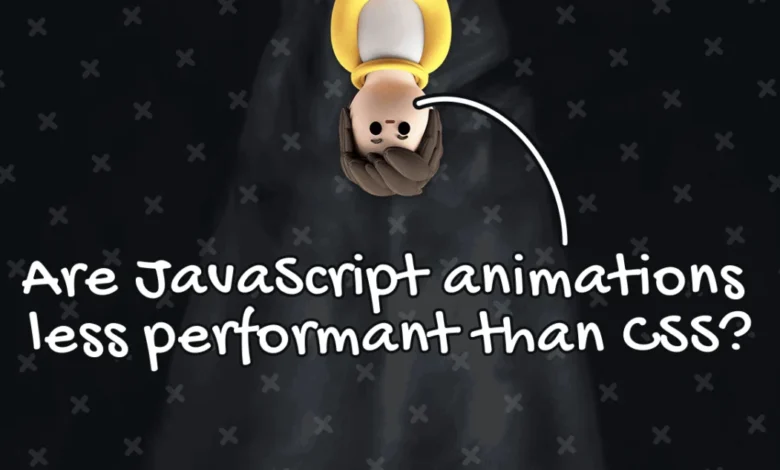
The quest for fluid, performant, and visually engaging web interfaces has long pitted CSS-based animations against JavaScript-driven logic. As modern web applications grow in complexity—often managing massive DOM trees, frequent data fetching, and real-time state updates—the choice of animation implementation has significant implications for user experience. While conventional wisdom suggests that CSS is inherently faster than JavaScript, the reality is defined by the technical architecture of browser rendering engines, the prioritization of the main thread, and the emergence of sophisticated animation APIs.
The Architectural Divide: Rendering Pipelines
To understand the performance disparity between CSS and JavaScript animations, one must examine how browsers process visual updates. The browser’s rendering pipeline consists of several stages: JavaScript execution, Style calculation, Layout, Paint, and Compositing.
CSS animations, particularly those defined via keyframes, are frequently handled by the browser’s compositor thread. When an animation involves properties that trigger only the "Compositor" stage—such as transform and opacity—the browser can offload the rendering work from the main thread. This separation allows animations to remain smooth even when the main thread is occupied with heavy tasks, such as executing complex JavaScript logic, parsing large JSON payloads, or re-rendering components in frameworks like React or Vue.
Conversely, traditional JavaScript animations, often implemented via requestAnimationFrame (rAF) loops, operate directly on the main thread. In this paradigm, the JavaScript engine calculates the state of an element for every frame—typically 60 times per second—and applies those values to the DOM. If the main thread becomes congested, the execution of the animation function is delayed. This results in "jank" or dropped frames, where the user perceives a stutter in the animation because the browser cannot complete the frame calculation within the required 16.67-millisecond window.
Chronology of Animation Evolution
The evolution of web animation has shifted from early, brittle methods to robust, standardized APIs. In the mid-2000s, developers relied on setInterval to move elements across the screen, a process that was notoriously inefficient and prone to synchronization issues. The introduction of requestAnimationFrame in the early 2010s marked a major improvement, allowing browsers to optimize animation loops to match the screen’s refresh rate.
However, the most significant shift occurred with the maturation of the Web Animations API (WAAPI). WAAPI acts as a bridge between the imperative nature of JavaScript and the declarative performance of CSS. By allowing developers to define animations in JavaScript that the browser can then delegate to the compositor thread, WAAPI effectively reconciles the flexibility of code with the performance of CSS.
Data-Driven Performance Analysis
Empirical benchmarks consistently show that main-thread blocking is the primary bottleneck for animation quality. In synthetic stress tests where the main thread is intentionally saturated with intensive computational tasks—simulating a high-load application environment—CSS-based animations maintain a consistent 60 frames per second (FPS). In contrast, standard JavaScript implementations using basic rAF loops often see frame rates drop to 20 FPS or lower, depending on the severity of the thread contention.
Industry research indicates that users notice frame drops as small as 5–10 FPS, which can lead to a perceived lack of polish or "cheapness" in a web application. Consequently, performance engineering teams at major tech firms often mandate that any animation running for the duration of a page’s lifecycle—such as spinners, background pulses, or persistent UI elements—must be offloaded to the compositor thread using CSS or WAAPI.
Comparative Analysis of Modern Libraries
The landscape of animation libraries reflects the trade-off between power and performance. Popular libraries such as GSAP (GreenSock Animation Platform) and Motion (formerly Framer Motion) represent different philosophical approaches to this challenge.
GSAP is widely regarded for its unparalleled feature set, including advanced timeline control, complex SVG morphing, and physics-based easing. Because GSAP is built for maximum flexibility, it often operates via the main thread to ensure full control over every property being animated. For complex, multi-stage orchestrations, developers often accept the minor performance overhead of the main thread in exchange for the library’s robust feature set and cross-browser consistency.
Motion, by contrast, has gained significant traction by prioritizing the Web Animations API. By abstracting WAAPI, Motion enables developers to write declarative, library-style code that the browser interprets as native-level animations. This allows Motion to provide a "best of both worlds" scenario: the ease of use of a JavaScript library and the performance characteristics of CSS-native transitions.
Broader Implications for Web Development
The trend toward "CSS-first" animation is supported by the rapid expansion of the CSS specification. Features such as View Transitions, the linear() easing function, and scroll-driven animation timelines have drastically reduced the number of scenarios that require JavaScript intervention. These native features allow browsers to handle complex logic internally, bypassing the overhead of constant communication between the JavaScript engine and the rendering engine.
However, the necessity of JavaScript for animation remains in cases involving high-frequency data binding or non-linear, user-input-driven interactivity. In these instances, the industry consensus is to use JavaScript to trigger or orchestrate, rather than to "drive" the frame-by-frame rendering. By utilizing CSS classes for the heavy lifting of the animation, developers keep the main thread free for critical business logic.
Expert Perspectives and Future Directions
Engineers and browser vendors advocate for a nuanced approach to animation performance. The consensus among frontend architects is that "pre-optimization" is rarely necessary for simple, transient UI animations, but "strategic optimization" is essential for high-visibility interactive elements.
As the web platform continues to evolve, the distinction between CSS and JavaScript animations is expected to blur further. The implementation of off-main-thread scheduling for more CSS properties and the refinement of Houdini APIs—which allow developers to hook into the browser’s painting process—will provide even more tools to maintain high performance.
Ultimately, the choice between CSS and JavaScript for animation is not merely a question of speed, but one of architectural suitability. Developers must weigh the complexity of the animation, the importance of the animation to the user experience, and the state of the main thread. By leveraging CSS and WAAPI for structural and persistent animations, and reserving traditional JavaScript-driven animations for highly complex, non-standard interactions, developers can build interfaces that are both highly responsive and visually compelling, ensuring a seamless experience across all device tiers, from high-end workstations to budget mobile devices.
Related posts: