The Ultimate Guide to UI and Design System Naming Conventions in Modern Software Engineering

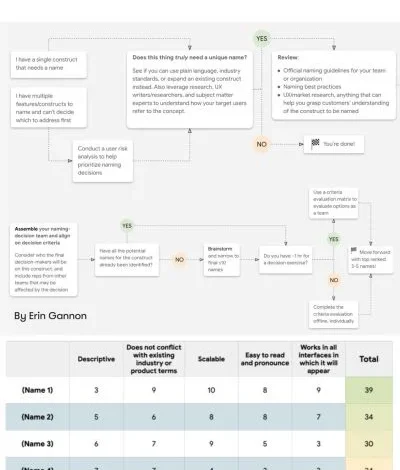
The challenge of nomenclature in software engineering and digital product design has long been a subtle yet pervasive bottleneck for cross-functional teams. Across the global tech industry, miscommunications stemming from ambiguous labeling routinely stall development cycles, inflate onboarding times for new hires, and degrade the user experience of final digital products. Whether it is a product manager debating the value proposition of a newly launched feature, a UI designer organizing component layers in a Figma workspace, or a front-end engineer debating the structural taxonomy of CSS classes and design tokens, the core obstacle remains identical: finding a universally understood vocabulary.
To address this industry-wide pain point, design system architects, developers, and information architects have increasingly turned to standardized frameworks, shared mental models, and specialized open-source nomenclature resources. The overarching goal of these initiatives is to bridge the communication gaps that frequently emerge between specialized dialects spoken by designers, developers, product managers, and end-users.
The Historical Context of Taxonomic Debt in Design

Historically, the proliferation of digital products—ranging from multi-brand enterprise software to consumer-facing mobile applications—has outpaced the evolution of standardized naming conventions. In the early eras of web development, class names and variables were frequently determined on an ad-hoc, project-by-project basis. Developers relied on idiosyncratic abbreviations or overly specific nomenclature tied directly to visual properties, such as .blue-box-right or .bold-text-large.
As digital systems scaled into multi-platform ecosystems encompassing web, iOS, Android, and desktop applications, this localized approach introduced severe technical debt. When a brand underwent a visual redesign, hardcoded color names and layout-specific class names broke down completely. A variable named .dark-blue-header rendered meaningless when a dark mode theme inverted the UI palette to light backgrounds with accent colors.
Concurrently, the rise of collaborative design tools such as Figma, Sketch, and Adobe XD highlighted a parallel crisis within design file organization. Without structured guidelines for layers, groups, and components, design files devolved into chaotic layers labeled "Rectangle 409" or "Frame Copy 2." This lack of semantic clarity directly impacted handoff efficiency, forcing engineers to reverse-engineer design intentions rather than mapping them cleanly to programmatic components.
Modern Approaches to General Naming and Lexical Inspiration

To help teams think outside traditional software engineering constraints, practitioners have begun looking toward interdisciplinary lexical repositories. Among the notable tools adopted by the design community is Classnames, a resource curated by Paul Robert Lloyd that offers thematically grouped lists of words designed to inspire semantic labeling for HTML classes, CSS properties, and JavaScript functions.
Rather than relying on mechanical or repetitive descriptors, these repositories encourage the use of terminology derived from nature, architecture, fashion, publishing, and the performing arts. By introducing structured metaphors—such as terms describing behavior, likeness, order, and association—teams can establish a more intuitive, memorable, and human-readable codebase. Experts argue that when code reads closer to natural language, cognitive load decreases significantly during code reviews and maintenance phases.
Standardizing Color Palettes Through Community-Sourced Repositories
Color selection and naming represent another critical friction point in design systems. Color palettes in enterprise systems frequently scale into hundreds of distinct shades, making manual naming impractical and prone to human error.

Addressing this scale, independent developer David Aerne maintains a comprehensive repository of color names that aggregates over 30,000 unique color designations sourced from diverse historical references, standardized color charts, and thousands of community contributions. Integrated with color pickers and search utilities like Color Parrot, these repositories provide teams with predictable, expressive, and non-numerical identifiers for complex color tokens.
By avoiding purely algorithmic hex codes or ambiguous color adjectives, engineering and design teams can establish clear linguistic anchors. This standardization ensures that references to a specific interactive state or background tint remain synchronized across design prototypes, CSS stylesheets, and native application builds.
Structuring Layers, Groups, and Components in Design Workflows
At the operational level of interface design, establishing consistent layer and component nomenclature is paramount for maintainability. Industry guidelines popularized by design systems specialists emphasize that an effective layer name must possess a logical structure, remain concise, carry explicit semantic meaning, and remain entirely decoupled from transient visual properties.

According to foundational best practices outlined by design leaders such as Javier Cuello, scalable design systems avoid naming elements based on temporary aesthetic traits like "Rounded Red Button" in favor of functional classifications such as "Primary Action Trigger." This distinction ensures that when underlying brand guidelines or accessibility requirements shift, the underlying architectural label remains valid, preventing widespread refactoring across massive design files.
Scaling Design Token Taxonomies Across Enterprise Ecosystems
As multi-brand corporations manage expansive portfolios of digital properties, the complexity of design tokens increases exponentially. A prime example of this challenge is found within enterprise environments like Intuit, the parent organization behind diverse financial and productivity tools including QuickBooks, TurboTax, Mailchimp, and Mint.
Faced with the challenge of unifying disparate brands under cohesive design principles, Intuit’s engineering and design teams engineered a flexible, multi-tiered design token taxonomy. This architectural shift moved beyond single-brand themes, creating a foundational infrastructure capable of supporting distinct product identities while maintaining centralized design governance.

Detailed case studies published by engineering leaders like Nate Baldwin highlight the migration from brittle, legacy naming systems to structured taxonomies. By defining explicit criteria for token categorization—separating primitive values, semantic tokens, and component-specific tokens—enterprises can scale their design systems without sacrificing predictability or developer velocity.
Similarly, the Vodafone UK Design System team released comprehensive tooling via their Variables Taxonomy Map in Figma. This framework maps out the intricate anatomy of design tokens across four core collections: brand primitives, semantic applications, and page-level variables. Built upon foundational methodologies established by industry veterans like Nathan Curtis, such taxonomy maps allow developers and designers to trace any given token directly to its origin and understand its exact contextual usage simply by reading its identifier.
Bridging the Gap: UI Component Inventories and Dictionaries
When teams encounter persistent disagreements regarding the nomenclature of standard interface elements—such as deciding between "accordion," "collapsible," or "disclosure widget"—referencing established design system repositories serves as an empirical solution.
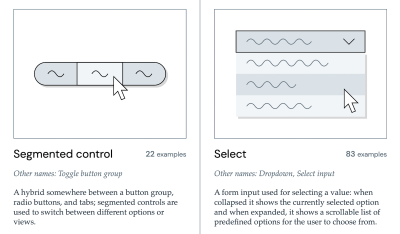
The Component Gallery, curated by Iain Bean, provides a comprehensive cross-section of interface components extracted from real-world design systems. By cataloging over 50 distinct UI components alongside their alternative industry synonyms, the gallery functions as a cross-industry dictionary. Complementary resources, such as visual dictionaries like Name That UI, further assist junior and senior practitioners alike in aligning their internal terminology with established global conventions.
Feature Discoverability and User-Centric Naming
Beyond internal engineering and design artifacts, the nomenclature applied to user-facing features directly dictates product adoption metrics. Product analytics consistently demonstrate that low feature adoption rates are frequently rooted in poor discoverability and opaque feature naming.
UX research indicates that users require a predictable path from discovery to comprehension, trial, habituation, and integration into existing workflows. When a feature is assigned an internal corporate codename rather than a user-centric title, adoption plummets because the label fails to communicate tangible value.

To counter this, design strategists advocate for feature naming methodologies grounded in the "job-to-be-done" framework. By conducting user interviews and asking participants to describe a feature’s utility in their own natural language, product teams can align feature names with user mental models. This linguistic synchronization ensures that UI copy, navigation menus, and marketing collateral speak directly to the user’s immediate problem space, reducing friction and accelerating time-to-value.
Streamlining Product and Service Nomenclature
At the macro level of brand and product architecture, naming new services remains a high-stakes corporate endeavor. Open-source repositories such as Onym have emerged to catalog methodologies, brainstorming frameworks, vetting procedures, and linguistic resources for naming new digital products and services. These resources combine empirical market research with linguistic analysis, helping organizations avoid common pitfalls such as trademark conflicts, unintended cultural connotations, or confusing phonetic structures.
Broader Implications and Industry Consensus

Ultimately, the persistent focus on naming conventions across the software industry highlights a profound realization: codebases and design systems are social contracts just as much as they are technical artifacts.
When cross-functional teams operate in different linguistic dialects—where designers, developers, product managers, and users assign conflicting meanings to identical terms—systemic friction is inevitable. Conversely, investing time in establishing rigorous, well-documented, and user-aligned nomenclature yields measurable dividends in developer productivity, design consistency, and product usability.
Industry analysts emphasize that as automated tooling, AI-driven code generation, and design token pipelines mature, the necessity for unambiguous, machine-readable, and human-understandable naming structures will only intensify. Organizations that prioritize taxonomic clarity today are inherently better positioned to scale their digital infrastructure, onboard new engineering talent efficiently, and deliver frictionless experiences to an increasingly discerning global user base.