Breaking the Agile Bottleneck: Why Design Systems are Essential for Modern Product Development

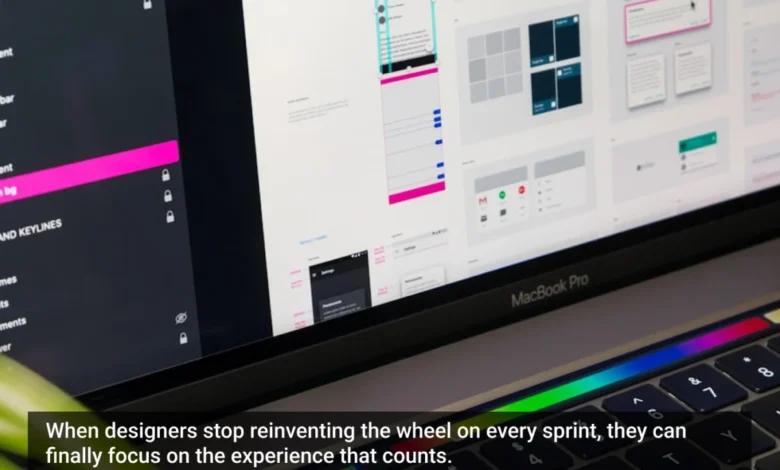
The rapid evolution of software development methodologies over the past two decades has fundamentally transformed the role of the product designer. As organizations shift toward Agile frameworks—characterized by iterative sprints, continuous integration, and rapid deployment—designers are increasingly grappling with the perception that the pace of development leaves little room for high-quality craftsmanship. The constant pressure of upcoming sprints, pending tickets, and the need for immediate feature deployment often forces designers into a reactive cycle. Yet, industry experts are increasingly identifying a strategic remedy for this chronic time-poverty: the implementation of robust design systems.
The Evolution of Design in Agile Environments
The historical shift toward Agile, codified in the 2001 Agile Manifesto, emphasized "working software over comprehensive documentation." While this shift accelerated delivery times for engineering teams, it created a paradoxical challenge for designers. In a traditional waterfall model, design was a discrete, upfront phase. In the Agile era, design is continuous, often fragmented into small, bite-sized tasks.
Research conducted by the Interaction Design Foundation and industry thought leaders like Laura Klein indicates that designers in Agile settings often spend upwards of 60% of their time on repetitive visual tasks—adjusting padding, standardizing hex codes, or debating button radii. This repetitive labor creates a "design debt" that accumulates over time, leading to inconsistent user interfaces and significant friction between design and engineering departments.
The Hidden Cost of Visual Redundancy
A critical analysis of current product design workflows reveals that the most significant bottleneck is not a lack of creativity, but a lack of standardized building blocks. When designers treat every new feature as a unique visual project, they effectively waste hours recreating components that already exist elsewhere in the application.
This phenomenon is not merely an inconvenience; it is a measurable drain on corporate resources. According to a 2023 report by enterprise software analysts, teams without a centralized design system spend approximately 30% more time on UI design per feature than those who utilize a shared library of components. The implications for Agile teams are profound: when designers are preoccupied with the minutiae of pixel placement, they lack the cognitive bandwidth to focus on user research, edge cases, and complex interaction design.
Defining the Design System: A Structural Framework
A design system is more than a UI kit or a style guide; it is a source of truth for an entire organization. It encompasses a collection of reusable components, patterns, and established guidelines that ensure visual and functional cohesion across disparate product teams. By codifying elements such as typography, grid systems, iconography, and interactive behaviors, organizations create a "language" that both designers and engineers speak fluently.
The integration of these systems follows a predictable timeline:
- Audit Phase: Teams analyze existing product interfaces to identify inconsistent patterns and technical debt.
- Standardization: Core components (buttons, inputs, headers) are defined, documented, and approved.
- Integration: Components are translated into code libraries (e.g., React or Vue components), allowing engineers to pull assets directly from the repository.
- Maintenance: A dedicated governance team or designated "system maintainers" oversee updates to ensure the system scales with the product.
Bridging the Design-Engineering Divide
One of the most persistent issues in Agile development is the "handoff." Traditionally, this involves a designer providing a static mockup (e.g., in Figma or Sketch) that an engineer must manually translate into code. This process is inherently prone to error and misinterpretation.
Design systems fundamentally alter this dynamic. By utilizing a shared component library, the conversation between designers and engineers shifts from "how should this look?" to "how does this solve the user’s problem?" When an engineer can import a pre-approved, pre-coded component, the design-to-implementation timeline is reduced from days to hours. This collaboration allows teams to move toward a model of "design-in-code," where prototypes are built from production-ready parts, significantly increasing the reliability of user testing.
Maintaining Consistency in Incremental Releases
The challenge of "UI drift" is a major concern for products built incrementally. When a product is developed by multiple teams over several years, the risk of visual fragmentation—where navigation menus or form behaviors vary from page to page—becomes acute. This inconsistency erodes user trust and increases the cognitive load required for customers to navigate the platform.
Design systems provide a stabilizing force. By enforcing a consistent visual grammar, these systems ensure that regardless of which team builds a feature, the resulting interface feels like a native part of the whole product. This modular approach allows for rapid, iterative releases without sacrificing the integrity of the user experience.
Impact on Organizational Performance
The adoption of a design system has measurable impacts on organizational efficiency and product quality. A study by McKinsey & Company on the "Business Value of Design" found that companies with top-tier design practices—which include the systematic reuse of assets—outperform their competitors in revenue growth by as much as 32%.
For the individual designer, the benefits are equally significant. By delegating the "visual busywork" to a system, designers are empowered to act as strategic partners within the Agile team. They gain the necessary time to focus on:
- Edge-case exploration: Ensuring the interface remains stable under unexpected conditions.
- Error states: Designing meaningful feedback loops when users encounter issues.
- User research: Spending more time observing real-world usage rather than drawing mockups.
Future Implications and Conclusion
The transition toward component-driven design represents a maturation of the digital product industry. As Agile development becomes the standard for organizations globally, the role of the designer is shifting from "visual artist" to "systems architect."
While the initial investment in creating a design system—time spent cataloging assets and gaining cross-departmental buy-in—can be significant, the long-term payoff is undeniable. It resolves the primary complaint of the Agile designer: the lack of time. By simplifying the creation of UI, design systems provide the structure necessary to balance the velocity of Agile development with the quality of thoughtful, human-centered design.
In the final analysis, a design system is not an impediment to the "Agile" way of working; it is the infrastructure that makes it sustainable. By learning faster than they build, and by building with a shared, reliable set of tools, teams can move beyond the constraints of the ticket-based sprint cycle and focus on what truly matters: delivering meaningful, consistent, and intuitive digital experiences for their users. As the digital landscape continues to grow more complex, the ability to scale design without losing focus will be the defining trait of successful product organizations.