CSS Versus JavaScript Animation Performance: An Analytical Review of Modern Web Rendering Strategies

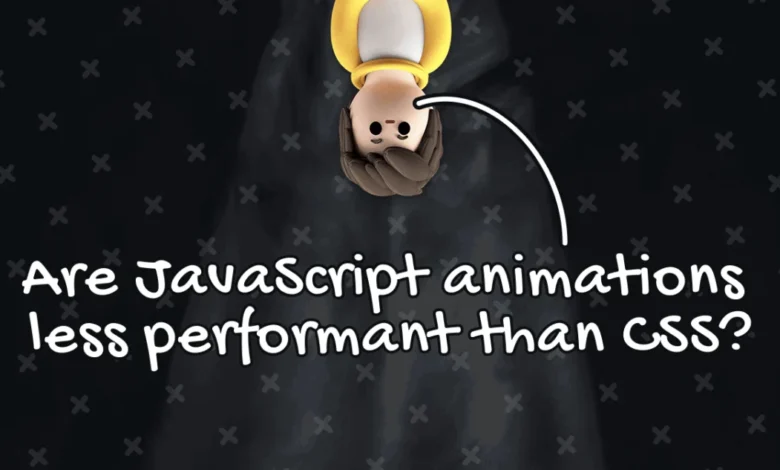
The debate over whether JavaScript-based animations are inherently inferior to CSS-based counterparts has long occupied the forefront of web performance optimization discussions. Conventional wisdom has historically favored CSS transitions and keyframes as the gold standard for fluidity, positing that JavaScript-driven motion inevitably incurs a performance penalty. However, as browser engine architectures have evolved and new APIs have been introduced, this dichotomy has shifted from a question of language to a question of execution strategy and threading. Understanding the performance profiles of these methods is essential for developers tasked with building responsive, high-performance interfaces in an increasingly complex digital ecosystem.
The Architectural Foundation of Browser Animations
To evaluate performance, one must first distinguish between how browsers handle styling versus logic. CSS animations and transitions are designed to be declarative. By defining the start and end states—or a sequence of keyframes—within a CSS file, developers offload the burden of state management to the browser’s internal rendering engine. Crucially, in many modern browsers, these operations are offloaded to the compositor thread. This separation allows animations to remain smooth even when the main thread—the process responsible for parsing HTML, executing JavaScript, and managing layout calculations—is under heavy load.
Conversely, manual JavaScript animations, typically implemented via requestAnimationFrame (rAF) loops, operate directly on the main thread. While this provides developers with granular control over the animation logic, it creates a dependency between the visual smoothness of the interface and the application’s overall processing overhead. If the main thread becomes congested due to complex data fetching, React state reconciliations, or heavy DOM manipulation, the rAF loop may stutter, resulting in dropped frames and a jarring user experience.
Chronology of Animation Evolution
The evolution of web animation began with simple GIF overlays and progressed into the era of jQuery-based movement. During the mid-2000s, JavaScript was the only viable path for dynamic movement, but it was notoriously resource-intensive. The introduction of CSS transitions and keyframes in CSS3 represented a paradigm shift, as it allowed for hardware-accelerated motion that did not require continuous execution of script.
By the mid-2010s, the emergence of the Web Animations API (WAAPI) sought to bridge the gap between the flexibility of JavaScript and the performance of CSS. WAAPI provides a standardized interface for defining animations in JavaScript that, like CSS keyframes, can be offloaded to the compositor thread. This development rendered the binary argument—"CSS is fast, JavaScript is slow"—largely obsolete, provided that the underlying API implementation is leveraged correctly.
Comparative Performance Data and Technical Analysis
Technical benchmarks demonstrate that while simple JavaScript animation loops are susceptible to "main thread blocking," the performance gap is largely a function of execution overhead rather than language limitations. When a browser executes a script that blocks the main thread for 50 milliseconds, an animation driven by a standard rAF loop will pause entirely for those 50 milliseconds. In contrast, an animation controlled by CSS keyframes or the WAAPI continues to interpolate values independently.
Recent industry studies indicate that high-performance web applications often utilize a hybrid approach. For static, non-interactive transitions, CSS remains the preferred choice due to its simplicity and zero-runtime cost. For complex, state-driven, or interactive animations—such as those following user gestures or involving non-linear physics—JavaScript is often required. The critical distinction lies in whether the JavaScript code directly modifies the DOM on every frame, or whether it instructs the browser’s animation engine to manage the transition.
Industry Perspectives and Library Trade-offs
Leading animation libraries, such as GSAP and Motion (formerly Framer Motion), offer distinct approaches to this challenge. GSAP, a industry staple for over a decade, provides an extensive feature set including complex timeline sequencing, morphing, and physics-based interactions. While GSAP operates primarily via JavaScript, its highly optimized engine is designed to minimize garbage collection and layout thrashing, often outperforming native CSS in scenarios involving hundreds of moving elements.
Motion, by contrast, relies heavily on WAAPI, effectively allowing it to behave like native CSS in terms of threading while maintaining the developer-friendly syntax of a JavaScript library. This allows developers to handle complex UI states—like those found in modern component-based frameworks—without sacrificing the frame-rate stability afforded by off-main-thread execution.
Broader Implications for Web Development
The shift toward component-based architecture in modern web development, particularly within the React and Vue ecosystems, has heightened the need for performant animation solutions. As applications grow in complexity, the "main thread" becomes an increasingly crowded bottleneck. Developers must now consider whether their animation strategy will scale as the application’s business logic expands.
Furthermore, the introduction of native browser features such as the linear() timing function, View Transitions API, and scroll-driven animations has significantly reduced the reliance on external libraries for common tasks. These native features allow for sophisticated motion effects that were previously only possible through complex JavaScript math, thereby allowing developers to offload more work to the browser’s optimized C++ or Rust-based rendering engines.
Future Outlook and Conclusion
The current state of web animation is characterized by a move toward native, declarative APIs that provide the performance of CSS with the power of JavaScript. While libraries like GSAP remain indispensable for high-complexity use cases where maximum control is required, the baseline for standard UI interactions is shifting toward native solutions.
The primary takeaway for modern engineering teams is clear: performance is less about the language used to declare the animation and more about the threading model employed by the browser to execute it. By favoring APIs that allow for off-main-thread rendering, and by auditing the impact of long-running JavaScript tasks on the UI thread, developers can ensure that animations remain fluid regardless of the application’s complexity. As browsers continue to refine their rendering pipelines, the distinction between CSS and JavaScript animations will likely continue to blur, ultimately benefiting the end user through more consistent, responsive, and engaging digital experiences.
In summary, the choice between CSS and JavaScript is no longer a matter of speed alone. It is a strategic decision that involves weighing the need for deep logic-based control against the requirement for frame-rate consistency. By leveraging the Web Animations API and understanding the limitations of the main thread, developers can navigate the modern web landscape with confidence, ensuring that even the most visually ambitious projects perform optimally across the diverse range of devices currently in use.