Gamification 2.0. Beyond Points and Badges: Designing for Players, Not Metrics. Chapter 1: The Problem—UX Magazine

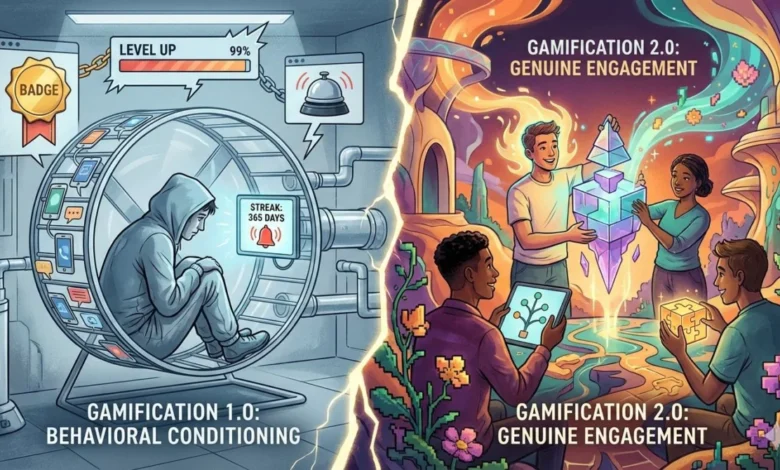
The contemporary digital landscape is defined by a paradox: as mobile and web applications become more sophisticated in their data collection, the user experience has increasingly defaulted to a repetitive cycle of “gamification theater.” This strategy, which involves the integration of points, badges, leaderboards, and notification-based guilt, is frequently employed by growth teams and product managers who lack a foundational background in professional game design. Industry analysts suggest that this trend—termed a “cargo cult” for its imitation of form without understanding of function—has reached a point of saturation, leading to diminished returns across the technology sector.
The Anatomy of the Gamification Cargo Cult
The term “cargo cult” refers to a historical phenomenon where isolated groups built mock landing strips and radio equipment in hopes of summoning supply planes, despite lacking the underlying technology or infrastructure to facilitate real flight. In the context of modern software, the “bamboo control tower” consists of meaningless status indicators, such as LinkedIn’s “All-Star Profile” or Duolingo’s persistent streak reminders. While these elements are intended to boost engagement metrics, they often alienate power users who recognize these features as tools for data harvesting rather than genuine value creation.
The chronological rise of this trend can be traced to the early 2010s, following the mainstream success of social media and the rapid expansion of mobile app ecosystems. As companies sought to maximize “Time Spent in App” as a primary KPI for investors, the industry standardized a “checklist” approach to engagement. By 2015, the “gamification” label had become a staple of marketing decks, shifting the focus from player psychology to behavioral conditioning.
Historical Context and Professional Critique
The disconnect between corporate gamification and actual game design is profound. Veteran industry professionals—those who have spent decades in the gaming sector—argue that the current model is built on a misunderstanding of human motivation.
Consider the trajectory of a typical fitness application. A new user might be incentivized by daily step counts and digital trophies during the first month. However, longitudinal studies on health app retention indicate that after the novelty of the initial reward cycle fades, usage drops precipitously. By the second or third month, the “extrinsic trap”—the reliance on external rewards to drive activity—becomes apparent. Once the user no longer feels the thrill of the badge, the underlying lack of intrinsic motivation leads to the device being abandoned.
The disparity in design philosophy is stark. In professional game development, designers focus on “flow state,” agency, and the mastery of complex systems. In contrast, corporate gamification often relies on operant conditioning, treating users like subjects in a behaviorist experiment. The result is a system that optimizes for short-term data collection while ignoring the long-term sustainability of the user experience.
Data-Driven Analysis of Engagement Failures
Quantitative data supports the critique that extrinsic rewards provide only temporary engagement. According to recent research in user experience (UX) design, apps that rely heavily on artificial progress bars or leaderboards see an initial spike in interaction, but they frequently report a “churn cliff” once the rewards become predictable or cease to offer a sense of progression.
When users perceive that an app’s reward system is designed to manipulate their attention rather than provide utility, they engage in “gaming the system.” This involves checking in to collect daily points without consuming the content, or navigating tutorials in the fastest way possible to clear notifications. This behavior creates a feedback loop of “vanity metrics” for the company—showing high activity levels—while the actual value-add of the application remains stagnant.
The Shift Toward Gamification 2.0
As the limitations of the current model become increasingly clear, some industry leaders are calling for a shift toward “Gamification 2.0.” This framework moves away from the simplistic “points-and-badges” approach in favor of intrinsic motivation.
The core principles of this evolution include:
- Autonomy: Providing users with the agency to define their own goals within the system.
- Mastery: Designing systems that allow for the development of genuine skills, rather than the accumulation of virtual currency.
- Purpose: Ensuring that the engagement loop is directly tied to the core value proposition of the software, rather than serving as an overlay.
Critics of current trends, such as veteran designers who have worked on global titles like Street Fighter and John Madden Football, argue that the industry must stop viewing users as metrics to be manipulated and start viewing them as players to be engaged. The transition from “extrinsic rewards” to “intrinsic satisfaction” is not merely a design preference; it is a necessity for companies looking to sustain user interest in an increasingly crowded and skeptical market.
Broader Implications for the Tech Sector
The implications of this shift are significant for both developers and investors. If the current model of gamification is reaching its functional limit, companies that continue to prioritize superficial engagement mechanics over deep product value may find themselves facing long-term decline.
Industry analysts suggest that the next wave of successful applications will be those that integrate game-design principles—such as meaningful choice, social connection, and clear feedback loops—without the “theatrical” elements that define the current era. The “cargo cult” approach is inherently fragile; it relies on the user’s ignorance of the system’s design. As users become more savvy and accustomed to digital manipulation, the effectiveness of these hollow mechanics will continue to decline.
The rescue mission for gamification lies in the hands of professionals who understand the intersection of human psychology and systemic design. By abandoning the checklist-based approach and focusing on the underlying reasons why people choose to spend their time in a digital space, the industry can evolve toward a more sustainable and rewarding future. This transition will require a fundamental reassessment of how product success is defined—moving away from the short-term dopamine hits of a notification badge and toward the enduring satisfaction of a well-crafted user experience.
As of 2026, the industry stands at a crossroads. The legacy of the last decade has been one of high-volume, low-engagement software. The coming years will likely favor platforms that prioritize the “player” experience, effectively ending the era of the gamification cargo cult. For those who can bridge the gap between rigorous game design and functional utility, the opportunity to redefine digital engagement remains significant. The future of software is not in the rewards it gives, but in the experiences it enables.
Related posts: