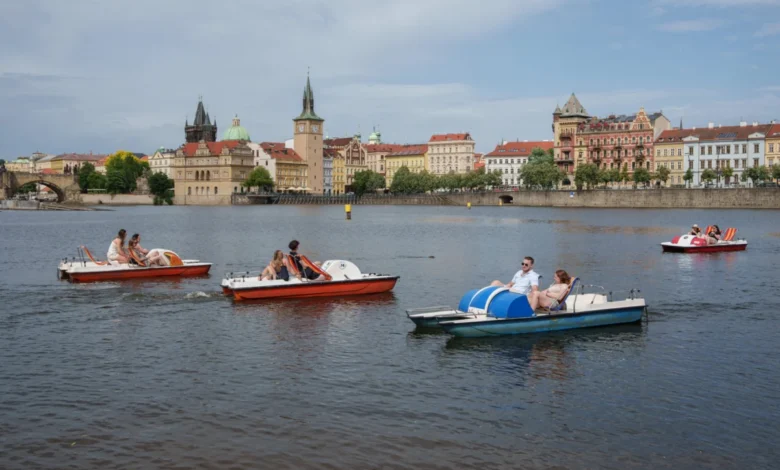
The Italian coastline, stretching over 7,600 kilometers, is defined not only by its geological diversity but by a specific set of seasonal artifacts that signal the arrival of the summer months. Among these, the pedalò—a human-powered catamaran—stands as perhaps the most democratic and ubiquitous vessel in the Mediterranean. While often dismissed as a mere leisure toy for tourists, the pedalò represents a complex intersection of Renaissance engineering, early 20th-century industrial ambition, and a post-war design philosophy that prioritizes collective enjoyment over rigid functionalism. As part of a broader investigation into the "ordinary" objects of Italian life, architect Carlo Ratti highlights the pedalò as a masterclass in resilient design, where the primary objective is not speed or efficiency, but the facilitation of shared experience.
The Engineering Lineage: From Brunelleschi to Da Vinci
The technical origins of the pedalò are far more prestigious than its current plastic-molded form suggests. The concept of a paddle-wheel vessel driven by internal mechanical force traces back to the dawn of the Italian Renaissance. In 1421, the celebrated architect and engineer Filippo Brunelleschi designed a massive vessel known as the Badalone. This craft was engineered specifically to transport heavy blocks of white marble from the quarries of Carrara up the Arno River to Florence, intended for the construction of the dome of Santa Maria del Fiore.
The Badalone was so technologically advanced for its time that it was granted what is widely considered the first industrial patent in history. The "exclusive privilege" was issued by the Florentine Republic, protecting Brunelleschi’s invention for a period of three years. However, the vessel’s fate served as a cautionary tale for over-engineering; on one of its maiden voyages, the Badalone sank under the weight of its cargo, leading to a significant financial loss.
Following Brunelleschi, Leonardo da Vinci further refined the concept of human-powered aquatic propulsion. Da Vinci’s notebooks contain numerous sketches of craft featuring paddle wheels operated by hand cranks or pedals. His designs sought to solve the problem of drag and mechanical advantage, though like many of his more ambitious engineering projects, they remained theoretical during his lifetime. These early iterations established a conceptual framework for the pedalò: the use of mechanical levers to amplify human strength for movement across water.

The 20th Century and the Rise of the Terziscafo
The modern iteration of the pedalò emerged in tandem with the "bicycle craze" of the late 19th and early 20th centuries. As the chain-drive pedal system revolutionized land transport, inventors sought to apply the same mechanics to the sea. The term "pedalò" itself is derived from the French pédaler, reflecting the international nature of early nautical experimentation.
In Italy, the definitive precursor to the modern rental boat was the Terziscafo. Built in 1913 by Angelo Terzi, a blacksmith from Gargnano on Lake Garda, the Terziscafo was a five-meter-long vessel constructed from durable larch wood. It utilized a bicycle-style pedal system to drive its propulsion. Terzi’s invention was poised to become a commercial success on the Italian lakes; however, the geopolitical instability of the era intervened. With the outbreak of World War I, Terzi was conscripted into the Alpini battalion. His prototype was abandoned, eventually being sold to a local fisherman, and the industrial development of the pedal boat in Italy was stalled for decades.
A Divergence in Design Philosophy: Nervi vs. The Pedalò
The evolution of the pedalò in the mid-20th century highlights a significant tension within Italian design theory. On one side stood the proponents of high functionalism, epitomized by the civil engineer Pier Luigi Nervi. Nervi, renowned for his work with reinforced concrete and his contributions to the aesthetic of the "true form," argued that design should follow the laws of physics and aerodynamics. To Nervi, a racing car or an airplane achieved beauty through its optimization; because they were governed by the same mathematical constraints, their forms would eventually converge toward a singular, perfect functional shape. This is the classic interpretation of "form follows function."
The pedalò, however, represents the antithesis of this rigid optimization. Once the basic technical requirement—buoyancy and a functional paddle wheel—is met, the design of the pedalò is liberated from the pursuit of efficiency. Because the boat is intended for leisure rather than transport or competition, it does not need to be aerodynamic or exceptionally fast. This freedom has allowed the pedalò to evolve into what Ratti describes as a "floating menagerie."
Since the post-war economic boom, the pedalò has adopted a variety of whimsical forms: giant swans, neon-colored dragons, unicorns, and flamingos. Manufacturers have integrated slides, sunshades, and built-in coolers. This shift represents a move from "form follows function" to "form follows fun." The design is successful not because it is the most efficient way to cross a body of water, but because it maximizes the playful potential of the environment.
Socio-Economic Impact and the Italian Beach Culture
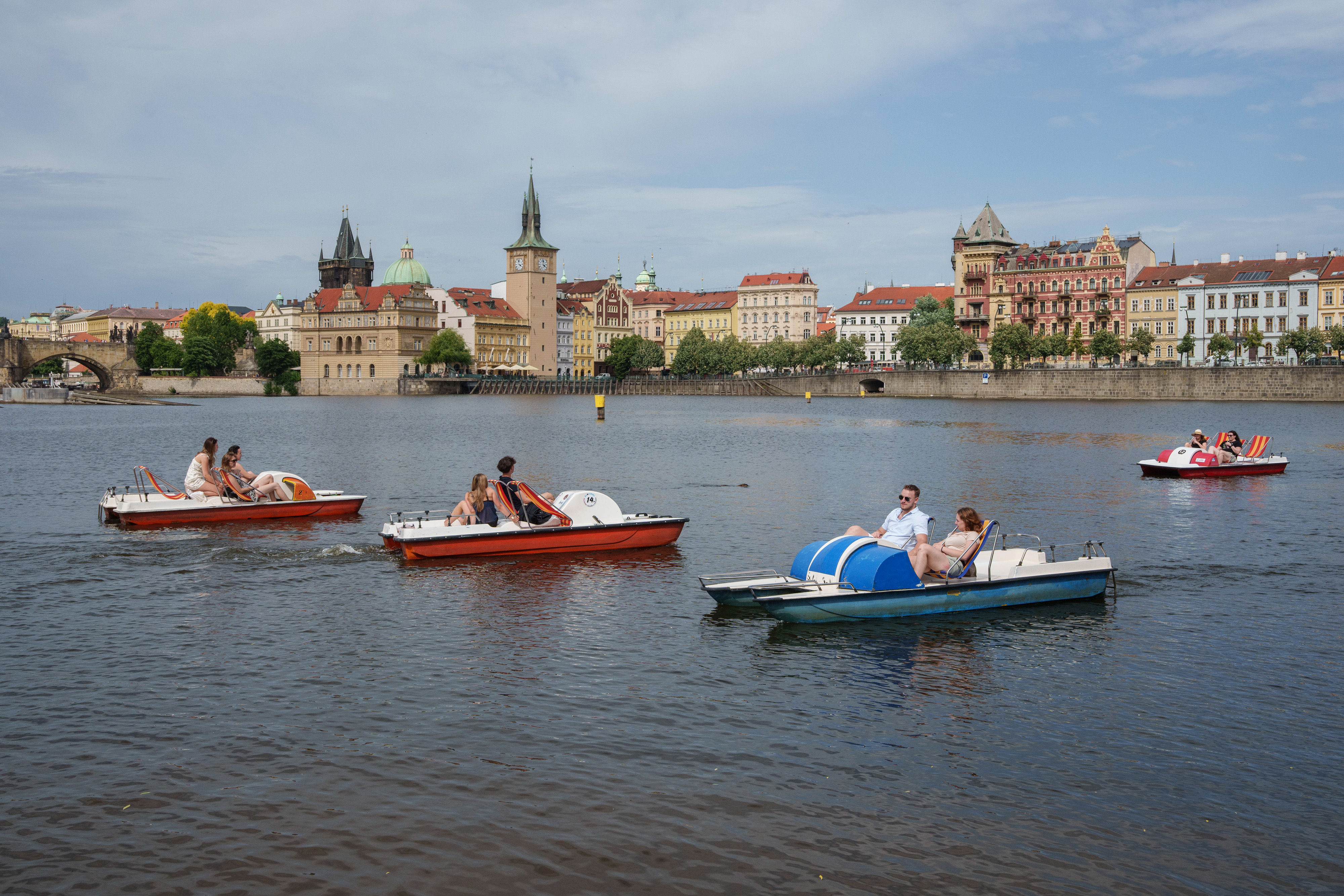
The pedalò is inextricably linked to the stabilimenti balneari—the private beach clubs that dominate the Italian coastline. These establishments, which began to proliferate in the 1950s and 60s, created a structured environment for summer leisure. The pedalò became the primary tool for escaping the crowded shoreline, offering a private space on the water for families and groups of friends.
Data from the Italian maritime industry suggests that there are tens of thousands of pedal boats currently in operation across the country’s 30,000 beach resorts. The rental model remains remarkably consistent: boats are hired by the hour, usually at a fixed rate with no discounts for extended use. This "democratic" pricing ensures that the experience is accessible to a wide demographic, from local teenagers to international tourists.
From an industrial standpoint, the manufacturing of these boats has shifted from the artisanal woodwork of Angelo Terzi’s era to high-volume production using fiberglass and, more recently, rotationally molded polyethylene. This transition has made the boats virtually unsinkable and highly resistant to the corrosive effects of salt water and UV radiation, ensuring a long operational lifespan for beach operators.
Chronology of the Pedalò’s Development
The history of the pedalò can be summarized through several key milestones:
- 1421: Filippo Brunelleschi receives the first industrial patent for the Badalone, a paddle-powered cargo vessel.
- Late 15th Century: Leonardo da Vinci sketches designs for human-powered paddle boats in his codices.
- 1913: Angelo Terzi builds the Terziscafo on Lake Garda, the first modern Italian pedal boat prototype.
- 1940s-1950s: The "Paddle Boat" gains popularity in the United States and Europe as a recreational craft, often utilizing surplus materials from the war effort.
- 1960s: The pedalò becomes a staple of the Italian "Dolce Vita" summer, with mass production in fiberglass beginning.
- 1980s-Present: The introduction of "fun" designs, including slides and animal shapes, solidifies the pedalò’s status as a leisure icon.
Broader Implications for Design and Sustainability
In the contemporary design landscape, the pedalò offers valuable lessons in sustainability and human-centric engineering. As the global tourism industry faces pressure to reduce its carbon footprint, the pedalò remains a zero-emission alternative to motorized personal watercraft. It relies entirely on human energy, encouraging physical activity and a slower, more deliberate engagement with the natural environment.
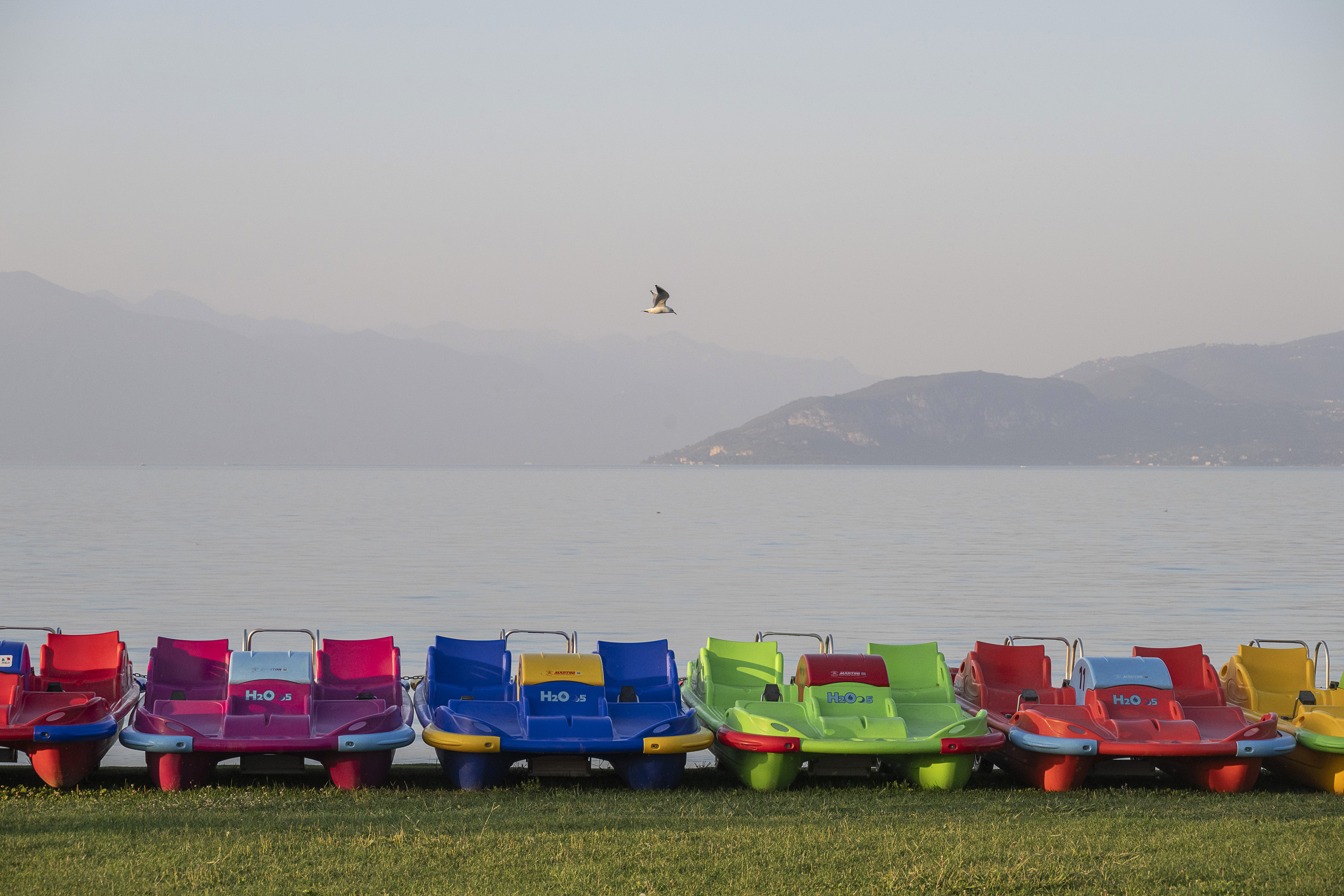
Furthermore, the longevity of the pedalò’s design—which has remained functionally unchanged for over half a century—challenges the modern cycle of planned obsolescence. While the "masks" or external shells of the boats may change to suit current trends (such as the recent surge in unicorn-themed inflatables and hard-shells), the internal mechanics remain the same. This modularity allows the core technology to persist while the aesthetic adapts to the cultural zeitgeist.
Carlo Ratti’s exploration of the pedalò serves as a reminder that design excellence is not always found in the sleekest or most expensive objects. Instead, it is often found in the items that "keep us company," as Achille Castiglioni famously put it. The pedalò is a masterpiece of the "less glamorous" Italian design canon—an object so common that it is often ignored, yet one that facilitates the very essence of the Italian summer: a shared, slow-paced, and democratic joy.
As climate change alters the Mediterranean landscape and the nature of coastal tourism evolves, the pedalò is likely to endure. Its simplicity, its refusal to succumb to the pressures of high-speed efficiency, and its commitment to the principle of "fun" make it a resilient symbol of a design culture that values the human experience above all else. Whether it is a sleek catamaran or a giant plastic duck, the pedalò remains a testament to the idea that some of our most important inventions are those that simply help us play.