
Bear Encounter British Columbia

Bear Encounters British Columbia: Essential Safety, Identification, and Mitigation Strategies
British Columbia, a province renowned for its stunning wilderness, is also home to a significant population of bears, primarily black bears (Ursus americanus) and grizzly bears (Ursus arctos horribilis). Understanding how to behave safely and responsibly in bear country is paramount for both residents and visitors. Bear encounters, while infrequent when proper precautions are taken, can be serious. This article provides comprehensive guidance on identifying bear species, understanding their behavior, and implementing effective strategies to prevent and manage encounters, thereby minimizing risks for both humans and bears.
Identifying Bear Species in British Columbia:
Accurate identification of bear species is the first critical step in responding to an encounter. While both black bears and grizzly bears inhabit British Columbia, their physical characteristics and typical behaviours differ significantly.
Black Bears (Ursus americanus):
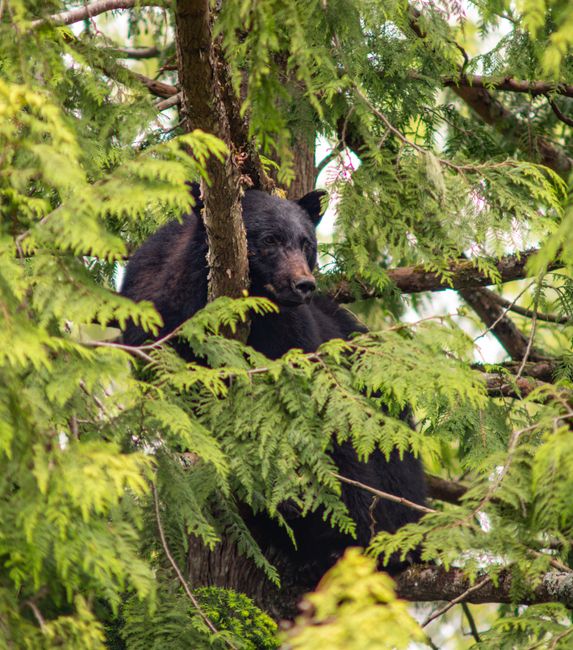
Black bears are the most common bear species in BC and are found in virtually all forested areas. Despite their name, their fur can range from black to brown, cinnamon, or even blonde. Key distinguishing features include:
- Shoulder Hump: Black bears generally lack a prominent shoulder hump.
- Facial Profile: They have a straighter facial profile and a shorter snout.
- Claws: Their claws are relatively short, curved, and black, adapted for climbing trees.
- Size: Adult males typically weigh between 50-150 kg (110-330 lbs), with females being smaller.
- Ears: Their ears are relatively large and pointed.
- Diet: Primarily omnivorous, with a diet consisting of berries, roots, insects, fish, and occasionally small mammals or carrion. They are often attracted to human food sources.
Grizzly Bears (Ursus arctos horribilis):
Grizzly bears are found primarily in the mountainous regions of the Interior and coastal mainland, with smaller populations on Vancouver Island. They are a subspecies of the brown bear. Key distinguishing features include:
- Shoulder Hump: A large, muscular hump is present on their shoulders, indicative of their powerful digging ability. This is the most reliable distinguishing feature.
- Facial Profile: They have a dished or concave facial profile (a "dished face") and a longer snout.
- Claws: Their claws are long (up to 10 cm or 4 inches), straight, and light-coloured, adapted for digging.
- Size: Significantly larger than black bears. Adult males can weigh from 180-360 kg (400-800 lbs) or more, with females being smaller but still substantial.
- Ears: Their ears are smaller and more rounded.
- Diet: Also omnivorous, but with a greater reliance on meat, including large ungulates and carrion. They also consume roots, berries, and fish. Their size and strength make them a more formidable presence.
Understanding Bear Behaviour and Motivations:
Bears are generally wary of humans and prefer to avoid confrontation. Most encounters are a result of surprise or a bear feeling threatened. Understanding their motivations is key to de-escalation.
- Surprise: Bears are most likely to attack if surprised, especially at close range. This can occur when a hiker rounds a blind corner or a bear is foraging in dense vegetation.
- Food Motivation: Bears have an excellent sense of smell and are strongly attracted to food sources. This includes garbage, pet food, bird feeders, barbecues, and even improperly stored camping supplies. When bears associate humans with food, they can become habituated, losing their natural fear and becoming more dangerous.
- Maternal Defence: Female bears with cubs are the most unpredictable and dangerous. They will defend their young fiercely and may perceive any perceived threat, including a human, as danger. Cubs, even if seemingly unattended, are almost always nearby.
- Territoriality (Less Common): While bears have territories, they are not as rigidly defended as some other animals. Encounters are more often about perceived threats than territorial disputes.
- Curiosity: Young bears, in particular, may exhibit curiosity towards humans and their activities.
Preventing Bear Encounters: Proactive Safety Measures
The most effective way to manage bear encounters is to prevent them from happening in the first place.
In Bear Country (Hiking, Camping, Outdoor Recreation):
- Make Noise: Bears have excellent hearing but can be surprised. Sing, talk, or clap loudly and often, especially in areas with limited visibility (dense brush, blind corners, near streams, or when the wind is blowing towards you). Bear bells are generally considered insufficient on their own. A human voice is more effective.
- Travel in Groups: Larger groups are noisier and more intimidating to bears. Ideally, hike with four or more people.
- Be Aware of Your Surroundings: Pay attention to fresh bear signs:
- Scat: Look for fresh droppings. The size and contents can indicate whether it’s from a black bear or grizzly.
- Tracks: Look for large, distinct paw prints.
- Digging: Areas with overturned rocks and soil can indicate bear foraging.
- Markings: Trees with claw marks or scraped bark.
- Leash Your Dog: Dogs can attract bears or provoke an encounter. Keep dogs leashed at all times. A dog off-leash can run into a bear and then run back to its owner, leading the bear to the humans.
- Avoid Hiking at Dawn and Dusk: Bears are most active during these crepuscular periods.
- Never Approach or Feed Bears: This is a critical rule. Maintain a safe distance of at least 100 meters (330 feet) from grizzly bears and 50 meters (165 feet) from black bears, and always give them space to retreat.
- Carry Bear Spray: Bear spray (capsaicin-based deterrent) is the most effective tool for deterring an aggressive bear. Carry it in an easily accessible location (e.g., on your hip or chest harness), not inside your backpack. Know how to use it before you need it. Ensure it’s EPA-approved and has a sufficient spray duration (e.g., 7-9 seconds) and range (e.g., 8-10 meters or 25-30 feet).
- Proper Food Storage (Camping):
- Bear-Resistant Containers (BRCs): Use approved BRCs for all food, toiletries, and scented items.
- Hanging Food: If BRCs are not available or feasible, hang food and scented items at least 4 meters (13 feet) high and 4 meters (13 feet) horizontally from the nearest tree trunk and branch. This is often more challenging than it appears.
- Cook and Eat Away from Sleeping Areas: Set up your cooking and eating area at least 100 meters (330 feet) downwind from your tent.
- Cleanliness: Wash dishes immediately after use and dispose of greywater far from your campsite. Store all garbage in BRCs or pack it out. Never bury garbage.
- Sleep Clean: Do not sleep in the clothes you wore while cooking. Store all scented items, including toothpaste and deodorant, with your food.
In Residential Areas and Urban Interfaces:
- Secure Garbage: Bears are attracted to garbage. Use bear-resistant bins if available. If not, store garbage in a secure shed or garage until collection day. Do not leave garbage bins out overnight. Double-bag odorous waste.
- Clean Barbecues: Clean your barbecue immediately after use to remove food residue.
- Remove Bird Feeders: Bird feeders are a significant attractant. Remove them or make them bear-proof by hanging them from a sturdy pole with a baffle, at least 3 meters (10 feet) high and 1.5 meters (5 feet) from any supporting structure.
- Manage Composting: Avoid composting meat, fish, or dairy products. Ensure compost bins are well-managed and not overflowing.
- Pick Ripe Fruit: Harvest ripe fruit from trees promptly. Fallen fruit is an attractant.
- Pet Food and Water: Do not leave pet food or water outside overnight. Feed pets indoors.
- Report Sightings: Report any bear sightings in urban or residential areas to the Conservation Officer Service immediately. This allows for early intervention.
Managing a Bear Encounter: What to Do
If you encounter a bear, remain calm and follow these guidelines:
General Encounter Guidelines:
- Do NOT Run: Running can trigger a chase response in bears. They are faster than you.
- Stay Calm: Avoid screaming or making sudden movements.
- Identify Yourself: Speak in a calm, low voice. Let the bear know you are human and not prey.
- Make Yourself Look Bigger: Stand tall, raise your arms, and hold up your jacket or backpack.
- Do NOT Make Eye Contact: Bears can interpret direct eye contact as a challenge.
- Back Away Slowly: Move away sideways, diagonally, or backwards, never turning your back on the bear. Give the bear plenty of space to leave.
- Do NOT Drop Your Pack: Your backpack can offer some protection if an attack occurs.
- Consolidate Your Group: If you are with others, gather together to appear larger.
Specific Scenarios and Responses:
If the Bear is Unaware of You:
- Quietly and slowly back away while staying downwind and out of sight.
If the Bear is Aware of You and Not Aggressive:
- Talk calmly to the bear.
- Slowly wave your arms above your head to appear larger.
- Slowly back away.
- If you have bear spray, have it ready.
If the Bear Approaches You (Curious or Investigating):
- Stand your ground.
- Continue to speak calmly but firmly.
- Make yourself look as large as possible.
- Be prepared to use your bear spray if the bear comes within range.
If the Bear Charges (Defensive Attack):
A defensive attack often occurs when a bear is surprised or feels threatened. They may huff, woof, or swat the ground.
- Stand Your Ground (initially): Do not run.
- Use Bear Spray: Deploy your bear spray when the bear is within its effective range (e.g., 8-10 meters). Aim for the bear’s face.
- If Bear Spray Fails or is Not Available:
- Grizzly Bear: Play dead. Lie flat on your stomach, protect the back of your neck with your hands, and spread your legs to make it harder for the bear to flip you over. Remain still until you are certain the bear has left the area. If the attack persists, fight back.
- Black Bear: Do not play dead. Fight back aggressively. Use any available weapon (rocks, sticks, fists, feet). Aim for the bear’s face and eyes.
If the Bear Attacks (Predatory Attack):
A predatory attack is rare and often involves a black bear. The bear may stalk you, show intense focus, and appear to be hunting you.
- DO NOT PLAY DEAD.
- Fight Back Aggressively: Use any weapon you have. Focus on the bear’s face, eyes, and nose. Your goal is to convince the bear that you are not easy prey.
Important Considerations:
- Bear Spray Effectiveness: Bear spray is a deterrent, not a weapon that incapacicts. Its effectiveness depends on proper deployment and the bear’s reaction.
- "Playing Dead" vs. "Fighting Back": This distinction is crucial and depends on the species and the nature of the attack. Always research and understand the recommended response for each bear species.
- Conservation Officer Service: In British Columbia, the Conservation Officer Service (COS) is the primary agency responsible for wildlife management and public safety. They can be contacted for advice, to report incidents, and to deal with problematic bears.
Conclusion:
Living with and recreating in bear country in British Columbia requires knowledge, respect, and preparedness. By understanding bear behaviour, identifying species, implementing stringent preventative measures for food and waste management, and knowing how to respond to an encounter, the risk of negative interactions can be significantly reduced. Prioritizing safety not only protects human lives but also contributes to the long-term conservation of these magnificent animals. Responsible stewardship of bear habitat and adherence to safety guidelines are essential for ensuring harmonious coexistence between humans and bears in British Columbia. Always stay informed about local bear advisories and regulations.


