Optimizing Time Series Data Management with Amazon OpenSearch Service Data Streams and Index State Management

The rapid acceleration of digital transformation has led to an unprecedented surge in time-series data generation, creating significant infrastructure challenges for modern enterprises. As organizations increasingly rely on real-time observability, IoT monitoring, and security analytics, the underlying search and storage engines must evolve to handle petabyte-scale workloads without compromising performance or inflating operational costs. Amazon OpenSearch Service has addressed these challenges by refining the integration of data streams and Index State Management (ISM), a combination that automates the lifecycle of time-series data and mitigates the performance degradation commonly associated with massive, monolithic indices.
The Modern Challenge of Scaling Observability Data
In the current cloud-native landscape, time-series data—information indexed with a timestamp—represents the vast majority of log management and monitoring workloads. Traditionally, users managed this data by writing to a single index or manually creating new indices on a daily or weekly basis. However, as datasets grow, this manual approach often leads to "index bloat."
When a single index becomes too large, it places immense pressure on the OpenSearch cluster’s heap memory and CPU resources. This results in high query latency, where searches that should take milliseconds begin to take seconds or even minutes. Furthermore, the "one-size-fits-all" storage approach means that older data, which is rarely accessed, occupies the same expensive "hot" storage as the most recent, high-priority logs. Without a sophisticated management layer, organizations are often forced to choose between deleting valuable historical data to save costs or over-provisioning hardware, leading to significant budget overruns.
Architecture of the Data Stream Solution
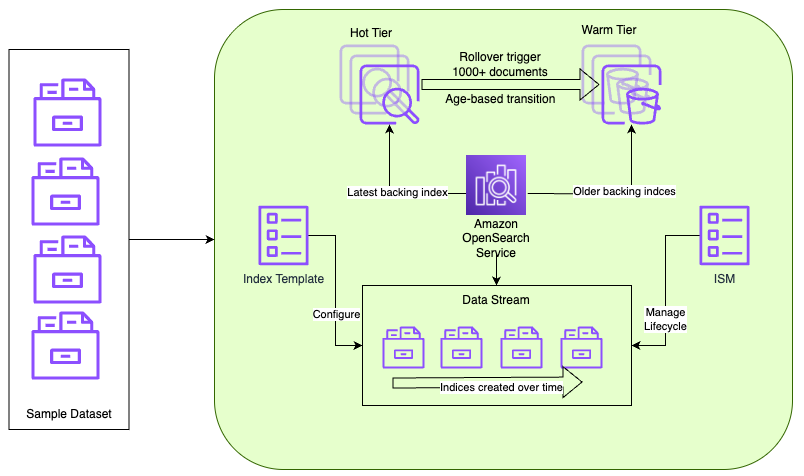
To solve these systemic issues, Amazon OpenSearch Service utilizes an abstraction layer known as data streams. A data stream simplifies the ingestion process by providing a single, consistent endpoint for all write operations. Behind this endpoint, the service automatically manages a series of "backing indices."
When a data stream is implemented, the application sending the logs does not need to know the name of the specific index currently receiving data. It simply targets the data stream. The system then routes the data to the latest "write index." Once certain thresholds are met—such as index size or age—the system performs a "rollover," creating a new backing index for incoming data while the previous index becomes read-only. This ensures that no single index grows large enough to become a performance bottleneck.
Index State Management: The Engine of Automation
While data streams handle the routing of data, Index State Management (ISM) acts as the policy engine that governs the data’s lifecycle. ISM allows administrators to define custom policies that automate the transition of data through various storage tiers.
In a typical enterprise configuration, data moves through a "Hot-Warm-Cold" architecture:
- Hot State: This is the initial landing zone where data is indexed on high-performance NVMe drives. It is optimized for high-speed writes and frequent, low-latency queries.
- Warm State (UltraWarm): As data ages and its query frequency drops, ISM automatically migrates it to UltraWarm storage. UltraWarm uses a combination of Amazon S3 and a specialized caching layer to provide a cost-effective way to retain large amounts of data (up to 3 petabytes per cluster) while maintaining interactive query performance.
- Cold/Delete State: For long-term compliance, data can be moved to "Cold" storage, where it is detached from the cluster but remains searchable via a mount operation. Eventually, the ISM policy can trigger a permanent deletion once the data exceeds the organization’s retention window.
Chronology of a Standard Implementation
Implementing this optimized workflow involves a strategic four-step process that transitions a cluster from a manual indexing model to an automated, stream-based architecture.
Phase 1: Policy and Template Definition
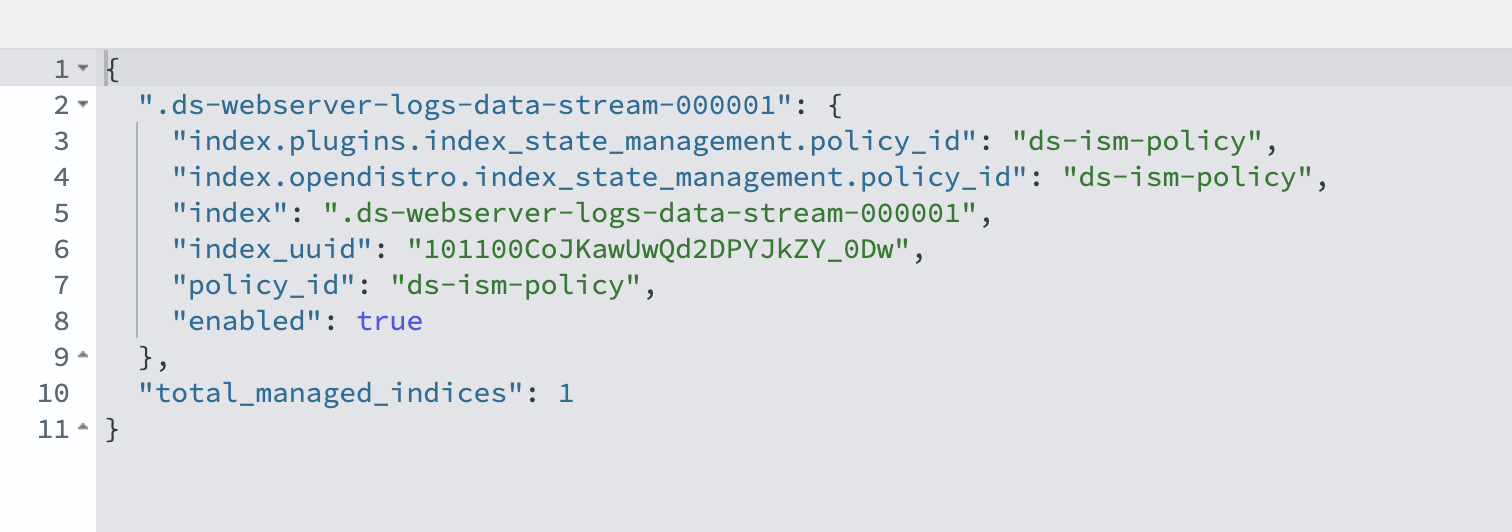
The process begins with the creation of an ISM policy. This policy acts as a blueprint, specifying that a rollover should occur when an index reaches a certain size (e.g., 50GB) or a specific document count. Following the policy definition, an index template is established. This template is critical because it tells OpenSearch which settings and mappings to apply to any new backing index created by the data stream. It links the ISM policy to the data stream by matching a specific naming pattern, such as webserver-logs*.
Phase 2: Stream Activation
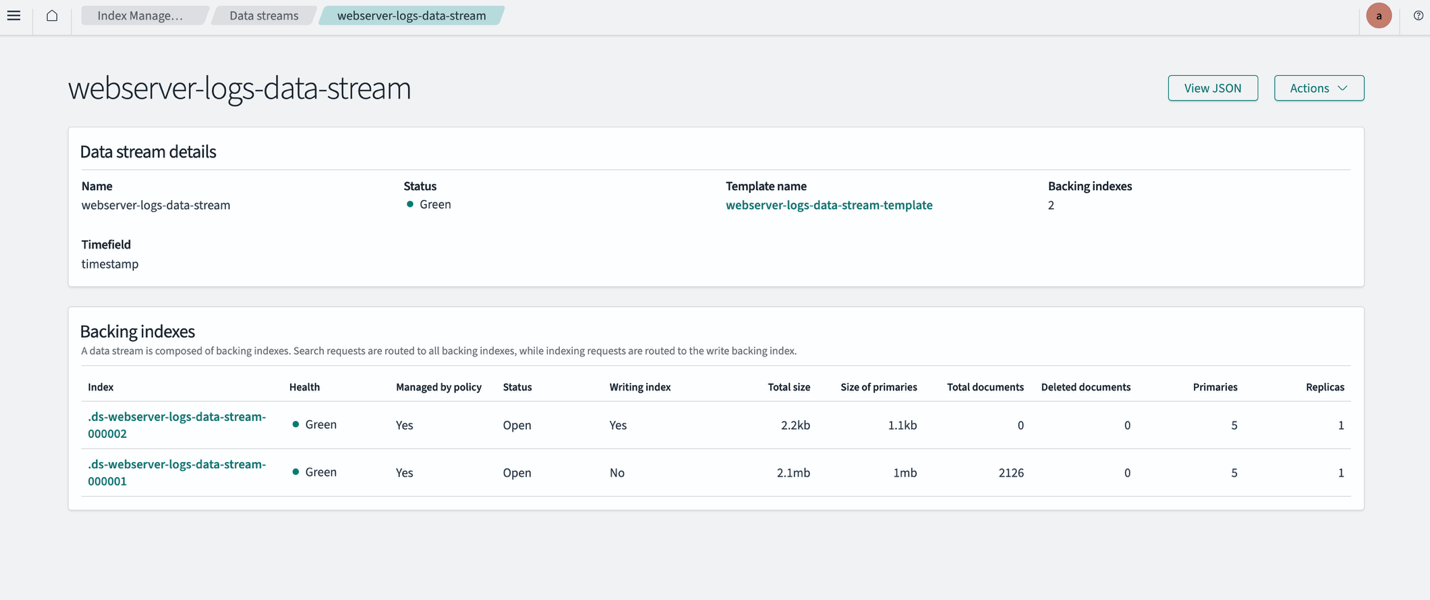
With the policy and template in place, the data stream is initialized. At this moment, OpenSearch creates the first hidden backing index. This index inherits the properties of the template, ensuring it is ready to receive high-velocity log data.
Phase 3: Data Migration and Reindexing
For organizations with existing data, the next phase is migration. Using the _reindex API, legacy data is moved into the new data stream. This is a delicate operation that often requires scripting to ensure data integrity—specifically, verifying that every document contains a valid timestamp, as data streams require a @timestamp field to function correctly.

Phase 4: Monitoring and Validation
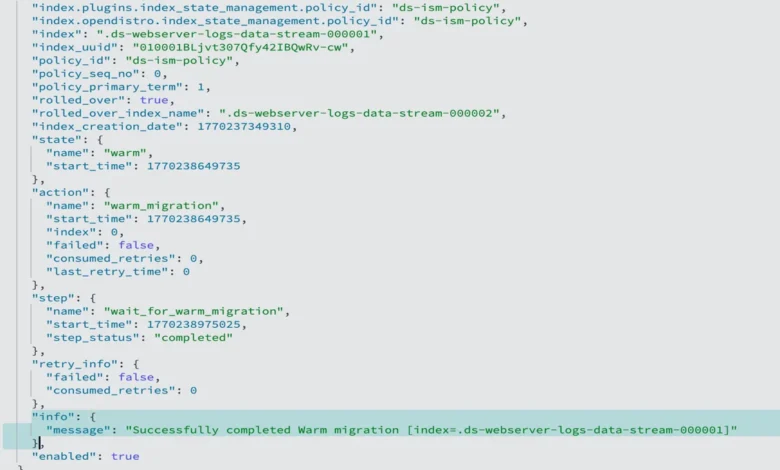
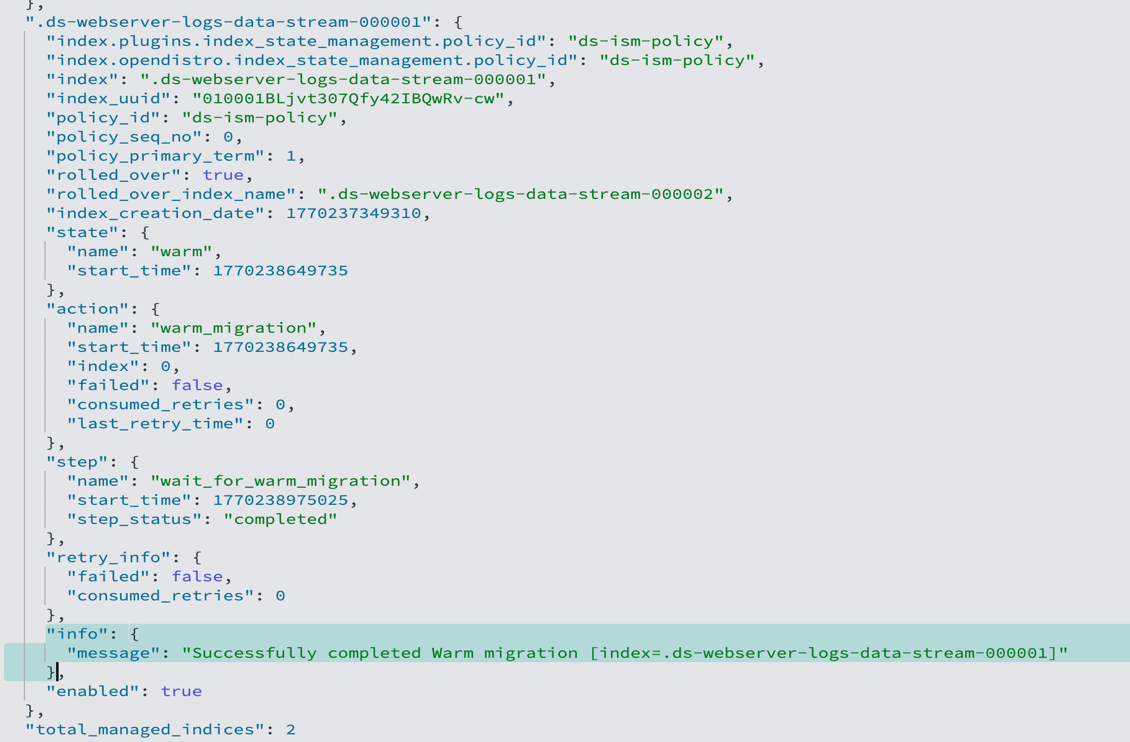
Once the stream is live, administrators monitor the "explain" API to verify that the ISM policy is executing. The system tracks the age and size of indices, moving them from "Hot" to "Warm" states automatically. In a production environment, this transition typically occurs after 24 to 48 hours, or when an index reaches the optimal shard size of 30-50GB.
Performance Data and Economic Impact
The shift to data streams and ISM is not merely a technical preference; it is a financial and operational necessity for large-scale deployments. Industry data suggests that moving aged data from Hot storage to UltraWarm can reduce storage costs by up to 90%.
Furthermore, by maintaining smaller, time-delimited backing indices, query performance is significantly improved. In a monolithic index, the engine must scan a massive shard to find relevant documents. In a data stream, the query engine can use "index-level pruning" to ignore backing indices that fall outside the requested time range. This reduces the I/O load on the cluster and ensures that dashboards in OpenSearch Dashboards (formerly Kibana) load rapidly, even when searching across months of historical data.
Market Context and Industry Reactions
The evolution of these features in Amazon OpenSearch Service follows the 2021 fork from Elasticsearch. Since then, AWS has focused heavily on "serverless" and "automated" features to differentiate its offering. Industry analysts from firms like Gartner and IDC have noted that the "operational tax" of managing distributed search engines is a primary concern for CTOs. By automating the shard management and tiering process, AWS is directly addressing the talent gap in specialized search engineering.
DevOps professionals have generally reacted positively to these updates. "The ability to set a policy once and forget about the underlying shard distribution allows our team to focus on data analysis rather than cluster maintenance," noted one lead site reliability engineer at a major fintech firm. The consensus among practitioners is that while the initial setup requires careful planning of mappings and templates, the long-term reduction in "pager duty" incidents related to full disks or crashed nodes is substantial.
Broader Implications for Cloud Infrastructure
The integration of ISM and data streams represents a broader trend in cloud computing: the move toward "intelligent" data management. We are entering an era where storage systems are no longer passive repositories but active participants in cost and performance optimization.
As machine learning becomes more integrated into OpenSearch, we can expect future iterations of ISM to use predictive analytics. Instead of static thresholds (like "rollover at 50GB"), the system may eventually predict incoming traffic spikes and proactively scale out backing indices to prevent latency before it occurs.
For now, the combination of data streams for ingestion and ISM for lifecycle management remains the gold standard for any organization running time-series workloads on AWS. It provides a scalable, cost-effective, and high-performance foundation that allows businesses to derive actionable insights from their data without being buried by the logistical weight of managing it.
Conclusion
The implementation of data streams and Index State Management in Amazon OpenSearch Service marks a significant milestone in the maturity of open-source search technologies. By automating the most complex aspects of index management—rollover, retention, and tiering—AWS has provided a path for organizations to scale their observability and analytics platforms sustainably. As data volumes continue to grow exponentially, these tools will be essential for maintaining the balance between deep historical insight and real-time operational awareness. Organizations that adopt these patterns early will find themselves better positioned to handle the data demands of the next decade, ensuring their infrastructure remains as agile as the markets they serve.
Related posts: