Running the Mythos Enhanced Coding Model Locally with llama.cpp and Pi: A New Era for AI-Powered Development

The landscape of artificial intelligence development is undergoing a significant transformation, marked by a growing emphasis on local, privacy-preserving, and cost-effective solutions. A notable advancement in this arena is the successful deployment of the Qwythos-9B-Claude-Mythos-5-1M reasoning and coding model on consumer-grade hardware, facilitated by the llama.cpp framework and integrated with the Pi coding agent. This development underscores a pivotal shift towards democratized access to powerful large language models (LLMs), enabling developers to harness advanced AI capabilities for local coding workflows, agentic development, and long-context tasks without reliance on external cloud services or expensive API calls.
The Rise of Local AI: Context and Motivation
For years, the cutting edge of AI, particularly in LLMs, has largely resided within the domain of colossal models requiring immense computational resources, typically hosted and accessed via cloud-based APIs. While offering unparalleled power, this model often entails significant costs, potential data privacy concerns, and latency issues, especially for iterative development cycles. The demand for more accessible and controlled AI environments has steadily grown, driven by developers seeking greater autonomy, enhanced security for proprietary code, and the ability to work offline.
This demand has fueled innovation in model quantization and efficient inference engines. Quantization techniques reduce the memory footprint and computational requirements of LLMs by representing their weights with fewer bits (e.g., from 32-bit floating-point to 4-bit integers), making them viable on less powerful hardware, including local GPUs and even CPUs. Projects like llama.cpp have emerged as critical enablers in this movement, providing highly optimized C/C++ implementations for LLM inference on a wide range of devices. Concurrently, the rise of AI coding agents, designed to assist developers directly within their local environments, has amplified the need for performant, locally executable models. The integration of Qwythos-9B with llama.cpp and Pi represents a synergistic convergence of these trends, offering a compelling solution for the modern developer.
Introducing Qwythos-9B-Claude-Mythos-5-1M: A Specialized Coding Powerhouse
At the core of this advancement is Qwythos-9B-Claude-Mythos-5-1M, a 9-billion parameter model built upon the robust Qwen3.5 architecture. Qwen, developed by Alibaba Cloud, is known for its strong performance across various benchmarks and its open-source availability, making it an excellent foundation for specialized derivatives. The "Mythos-enhanced" aspect suggests further fine-tuning or integration of specific datasets and architectural improvements aimed at optimizing its reasoning and coding capabilities. With 9 billion parameters, Qwythos-9B strikes an impressive balance: it’s considerably smaller than colossal models like GPT-4 or Claude 3, yet sufficiently large to exhibit sophisticated reasoning and generate high-quality code. This particular variant, Qwythos-9B-Claude-Mythos-5-1M, is specifically engineered for local coding workflows, agentic development, and handling long-context tasks, making it ideal for developers who require an intelligent assistant capable of understanding complex codebases and generating relevant solutions. Its design prioritizes efficiency and effectiveness on consumer hardware, a crucial factor for broad adoption.
Democratizing AI: The Role of llama.cpp
The llama.cpp project, originating from Georgi Gerganov, has been instrumental in making LLMs accessible to the masses. It is a highly optimized C/C++ library that allows for efficient inference of large language models, particularly those in the LLaMA family and its derivatives, on standard consumer hardware. Its key innovation lies in its efficient implementation of quantization techniques and its ability to offload model layers to the GPU while leveraging the CPU for remaining tasks, maximizing resource utilization. The introduction of the GGUF (GGML Universal Format) has further standardized and streamlined the process of running quantized models, making them easily transferable and compatible across different systems.
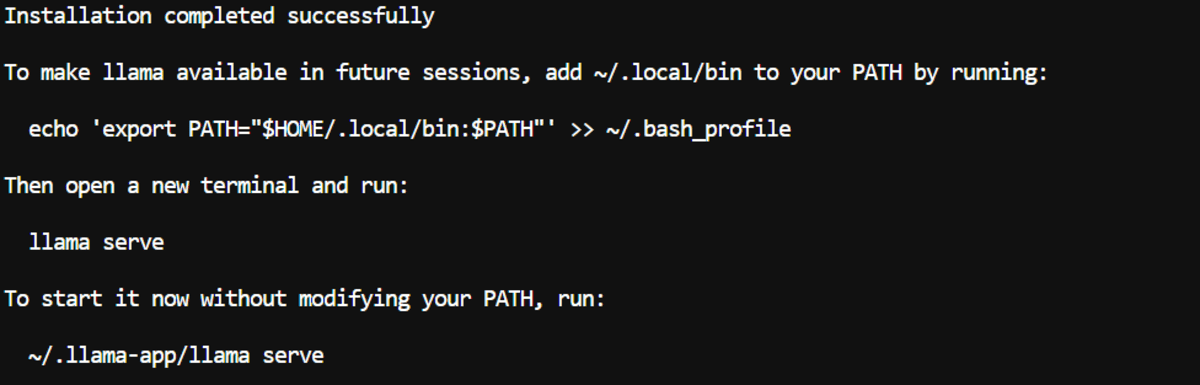
To leverage Qwythos-9B locally, the first step involves installing the official llama.cpp command-line interface (CLI). This CLI provides access to the llama command, which includes functionalities like llama serve for running a local inference server. The installation process is straightforward, typically involving a curl command to execute an installation script:
curl -LsSf https://llama.app/install.sh | shFollowing the installation, it is crucial to add the llama.cpp installation directory to the system’s shell path to ensure the llama command is recognized in any terminal session. This is commonly achieved by adding a line to the shell configuration file (e.g., ~/.bashrc for Bash or ~/.zshrc for Zsh) and then sourcing the file:
echo 'export PATH="$HOME/.local/bin:$PATH"' >> ~/.bashrc
source ~/.bashrc
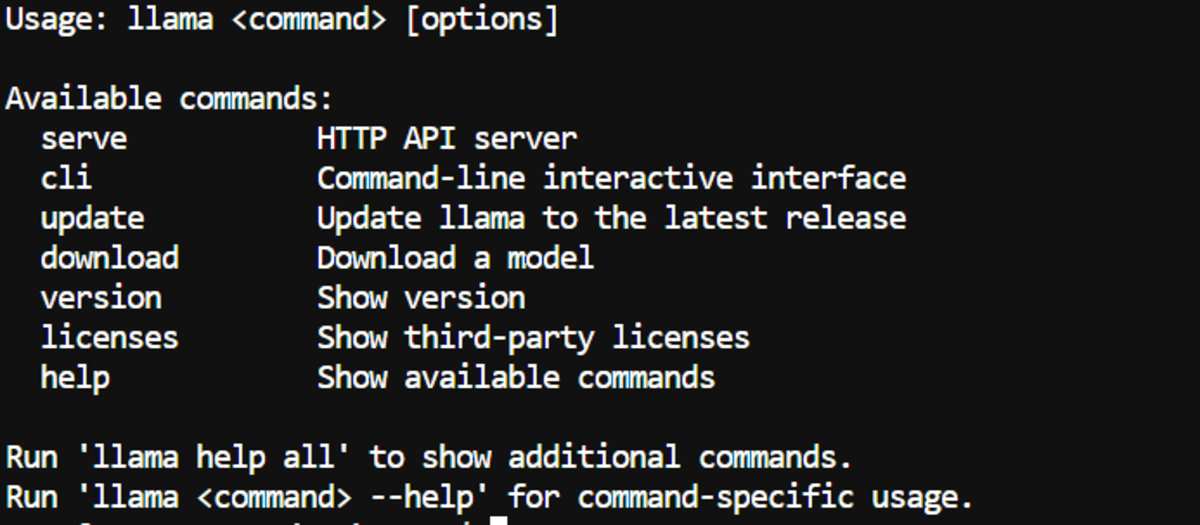
A quick verification, such as running llama --help, confirms successful installation by displaying the available commands and options. This foundational step establishes the local inference engine that will power the Qwythos model.
Optimizing Storage: Setting a Hugging Face Cache Directory
Before initiating the model, a pragmatic step involves configuring the Hugging Face cache directory. Models, especially those of 9 billion parameters, require substantial disk space for their files. On cloud instances or systems with limited default home directory space, specifying a cache location with ample storage is vital. This ensures that model downloads and subsequent caching operations proceed without interruption. The process involves setting the HF_HOME environment variable and creating the designated directory:
export HF_HOME="/workspace/huggingface"
mkdir -p "$HF_HOME"
For persistent configuration across new terminal sessions, this export command should also be added to the shell configuration file:
echo 'export HF_HOME="/workspace/huggingface"' >> ~/.bashrc
source ~/.bashrc
This simple yet effective measure prevents common disk space issues and contributes to a smoother setup experience.

Launching Qwythos-9B: Configuration and Performance
With llama.cpp installed and the cache configured, the next crucial step is to launch the Qwythos model. This is achieved using the llama serve command, which initiates a local server providing an OpenAI-compatible API endpoint. The command includes a comprehensive set of flags to optimize performance, memory usage, and model behavior. For the Q6_K MTP quantization of Qwythos-9B, the following command is recommended for systems with sufficient VRAM (e.g., 16GB on an RTX 4070 Ti Super):
llama serve
  -hf "empero-ai/Qwythos-9B-Claude-Mythos-5-1M-GGUF:MTP-Q6_K"
  --alias "qwythos-9b-mtp"
  --host 0.0.0.0
  --port 8910
  --n-gpu-layers all
  --ctx-size 100000
  --parallel 1
  --batch-size 1024
  --ubatch-size 512
  --flash-attn on
  --cache-type-k q8_0
  --cache-type-v q8_0
  --spec-type draft-mtp
  --spec-draft-n-max 6
  --threads 12
  --threads-batch 24
  --temp 0.6
  --top-p 0.95
  --top-k 20
  --repeat-penalty 1.05
  --jinja
  --perf
Upon its initial execution, llama.cpp intelligently downloads the specified model files from Hugging Face, leveraging the pre-configured HF_HOME directory. This process is followed by loading the model into GPU memory and starting the local server. A successful launch typically makes the model accessible via a local web interface (e.g., http://127.0.0.1:8910) and an OpenAI-compatible API endpoint (e.g., http://127.0.0.1:8910/v1).
Key Configuration Flags and Their Impact:

--n-gpu-layers all: This critical flag offloads all compatible model layers to the GPU, significantly accelerating inference by leveraging the parallel processing power of the graphics card. For systems with limited VRAM (e.g., 8GB), reducing the number of GPU layers or opting for a lighter quantization (like Q4_K_M) might be necessary.--ctx-size 100000: Allocates an impressive 100,000-token context window. This large context size is invaluable for complex coding tasks, allowing the model to process extensive codebases or long conversational histories. Users experiencing VRAM or RAM limitations should prioritize reducing this value.--flash-attn on: Enables Flash Attention, a highly optimized attention mechanism that improves speed and reduces memory usage on supported hardware, contributing to faster token generation.--cache-type-k q8_0and--cache-type-v q8_0: These flags specify 8-bit quantization for the Key and Value (KV) cache. The KV cache stores intermediate computations of the attention mechanism, and quantizing it helps reduce VRAM consumption without a significant degradation in output quality.--spec-type draft-mtpand--spec-draft-n-max 6: These parameters enable MTP (Multi-Token Prediction) speculative decoding. Speculative decoding is an advanced technique where a smaller, faster "draft" model generates a few tokens ahead, and the main, more accurate model then verifies them. This significantly boosts token throughput by reducing the computational load on the main model.spec-draft-n-max 6allows up to six speculative tokens per step, enhancing efficiency.--jinja: Instructsllama.cppto use the model’s embedded chat template, ensuring proper formatting and interaction with the model’s intended prompt structure.--perf: A useful diagnostic flag that prints performance statistics, including token throughput, allowing users to monitor and optimize their setup.
On an RTX 4070 Ti Super with 16GB of VRAM, the Q6_K variant achieved approximately 81.74 tokens per second. This demonstrates that even with a locally run model, highly efficient inference is achievable, providing a responsive and productive development experience.
Enhancing Workflow: Pi as a Local Coding Agent
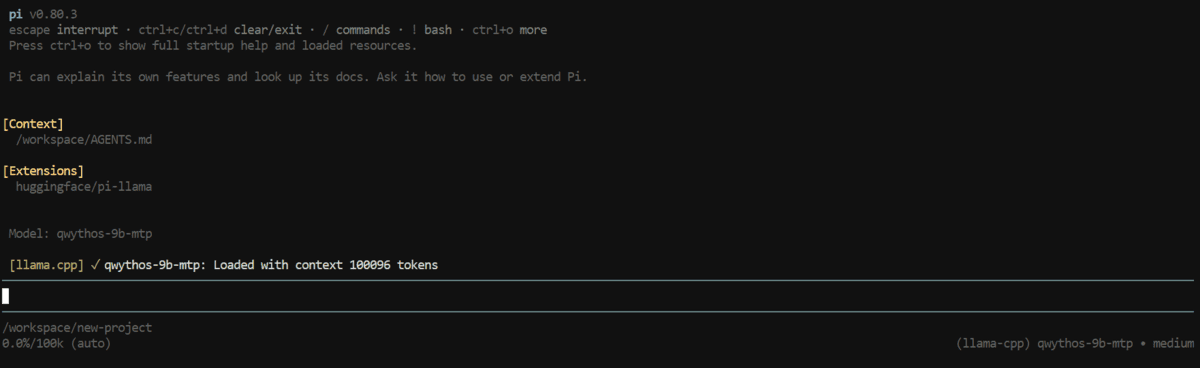
The true power of a locally running LLM for development is unleashed when integrated with an intelligent coding agent. Pi, developed by Hugging Face, is an innovative coding agent designed to interact with developers, understand their requirements, and automate various coding tasks. The pi-llama plugin specifically enables Pi to connect to a local llama.cpp server, bypassing the need for external API keys and ensuring a fully localized workflow.
The installation of Pi follows a similar curl command pattern:
curl -fsSL https://pi.dev/install.sh | shSubsequently, the pi-llama plugin is installed from its GitHub repository:
pi install git:github.com/huggingface/pi-llamaBy default, pi-llama attempts to connect to a llama.cpp server on port 8080. Since the Qwythos server was configured on port 8910, it’s essential to set the LLAMA_BASE_URL environment variable before launching Pi:
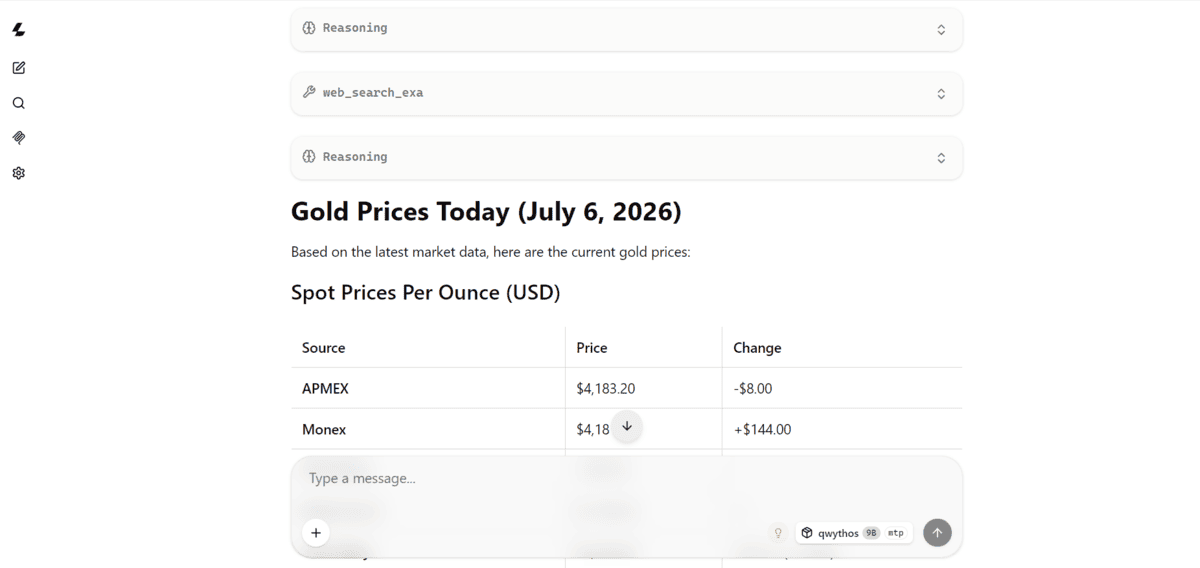
export LLAMA_BASE_URL="http://127.0.0.1:8910/v1"Finally, Pi can be launched, and within its interface, users can select the local qwythos-9b-mtp model alias using the /model command. Once selected, Qwythos-9B becomes the active coding agent, ready to assist with a multitude of development tasks. This setup creates a powerful, self-contained AI development environment, providing developers with an intelligent assistant that respects privacy and operates without recurring costs.
Practical Applications: Real-World Test Cases
To validate the practical utility of this local AI coding agent setup, two distinct coding tasks were performed: building a simple browser game and developing a Python CLI tool for CSV-to-Excel conversion. These tests are representative of common developer needs and highlight the model’s capabilities in front-end development, scripting, and file manipulation.
Building a Simple Browser Game: "Beat the AI"
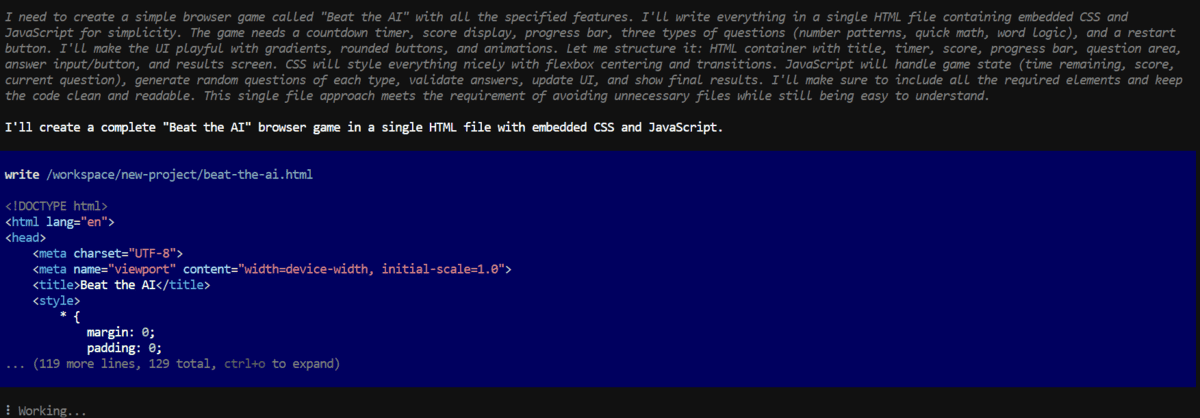
The first task involved prompting Pi to create a basic browser game named "Beat the AI." The requirements were clear: a 30-second timer, score tracking, a progress bar, multiple question types (number patterns, quick math, word logic), an HTML/CSS/JavaScript-only implementation, a restart button, a playful interface, and concise code within a single file.
The Qwythos-9B model, through Pi, successfully generated a complete game within a single index.html file, embedding both CSS and JavaScript. This approach aligns with the "avoid unnecessary files" requirement, simplifying project structure and ease of inspection. Pi then provided a summary of the implemented features, confirming the inclusion of the countdown, score tracking, progress bar, diverse question types, and the restart mechanism. Crucially, the model demonstrated its ability to not only generate code but also to understand and adhere to architectural constraints (single file, vanilla JS) and user experience requirements ("playful and polished"). Opening the generated HTML file in a browser confirmed the game’s functionality and polished appearance, demonstrating the local model’s capability to handle a complete front-end development task from conceptualization to a working prototype.
Building a CSV-to-Excel Python CLI
The second test focused on a more utilitarian task: building a Python command-line interface (CLI) to convert CSV files to Excel .xlsx format. Key requirements included accepting input/output file paths as arguments, preserving column headers, validating missing files, and providing clear success/error messages. Furthermore, the agent was tasked with creating a dummy CSV, using it to test the CLI, verifying the output, and summarizing the results.
Qwythos-9B through Pi delivered a Python script named csv2excel.py. It also generated a sample CSV file and then executed the conversion command (e.g., python csv2excel.py sample_data.csv output.xlsx). The subsequent summary from Pi detailed the script’s functionality, confirming its ability to handle file paths, preserve headers, and validate file existence. Manual inspection of the generated output.xlsx file further validated that the data, including column headers and rows, was correctly preserved. This test showcased the model’s proficiency in back-end scripting, file I/O operations, and adherence to CLI design principles, reaffirming its versatility across different development domains.
Broader Implications for Developers and the AI Ecosystem
The successful local deployment of Qwythos-9B with llama.cpp and Pi carries significant implications for the future of AI-powered development:
- Cost Efficiency: By running models locally, developers can drastically reduce or eliminate costs associated with cloud-based API calls, making advanced AI tools accessible even for budget-constrained projects or individual developers.
- Enhanced Privacy and Security: Local execution ensures that proprietary code and sensitive data never leave the developer’s machine. This is particularly crucial for enterprises, startups, and projects dealing with confidential information, addressing a major concern with cloud-based LLMs.
- Offline Capability: The ability to operate entirely offline liberates developers from internet dependency, enabling productivity in diverse environments and ensuring continuous workflow even with network interruptions.
- Customization and Fine-tuning: Local deployment offers greater control over the model. Developers can potentially fine-tune
Qwythos-9Bwith domain-specific datasets without the complexities and costs associated with cloud-based model hosting, leading to highly specialized and performant agents. - Rapid Prototyping and Iteration: The low latency of local inference, combined with the agentic capabilities of
Pi, facilitates rapid prototyping and iterative development cycles. Developers can experiment, test, and refine solutions much faster than with cloud-dependent setups. - Democratization of Advanced AI: This setup lowers the barrier to entry for utilizing sophisticated LLMs. Developers who might otherwise be priced out of cloud APIs can now access powerful AI assistants on their existing consumer hardware.
- Decentralization of AI: The trend towards local LLMs fosters a more decentralized AI ecosystem, reducing reliance on a few dominant cloud providers and promoting diversity in AI development.
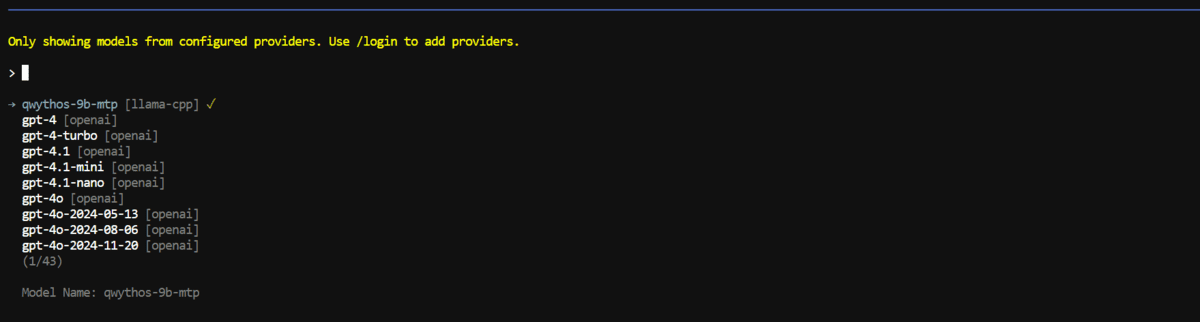
For developers seeking to further enhance their local AI coding environment, integrating additional tools like web search capabilities, knowledge bases (e.g., Context7), and other Pi integrations can significantly augment the agent’s effectiveness. These additions can provide the local LLM with real-time information and domain-specific context, bridging the gap between its pre-trained knowledge and the ever-evolving world of software development.
Conclusion
The Qwythos-9B-Claude-Mythos-5-1M model, running efficiently on consumer hardware via llama.cpp and integrated with Pi, represents a significant milestone in the journey towards accessible and powerful AI development. Its performance in diverse coding tasks, from front-end game development to back-end utility scripting, demonstrates its readiness for everyday developer workflows. This local, privacy-respecting, and cost-effective approach empowers developers to build, innovate, and prototype with advanced AI, charting a new course for the future of software creation. As quantization techniques and inference engines continue to evolve, the capabilities of locally deployable LLMs are only expected to grow, further solidifying their role as indispensable tools in the modern developer’s toolkit.