Confluent Optimizes Data Streaming Infrastructure Through Strategic Migration to Amazon OpenSearch Service Optimized Instances

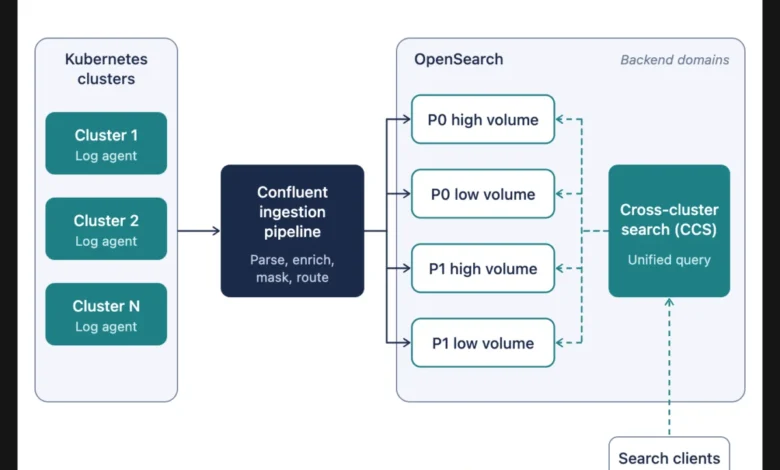
Operating one of the world’s most extensive data-streaming platforms requires an infrastructure capable of handling massive, continuous information flows. Confluent, the company founded by the original creators of Apache Kafka and now a key part of the IBM ecosystem, recently completed a major architectural migration of its internal logging systems. By transitioning its Amazon OpenSearch Service hot tier to purpose-built oi2 instances, the engineering team successfully modernized its backend to stay ahead of rapid, exponential data growth. This migration demonstrates a sophisticated shift in infrastructure philosophy: prioritizing ingestion efficiency per node over individual instance pricing.
The Challenge of Massive Scale
Confluent manages a complex fleet of data-streaming products, including Apache Kafka, Connect, and Flink. These services generate hundreds of terabytes of operational logs daily. Within the context of such high-volume ingest, the primary bottleneck for the platform’s logging infrastructure was indexing work. As the company’s internal telemetry grew, the engineering team reached a critical decision point. Rather than asking if the current workload could be shifted to lower-cost, generic hardware, the team focused on a more strategic query: "How much more ingest can we absorb per node, and how much operational headroom does that increased efficiency create?"
The answer lay in the adoption of the OpenSearch Optimized Instance family (oi2). While these instances carry a higher unit price compared to the previous-generation r6gd instances, the resultant gain in throughput allowed for a dramatic reduction in the total number of nodes required. The migration highlights a recurring theme in modern cloud architecture: true cost efficiency is often found in the performance density of the resource, not merely the sticker price of the server.
Chronology of the Modernization
The transition was executed in two distinct phases to ensure stability and precise measurement. In the first phase, the team integrated the new oi2 instances into the existing environment, allowing for a side-by-side performance comparison while the original r6gd fleet remained active. This allowed engineers to observe how the new architecture handled real-world production traffic without risking system outages.
Once the performance benefits were verified—specifically the increased indexing speed and reduced latency—the team proceeded to the second phase: consolidation. By decommissioning the legacy r6gd nodes and relying on the higher capacity of the oi2 units, Confluent achieved a significant reduction in the physical size of its cluster. This phased approach provided the empirical evidence needed to justify the shift, moving from a bloated, multi-node configuration to a streamlined, high-performance architecture.
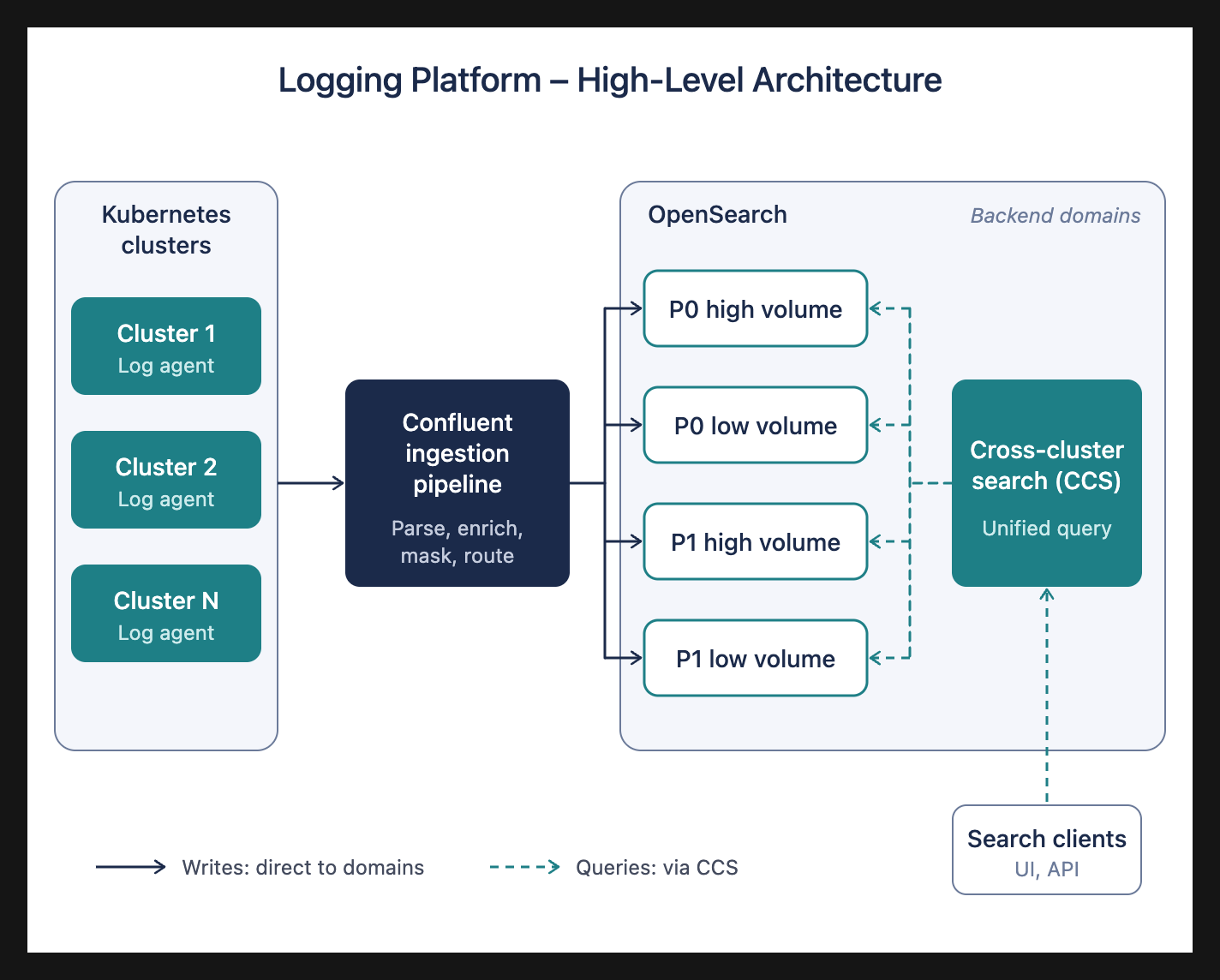
Technical Architecture and Storage Evolution
The previous architecture relied on r6gd instances, which are general-purpose Graviton2-based machines that utilized local NVMe storage as an add-on. In contrast, the oi2 family is specifically engineered for OpenSearch. In an oi2 configuration, local NVMe is the primary storage tier, eliminating the need for separate Amazon Elastic Block Store (EBS) volumes. This architectural change creates a direct, optimized path for indexing and merge I/O.
Furthermore, the oi2 instances utilize a physical replication model. Unlike logical replication, which requires each replica to perform independent indexing—effectively doubling the computational work—physical replication indexes data only on the primary copy. Segments are then copied to Amazon S3 for durability, ensuring that the system maintains "11 nines" of data persistence while freeing up CPU and network resources on the replicas. This shift fundamentally changed the throughput characteristics of Confluent’s cluster. Even when indexing rates appeared lower on dashboards due to the unique way physical replication is reported, the actual volume of data processed by the cluster increased significantly.
Data-Driven Results
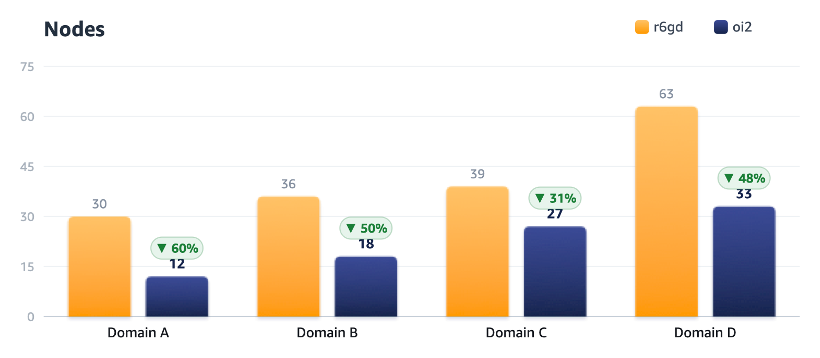
The empirical data collected by Confluent following the migration underscores the efficacy of the oi2 instances. Prior to the migration, the fleet consisted of 168 r6gd nodes. Following the transition to oi2, the company maintained the same log volume with only 90 nodes—a 46% reduction in total fleet size.

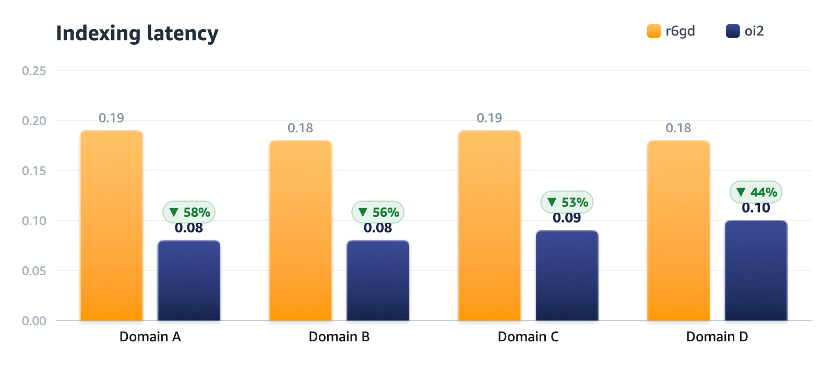
Specific domains showed even more drastic improvements. For example, a high-volume domain (Domain A) saw its node count drop from 30 to 12, a 60% reduction, while average CPU utilization dropped from 49% to 43%. Perhaps most importantly, indexing latency across all four analyzed domains was effectively cut in half, dropping from an average of 0.18–0.19 ms to 0.08–0.10 ms. Write queue depths, which previously exhibited double-digit backlogs, were reduced to near zero, indicating a highly responsive ingestion pipeline.
The financial implications were equally positive. Despite the higher per-node cost of the oi2 instances, the 46% reduction in the total number of nodes resulted in an estimated 18% decrease in overall hot-tier costs based on on-demand pricing. With the potential to transition to reserved instance pricing, the engineering team projects total cost savings in the range of 47% to 51% compared to the original r6gd baseline.
Industry Implications and Expert Commentary
This migration serves as a case study for organizations managing "ingest-bound" workloads. The success of the project reinforces a growing trend in cloud-native engineering: the move toward purpose-built infrastructure. As AWS and other providers continue to release instance types designed for specific workloads—such as log analytics, observability, or security monitoring—the incentive to move away from "one-size-fits-all" general-purpose hardware becomes increasingly compelling.
Industry analysts note that for companies like Confluent, where data is the core product, the cost of sub-optimal infrastructure isn’t just limited to the cloud bill. It extends to latency, developer productivity, and the ability to scale during sudden traffic spikes. By choosing instances that align with the specific storage and compute patterns of OpenSearch, the company has effectively "future-proofed" its logging pipeline, creating a buffer that allows for significant growth without requiring a proportional increase in administrative overhead or hardware spend.
Broader Impact on the Data Streaming Ecosystem
The collaboration between Confluent and the Amazon OpenSearch Service team also highlights the importance of deep integration between data streaming platforms and their underlying storage backends. By leveraging features such as the integration with Amazon S3 for durable storage, Confluent has simplified its disaster recovery and data retention strategies. The physical replication model, in particular, demonstrates how specialized software-hardware co-design can resolve traditional bottlenecks in distributed systems.
The lessons learned here are applicable to any enterprise managing high-velocity data. The "measure-first" philosophy adopted by the Confluent team—where heap utilization and latency metrics guided the consolidation process—is a replicable framework. It suggests that infrastructure optimization should not be driven by a target budget alone, but by a thorough understanding of the workload’s performance characteristics.
Future Outlook
As Confluent continues to scale its operations within the IBM ecosystem, the ability to maintain a lean, efficient infrastructure will be paramount. The migration to oi2 instances provides the company with a stable foundation for the next stage of its growth. While the immediate benefits of reduced costs and lower latency are clear, the secondary benefits—such as reduced operational complexity and improved system headroom—will likely provide the most value in the long term.
For teams currently evaluating their own OpenSearch deployments, the Confluent experience offers a clear roadmap: evaluate the specific I/O patterns of your workload, leverage purpose-built instance types like oi2 that prioritize throughput and storage efficiency, and always maintain a data-first, measurement-heavy approach to architecture changes. The shift from general-purpose to optimized instances is no longer just an optional upgrade; it is becoming a critical component of cost-effective, high-scale cloud operations. By focusing on the efficiency of each unit of work rather than the individual cost of the resource, organizations can unlock both significant financial savings and improved performance at scale.