Seamless Identity Propagation for Enterprise AI Agents Using Amazon Bedrock AgentCore Gateway and Microsoft Entra ID

Artificial intelligence agents interacting with enterprise application programming interfaces on behalf of corporate users must maintain accurate user identity tracking throughout the request chain to ensure robust security and accountability. Historically, without dedicated identity propagation mechanisms, inbound API calls from automated agents routinely arrived at downstream corporate services presenting the application’s generic credentials rather than the individual credentials of the user who originally authorized the action. This operational gap severely disrupted historical audit trails, inadvertently bypassed strict user-level access controls, and fundamentally violated standard security frameworks such as the principle of least privilege. To resolve these vulnerabilities, organizations are increasingly adopting advanced middleware and gateway technologies designed to bridge enterprise identity providers and cloud-native artificial intelligence infrastructure.
The release of platform capabilities within Amazon Bedrock AgentCore provides developers and systems architects with a scalable environment to build, connect, and optimize artificial intelligence agents across virtually any framework or model. A primary feature of this platform, Amazon Bedrock AgentCore Gateway, introduces native support for on-behalf-of token exchange mechanisms integrated directly with identity providers like Microsoft Entra ID. By leveraging this architecture, an artificial intelligence agent can successfully execute queries against complex downstream platforms—such as the ServiceNow REST API—while preserving the exact identity and permissions profile of the calling user. System administrators configure the required token exchange parameters directly on the gateway target, allowing the gateway to handle complex credential translations transparently on every individual request without requiring custom interception code. Furthermore, this architectural pattern can be generalized and applied across nearly any corporate REST API protected by standard OAuth protocols, greatly simplifying enterprise integration efforts.
Background Context and Evolution of Agentic Security
The rapid proliferation of generative artificial intelligence and autonomous software agents within corporate environments has radically altered how enterprise workflows are automated. Early iterations of enterprise chatbots and automated assistants typically operated using elevated, blanket service accounts to interact with internal business applications like customer relationship management platforms and enterprise service management suites. While functionally straightforward, this approach created massive security blind spots. Security auditors found it nearly impossible to trace specific data modifications or retrieval requests back to human operators, exposing enterprises to unauthorized data exfiltration and compliance failures.
As regulatory frameworks governing data privacy and operational security tightened globally, the demand for fine-grained access control within artificial intelligence workflows reached a critical inflection point. Industry analysts noted that deploying autonomous agents without native identity propagation was equivalent to distributing master administrative keys to every desktop user. The introduction of protocol-level token exchange gateways addresses this structural deficiency by enforcing zero-trust principles at the API perimeter. By mapping inbound authorization tokens directly to downstream service scopes, organizations can harness the productivity benefits of artificial intelligence agents while maintaining strict adherence to internal compliance mandates and governance policies.
Architecture and Mechanics of the On-Behalf-Of Token Exchange
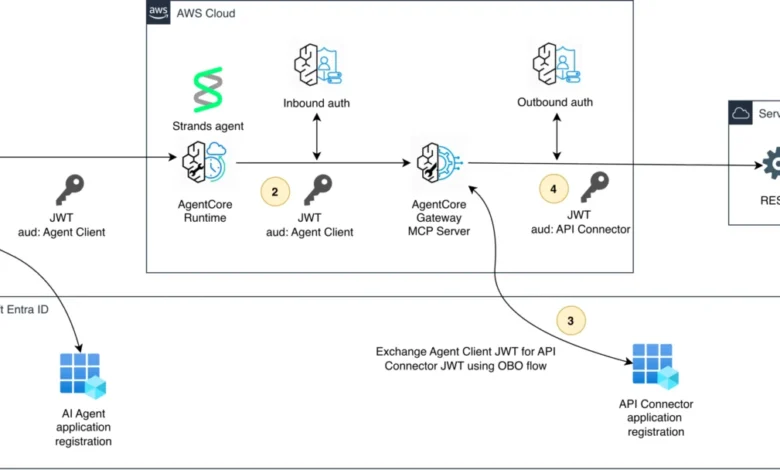
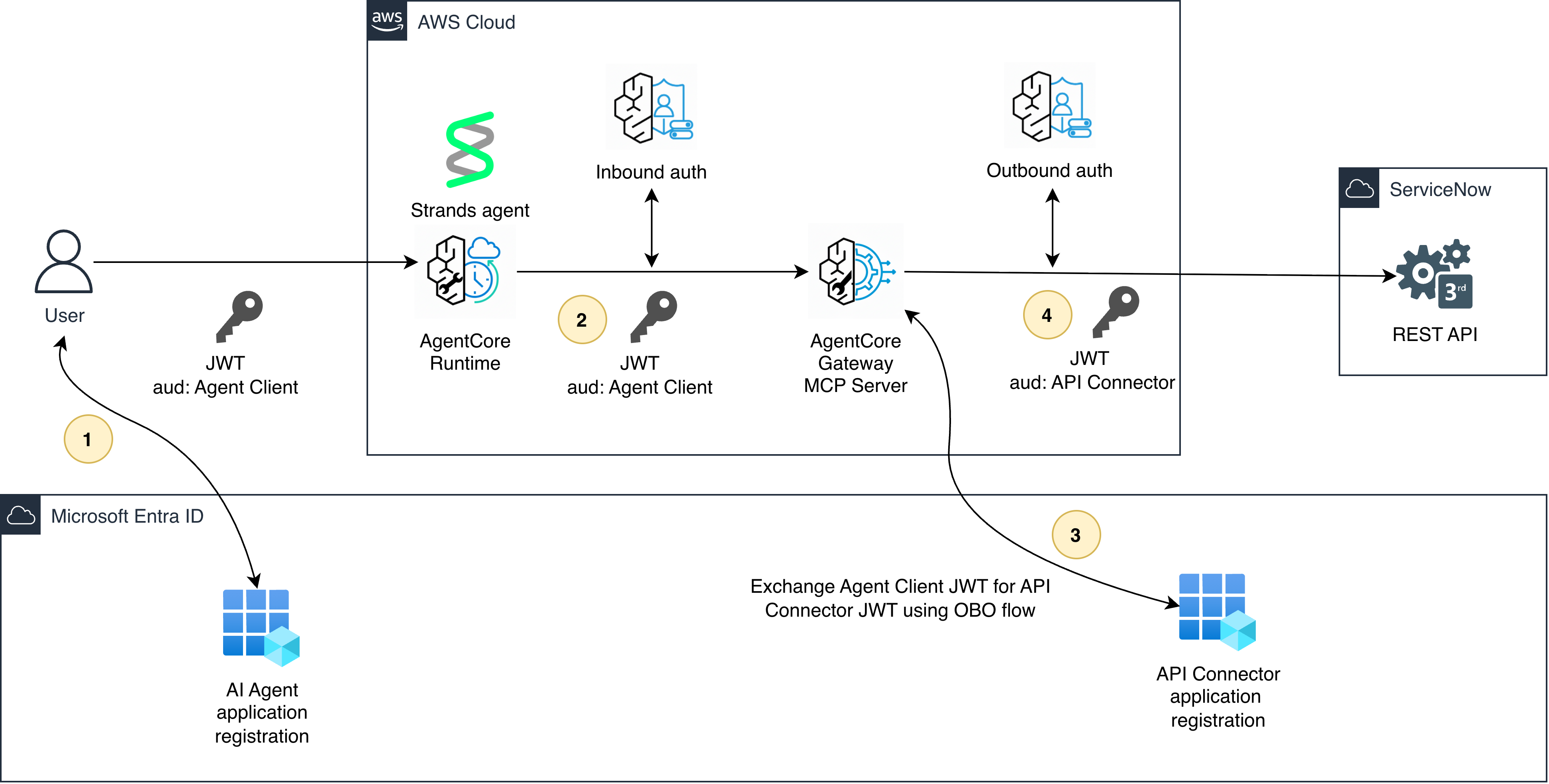
The end-to-end solution architecture spans multiple distinct technological domains, primarily integrating AWS infrastructure, Microsoft Entra ID, and third-party enterprise platforms like ServiceNow. The operational workflow begins when an authenticated human user acquires a JSON Web Token to invoke the enterprise AI agent. The agent subsequently authenticates to the AgentCore Gateway using a distinct token scoped specifically to its own application registration. Upon receiving this request, the gateway executes an on-behalf-of token exchange with the Microsoft Entra ID token endpoint, presenting the inbound user token alongside the agent’s client credentials and the target API scope.
Microsoft Entra ID validates that the original user previously consented to the delegation framework, and subsequently issues a brand-new token scoped exclusively for the ServiceNow API connector, ensuring all foundational user claims remain entirely intact. When ServiceNow ultimately receives the downstream request, it evaluates a valid token whose preferred username claim maps directly to an active user record within the platform, thereby enforcing that individual’s precise role-based access permissions. In production environments, enterprise security teams frequently augment this identity flow by pairing Amazon Bedrock AgentCore Gateway with Amazon Bedrock Guardrails, establishing an automated mechanism to filter harmful content and validate both agent inputs and outputs prior to execution.
Configuring Microsoft Entra ID and ServiceNow for Native Integration
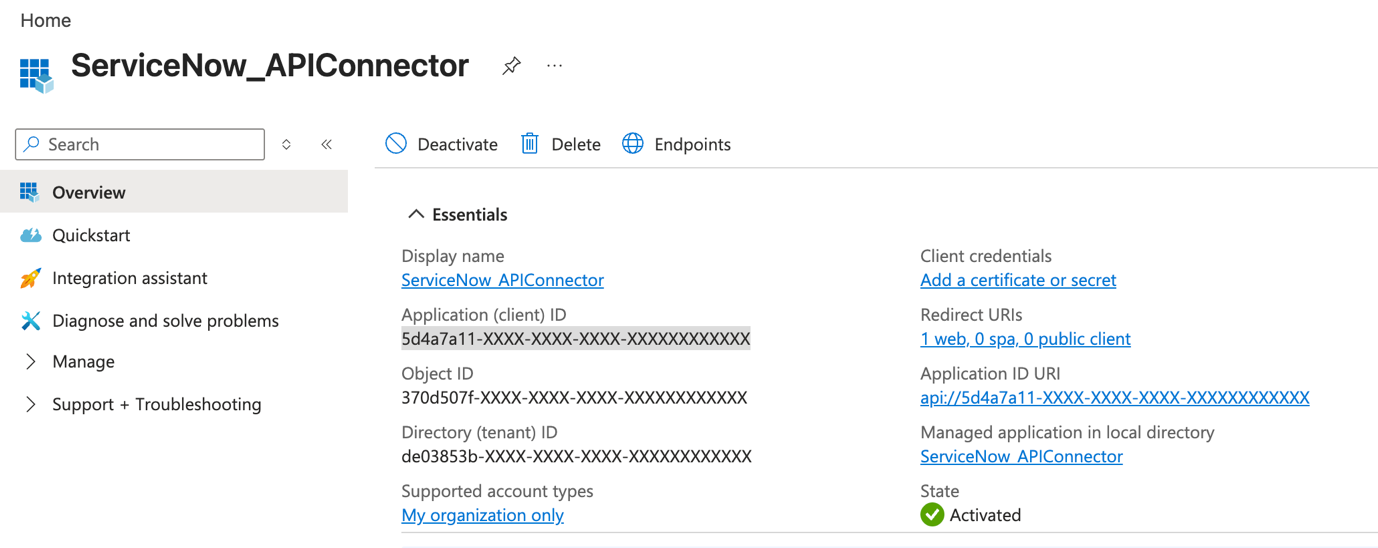
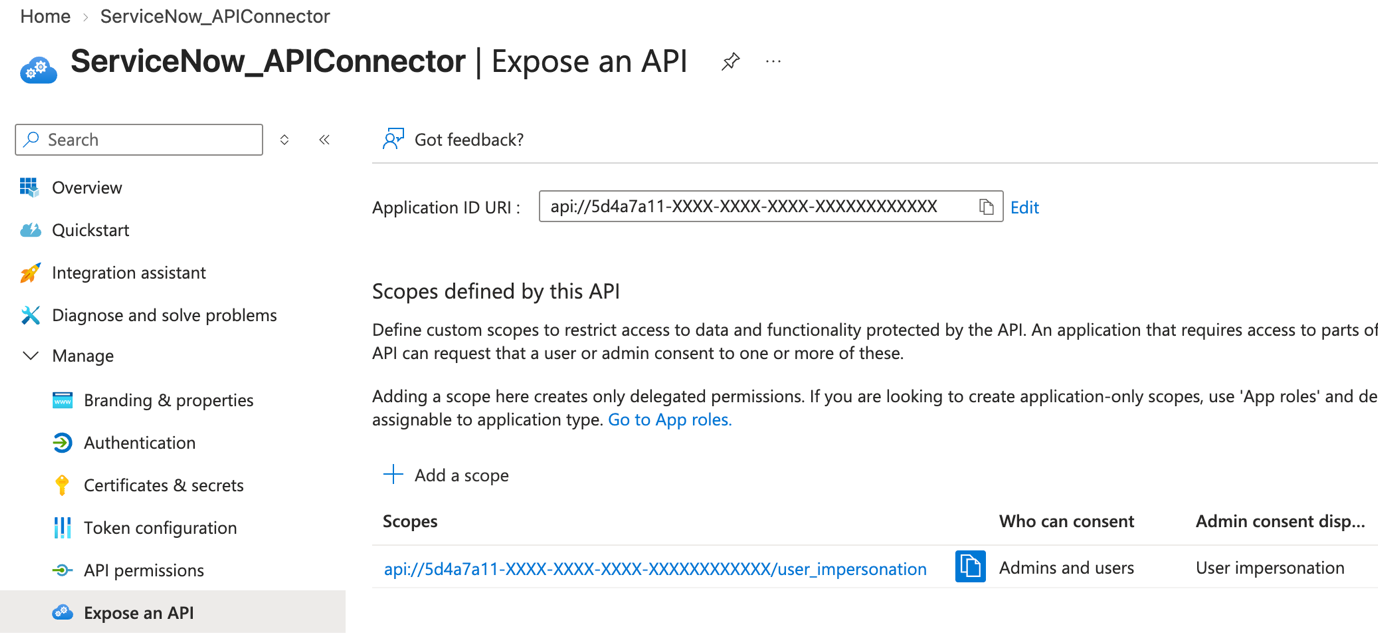
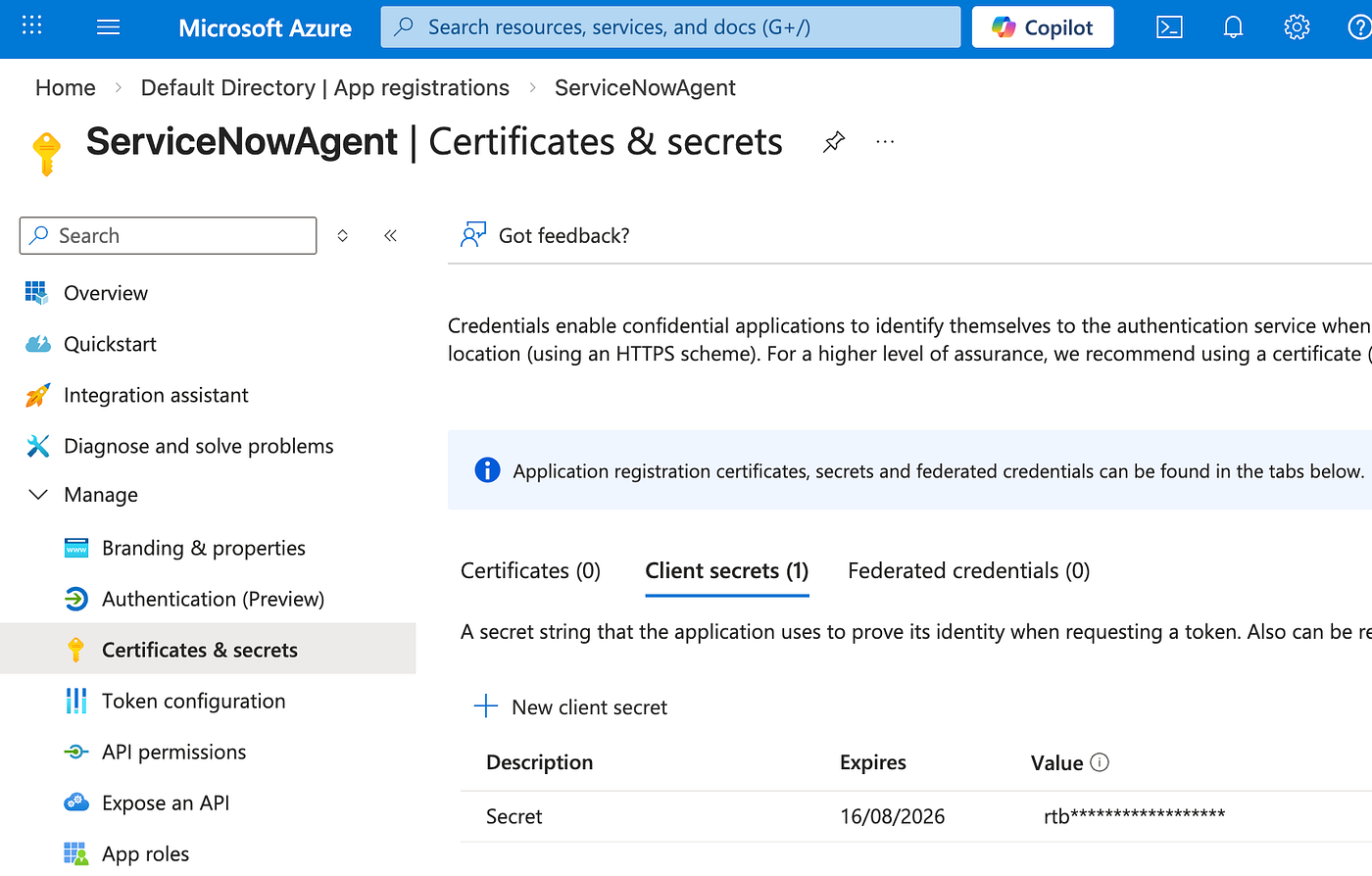
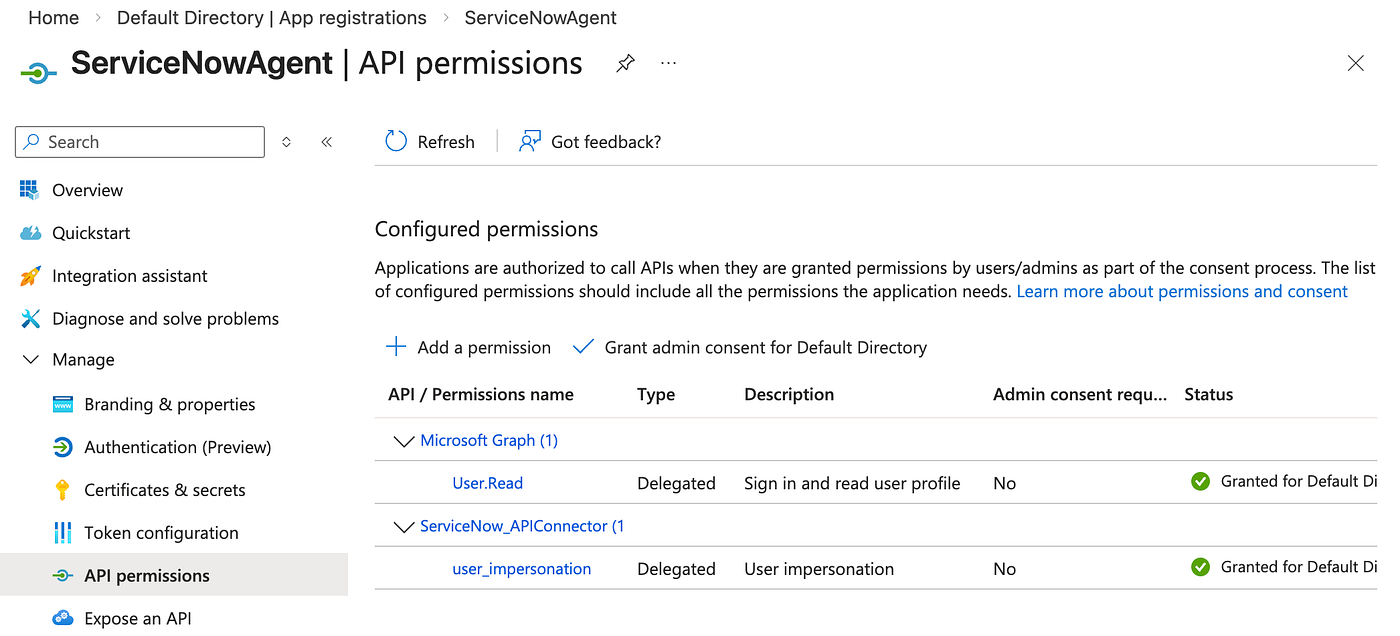
Implementing this identity propagation pipeline requires coordinated configuration across both the enterprise identity provider and the target application platform. In Microsoft Entra ID, administrators begin by establishing a dedicated application registration to represent the ServiceNow API connector. Within this registration, developers expose an application programming interface scope—commonly designated as user_impersonation—using the default application identifier uniform resource identifier. This specific scope serves as the target for the on-behalf-of token exchange flow.
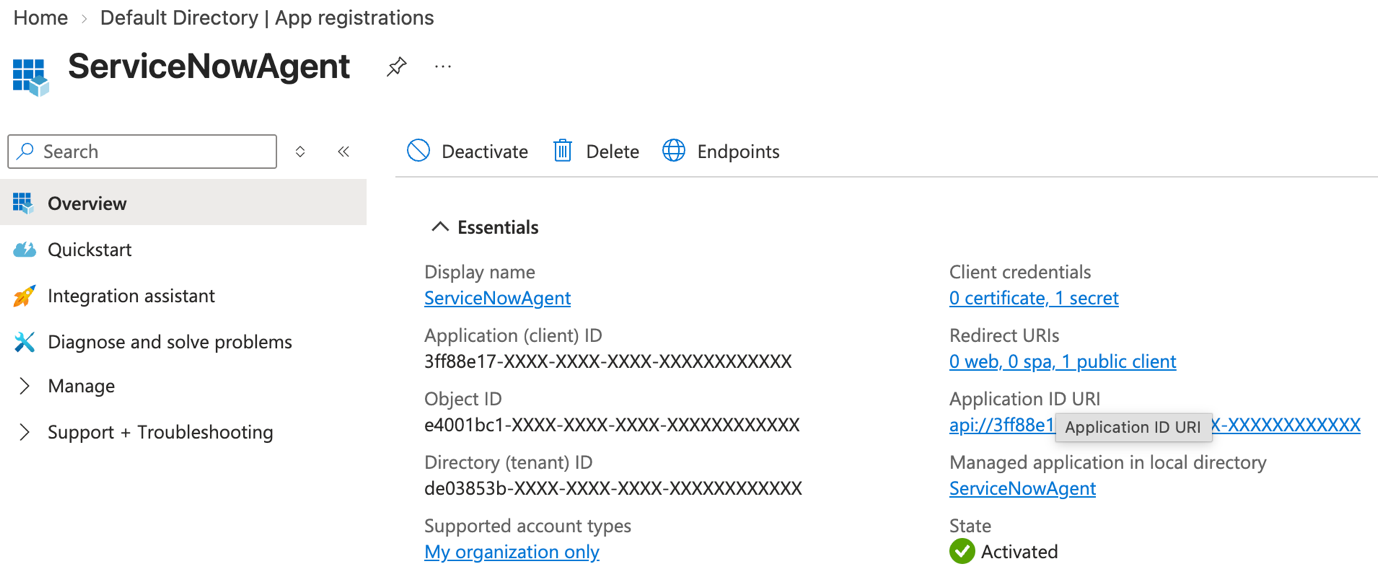
Next, a separate application registration is established for the artificial intelligence agent itself, accompanied by a secure client secret that enables the gateway to authenticate during the exchange process. API permissions are then assigned to the agent application, granting it explicit authorization to call the ServiceNow API connector application. These configuration steps mirror standard enterprise application integration practices, ensuring minimal friction for identity and access management teams familiar with Microsoft’s ecosystem.
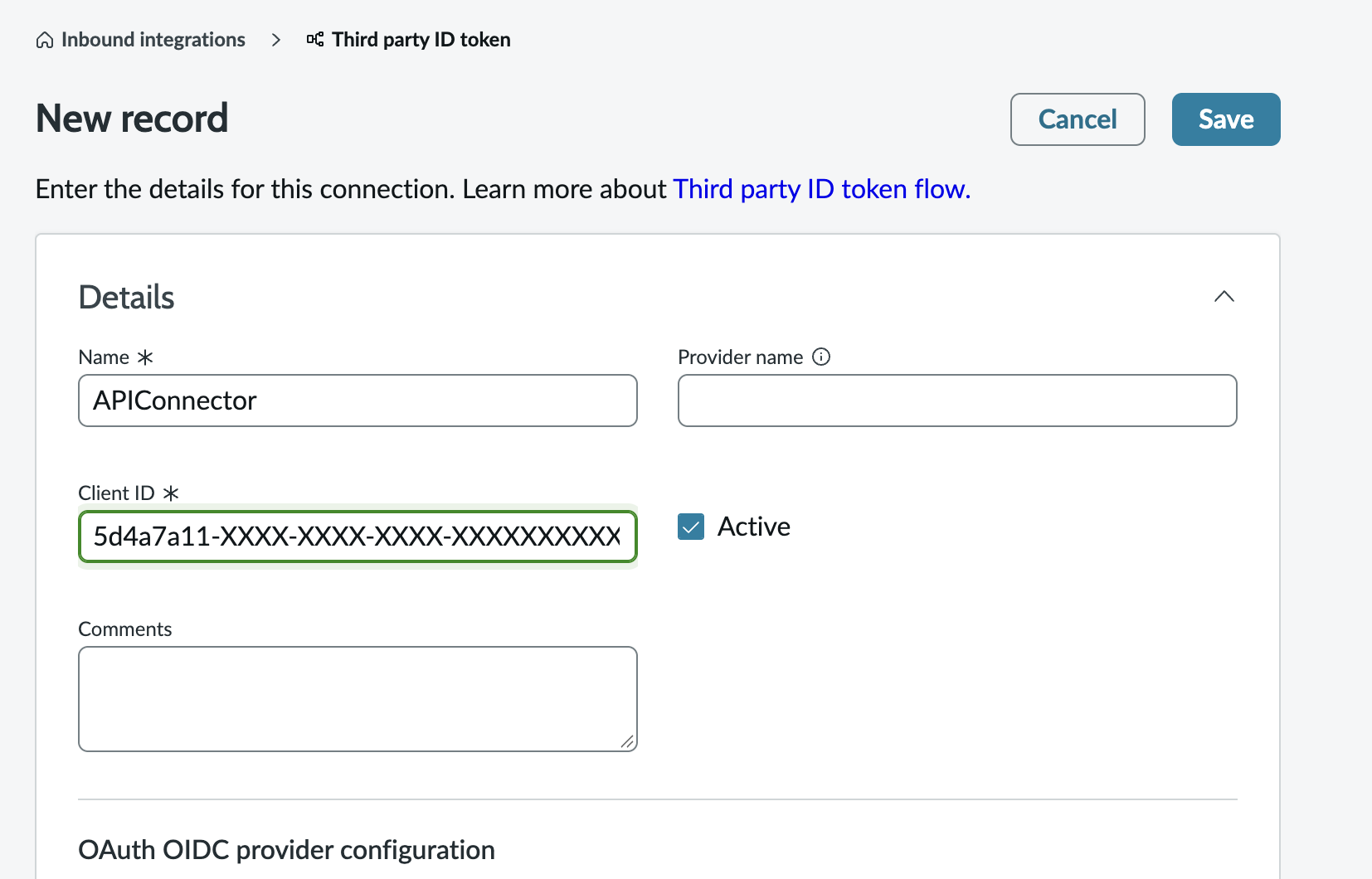
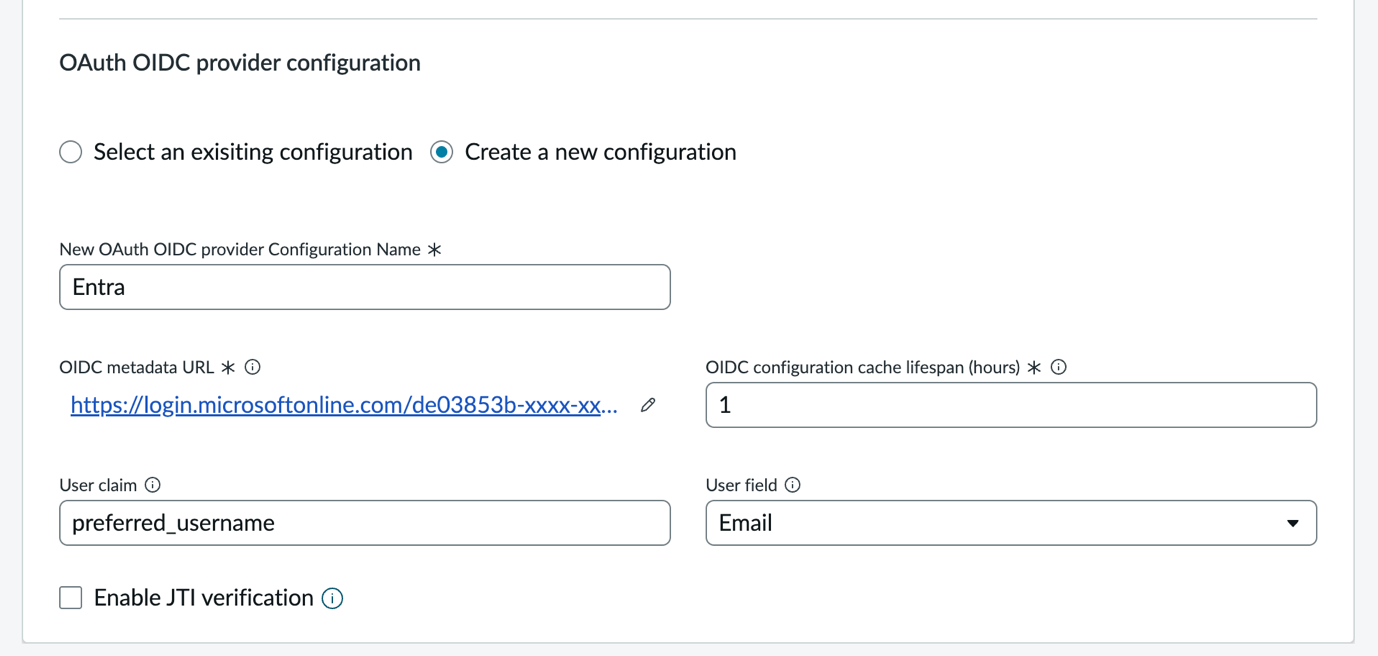
Parallel adjustments are required within the ServiceNow administrative console. Administrators navigate to the inbound integrations module under system OAuth, creating a new integration configuration designed to accept third-party ID tokens issued by OpenID Connect-compliant identity providers. By linking the client identifier generated within Entra and supplying the appropriate OpenID Connect metadata URL, ServiceNow establishes trust with the identity provider. Furthermore, administrators map user claims—such as mapping the preferred_username claim to the enterprise email field in ServiceNow—and configure appropriate authentication scopes restricted specifically to necessary interfaces like the Table API. This ensures that even if an agent successfully authenticates, its operational capabilities remain rigidly bounded by the individual user’s assigned permissions.
Deploying and Testing AgentCore Gateway
Configuring Amazon Bedrock AgentCore Gateway to manage the on-behalf-of exchange natively involves a structured series of administrative actions within the AWS Management Console. Administrators first establish an outbound authorization configuration by selecting a customized provider, supplying the agent application’s client identifier and secret, and referencing the Microsoft Entra discovery endpoint. Crucially, administrators must select the JWT authorization grant within the additional configuration parameters, instructing the gateway to utilize token-based grant types during downstream communication.
When creating the gateway instance, selecting the appropriate messaging control protocol version—specifically version 2025-11-25 or later—is mandatory to enable native on-behalf-of capabilities. Inbound identity is established by referencing the existing identity provider configurations and integrating the application identifier designated for the agent. The final step involves defining a gateway target pointing to the enterprise REST endpoint, supported by an inline OpenAPI specification that outlines available operational tools, such as retrieving incident records. Within the target’s outbound authorization settings, administrators configure a token exchange grant, explicitly defining the target scope and adding the custom parameter requested_token_use set to on_behalf_of. This specific parameter acts as the operational trigger for the identity provider to execute the token translation.
Industry Implications and Future Outlook
The deployment of native token exchange mechanisms within artificial intelligence gateways represents a significant maturity milestone for enterprise cloud architecture. By eliminating the necessity for custom-built intermediary code, such as AWS Lambda interceptors designed to manually parse and exchange tokens, organizations can drastically reduce their maintenance overhead and potential security attack surfaces. Industry observers note that as artificial intelligence agents transition from experimental productivity tools to core operational infrastructure, seamless adherence to existing enterprise security perimeters will determine the pace of enterprise adoption.
Analysis of these architectural patterns indicates that platforms uniting hyperscale cloud providers with specialized identity and workflow ecosystems will dominate enterprise deployments. The ability to guarantee that an autonomous agent operates under the strict legal and technical permissions of a human actor mitigates significant legal and operational risks associated with automated system access. As organizations continue to scale their generative artificial intelligence footprints, standardized approaches to identity propagation established by frameworks like Amazon Bedrock AgentCore Gateway will serve as the foundational bedrock for secure, compliant, and auditable enterprise automation.