Design for players, not metrics: The evolution of user engagement and the shift toward Gamification 2.0

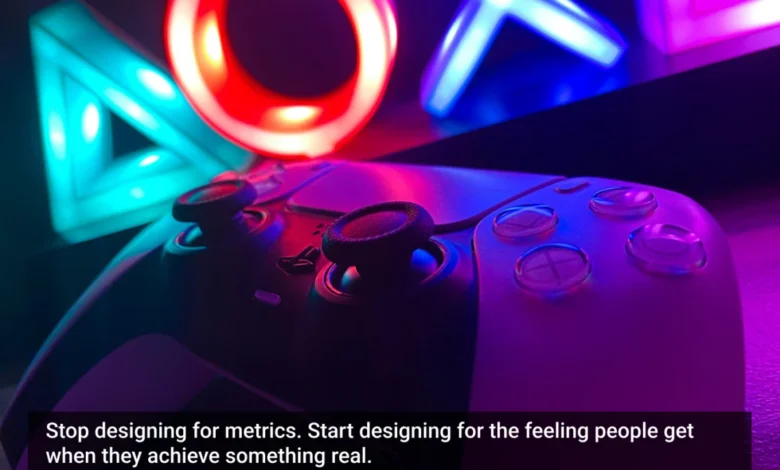
For decades, the digital landscape has witnessed a rapid transformation of gaming from a niche hobby into a dominant pillar of global culture. From the pixelated simplicity of 8-bit sprites to the hyper-realistic 3D environments of the modern era, and from the tactile clatter of arcade cabinets to the seamless accessibility of cloud gaming, the industry has fundamentally reshaped how humans interact with technology. Yet, beneath the surface of these technological advancements, one core principle has remained constant: the most enduring games succeed not because they award points or leverage external incentives, but because they offer experiences that are inherently worth having.
This realization is currently forcing a significant pivot within the software development industry. Product teams, once hyper-focused on extrinsic motivators such as leaderboards, streaks, and superficial reward schedules, are beginning to recognize the diminishing returns of "gamification" that relies on psychological manipulation. Industry analysts and behavioral psychologists now identify this as the transition toward "Gamification 2.0," a framework that prioritizes intrinsic motivation, user agency, and the development of genuine skills.
A Chronology of the Gamification Era
The history of gamification as a corporate strategy can be traced back to the early 2010s, following the widespread adoption of smartphones. As mobile applications flooded the market, developers sought ways to increase Daily Active Users (DAU) and retention rates.
- 2010–2014: The Emergence of the "Skinner Box": Inspired by behavioral psychology, early gamification strategies focused on intermittent reinforcement. Companies implemented daily login bonuses, progress bars, and "streak" mechanics to induce habit formation.
- 2015–2018: The Peak of Quantifiable Engagement: During this period, A/B testing reached its zenith. Platforms began treating user behavior as a series of data points to be optimized, leading to a rise in "dark patterns"—design choices intended to trick users into performing actions they might not otherwise choose.
- 2019–2022: The Crisis of Trust: Users began to express increased fatigue with notifications and artificial pressure, often termed "notification anxiety." Data from consumer research firms indicated that while these tactics maintained short-term retention, they severely damaged long-term brand loyalty and user sentiment.
- 2023–Present: The Shift to Intrinsic Value: Current trends indicate a movement away from manipulative loops. Leading platforms, such as Notion and various creative sandbox environments, have demonstrated that high-value utility—combined with meaningful agency—outperforms artificial reward systems.
Supporting Data and Behavioral Analysis
The efficacy of traditional gamification is increasingly being questioned by both designers and economists. A meta-analysis of engagement metrics suggests that while extrinsic rewards (points, badges, leaderboards) can drive short-term activity, they often undermine intrinsic interest. This phenomenon, known as the Overjustification Effect, occurs when an expected external incentive decreases a person’s intrinsic motivation to perform a task.
Furthermore, industry data from user retention studies highlights a stark divide. Apps that rely on "gamified" habit-forming triggers often suffer from high churn once the novelty of the rewards wears off. Conversely, products that prioritize "meaningful mastery"—where the user perceives an increase in personal capability—show higher retention rates over multi-year periods. For example, platforms that teach users tangible skills, such as coding, design, or project management, maintain deeper roots in a user’s daily life than those that simply reward "check-in" frequency.
Official Perspectives and Industry Reactions
The professional design community has become increasingly vocal regarding the ethical implications of "dark pattern" gamification. During the 2023 Game Developers Conference (GDC), several prominent designers argued that the focus on DAU metrics has led to a stagnation in creative product development.
"When we design primarily to satisfy a dashboard, we lose sight of the human on the other side of the screen," noted one lead product architect during a panel on user experience design. "If our primary goal is to ensure a user feels a sense of loss upon closing the app—the ‘broken streak’ feeling—we are no longer building tools. We are building traps."
Conversely, some marketing-focused stakeholders argue that in a crowded app ecosystem, subtle psychological nudges are necessary to capture initial attention. However, the prevailing consensus among design leaders is shifting toward a model that equates "retention" with "value creation." The argument is that if a product genuinely improves a user’s life, the need for artificial, anxiety-inducing reminders diminishes significantly.
The Core of Gamification 2.0: Dignity and Mastery
The philosophy behind Gamification 2.0 is rooted in the psychological concept of "flow"—a state of deep engagement where a user is fully immersed in an activity. Unlike manipulative loops, which create tension, flow creates satisfaction.
Successful applications of this new model focus on three pillars:
- Agency: Allowing users to set their own goals rather than forcing them to follow a linear, pre-determined path.
- Competence: Providing challenges that are difficult but fair, leading to a measurable increase in skill or knowledge.
- Connection: Fostering community through shared creation or collaborative problem-solving, rather than through competitive leaderboards that often create toxic or exclusionary environments.
This shift requires product teams to move away from the Pavlovian model—the "bell and pellet" approach—and toward a model of partnership. In this framework, the software is treated as a mentor or a collaborator. When a user completes a task in such an app, the reward is not a virtual badge, but the realization that they have mastered a new workflow, finished a complex project, or gained a deeper understanding of a subject.
Broader Implications for the Tech Sector
The implications of this shift are profound for the tech industry’s future. As privacy regulations tighten and users become more sophisticated in identifying manipulative software, the "attention economy" model—where the goal is to keep users glued to a screen at all costs—is becoming increasingly unsustainable.
Companies that pivot to Gamification 2.0 are positioning themselves for a future where "digital wellbeing" is a competitive advantage. By prioritizing the user’s long-term goals over their short-term compulsive behavior, these firms are cultivating a more loyal, less volatile user base.
The transition also presents a challenge to current product management education. The standard curriculum, which focuses heavily on growth hacking and behavioral modification, must now be balanced with instruction in human-centered design, ethics, and psychological well-being. Teams are being encouraged to ask not what they can extract from the user, but what they can offer in return for the user’s most valuable asset: their time.
The Path Forward: Designing for Potential
The ultimate test for any new digital feature is simple: Does it respect the user’s dignity? If an application’s engagement strategy relies on the user feeling ashamed for falling behind or anxious about a reset timer, it fails the standard of modern, responsible design.
As the industry matures, the focus will likely shift from the quantity of engagement to the quality of the experience. We are witnessing a departure from the era of the "Skinner box" toward an era of meaningful digital utility. By designing for human potential—for the desire to learn, to create, and to master—developers can create experiences that do not merely occupy the user, but actively empower them.
In this new paradigm, the success of an app is not measured by how many times a user clicks a button to satisfy an algorithm, but by how much more capable, creative, or connected that user feels after engaging with the software. This is the promise of Gamification 2.0: to treat the user not as a laboratory subject to be steered, but as a partner to be served. This approach, while more difficult to execute and harder to quantify, offers the only path toward sustainable, long-term success in an increasingly crowded and conscious digital world.