Tatiana Bilbao Estudio Unveils Borrowed Earth, a Disintegrating Rammed-Earth Installation at Art Omi

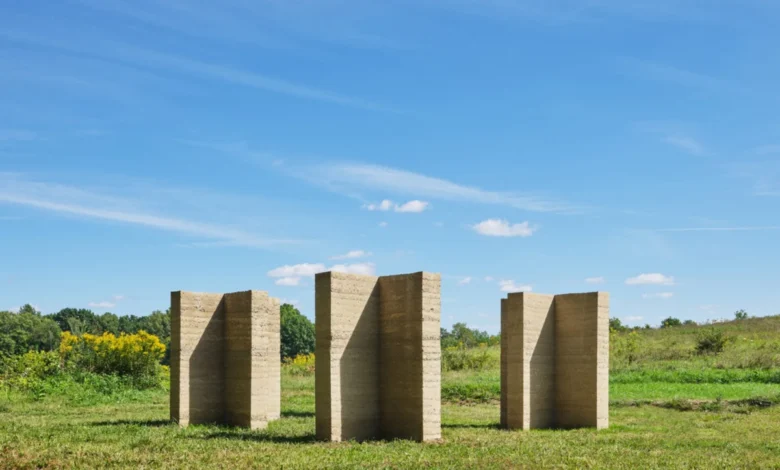
Renowned Mexico-based architecture practice Tatiana Bilbao Estudio has added a dynamic, ephemeral work to the landscape of the Hudson Valley, installing a large-scale outdoor exhibition titled Borrowed Earth at the Art Omi arts center in Ghent, New York. Designed to interact with the elements over time, the project uses compacted local soil shaped into architectural crosses, exploring the intersection of modern geometry, sustainable material science, and the inevitable cycle of decay.
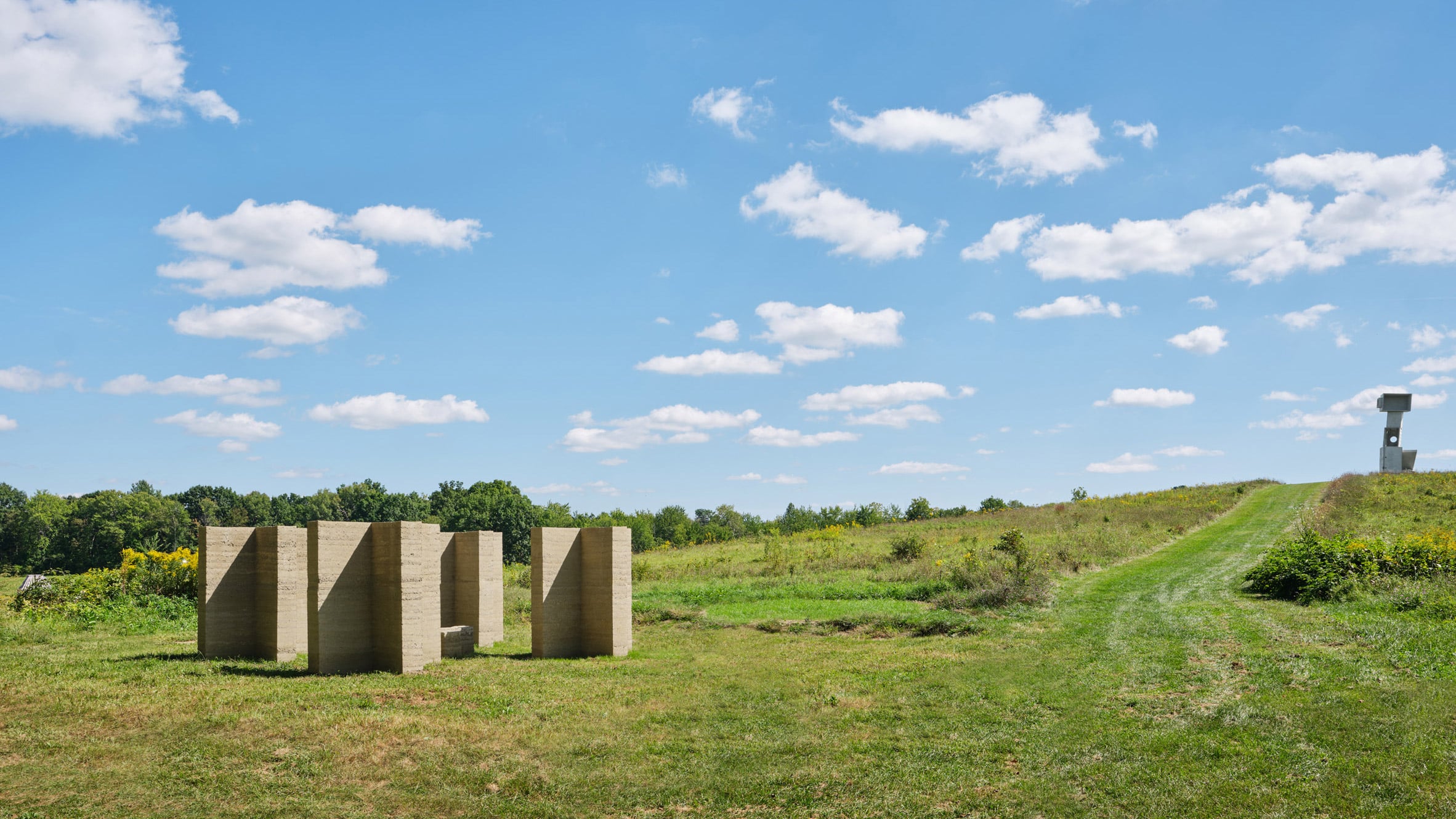
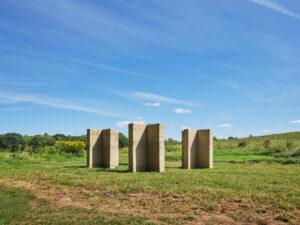
The installation consists of four primary 7.5-foot-tall rammed-earth columns featuring a cruciform footprint, anchored by a shorter, centrally placed cross-form element that doubles as a communal bench. Sited within Art Omi’s expansive 120-acre sculpture park, Borrowed Earth challenges conventional ideas of permanence in public art and architecture, offering visitors an intimate, tactile experience of the earth from which it was constructed.
The Main Facts and Composition of the Installation
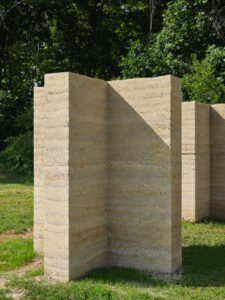
At its core, Borrowed Earth is an exploration of modularity and materiality. Tatiana Bilbao Estudio developed the structural forms around a repeating basic unit, which ultimately informed the geometry of both the towering vertical columns and the central seating element. Each column rises 7.5 feet, presenting a strong cruciform shape that casts deep shadows and interacts visually with the shifting light of the Hudson Valley landscape.
The composition relies entirely on locally sourced resources. The construction team harvested earth directly from a building site located just down the road from Art Omi. This native soil was combined with carefully measured proportions of sand and lime to optimize stability during the initial setting phase. Workers then packed the mixture layer by layer into traditional wooden formworks on-site, a process executed under the technical guidance of a specialized rammed-earth consultant based in Mexico.
Rather than being treated as a static monument, the installation is engineered to weather, erode, and eventually break down completely. While curators estimate a lifespan of approximately two years, the precise timeline of its deterioration remains deliberately uncertain, leaving the sculpture at the mercy of local wind, rain, and freeze-thaw cycles.
Chronology and Collaborative Development
The realization of Borrowed Earth was an iterative process that spanned months of design refinements, structural engineering consultations, and on-site construction coordination. The collaboration between Tatiana Bilbao Estudio and Art Omi began with exploratory talks focused on introducing a site-specific architectural intervention to the sculpture park.
According to Art Omi curator Julia van den Hout, the initial vision for the artwork did not immediately point toward the cruciform shape seen today. Instead, the final design emerged as a direct response to the structural constraints and physical realities of working with rammed earth—a material celebrated for its sustainable credentials but notoriously difficult to manipulate on an ambitious scale.
"They were not always crosses in our initial conversations," van den Hout explained during discussions of the project’s development. "As we started getting into the reality of trying to figure out how to construct this—because rammed earth is a challenging material to work with—and thinking structurally about how this would be built up, during those conversations, [it] shifted to being a cruciform column. It also really resonated [because] it has such a strong classic modernist shape."
Once the geometry was finalized, the construction phase brought together international architectural expertise and local material harvesting. The studio collaborated closely with regional builders and an overseas rammed-earth specialist to ensure the soil-sand-lime mixture could withstand the initial stresses of demolding before being exposed to the New York climate. Olympia Shannon documented the completed installation through architectural photography, capturing the rich texture and earthen tones of the columns against the verdant backdrop of the park.
Contextualizing Art Omi and Its Contemporary Art Programming
Art Omi, founded in 1992, has long functioned as a vital international arts center, residency program, and sculpture park. Situated in Columbia County, New York, the institution provides a sprawling outdoor laboratory where contemporary artists and architects can test large-scale concepts outside the white-cube constraints of traditional galleries.
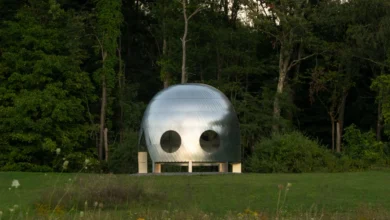
Borrowed Earth joins a distinguished lineage of architectural pavilions and sculptural installations commissioned by the park in recent years. In 2024, the New York-based design practice Young Projects installed a frayed wooden pavilion that explored material degradation and textural weathering. More recently, MOS Architects contributed an industrial aluminum pavilion to the park’s permanent and temporary collection, showcasing a stark metallic contrast to the organic, earth-toned works typically integrated into the landscape.
By inviting practices like Tatiana Bilbao Estudio, MOS Architects, and Young Projects, Art Omi fosters a dialogue between disparate materials—ranging from gleaming aluminum and distressed timber to raw, compacted soil. This diverse programming encourages visitors to consider how human-made structures relate to the surrounding ecology and how different mediums weather the passage of time.
Material Properties and the Aesthetic of Decay
The decision to utilize rammed earth as the primary medium for Borrowed Earth speaks to a broader architectural movement toward sustainable, low-carbon building practices. Rammed earth has a centuries-old history across various global cultures, valued for its thermal mass, local availability, and minimal embodied energy compared to fired brick or reinforced concrete.
However, Bilbao Estudio’s implementation subverts the traditional goal of rammed-earth construction—which is usually designed to endure for decades or centuries—by intentionally inviting structural vulnerability. The installation is soft to the touch, and visitors who interact with the columns will immediately notice the tactile nature of the compacted soil, which yields subtle crumbs and registers physical contact.
"It’ll be an experiment," van den Hout noted regarding the lifespan of the pieces. "We don’t quite know how fast it’s going to go. It is definitely soft. It crumbles. It’s lovely and tactile in that when you touch it, you really feel that sense that erosion can happen pretty easily. But simultaneously, they feel very stable."
This duality—the tension between structural solidity and inevitable dissolution—forms the conceptual core of the artwork. The title itself, Borrowed Earth, references the temporary nature of the material, which has been extracted from the local landscape, shaped into an architectural typology, and destined to eventually return to the ground via natural weathering.
Broader Impact and the Work of Tatiana Bilbao Estudio
Tatiana Bilbao Estudio, founded in 2004 and based in Mexico City, has established a global reputation for socially conscious architecture, innovative housing solutions, and large-scale public cultural projects. The studio’s portfolio spans diverse geographies and typologies, ranging from the sprawling Sea of Cortez Research Center in Mexico, completed in 2023, to housing masterplans and pavilion designs across Europe and the Americas.
Beyond her built output, Bilbao has been a vocal advocate for systemic change within the architecture profession. In past interviews and public lectures, including extensive discussions with architectural media regarding the rising generation of female architects in Mexico, she has championed collaborative design processes that prioritize local community needs, environmental sustainability, and cultural identity.
The introduction of Borrowed Earth to the Hudson Valley aligns seamlessly with the studio’s ongoing inquiry into how buildings and installations interact with their surrounding environments. By relinquishing control over the final phase of the artwork’s existence—allowing rain, wind, and biological activity to erode the crosses over the course of two years—the practice offers a poignant commentary on human intervention in the landscape.
Implications for Sustainable Public Art
As cultural institutions increasingly grapple with the environmental footprint of temporary exhibitions and large-scale installations, projects like Borrowed Earth offer a compelling model for sustainable curation. Traditional outdoor art often relies on petroleum-based plastics, structural steel, or treated timbers that require energy-intensive recycling or result in permanent landfill waste once an exhibition concludes.
In contrast, an installation built entirely from native soil, sand, and lime leaves virtually no negative ecological trace. As the cruciform columns weather and dissolve, the constituent materials are safely reabsorbed into the local ecosystem of the Art Omi campus.
Furthermore, the project challenges the prevailing societal impulse to preserve art and architecture in a state of pristine permanence. By designing for obsolescence, Tatiana Bilbao Estudio and Art Omi encourage viewers to appreciate the beauty of impermanence, shifting the artistic value from a fixed, unchanging object to an evolving process of environmental integration.
As Borrowed Earth settles into its multi-year tenure at Art Omi, it stands not only as a testament to the versatility of rammed earth as a structural medium, but also as a poetic meditation on time, gravity, and the cyclical nature of the earth itself.