Architecting High-Performance Cross-Account Data Streaming Pipelines with Amazon Kinesis

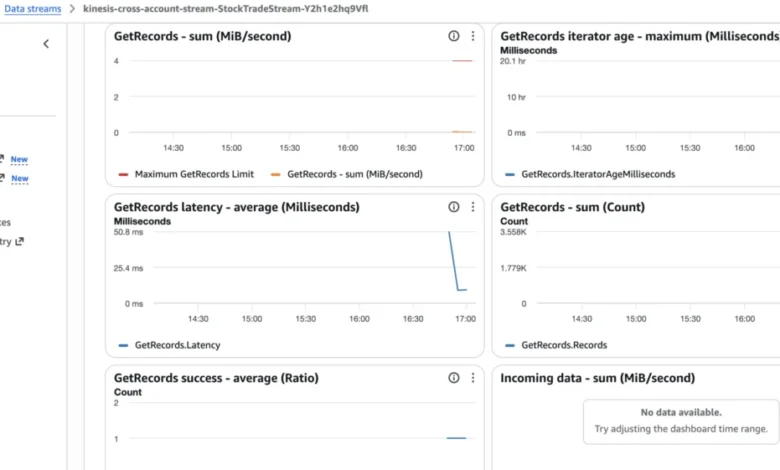
In the modern enterprise landscape, the ability to process data in real-time is no longer a competitive advantage; it is a fundamental requirement. Organizations across the globe rely on streaming data to detect fraudulent transactions, provide hyper-personalized customer experiences, and trigger automated infrastructure responses within milliseconds. As businesses scale, the traditional "all-in-one" account model often gives way to decentralized, multi-account environments. These architectures are designed to enforce strict security boundaries, satisfy regional regulatory requirements, and contain the blast radius of operational incidents. However, achieving this level of isolation while maintaining high-throughput performance for streaming pipelines has historically been a complex engineering challenge.
The primary obstacle for organizations is the operational overhead associated with cross-account data movement. Coordinating AWS Identity and Access Management (IAM) policies, managing encryption keys across different administrative domains, and ensuring consistent monitoring can significantly extend deployment timelines. To address these hurdles, engineers must move beyond basic configurations and adopt robust architectural patterns that treat security, performance, and operational visibility as first-class citizens.
The Evolution of Enterprise Streaming Architectures
Historically, streaming data within a single AWS account was straightforward. However, the rise of "Landing Zones" and centralized data governance strategies—driven by the need to separate sensitive data from operational workloads—has necessitated a transition toward cross-account configurations. In a typical "Full Separation" model, a producer application resides in one account, the Kinesis Data Stream resides in a dedicated central account, and a consumer fleet operates in an entirely different third account.
This separation is not merely a matter of convenience; it is a pillar of enterprise security. By placing a stream in its own isolated account, an organization ensures that no single application or team has unilateral control over the entire data lifecycle. This architecture limits the scope of potential IAM permission errors and ensures that encryption keys—managed via AWS Key Management Service (KMS)—are restricted to the specific services that require them.
Chronology and Implementation Strategy
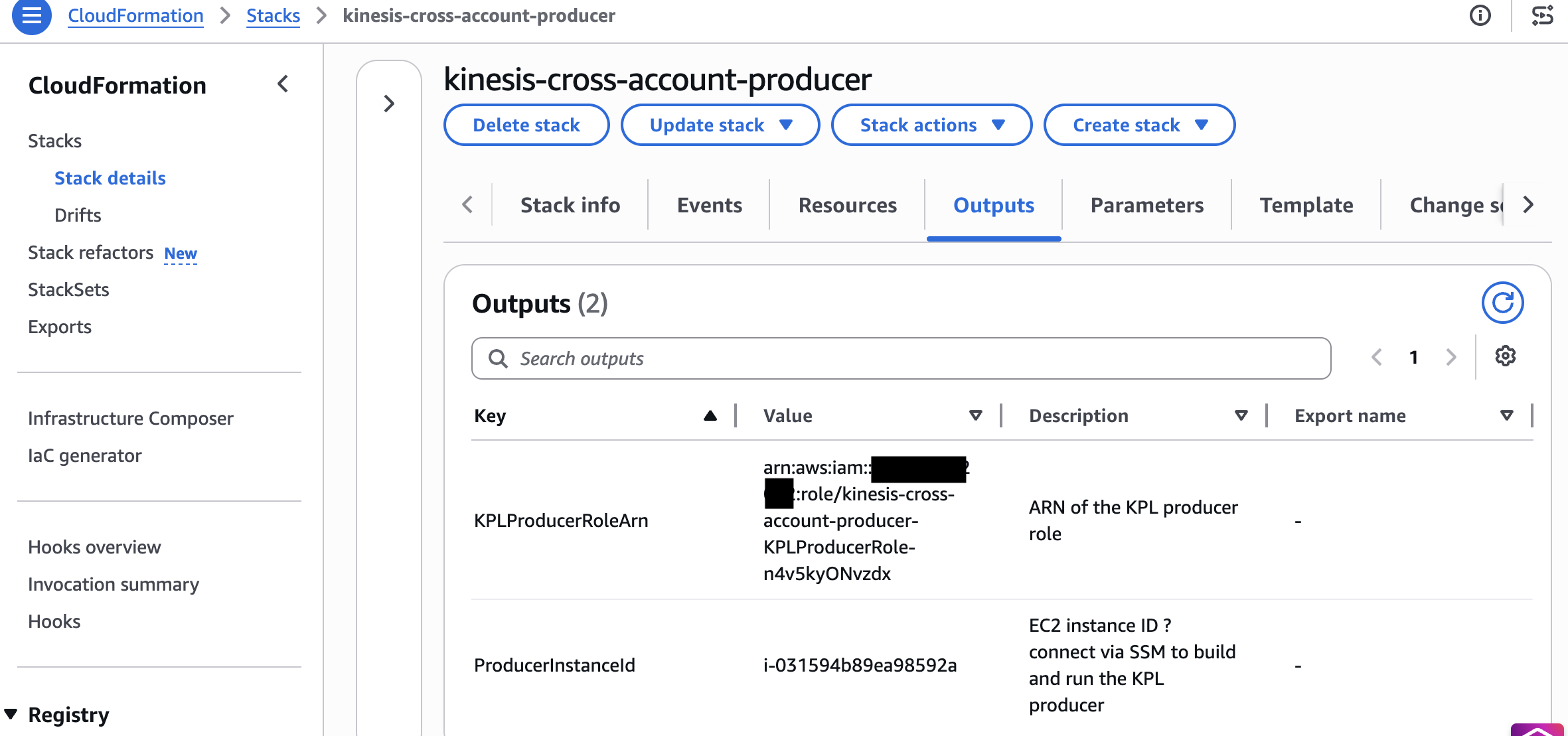
To successfully implement a three-account architecture, engineering teams follow a structured deployment chronology. The process begins with the "Stream Account," which acts as the neutral ground for data ingestion. The stream-owning account must be configured to expose the resource to authorized entities in external accounts. This is accomplished through a combination of resource-based policies and, in the case of producers, the assumption of cross-account IAM roles.
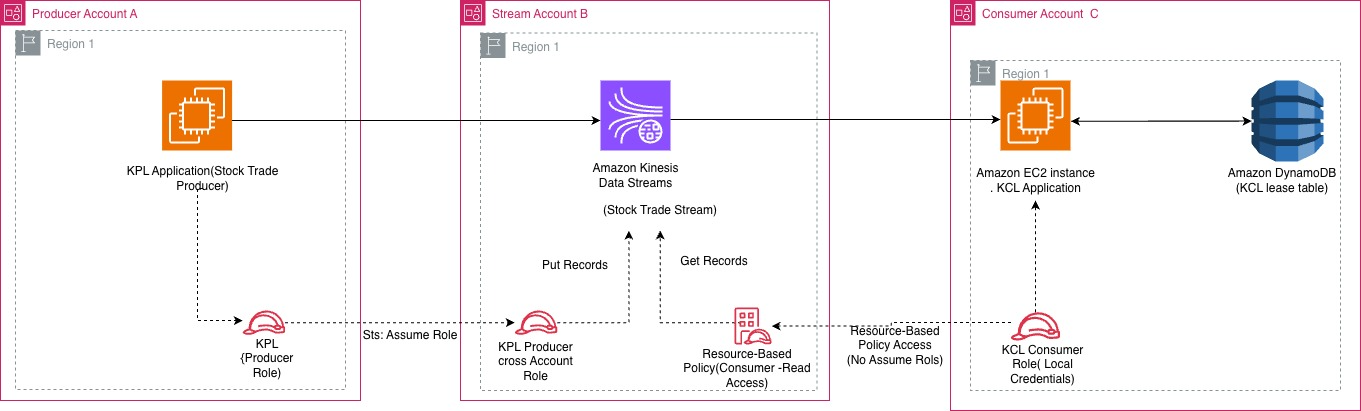
Following the stream setup, the "Producer Account" is configured. The producer, typically utilizing the Amazon Kinesis Producer Library (KPL), is granted the permissions necessary to assume a role in the stream account. This approach leverages the AWS Security Token Service (STS) to generate temporary, short-lived credentials. This methodology eliminates the risk of long-term credentials being stored on disk or in environment variables, effectively mitigating one of the most common vectors for cloud-based credential theft.
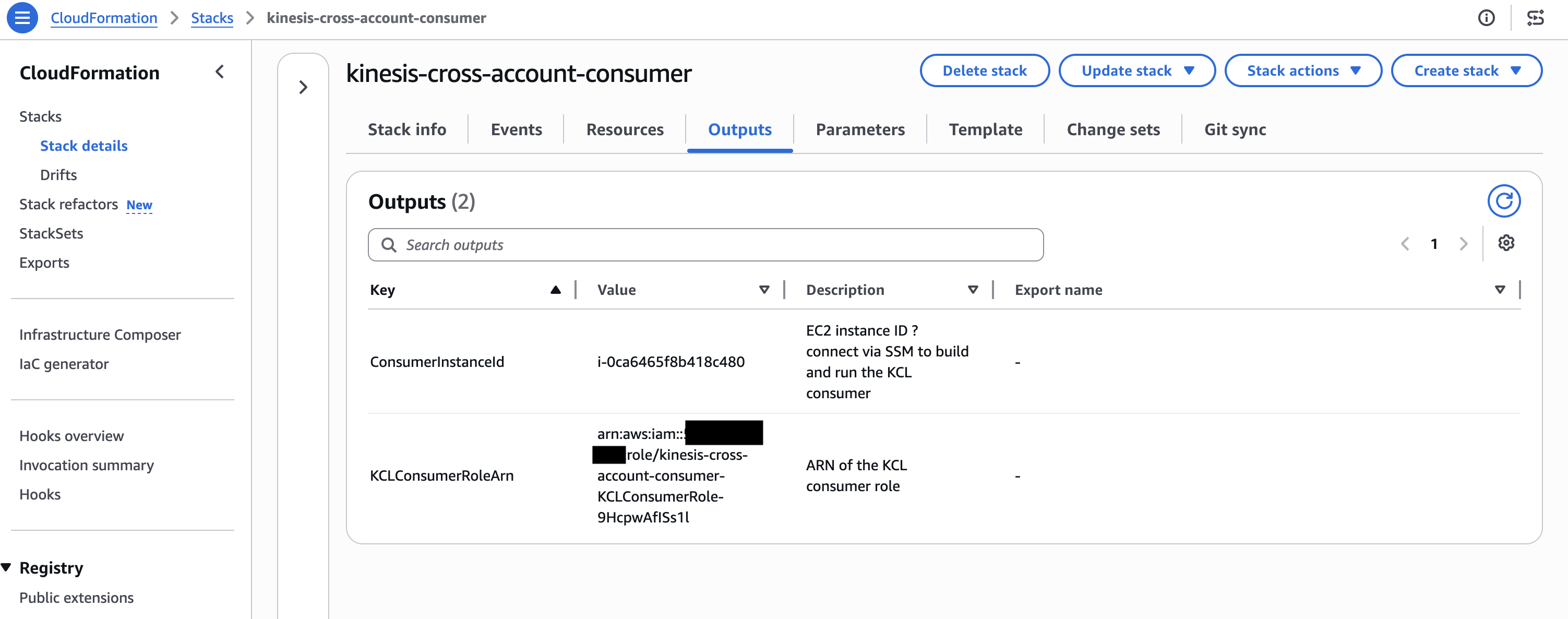
Finally, the "Consumer Account" is integrated. Modern implementations favor the Kinesis Client Library (KCL) 3.5, which has evolved to support resource-based policies. By granting the consumer account direct read access to the stream through a resource-based policy, organizations can bypass the complexities of manual role-chaining. This evolution in KCL design represents a significant shift toward simplifying the developer experience, allowing teams to focus on business logic rather than identity management plumbing.
Supporting Technical Data and Performance Metrics
The choice of library is critical to maintaining the high-throughput performance expected from streaming architectures. The Amazon Kinesis Producer Library (KPL) is engineered to solve the "small record" problem by aggregating multiple user records into a single Kinesis record before transmission. This process maximizes shard utilization and significantly reduces the total number of API calls, which in turn lowers costs and improves latency.
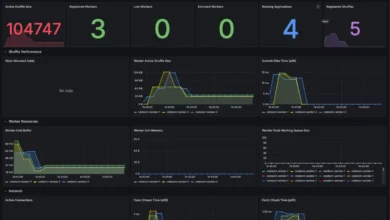
On the consumption side, the Kinesis Client Library (KCL) provides the intelligence required to manage a fleet of workers. With the release of KCL 3.0 and subsequent updates, the library now features dynamic load balancing based on CPU and memory utilization. In high-scale environments, this means that consumer fleets can be "right-sized." Rather than manually partitioning shards across workers, KCL 3.0 dynamically adjusts, leading to an estimated 15% to 25% reduction in compute infrastructure costs for many enterprise-grade deployments.
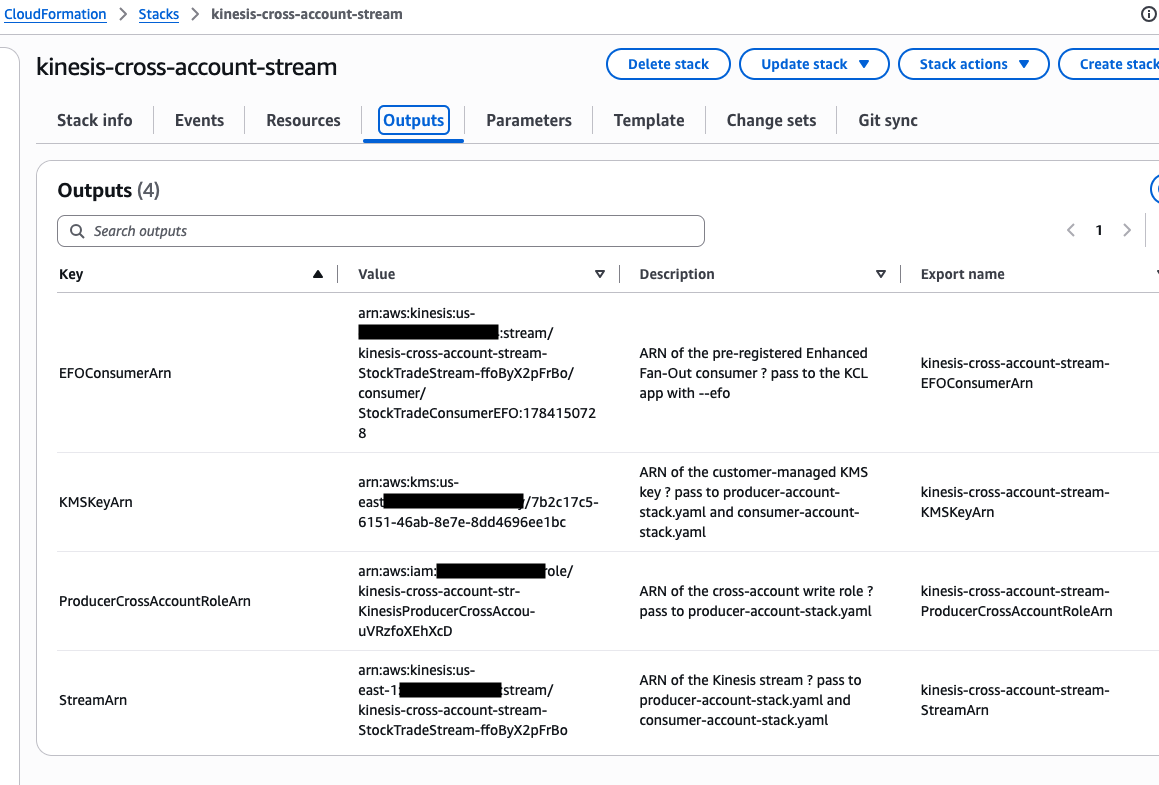
Furthermore, the introduction of Enhanced Fan-Out (EFO) in KCL 3.5 offers dedicated throughput of 2 MB/s per consumer. This feature is instrumental for applications that require sub-70 millisecond latency. When combined with a multi-account setup, EFO ensures that even with the added overhead of cross-account networking, the performance degradation is kept to a negligible minimum.
Analyzing the Impact on Regulatory Compliance
For organizations in highly regulated sectors such as finance, healthcare, and government, the ability to demonstrate strict data isolation is paramount. The multi-account approach facilitates "least privilege" access, a core tenet of the Zero Trust security model. By isolating the Kinesis Data Stream, an organization can implement centralized logging via AWS CloudTrail and Amazon CloudWatch across all three accounts.
This creates a comprehensive audit trail. An auditor can verify exactly when a producer in Account A wrote a record, confirm that the record was encrypted with a Customer Managed Key (CMK) in Account B, and validate that the consumer in Account C was the only entity authorized to process that specific batch of data. This granularity is difficult, if not impossible, to achieve in a shared-account environment where administrative privileges are often broad.
Official Guidance and Industry Best Practices
AWS engineering leads and security architects emphasize that while the technical capability for cross-account streaming is mature, the human element—specifically the coordination of policy deployments—remains the most frequent failure point. Common errors, such as misconfigured trust relationships in the IAM role or failing to include the consumer account’s ARN in the stream’s resource-based policy, are the primary causes of deployment delays.
To mitigate these risks, industry best practices dictate the use of Infrastructure as Code (IaC) tools like AWS CloudFormation or Terraform. By templating the entire three-account architecture, organizations ensure that the IAM policies, KMS key grants, and streaming configurations are immutable and reproducible. As one lead developer noted, "The goal is to make the infrastructure ‘boring’—predictable, documented, and automated. When you automate the cross-account setup, the complexity of the security model becomes an asset rather than a liability."
Broader Implications for Distributed Systems
The shift toward cross-account streaming is part of a broader trend in cloud computing: the move toward "decoupled architectures." By separating the producer, the transport layer, and the consumer, organizations are effectively creating a plug-and-play ecosystem. If a consumer application in Account C needs to be updated or replaced, the producer in Account A remains completely unaware of the change. The stream acts as a durable, highly available buffer that protects the integrity of the data stream against downstream failures.
This architectural resilience is vital for modern microservices. In a tightly coupled system, a failure in the consumer application can cause backpressure that cascades up to the producer, potentially causing the entire application stack to crash. In the cross-account, stream-buffered model, the producer continues to write to the stream regardless of the state of the consumer. This design allows for "graceful failure," where the consumer can recover and re-process records from the last checkpoint stored in DynamoDB without losing data or requiring manual intervention.
Future-Proofing the Streaming Pipeline
As KCL continues to evolve—moving toward unified tracking tables and more efficient leader-driven migration paths—the operational cost of maintaining these pipelines will likely continue to decline. The integration of advanced observability features, such as per-instance metrics in CloudWatch, provides teams with the telemetry required to proactively identify bottlenecks.

For large-scale enterprises, the transition to cross-account streaming is an investment in long-term agility. While the initial configuration requires a significant upfront investment in policy design and architectural planning, the result is a robust, secure, and scalable foundation that can support the next generation of real-time applications. By leveraging the native capabilities of Amazon Kinesis, KPL, and KCL, organizations can achieve the perfect balance between the high-speed performance required for real-time analytics and the uncompromising security demanded by modern corporate governance.
In conclusion, the successful deployment of a cross-account Kinesis stream is a testament to the power of well-architected cloud infrastructure. By isolating roles, automating the provisioning process, and utilizing the latest client-side libraries, enterprises can build a data-driven nervous system that is both secure by design and performant by nature. As businesses continue to generate and consume data at an exponential rate, the ability to master these multi-account patterns will be a defining characteristic of the most resilient and successful organizations.
Related posts: