Libreria Valladolid by Em-Estudio Transforms a Mexico City Basement into a Literary Speakeasy

Nestled beneath the foundations of an early 20th-century residential property in Mexico City’s culturally vibrant Roma neighborhood, a new subterranean hospitality destination has emerged. Named Libreria Valladolid, the venue functions simultaneously as a conceptual bar and an immersive architectural homage to the historic, eclectic vintage bookstores that define the urban fabric of the Mexican capital. Designed by the local architecture and interior practice Em-Estudio—co-founded by architect Ivan Esqueda and interior designer Gala Sánchez-Renero—the project reinterprets the tactile, melancholic romance of physical literature into a moody, theatrical hospitality space. The design team sought to capture the psychological shift experienced when moving from the bustling exterior of a metropolis into the hushed, dusty labyrinth of an antiquarian bookshop, translating that sense of discovery into a sophisticated nocturnal retreat.
Spatial Choreography and the Descent into Darkness
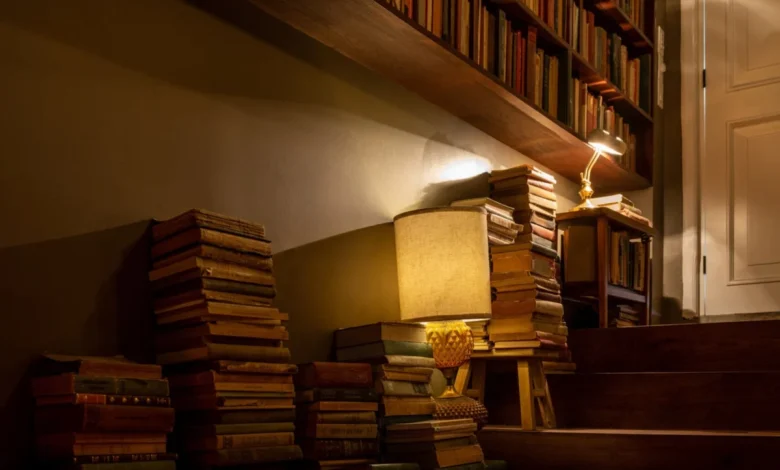
The architectural journey into Libreria Valladolid is meticulously choreographed to heighten anticipation. Visitors approaching from the street encounter an unassuming, minimalist door that offers little indication of the expansive subterranean world hidden below. Upon crossing the threshold, patrons enter a narrow entry vestibule where custom-built timber shelving units are densely packed with weathered, vintage volumes. This accumulation of printed matter spills outward, cascading down the treads of a narrow wooden staircase that leads deeper into the earth.
Small, focused lamps are wedged strategically between book spines and balanced atop precarious stacks, casting a warm, cinematic glow that contrasts sharply with the exterior daylight. According to Em-Estudio, this transitional zone serves as a psychological decompression chamber. "The old bookstore is encountered upon entering, as you descend the stairs, and it remains behind as you cross the first threshold, where the books transform into the skin that embraces the rooms," the studio noted in a project statement. This deliberate spatial sequencing prepares guests for the sensory shift required to fully appreciate the main bar area.
Materiality, Lighting, and the Main Lounge
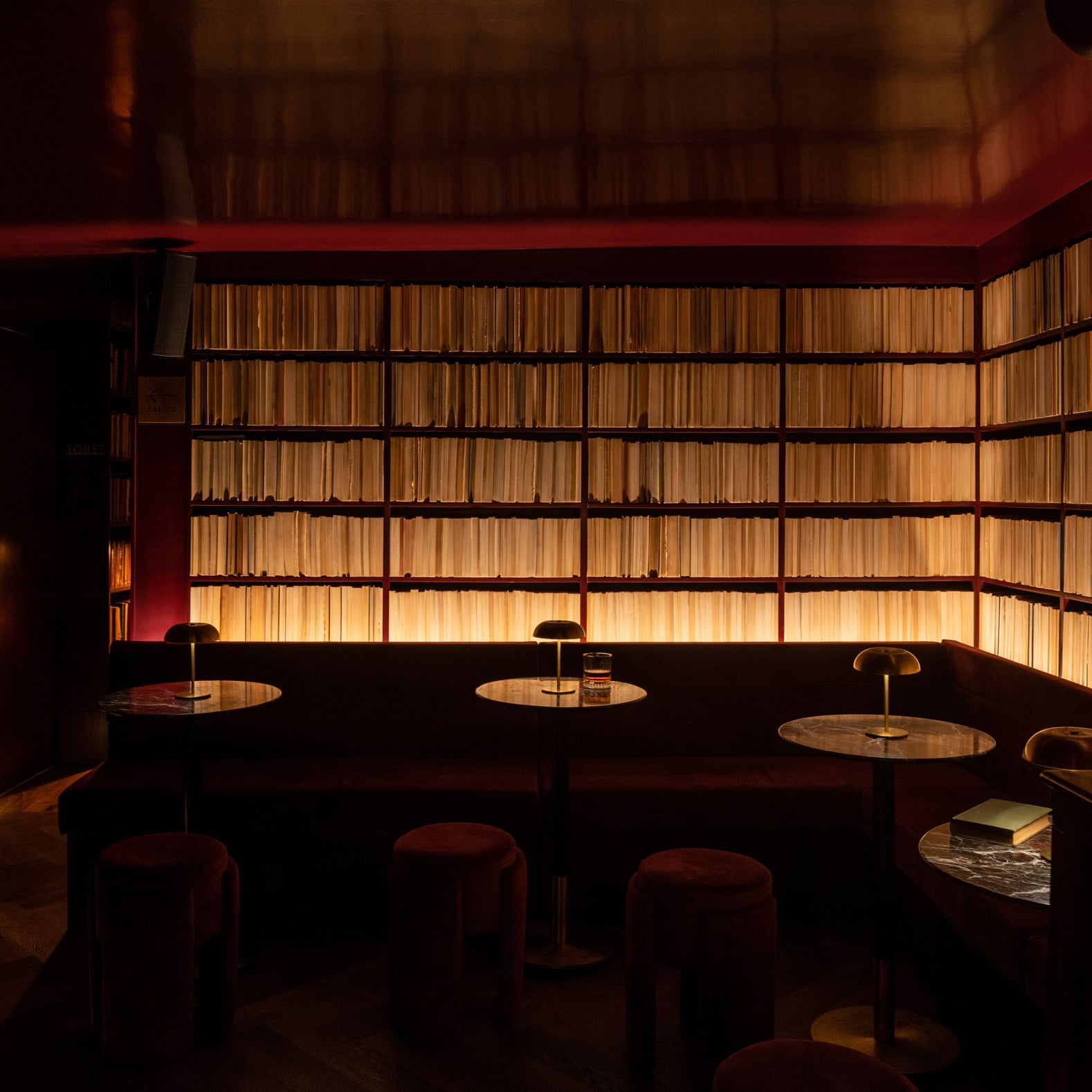
Upon reaching the base of the staircase, visitors step onto dark, rich herringbone flooring that establishes a grounded, traditional foundation for the more experimental elements of the interior. The primary walls of the basement are enveloped in floor-to-ceiling timber shelving. In a striking conceptual gesture, thousands of books are arranged spine-inward. Instead of a chaotic mosaic of colored bindings and typography, the walls present a uniform, textured expanse of warm beige pages.
Cove lighting integrated along the shelving units washes downward, illuminating the weathered paper edges and creating a dramatic chiaroscuro effect against the shadowy, intimate depths of the bar. Low-slung banquette seating upholstered in complementary tones runs along the perimeter, accompanied by minimalist circular marble tables designed for drinks. The overall effect strips the books of their literal, reading-oriented function, transforming them into a textural, sculptural tapestry governed entirely by time and warm illumination.
Focal points within the primary lounge, including the DJ booth, the central bar counter, and the guest restrooms, are punctuated by strategic applications of gold leaf and polished brass. These metallic accents catch the scarce light, guiding the eye across the darkened expanse and injecting a subtle layer of refined decadence into the literary theme.
The Secret Speakeasy and Hidden Interventions
Pushing the narrative of discovery further, Libreria Valladolid conceals a secondary, more exclusive lounge behind a faux bookshelf. This hidden room deliberately shifts away from the burgundy-drenched palette of the main space, pivoting instead toward a playful subversion of traditional upscale design. The concealed chamber borrows visual cues from neighborhood grocery stores and corner bodegas, featuring walls decorated with vintage canned goods and everyday household items that evoke a casual neighborhood grocery-store bar.
Inside this inner sanctum, a glossy, deep green finish coats the ceiling, setting a distinct visual tone. Running through the center of the room is a long, polished marble table flanked by dark wood Van Beuren chairs upholstered in vibrant yellow fabric. This seating arrangement sits parallel to additional walls of books that are individually uplit along every tier. To visually expand the relatively compact footprint of the secret room, designers installed a full-height mirror across the back wall. The reflective surface successfully doubles the perceived space, creating an optical illusion that extends the central table and the illuminated bookshelves into infinity.
Contextual Background and the Evolution of Em-Estudio
The realization of Libreria Valladolid adds to the growing portfolio of inventive commercial and residential projects by Em-Estudio. Co-founders Ivan Esqueda and Gala Sánchez-Renero, who manage their individual practices alongside their collaborative endeavors, have built a reputation for context-driven architecture that responds sensitively to Mexico’s diverse landscapes and urban settings. Their previous notable works include a monolithic concrete holiday home perched on a steep hillside in Oaxaca, where pigmented structural elements were deliberately selected to allow the architecture to weather and integrate seamlessly into the surrounding rocky terrain.
The firm’s design methodology consistently emphasizes material authenticity and spatial storytelling. In the case of Libreria Valladolid, the project reflects a broader architectural trend within Mexico City’s hospitality sector: the adaptive reuse and thematic transformation of historic structures. As real estate pressures mount in dense neighborhoods like Roma and Condesa, architects are increasingly looking underground and inward, repurposing basements and neglected structural cavities into experiential venues that cater to a discerning clientele seeking narrative-driven environments.
Broader Design Implications and Urban Impact
The opening of Libreria Valladolid highlights the ongoing dialogue between heritage preservation and contemporary commercial design in Mexico City. By anchoring a modern nightspot in the aesthetics of traditional, fading print culture, Em-Estudio addresses anxieties surrounding the digitization of media and the decline of independent brick-and-mortar bookstores. The design forces an ironic juxtaposition: books, often casualties of the digital age, are repurposed here not as vessels of information, but as structural and architectural masonry, serving as the literal building blocks of a modern nightlife experience.
Furthermore, the project exemplifies the sophisticated use of lighting and materiality to manipulate human perception in small-scale urban interiors. By relying on indirect cove lighting, matte paper textures, and reflective surfaces, the design team successfully transformed a potentially oppressive basement into a cavernous, welcoming sanctuary.
Project Credits and Execution Team
The realization of Libreria Valladolid was a collaborative effort involving a specialized team of designers, artisans, and contractors. Architecture and interior design were spearheaded by Taller Ivan Esqueda and Gala Sánchez-Renero Estudio. The core design team comprised Berenice Galindo, Sergio Peláez, and Fabián Cedillo. Structural construction and MEP (mechanical, electrical, and plumbing) installations were managed by Miguel Ángel Márquez, while the intricate custom carpentry required for the extensive shelving and hidden doors was executed by craftsman Leonardo Cabrera. Photography for the project was documented by architectural photographer Nin Solis.
Related posts: