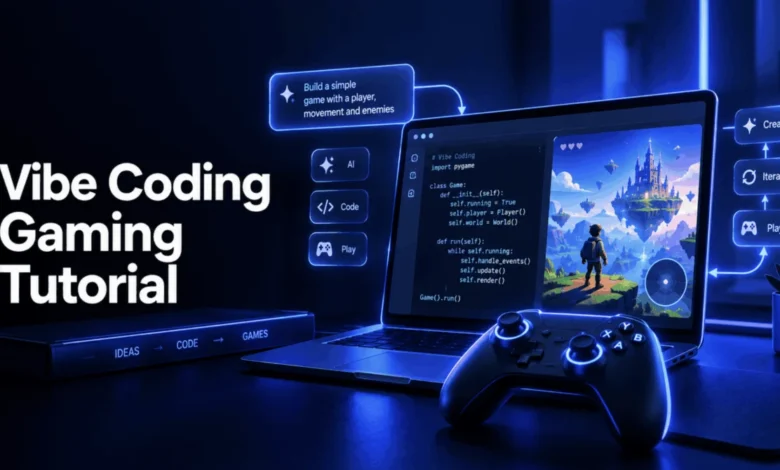
The emergence of vibe coding represents a fundamental shift in the software engineering paradigm, moving away from manual syntax construction toward a high-level, intent-driven methodology. Coined by researcher Andrej Karpathy in early 2025, the term describes a workflow where developers articulate goals in natural language, delegating the complexities of code generation, execution, and iterative refinement to sophisticated AI agents. By the close of 2026, this approach has matured from an experimental curiosity into a foundational standard for industry-scale software production. Recognized by the Collins English Dictionary as the 2025 Word of the Year, vibe coding reflects a broader transition in how technical systems are conceptualized and deployed.
The Mechanical Architecture of Vibe Coding
At its core, vibe coding relies on the capacity of large language models to interpret high-level instructions and translate them into functional, executable code. Unlike traditional autocomplete features that suggest single lines, modern AI agents act as collaborative partners capable of scanning extensive repositories, refactoring multi-file architectures, and executing automated test suites.
Industry data underscores the rapid adoption of these tools. Airbnb, for example, reported in May 2026 that AI agents are now responsible for approximately 60% of its newly generated code. This transition has necessitated a shift in the developer’s role: from a "writer of syntax" to an "architect of intent." The proficiency of the practitioner is no longer measured solely by their knowledge of a specific language’s library, but by their ability to structure prompts, debug logic flows, and perform rigorous quality assurance on AI-generated outputs.
A Historical Case Study: The Breakout Project
To understand the practical application of this methodology, it is useful to examine the construction of a classic digital artifact: the arcade game Breakout. Originally released by Atari on May 13, 1976, Breakout was conceptualized by Nolan Bushnell and Steve Bristow as a single-player variation of the seminal Pong. The hardware was famously engineered by Steve Wozniak, whose design was so optimized in its logic gates that Atari’s manufacturing team struggled to replicate the efficiency of the original prototype. This project, which helped define the technical foundation for the Apple II, serves as an ideal "vibe coding" subject because it requires clear logic gates, state management, and collision physics while remaining manageable in scope.
The Development Lifecycle: A Chronological Implementation
Executing a project through vibe coding requires a disciplined, modular approach. Rather than requesting a monolithic codebase—which often introduces hidden vulnerabilities—a professional workflow involves a step-by-step assembly.
Phase 1: The Environment and Structural Skeleton
The process begins by establishing the primary canvas. By prompting an AI agent to define a 480×400-pixel HTML5 canvas, the developer creates a blank visual workspace. The goal here is to establish the UI, including HUD elements like score and life counters, without embedding game logic. This stage acts as a "sanity check," ensuring the environment is responsive before layering complexity.
Phase 2: Mechanics and Input Handling
The second phase focuses on the paddle. By specifying that the paddle should be an 80×10 pixel rectangle, the developer dictates the geometric constraints. The logic for input handling is then defined by using event listeners for keyboard inputs. Crucially, the implementation of boundary clamping—ensuring the paddle does not traverse beyond the canvas—demonstrates the necessity of human oversight; AI may suggest basic movement, but the developer must ensure the boundary constraints are robust.
Phase 3: Physics and Spatial Logic
The introduction of the ball requires vector-based velocity logic. The AI generates the code for ball movement, while the developer validates the collision detection algorithms. The challenge lies in ensuring that the ball bounces off walls rather than clipping through them. By checking the ball’s radius against the canvas boundaries, the implementation achieves visual accuracy.
Phase 4: State Management and The Grid
Building the brick grid involves iterative loops to place objects in a structured pattern. Each brick must maintain a state—"destroyed" or "active." This is where the logic becomes critical. The developer must ensure that the collision detection logic includes a guard clause to prevent the ball from interacting with "destroyed" bricks. This is a common point of failure in automated coding; without a specific instruction to ignore non-active bricks, the game physics will break.
Phase 5: Scoring, Lifecycle, and Win Conditions
The final phase involves integrating the score and life counters. This requires the logic to differentiate between a "reset" (when a ball is lost) and a "game over" (when all lives are exhausted). The final state, a win condition, is defined by iterating through the brick array to check if all instances have been flagged as destroyed.
Industry Implications and Future Outlook
The shift toward vibe coding has ignited a debate regarding the future of software craftsmanship. Critics argue that relying on AI generation may lead to "black box" codebases where developers do not fully grasp the underlying logic of their own applications. Proponents, however, argue that this allows for an unprecedented rate of iteration and prototyping, enabling smaller teams to build software that would have previously required large engineering departments.
The requirement for manual verification remains the most significant hurdle. As AI-generated code becomes ubiquitous, the ability to read and debug that code becomes the primary value-add for the human operator. One must be able to recognize, for instance, that a "break" statement in a collision loop is necessary to prevent multiple brick-collision events from firing in a single frame, which would cause the ball to behave erratically.
Distribution and Accessibility
Once a project is completed, the barriers to entry for deployment have virtually vanished. Static hosting platforms like GitHub Pages and Netlify allow developers to deploy their applications instantly without managing servers. Furthermore, platforms like itch.io have become centralized hubs for indie developers to distribute these projects, creating a ecosystem where the focus remains on the output rather than the infrastructure.
Conclusion
Vibe coding does not eliminate the necessity of engineering discipline; it merely reallocates the effort. The transition from writing every character of code to guiding an agent requires a sophisticated understanding of logic, edge cases, and user experience. As AI tools continue to improve, the role of the developer will likely continue to evolve toward a role defined by oversight, strategy, and critical verification. The successful development of a game like Breakout using this method is not a triumph of the AI alone, but a triumph of the human who understood the physics of the game, the requirements of the interface, and the necessity of testing every component before declaring the project complete. In the landscape of 2026, the coder who can effectively navigate the synergy between human intent and machine execution is the coder who defines the future of the digital economy.