Modern web development has long relied on Bézier curves to define the transition between animation states. While these mathematical curves offer a standard way to dictate acceleration and deceleration, they have historically faced limitations when developers attempt to replicate complex, physics-based motion such as spring oscillations or multi-stage bounces. Traditionally, achieving these high-fidelity effects required the implementation of external JavaScript libraries. However, the introduction of the native CSS linear() timing function has fundamentally altered this landscape, allowing developers to execute complex, performant animations directly within the browser’s style layer.
The transition toward native CSS solutions marks a significant shift in web performance optimization. Previously, JavaScript-based animation libraries—such as React Spring or Framer Motion—performed the heavy lifting of calculating physics-based interpolation. While effective, these libraries execute on the browser’s main thread. In complex web applications, high levels of main-thread activity can lead to frame drops and stuttering animations. By migrating these interpolations to the browser’s native CSS engine, developers can offload complex calculations to the compositor thread, ensuring smooth 60-frames-per-second performance even under heavy system load.
Mechanics of the linear() function
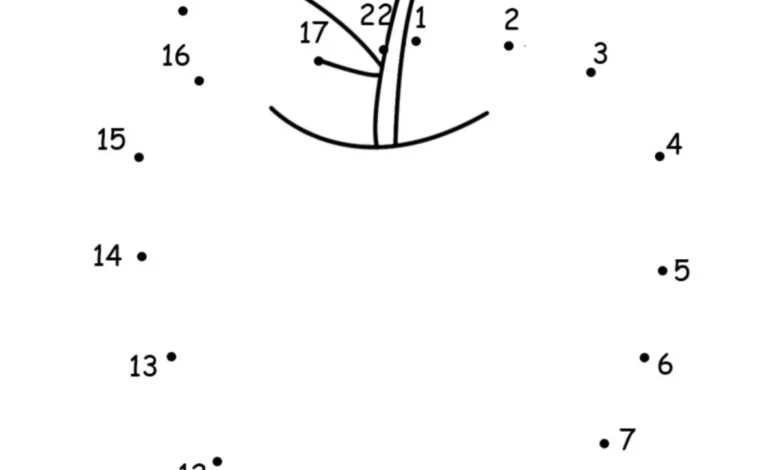
At its technical core, the linear() function moves away from the continuous mathematical slopes of the cubic-bezier() function. Instead, it approximates curves through a series of discrete, linear segments. By defining a sequence of points on a Cartesian plane—where 0 represents the starting state and 1 the target state—the browser connects these points with straight lines. When these points are placed in high enough density, the human eye perceives a smooth, complex curve.
This methodology allows for "overshoot" effects, which are critical for emulating physical objects. In classical mechanics, a spring does not simply slide into place; it compresses and expands beyond its resting position before settling. The linear() function accommodates this by allowing values outside the 0 to 1 range. A value of 1.25, for instance, signals to the browser that the element should travel 25% beyond its target destination before returning.
Chronology of web animation standards
The evolution of animation on the web has followed a steady trajectory toward native browser support. In the mid-2000s, animation was largely the domain of Flash, which provided developers with a robust timeline and easing engine. As the industry moved toward HTML5 and CSS3, the W3C introduced transitions and animations. These early tools were powerful but limited to basic easing functions like "ease-in," "ease-out," and the versatile, yet restrictive, cubic-bezier().
For nearly a decade, developers were constrained by these limitations. The rise of sophisticated UI/UX design trends, particularly those favoring "delightful" interactions, forced a reliance on JavaScript. It was not until the recent standardization and broad browser adoption of the linear() function that the CSS specification finally caught up to the demands of modern motion design. This evolution represents a maturation of the browser as a platform, shifting responsibilities from user-space scripts to engine-level primitives.
Quantitative performance and implementation analysis
To evaluate the impact of using high-density linear() strings, performance analysts have compared traditional Bézier-based animations against linear() implementations with upwards of 100 data points. Empirical data suggests that there is no discernible difference in frame rates between these two methods, even on low-end mobile devices.
In terms of data overhead, a typical linear() function string with 75 points adds approximately 1.3 kilobytes to a CSS bundle. In a production environment, this is a negligible cost. When considering the cumulative impact on a site with multiple animated components, developers are advised to utilize CSS variables. By storing the linear() string in a variable at the root level, the payload remains minimal, and the animation logic becomes reusable across the entire design system.
Limitations and the challenge of interruptibility
Despite its advantages, the linear() function is not a universal panacea. One primary limitation is its reliance on time-based duration. Physics-based animation, by definition, is driven by stiffness and damping—properties that determine the duration of the movement. CSS transitions, conversely, require a fixed duration (e.g., 1200ms). This requires developers to use "fudged" math, where the duration is estimated based on the time it takes for a spring to reach a near-stationary state.
Furthermore, the handling of interrupted transitions remains a point of contention. In JavaScript-based physics libraries, if a user triggers an animation mid-transition, the library accounts for current velocity and inertia, creating a seamless rebound. CSS transitions, however, follow the W3C specification for reversing animations, which often results in a "hard" cut or a forced acceleration of the timing curve. This can lead to a robotic, unnatural feel during rapid user interaction. While the browser vendors continue to iterate on the CSS specification, these edge cases currently remain the strongest argument for keeping critical, highly-interactive elements within a JavaScript-based physics framework.
Industry response and integration strategies
Leading web engineers, including prominent figures like Jake Archibald and Adam Argyle, have developed specialized tools to bridge the gap between complex physics and CSS syntax. These tools, such as the Linear Easing Generator, allow developers to input physical parameters—such as mass, damping, and stiffness—and output an optimized string of linear() values.
The industry consensus on integration suggests a "progressive enhancement" strategy. By utilizing the @supports at-rule, developers can provide a high-fidelity linear() animation for modern browsers while maintaining a graceful Bézier fallback for legacy clients. This approach ensures that the application remains functional and aesthetically pleasing across the broadest possible range of hardware and software configurations.
Future implications for the web
The transition toward native CSS physics is symptomatic of a broader effort to reduce the "JavaScript tax" on the modern web. By offloading motion to the browser, developers are not only improving performance but are also creating more accessible and robust design systems. The ability to define complex, organic, and "whimsical" motions without the overhead of heavy animation libraries is a significant milestone for web standards.
Looking forward, the integration of these features will likely become standard practice in design systems like Material Design or Apple’s Human Interface Guidelines, which emphasize high-quality motion as a core component of user experience. As browsers continue to optimize the parsing of long linear() strings, the barrier to creating sophisticated, high-performance web experiences will continue to lower, paving the way for a more dynamic and responsive internet. Ultimately, while JavaScript libraries will continue to serve a purpose for highly complex, state-dependent animations, the role of native CSS has been fundamentally and permanently elevated.