Modernizing Data Observability with the Next Generation of Amazon OpenSearch Serverless Time Series Collections

The rapid evolution of cloud-native infrastructure has necessitated a fundamental shift in how organizations manage massive volumes of telemetry, logs, and event data. Amazon Web Services (AWS) has officially expanded its next-generation Amazon OpenSearch Serverless platform, introducing advanced capabilities specifically tailored for time series workloads. This architectural overhaul addresses the historical friction points of search infrastructure: rigid capacity planning, unpredictable scaling requirements, and the escalating costs of long-term data retention. By decoupling compute from storage and leveraging the high durability of Amazon S3, this update provides a "pay-for-what-you-use" model that eliminates the need for teams to provision for peak traffic scenarios.
Evolution of the Serverless Architecture
The journey toward this release began with the fundamental redesign of OpenSearch Service collections. Historically, OpenSearch practitioners struggled with the "peak capacity" dilemma. To ensure system stability during sudden spikes in indexing—such as a security event triggering a surge in log generation—engineers were forced to over-provision hardware. This led to significant waste during baseline operations.
In late 2024 and throughout 2025, AWS accelerated its shift toward serverless-first architectures. The introduction of the next-generation OpenSearch Serverless collections represents the culmination of this strategy. By moving away from static cluster management, the new architecture enables near-instant autoscaling. For organizations managing event analytics, this means the infrastructure now flexes dynamically. When ingestion volume increases, the service allocates additional OpenSearch Compute Units (OCUs) automatically, scaling down when activity subsides to optimize expenditure.
Technical Innovations in Time Series Management
The newly announced features for time series collections are designed to provide granular control over the data lifecycle. The core innovation lies in the introduction of a tiered storage strategy, which allows users to balance query performance against cost efficiency.
Tiered Storage and Performance Dynamics
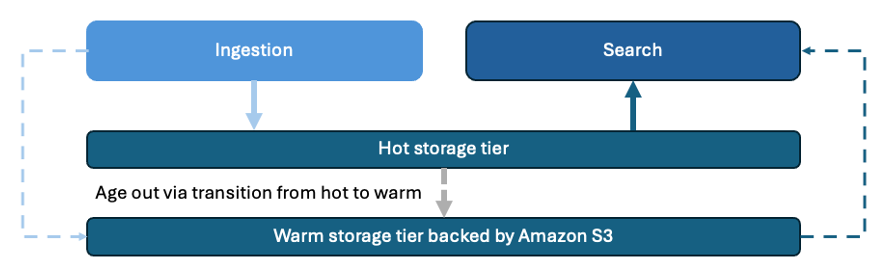
The platform now utilizes a dual-tier approach: a high-performance "hot" tier for real-time observability and an "infrequent access" warm tier for long-term data storage. The integration with Amazon S3 serves as the foundational durability layer. Because every index is backed by S3, data remains accessible even as it transitions to lower-cost storage tiers.
The implementation of the index.warm.after setting is a critical control mechanism. By specifying a time-based threshold, such as seven days, administrators can automate the movement of data. Once an index passes this threshold, it is moved to the warm tier, significantly reducing storage costs. While search latency increases in the warm tier—due to the nature of interacting with S3-backed storage—it provides an ideal solution for historical auditing and compliance reporting without the prohibitive cost of maintaining high-compute capacity for cold data.
Customizing Temporal Logic
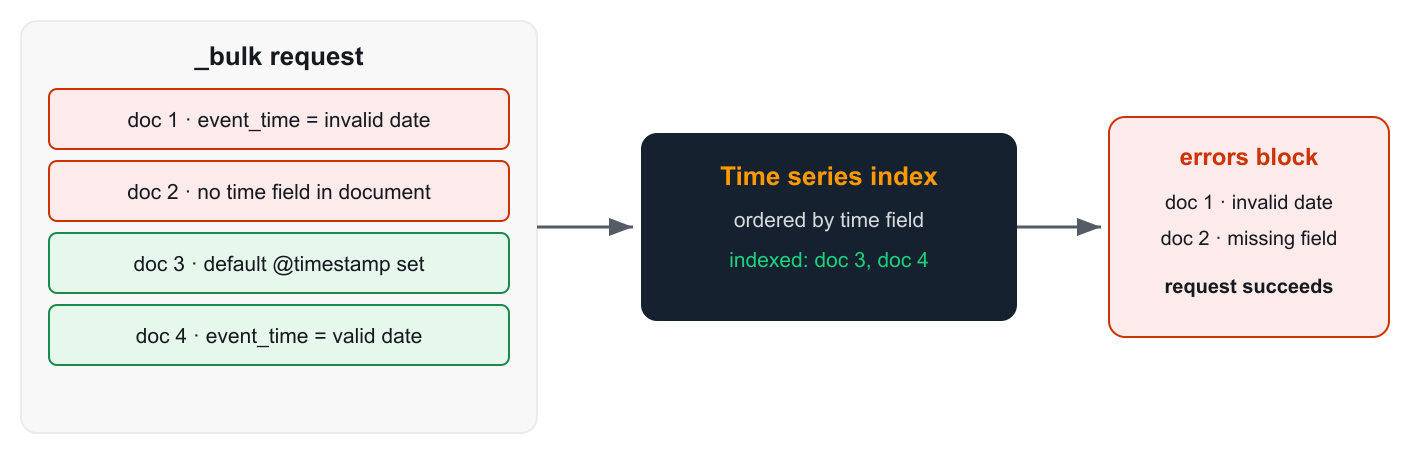
Historically, OpenSearch enforced a rigid reliance on the @timestamp field for data ordering. The next-generation collections offer increased flexibility by allowing users to define custom timestamp fields via the index.timestamp_field attribute. This is particularly beneficial for organizations migrating from legacy systems that may utilize non-standard naming conventions for event tracking. The service now performs validation at the point of ingestion; documents failing to meet timestamp criteria are rejected or flagged during bulk API operations, ensuring that the integrity of time-series data remains intact throughout the ingestion pipeline.
Strategic Implications for Data Retention and Compliance
Data retention has long been a source of operational complexity. In traditional, provisioned environments, managing storage growth required manual snapshotting, complex lifecycle management policies, and the maintenance of "forensic clusters" for audits. The new serverless model shifts this responsibility directly to the index level.
By configuring index.data.retention settings within an index template, organizations can now dictate exactly how long data should persist. Because this is handled as an index-level attribute, the management overhead is reduced from cluster-wide policy enforcement to localized configuration. This granularity is essential for industries subject to strict regulatory frameworks, such as finance or healthcare, where data must be retained for specific durations but must also remain queryable for compliance discovery.
The Role of the Next-Generation OpenSearch UI
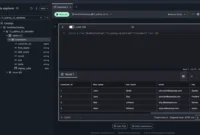
Complementing the backend infrastructure, the launch of the next-generation OpenSearch UI provides a unified interface for observability. Introduced in late 2024, this UI serves as the bridge between raw event data and actionable insights. It integrates natively with the Observability workspace, offering tools for anomaly detection, real-time alerting, and Piped Processing Language (PPL) queries.
By unifying these tools, AWS is aiming to simplify the workflow for Site Reliability Engineers (SREs). Instead of toggling between disparate monitoring tools, teams can now visualize time series data, perform root-cause analysis, and configure automated alerts within a single console. The ability to use PPL to perform complex data manipulation on the fly—without requiring deep knowledge of the underlying query DSL—marks a significant step forward in democratizing data access for non-specialist users.
Industry Impact and Future Outlook
The move toward serverless observability is not merely an incremental update; it reflects a broader industry trend toward "intelligent" infrastructure. According to internal metrics from AWS, the transition to serverless collections allows teams to reduce the time spent on cluster maintenance by up to 60%, allowing them to pivot resources toward building value-added applications rather than managing search indices.
The architectural separation of compute and storage also addresses the long-standing issue of "noisy neighbor" problems. In traditional multi-tenant or shared-cluster environments, a resource-intensive query could potentially impact the performance of other critical indices. In the next-generation serverless model, the compute resources are managed per collection, providing isolation that enhances the reliability of mission-critical observability dashboards.
Operational Recommendations
For organizations looking to migrate or adopt these features, the recommended path involves a phased integration:
- Pipeline Assessment: Audit existing ingestion pipelines to determine which data sources require low-latency hot storage versus those that can reside in the warm tier.
- Template Standardization: Utilize index templates to enforce consistent data retention and timestamp field settings across all application logs.
- Observability Integration: Transition dashboards to the next-generation OpenSearch UI to leverage the PPL and anomaly detection features, which are optimized for these collections.
- Boundary Definition: Use the budget-setting capabilities to define maximum OCU limits, preventing runaway costs during unexpected spikes in event data.
Conclusion: A New Standard for Logging
The next generation of Amazon OpenSearch Serverless time series collections represents a departure from the "set it and forget it" mentality that often led to bloated costs and performance bottlenecks. By providing developers and administrators with surgical control over data tiering, retention, and time-field mapping, AWS has created a platform that is as scalable as it is cost-effective.
As the volume of telemetry data continues to grow exponentially, the ability to maintain visibility without proportional increases in management overhead will become a key differentiator for high-performing technical teams. Through the combination of automatic autoscaling, S3-backed durability, and a centralized UI, this offering provides the foundational infrastructure necessary for modern discovery. Ultimately, it allows organizations to treat logging not as a secondary task of infrastructure maintenance, but as a primary driver of operational intelligence and system resilience. With these tools, the industry is moving closer to an era of "logging without compromise," where the boundaries of performance and budget are defined by the user, and the heavy lifting is handled entirely by the underlying service.