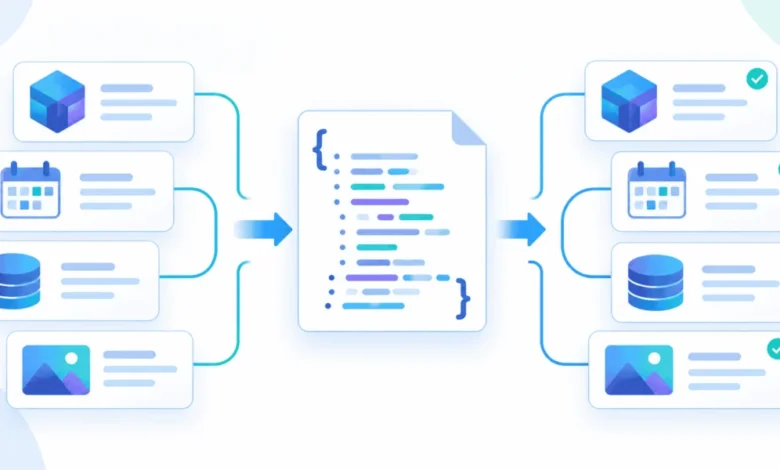
The Evolution of Data Plumbing in Machine Learning
Industry benchmarks indicate that data-related tasks—including cleaning, preprocessing, and serialization—consume upwards of 80% of a machine learning engineer’s time. While model architecture design often receives the most attention, the underlying infrastructure that manages data flow between microservices, distributed clusters, and storage buckets is what determines the overall uptime of an AI system.
In the early days of machine learning development, scripts were often self-contained and monolithic. Today, however, the industry has shifted toward modular, distributed systems. This transition necessitates the frequent movement of complex objects across network boundaries. JSON (JavaScript Object Notation) has emerged as the de facto standard for this exchange due to its human-readable structure and language-agnostic properties. However, JSON was never designed to accommodate the rich data types inherent in Python, such as datetime objects, set collections, or system Path objects.
This inherent incompatibility often leads to the infamous TypeError, where a pipeline abruptly crashes because a standard library encoder fails to recognize a non-primitive object. For production systems running on strict service-level agreements (SLAs), such a crash is not merely an inconvenience; it represents a significant operational risk.
The Mechanics of Serialization Failure
The core of the problem lies in the limited primitive support within the standard json module. When a developer attempts to serialize a configuration dictionary containing a datetime stamp or a pathlib.Path instance, the encoder encounters a structure it does not recognize. Historically, developers attempted to mitigate this by manually converting objects to strings before serialization, a practice that is error-prone and complicates the deserialization process.
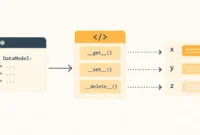
To resolve this, engineers have moved toward custom serialization pipelines that utilize the json.JSONEncoder class. By overriding the default() method, developers can explicitly instruct the parser on how to handle custom types. For instance, transforming a datetime object into a standardized ISO 8601 string, while wrapping it in a metadata marker like __type__, ensures that the receiving end knows exactly how to reconstruct the original object.
Implementing Robust Encoder Architectures
The implementation of a custom encoder class is a foundational step in hardening an infrastructure pipeline. By inheriting from json.JSONEncoder, developers can create a logic layer that intelligently checks the type of each object during the conversion process.
class RobustEncoder(json.JSONEncoder):
    def default(self, obj):
        if isinstance(obj, datetime):
            return "__type__": "datetime", "value": obj.isoformat()
        if isinstance(obj, set):
            return "__type__": "set", "value": list(obj)
        if isinstance(obj, Path):
            return "__type__": "path", "value": str(obj)
        if isinstance(obj, Enum):
            return obj.value
        return super().default(obj)
This approach provides a deterministic way to handle data. When combined with the cls argument in json.dumps(), the encoder ensures that every object—regardless of its complexity—is transformed into a valid, transferable JSON string. This methodology has been adopted by major cloud providers and open-source frameworks to ensure interoperability between heterogeneous system components.
Bidirectional Reliability: The Role of the Custom Decoder
Serialization is only half of the equation. A robust pipeline must also ensure that the data can be reconstructed exactly as it was intended. Using the object_hook parameter in json.loads(), engineers can pass a decoding function that scans every dictionary parsed from the JSON string. If the dictionary contains the __type__ marker, the decoder automatically triggers the inverse transformation—converting the ISO string back to a datetime object or a list back into a Python set.
This two-way synchronization is vital for consistency. In distributed training environments, where hyperparameter configurations are passed between worker nodes, any loss of data precision or type-safety can lead to silent bugs that are notoriously difficult to debug. By enforcing type-preservation at the deserialization stage, teams can ensure that the configuration loaded by the worker node is identical to the one exported by the orchestrator.
Navigating Schema Migrations and System Evolution
Perhaps the most significant challenge in machine learning engineering is the inevitable evolution of data schemas. As models advance, the metadata required to train them changes—new hyperparameters are added, legacy metrics are retired, and file paths are reorganized.
If a system is not designed to handle these migrations, an update to the model code can render all historical experiment configurations unreadable. This "versioning debt" can lead to massive data loss. A sophisticated serialization pipeline addresses this through a factory pattern that acts as a middleware between the raw JSON input and the application logic.
By implementing a load_experiment_config function, developers can introduce default values for missing keys, sanitize deprecated fields, and perform validation checks before the data ever reaches the model training loop. This provides a safety buffer, allowing legacy configurations to coexist with modern deployments, thereby extending the lifecycle of experimental data.
Broader Implications for AI Operations (MLOps)
The industry-wide move toward "Data-as-Code" principles underscores the importance of these serialization techniques. In modern MLOps environments, the configuration of an experiment is as important as the code itself. If that configuration cannot be reliably serialized, versioned, and restored, the reproducibility of the entire research project is compromised.
Industry experts argue that the implementation of robust serialization is a prerequisite for ethical and reproducible AI. Without the ability to track exactly what data types, paths, and hyperparameter values were used in a training run, auditability becomes impossible. Furthermore, as organizations move toward large-scale automated pipelines, the ability to recover from malformed data—using the error-handling wrappers discussed in this framework—prevents the "cascading failure" phenomenon common in tightly coupled systems.
Future-Proofing Machine Learning Pipelines
Looking ahead, the shift toward more complex data structures in machine learning—such as graph-based data, high-dimensional tensors, and dynamic environmental variables—will likely require even more sophisticated serialization strategies. While the techniques outlined here provide a stable foundation, the industry is increasingly looking toward binary serialization formats like Protocol Buffers (protobuf) or Apache Avro for even greater efficiency and schema enforcement.
However, JSON remains the gold standard for configuration and inter-service communication due to its accessibility. By mastering the art of the custom encoder and decoder, and by building in layers for schema migration, engineers are not just writing "better code"—they are building the resilient plumbing that sustains the next generation of artificial intelligence.
The transition from a simple json.dumps() call to a comprehensive, error-aware, and schema-adaptive pipeline marks the transition from amateur scripting to professional systems engineering. As the stakes for machine learning infrastructure continue to rise, the ability to reliably move and interpret data will distinguish the most robust and scalable AI platforms in the marketplace. For those tasked with the responsibility of managing these systems, the time invested in refining these serialization protocols will pay dividends in both operational stability and long-term research continuity.