The Strategic Evolution of UX Design in the Age of Artificial Intelligence: Why Prompting is the New Creative Brief

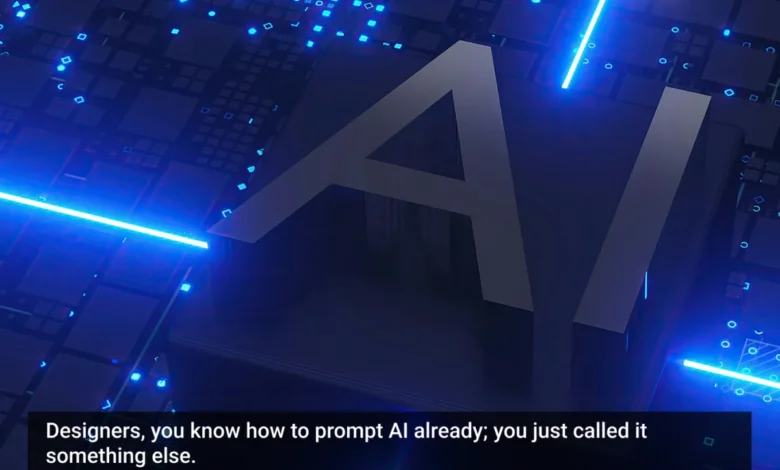
The integration of artificial intelligence into professional design workflows has sparked a widespread, often anxiety-ridden debate regarding the future of the human practitioner. In the inaugural segment of this series, the industry myth that AI serves as a direct replacement for the designer was dismantled, replaced by a more pragmatic model: AI functions as a tireless, high-speed intern that remains fundamentally dependent on human oversight, strategic judgment, and ethical accountability. As the industry advances into the second phase of this transition, it becomes clear that the primary hurdle is not technical aptitude, but rather a failure to recognize that the core competency of successful prompting is a skill designers have cultivated for decades: the art of the creative brief.
The Misnomer of Prompt Engineering
For the past twenty-four months, the tech industry has been dominated by the term "prompt engineering." Borrowed from software development and data science, this nomenclature positions the interaction between human and machine as a technical capability requiring specialized coding knowledge. This framing has inadvertently created a barrier to entry, causing many seasoned UX researchers and designers to view AI as an external, technical domain rather than an extension of their existing craft.
However, historical analysis of design methodology suggests otherwise. Whether it is a design brief, a research protocol, or a content strategy document, the professional designer’s daily work has always involved translating complex, abstract business goals into actionable instructions for creative collaborators. When a design lead briefs an illustrator or a copywriter, they define the goal, identify the audience, set constraints, and establish tone—all while providing the context necessary for the recipient to exercise creative agency. Prompting an AI is, at its most fundamental level, a digital evolution of this brief-writing process.
Chronology of a Shift
The trajectory of AI adoption in design has followed a distinct pattern since the widespread availability of Large Language Models (LLMs) in late 2022.
- 2022–2023: The Era of Novelty. Initial engagement with AI tools focused on superficial tasks, such as generating placeholder text or creating conceptual imagery. The "prompting" style was experimental, often resulting in generic outputs.
- 2023–2024: The Technical Pivot. The narrative shifted toward "prompt engineering." Organizations began hiring specialists, and the focus moved toward complex syntax, "few-shot prompting," and chain-of-thought processing. This era inadvertently siloed design professionals who lacked traditional engineering backgrounds.
- 2025–Present: The Integration Phase. Leading design firms and academic institutions are now moving toward a "Strategic Briefing" model. This period emphasizes that the quality of AI output is directly proportional to the quality of the design intent embedded within the prompt.
Data-Driven Implications for the Workforce
According to the World Economic Forum’s Future of Jobs Report 2025, AI and big data fluency are projected to be the fastest-growing professional requirements through 2030. Approximately 39% of core workplace skills are expected to undergo significant transformation in this timeframe. Despite this rapid change, the demand for "human-centric" design remains at an all-time high.
Evidence from the Nielsen Norman Group suggests that the most effective designers in AI-integrated teams are not necessarily those who master complex technical prompt chains, but those who excel at defining the "problem space." When designers treat an AI like a junior team member—providing explicit context, clear goals, and rigorous constraints—they experience a measurable increase in both productivity and output quality. Conversely, when the brief is vague, the AI defaults to probabilistic averages, resulting in "hallucinations" or generic, unhelpful content.
Anatomy of an Effective Prompt
To bridge the gap between design practice and AI interaction, practitioners are increasingly adopting a structured framework that mirrors the traditional design brief. A high-performance prompt should include four critical dimensions:
- The Goal: Moving beyond the "what" (e.g., "design a button") to the "why" (e.g., "increase conversion among first-time mobile users in Tier 2 markets").
- The Audience: Defining the user’s mental model, literacy level, and skepticism toward the product. Without this, the AI cannot simulate a relevant persona.
- The Constraints: Establishing the boundaries of the solution space. This includes technical limitations, regulatory requirements, and brand guidelines.
- The Context: Providing the narrative of the project. This allows the AI to make informed decisions when the prompt does not provide explicit guidance.
The Risk of Technical Siloing
A primary concern among industry leaders is the risk of "technical displacement." If organizations treat AI prompting as an exclusively technical domain, they risk relegating designers to the role of post-production "polishers" rather than strategic architects. This separation mirrors the historical friction between engineering and design, where user experience was often an afterthought to technical capability.
When design professionals are excluded from defining the "system prompts"—the underlying instructions that govern how an AI behaves within a product—the resulting systems often fail to address human nuances. The strategic opportunity for the UX professional today is to move upstream, shaping the AI’s behavior, workflow, and evaluation frameworks. By asserting that prompt design is, in essence, UX design, practitioners can ensure that the AI tools of the future are optimized for human utility rather than merely technical output.
Comparative Analysis: Briefing vs. Prompting
The failure modes of a poor prompt are identical to the failure modes of a poor design brief. A vague brief leads to a lack of alignment; a vague prompt leads to irrelevant AI generation. A brief that lacks constraints leads to scope creep; a prompt that lacks constraints leads to incoherent, excessive, or off-brand responses.
Designers already possess the "ambiguity management" skills required to navigate these failures. They are trained to iterate, to refine, and to view the first output not as a final product, but as a diagnostic data point. This iterative mindset is the missing link in many current AI adoption strategies. The practitioner who understands that an unsatisfactory AI output is a signal to refine the brief—rather than a failure of the tool—will gain a significant competitive advantage in the coming years.
Future Outlook and Strategic Ambition
The design community is currently at an inflection point. By moving past the intimidation of "prompt engineering" and reclaiming the skill as "brief writing," designers can reposition themselves as the essential architects of the AI-integrated future.
The path forward requires a shift in mindset:
- Stop waiting for permission. The tools exist today. Integrating them into existing workflows is a matter of applying professional communication standards to a new surface.
- Challenge the narrative. Promote the idea that UX strategy is the governing force behind successful AI integration, not raw technical capability.
- Audit current workflows. Examine recent projects and translate the underlying intent into a structured prompt. The gap between that prompt and the AI’s output will serve as a diagnostic tool for refining communication skills.
In summary, the transition to AI-augmented design does not require a abandonment of past knowledge, but rather a synthesis of it. The principles of precision, specificity, and contextual richness that define a successful designer remain the same, regardless of whether the recipient of the brief is a human junior designer or a sophisticated language model. The skill set has not changed; the medium has simply evolved. Designers who recognize this will not only survive the shift; they will lead it.