Eighteen months ago, the landscape of AI agent development was characterized by fragmentation and bespoke solutions. Integrating an AI agent with any external tool necessitated writing specific, custom "glue code" for each individual connection, a process that was both time-consuming and prone to errors. This siloed approach hindered scalability and innovation, creating significant friction for developers attempting to build sophisticated, multi-tool AI agents. The absence of a universal standard meant that every new tool or agent ecosystem demanded a fresh integration effort, stifling the rapid proliferation and deployment of intelligent automation.
This era of bespoke integration began to draw to a close with a pivotal development: Anthropic open-sourced the Model Context Protocol (MCP) in late 2024. This move marked a significant turning point, introducing a standardized framework designed to facilitate seamless communication between AI models and external resources. The analogy of MCP as the "USB-C of agent tooling" quickly gained traction, aptly describing its ambition to create a universal plug-and-play mechanism for AI agents. Following Anthropic’s lead, industry giants such as OpenAI, Google, and Microsoft swiftly adopted the protocol throughout 2025, cementing its status as an industry-wide standard. By the end of that same year, the protocol was further solidified through its donation to a Linux Foundation body, a strategic move ensuring its open governance, long-term maintenance, and broad community stewardship. This transfer to a neutral, non-profit foundation underscored the industry’s collective commitment to fostering an open and interoperable ecosystem for agentic AI.
The immediate consequence of MCP’s widespread adoption was an explosion in the ecosystem of compliant tools and servers. While this surge reflected a vibrant and innovative community, it also introduced a new challenge: distinguishing genuinely valuable solutions from the sheer volume of "noise." Many early entrants or less actively maintained projects quickly became obsolete, with several servers previously recommended in older listicles now archived or defunct. This dynamic underscores the critical importance of careful selection when building a high-performance agent development setup. The following five Model Context Protocol servers represent genuinely impactful tools, chosen not merely for their star counts on repositories (though these are noted as of writing and are subject to rapid change) but for their demonstrable contribution to an agent’s actual capability and operational efficiency.
The Model Context Protocol: A Paradigm Shift in AI Integration
The Model Context Protocol (MCP) emerged as a direct response to the escalating complexity of integrating AI agents with the vast array of external tools and data sources required for real-world applications. Before MCP, developers faced a daunting task: every time an AI agent needed to interact with a new API, a database, a web service, or even a local file system, a custom adapter or "glue code" had to be meticulously crafted. This process was not only resource-intensive but also fragile, as changes in either the agent’s internal architecture or the external tool’s API would often necessitate extensive re-engineering. This bottleneck severely limited the agility and scalability of AI agent development, confining many projects to a narrow set of predefined integrations or forcing developers into proprietary, closed ecosystems.
MCP fundamentally redefines this interaction by providing a standardized interface through which AI models can understand and utilize external capabilities. At its core, MCP abstracts away the underlying complexities of tool APIs, presenting them to the AI agent in a unified, natural language-friendly format. This means an agent, rather than needing to be programmed with specific API calls and data schemas for, say, a GitHub repository or a web browser, can simply express its intent (e.g., "open a pull request," "navigate to a webpage," "search for documentation"). The MCP-compliant server then translates this intent into the appropriate actions, executes them, and returns structured results back to the agent. This decoupling of intent from execution vastly simplifies agent design, making them more robust, adaptable, and easier to develop.
The technical benefits of MCP are manifold. Firstly, it ensures true interoperability, allowing any compliant agent to connect with any compliant tool, much like how a USB-C cable can connect various devices regardless of their manufacturer. Secondly, it drastically reduces development friction, freeing engineers from the repetitive task of writing bespoke integration code. This accelerated development cycle means AI agents can be brought to market faster and iterated upon more rapidly. Thirdly, by providing structured, deterministic data rather than raw, unstructured outputs (like screenshots for web interaction), MCP enhances the reliability and performance of agent operations, minimizing errors and improving decision-making capabilities.
The historical context of MCP’s adoption is crucial to understanding its impact. Anthropic, a leading AI research company, recognized the urgent need for such a standard and took the initiative to open-source MCP in late 2024. This act of releasing a foundational technology into the public domain immediately garnered attention from the wider AI community. The subsequent adoption by major players like OpenAI, Google, and Microsoft throughout 2025 was a powerful endorsement, signaling a collective industry consensus on the necessity of standardized agent-tool interaction. This rapid uptake by competitors underscored the universal pain point MCP addressed and the clear benefits it offered. The ultimate donation of MCP to a Linux Foundation body by the end of 2025 further solidified its long-term viability. This move ensures that MCP remains an open standard, free from single-vendor control, fostering a collaborative development environment and guaranteeing its evolution to meet future industry needs. The Linux Foundation’s stewardship provides a neutral ground for continued innovation, governance, and community contributions, crucial for maintaining a robust and adaptable standard in a fast-evolving field.
Chronology of Adoption and Standardization
The journey of the Model Context Protocol from an innovative concept to an industry standard unfolded with remarkable speed, reflecting the urgent need for such a solution in the burgeoning field of agentic AI.
- Late 2024: Anthropic Open-Sources MCP. The initial catalyst for standardization came from Anthropic, a key player in frontier AI research. Recognizing the inefficiencies inherent in fragmented agent-tool integrations, Anthropic made the strategic decision to open-source the Model Context Protocol. This act immediately provided a common framework that other developers and organizations could adopt, experiment with, and build upon. The move was widely lauded within the developer community as a proactive step towards fostering an open and collaborative AI ecosystem.
- Throughout 2025: Industry Giants Adopt MCP. Following Anthropic’s lead, the year 2025 saw a critical mass of adoption from major technology companies. OpenAI, Google, and Microsoft, all heavily invested in AI research and product development, integrated MCP into their respective agent frameworks and platforms. This widespread adoption by market leaders was instrumental in legitimizing MCP as the de facto standard for agent-tool communication. Their involvement brought significant resources, expertise, and a vast developer base, accelerating the protocol’s refinement and the development of compatible tools and servers. The competitive yet cooperative embrace of MCP highlighted a rare moment of industry alignment on a foundational technology, driven by the shared goal of unlocking the full potential of AI agents.
- End of 2025: Donation to the Linux Foundation. To ensure the long-term health, neutrality, and open governance of the protocol, MCP was formally donated to a Linux Foundation body by the close of 2025. This critical step secured MCP’s future as a truly open standard, independent of any single corporate entity. The Linux Foundation, known for its expertise in fostering open-source projects, provides a stable and transparent environment for community collaboration, ensuring that MCP’s evolution is guided by collective input rather than proprietary interests. This move was particularly reassuring to developers and enterprises concerned about vendor lock-in, guaranteeing that the standard would remain accessible and adaptable for years to come.
This rapid chronology underscores the profound impact MCP has had on the AI development landscape. Within a span of little over a year, it transformed from a novel idea into an established, openly governed standard, fundamentally reshaping how AI agents interact with the digital world.
Navigating the Exploding Ecosystem: Why Server Selection Matters
The swift adoption and standardization of the Model Context Protocol, while overwhelmingly positive for the advancement of agentic AI, inevitably led to a proliferation of new tools and services. This explosion of the ecosystem, though a testament to MCP’s success, also presented a significant challenge: how to navigate the sheer volume of available servers and identify those that genuinely contribute to a high-performance development setup. The market quickly became saturated, with many projects emerging that were either experimental, poorly maintained, or simply offered limited utility.
A particularly insidious aspect of this rapid evolution is the phenomenon of "archived" or "dead" repositories. As the technology matured and best practices coalesced, some early, once-popular servers became obsolete. Unfortunately, many older articles and listicles continue to recommend these defunct projects, leading developers down unproductive paths. This highlights a critical need for up-to-date guidance and a discerning eye when selecting MCP servers.
The criteria for selecting a genuinely valuable MCP server extend far beyond superficial metrics like "star counts" on GitHub, which can often reflect initial hype rather than sustained utility or actual impact on an agent’s capabilities. Instead, the focus must shift to the server’s functional contribution:
- Actual Capability Enhancement: Does the server enable the agent to perform tasks that were previously impossible, inefficient, or unreliable?
- Performance and Reliability: Does it execute tasks quickly, consistently, and without frequent errors?
- Maintainability and Active Development: Is the server regularly updated to keep pace with platform changes, security patches, and new features? An actively maintained server indicates a commitment to its long-term viability and ensures compatibility with the latest MCP specifications and underlying technologies.
- Specificity of Purpose: Does it address a critical bottleneck or enhance a specific aspect of an agent’s workflow, such as code generation, web interaction, or local file management?
- Efficiency: Does it optimize resource usage, particularly token consumption, which can be a significant cost factor in LLM-powered agents?
By prioritizing these criteria, developers can cut through the noise and assemble a robust, efficient, and future-proof stack for their agentic AI projects, ensuring that their agents are not just connected, but truly capable.
Deep Dive into High-Performance MCP Servers
The following five servers represent the vanguard of MCP implementations, each offering unique and significant enhancements to an AI agent’s capabilities, moving beyond mere connectivity to tangible performance improvements.
1. GitHub MCP Server: The Core of Development Workflow Automation
The official GitHub MCP server stands as an indispensable backbone for any AI agent involved in the software development lifecycle. Its primary function is to expose the extensive functionalities of the GitHub platform to an AI agent through a natural language interface, effectively granting the agent the ability to understand and manipulate key development artifacts. This includes access to repositories, issues, pull requests, GitHub Actions workflows, and critical code security features. The profound advantage of this server lies in its direct maintenance by GitHub itself. This ensures that the server consistently tracks the evolving capabilities and APIs of the GitHub platform, rather than lagging behind, guaranteeing up-to-date and reliable integration.
For agentic development, the GitHub MCP server transforms an agent from a passive observer that can "reason about code" into an active participant capable of "moving code." Without such a server, an agent might be able to analyze code and suggest changes, but the actual implementation of those changes would require human intervention or complex, brittle scripting. With the GitHub MCP server, an agent can autonomously perform critical developer tasks: opening new pull requests, triaging incoming issues based on predefined criteria, or even checking the status of failing CI/CD workflows and potentially initiating remediation steps. This level of automation significantly boosts developer productivity, reduces manual overhead, and accelerates development cycles. The server’s substantial popularity, evidenced by approximately 30,000 stars (as of writing), reflects its utility and reliability within the developer community. It is arguably the first server developers will integrate when building agents focused on code and project management, serving as a foundational element for sophisticated software engineering agents.
2. Playwright MCP (Microsoft): Revolutionizing Web Interaction for Agents
Browser automation has historically been a treacherous domain for AI agents, often characterized by frustrating failures and unreliable execution. Traditional approaches frequently involve agents attempting to interpret screenshots using vision models, leading to imprecise interactions based on guessing pixel coordinates. This method is inherently brittle, highly sensitive to minor UI changes, and computationally expensive. Microsoft’s Playwright MCP server offers a radical departure from this paradigm, sidestepping these challenges by driving the browser through its accessibility tree.
Instead of squinting at a picture, the Playwright MCP server provides the agent with structured, deterministic data about the webpage. The accessibility tree, a hierarchical representation of a page’s elements and their properties (such as roles, labels, and states), offers a robust and semantically rich understanding of the UI. This means an agent can identify buttons, input fields, and links by their functional attributes rather than their visual appearance. The result is significantly faster and more reliable web interaction across its extensive suite of over 40 browser automation tools. Crucially, this approach eliminates the need for a vision model in the loop for UI interpretation, leading to substantial performance gains and reduced computational overhead. For any agent tasked with testing web applications, systematically scraping rendered pages for data, or completing complex multi-step online flows, Playwright MCP is the unequivocally performance-conscious choice. Its strong community backing, with roughly 31,000 stars, and consistent updates from Microsoft ensure its continued relevance and efficacy in an ever-evolving web landscape.
3. Context7 (Upstash): Elevating Code Quality with Real-Time Documentation
One of the most pervasive and costly failures in AI-generated code stems from "hallucinations" – instances where large language models confidently produce API calls, library functions, or syntax that are either deprecated, incorrectly used, or simply non-existent. This problem is exacerbated in environments with fast-moving libraries and frameworks, where documentation can quickly become outdated. Context7 by Upstash directly addresses this critical issue by injecting up-to-date, version-specific library documentation straight into the agent’s context.
By providing the agent with current and accurate reference material, Context7 acts as a powerful preventative measure against these common coding errors. It ensures that when an agent is tasked with writing code against a specific library version, it has access to the precise API signatures, parameter requirements, and usage examples. This capability is of paramount importance for agents generating code, as it attacks the single most common source of bugs before they are even written. The impact on code quality and developer efficiency is substantial: agents produce more correct, functional code from the outset, reducing the need for extensive debugging and refactoring. This makes Context7 the highest-leverage server on this list for any code-generating agent, directly improving the quality and reliability of its output. Its immense popularity, reflected in nearly 59,000 stars and very active development, underscores its value to the AI coding community. For developers building agents that write or modify code, Context7 should be among the very first integrations, as it fundamentally improves the correctness of the agent’s core function.
4. Serena (Oraios): Semantic Code Editing for Precision and Efficiency
Traditional text search-and-replace mechanisms, while rudimentary, are often the default method for agents attempting to edit code. However, this approach is crude, highly susceptible to errors, and inefficient in its token consumption. An agent using simple pattern matching might inadvertently modify the wrong string, miss subtle contextual nuances, or require dumping entire files into its context window just to locate and replace a few lines, incurring significant computational and monetary costs. Serena by Oraios offers a sophisticated alternative by providing an agent with a semantic, symbol-level understanding of a codebase, leveraging the capabilities of the Language Server Protocol (LSP).
LSP is a protocol used by IDEs to provide features like auto-completion, go-to-definition, find-all-references, and refactoring across various programming languages. Serena integrates this power, giving an agent the equivalent of an Integrated Development Environment’s (IDE) understanding rather than a basic text editor’s. This allows the agent to precisely identify and edit actual functions, variables, classes, or symbols, rather than relying on brittle string pattern-matching. With support for over 40 programming languages, Serena enables highly targeted and accurate code modifications. The practical payoff is twofold: precision and token efficiency. The agent reads and changes exactly what it needs to, avoiding the unnecessary consumption of tokens by processing entire files or large code blocks. This is especially critical for agents working on large codebases, where the cost and latency of processing vast amounts of code can be prohibitive. Serena empowers coding agents to perform complex refactoring, rename symbols across an entire project, or implement nuanced changes with a level of accuracy and efficiency previously unattainable, significantly enhancing their utility in professional software development environments. It boasts around 24,000 stars, reflecting its strong adoption among developers seeking more intelligent code manipulation.
5. The Official Reference Servers: Foundational Primitives for Agentic Control
Rounding out a serious agent development setup is the official reference server collection maintained by the Model Context Protocol project. While often considered foundational, these servers provide the dependable primitives essential for almost any AI agent’s operation, forming the core "plumbing" that enables interaction with the local environment and structured reasoning. This monorepo includes several critical components:
- Filesystem: Provides agents with secure and controlled access to the local file system, enabling them to read, write, and manage files. This is fundamental for tasks like saving generated code, loading configuration files, or processing local datasets.
- Git: Offers basic Git functionalities, allowing agents to interact with version control systems for tasks such as committing changes, checking out branches, or fetching updates. While less comprehensive than the GitHub MCP server, it provides essential local Git operations.
- Fetch: Enables agents to make HTTP requests, allowing them to retrieve data from web APIs, download resources, or interact with external web services.
- Memory: Provides a structured mechanism for agents to store and retrieve short-term or long-term information, crucial for maintaining context across multiple interactions or tasks.
- Sequential Thinking: This is a particularly valuable primitive, giving an agent a structured space to reason step by step before acting. It allows the agent to break down complex problems, formulate plans, and evaluate potential outcomes, significantly improving the reliability and coherence of its actions.
Collectively, the monorepo for these reference servers carries well over 80,000 stars, though it’s important to note that this number reflects the popularity of the entire set rather than any single server within it.
Two honest caveats accompany the use of these reference servers. Firstly, they are primarily maintained as educational references and solid building blocks. While functional and dependable, they should be treated as foundational components to be integrated and potentially hardened for production environments, rather than fully-fledged, production-ready infrastructure out of the box. Secondly, and critically, the MCP project has actively archived several once-popular servers that were part of older reference collections, including standalone Postgres and Puppeteer ones. This highlights the rapid evolution of the ecosystem and is precisely why many older "top MCP servers" posts now point to dead repositories. Developers are strongly advised to always verify that a server is actively maintained and live before committing to building on it, ensuring long-term stability and compatibility.
Building the Stack: Unlocking Agentic Potential
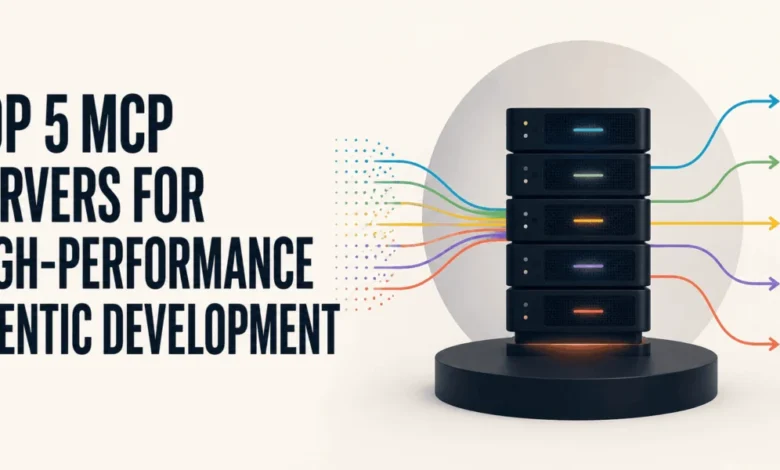
By strategically wiring together these five Model Context Protocol servers, developers can equip an AI agent with a coherent and powerful set of "hands" to interact with the digital world. The GitHub MCP server provides the capability to move code within a development workflow, enabling agents to participate actively in software engineering processes. Playwright MCP empowers agents to navigate and interact with the web reliably and efficiently, opening up vast possibilities for data gathering, testing, and automated online tasks. Context7 elevates the quality of AI-generated code by injecting up-to-date documentation, directly combating hallucinations and reducing debugging efforts. Serena, leveraging LSP, grants agents a semantic understanding of code, enabling precise and token-efficient editing across large codebases. Finally, the official reference servers provide the essential local plumbing – file access, basic version control, web fetching, memory, and crucial sequential reasoning capabilities – that underpin almost any sophisticated agent’s operation.
The Model Context Protocol itself performed the most challenging part: establishing a universal standard that made these diverse tools interoperable. This standardization eliminated the need for bespoke integrations, dramatically lowering the barrier to entry for complex agent development. The remaining task for developers is one of informed choice – selecting the right servers that not only align with their agent’s functional requirements but also demonstrate active maintenance and long-term viability.
The broader impact of this standardized approach to agentic development is profound. It accelerates innovation by providing a common language for AI agents and external tools, fostering a more collaborative and less fragmented ecosystem. Developers can now focus on the core intelligence and reasoning capabilities of their agents, confident that robust, standardized mechanisms exist for interacting with the outside world. This shift is expected to lead to a rapid proliferation of more capable, reliable, and economically viable AI agents across various industries, from automated software engineering assistants to intelligent research agents and sophisticated business process automation tools. The continuous evolution and community stewardship facilitated by the Linux Foundation ensure that MCP will remain a cornerstone of this transformative era, guiding the development of increasingly powerful and versatile AI agents well into the future. The ability to choose well, and to choose servers that still exist and are actively supported, remains paramount to harnessing the full potential of this technological revolution.
Nahla Davies is a software developer and tech writer. Before devoting her work full time to technical writing, she managed—among other intriguing things—to serve as a lead programmer at an Inc. 5,000 experiential branding organization whose clients include Samsung, Time Warner, Netflix, and Sony.