Disney’s 12 Basic Principles of Animation and Their Application in Modern Web Development


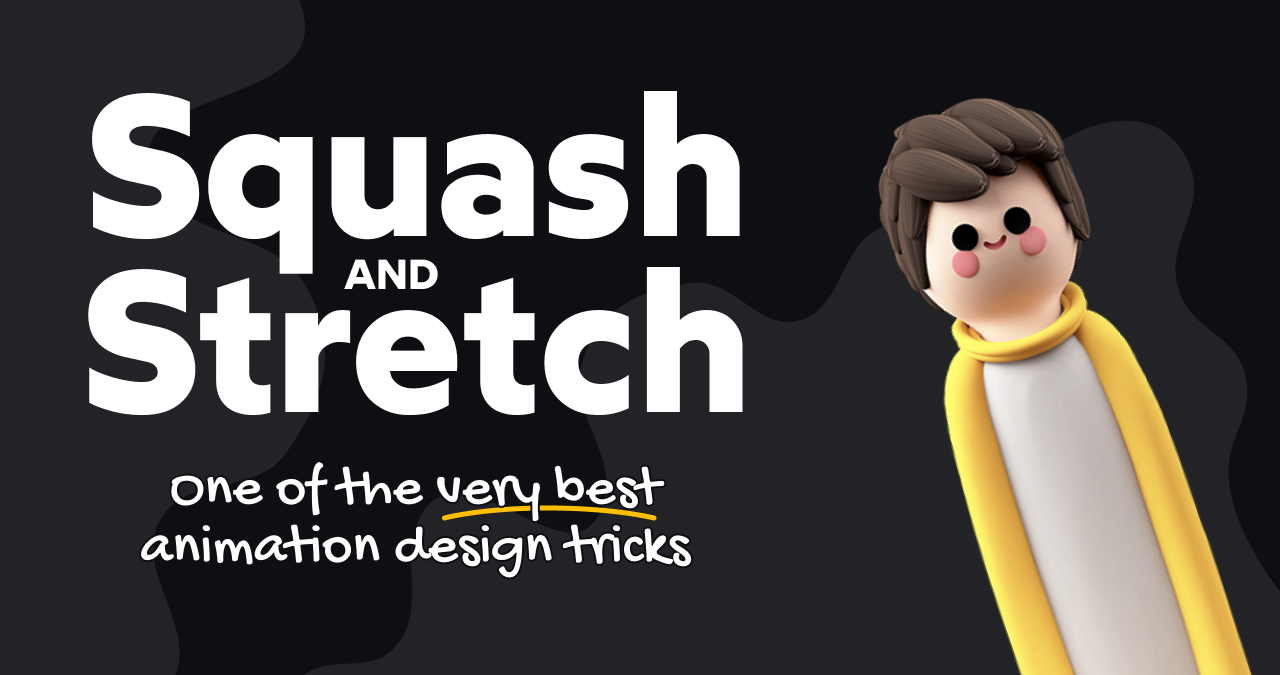
The foundational principles of traditional animation, first codified in the 1981 seminal text The Illusion of Life: Disney Animation by veteran animators Ollie Johnston and Frank Thomas, have transcended their origins in hand-drawn feature films like Aladdin and Beauty and the Beast to become essential components of contemporary user interface design. Among these twelve rules, the concept of "squash and stretch"—the practice of distorting an object’s shape during motion to emphasize its mass, flexibility, and velocity—has emerged as a critical technique for web developers seeking to create intuitive and engaging micro-interactions. By applying these cinematic techniques to Scalable Vector Graphics (SVG), developers can transform static web elements into responsive components that provide immediate, tactile feedback to users.
The Evolution of Animation Principles in Digital Media
The shift from static web design to dynamic, motion-rich interfaces represents a significant maturation of the World Wide Web. Historically, web animation was limited by low processing power and fragmented browser support, often restricted to simple CSS transitions. However, the maturation of the Web Animations API and the development of robust JavaScript libraries have allowed developers to integrate complex physics-based movements directly into the Document Object Model (DOM).
The "squash and stretch" principle is mathematically grounded in the preservation of volume. As an object accelerates, it elongates (stretch); upon impact, it compresses (squash). In a digital context, this provides a visual cue that helps the human brain interpret the "weight" and "physicality" of UI elements. When an arrow icon on a webpage subtly narrows and elongates during a cursor hover, it signals to the user that the element is reactive and responsive, effectively bridging the gap between flat digital design and real-world physics.
Implementation Strategies: CSS versus JavaScript
The technical implementation of these animations varies based on the desired performance profile and browser compatibility. As of mid-2026, browser support for direct transitions on SVG path attributes—specifically the d attribute—remains inconsistent, particularly within Safari. While the CSS path() function offers a lightweight, declarative method for defining these transitions, it often lacks the cross-browser reliability required for mission-critical production environments.
The current industry standard for high-fidelity web animation involves the use of specialized animation libraries such as Motion (formerly Framer Motion). These tools function by calculating intermediate frames in a dedicated animation thread, which prevents the main thread from becoming overloaded. This approach ensures that complex transformations remain performant, even on devices with limited hardware capabilities. Furthermore, these libraries allow for the implementation of spring-based physics, which produce more naturalistic motion curves compared to the rigid, linear movement defined by standard Bezier curves.
A Chronology of Technical Advancement
The integration of advanced animation into standard web workflows has followed a distinct timeline:
- 1981: Publication of The Illusion of Life, establishing the baseline principles for professional animation.
- 2010–2015: Rise of early JavaScript libraries like GSAP and jQuery, which first allowed for complex manipulation of DOM elements.
- 2018–2022: Standardization of the Web Animations API and the introduction of browser-native support for CSS
dattribute transitions. - 2023–2026: Emergence of modern, lightweight animation frameworks that leverage the Web Animations API to allow for "spring physics" and declarative animation state management.
Data-Driven Design and User Experience
Research into human-computer interaction (HCI) consistently demonstrates that subtle, purposeful motion improves user retention and task completion rates. According to industry analysis, interfaces that utilize "micro-interactions"—small, functional animations—receive higher engagement scores because they reduce the perceived latency of a website. When a user interacts with a button, the visual confirmation provided by a squash-and-stretch effect confirms that the input was received, mitigating the anxiety often associated with web-based interactions.
However, developers must balance these aesthetic choices with accessibility standards. The "prefers-reduced-motion" media query is a critical tool for ethical web development, ensuring that users with vestibular disorders or motion sensitivities can opt-out of high-intensity animations. Best practices now dictate that all web-based motion should be conditional, verifying the user’s system preferences before triggering non-essential visual transitions.
The Technical Challenge of SVG Path Interpolation
The primary hurdle in animating icons lies in the complexity of SVG path data. A path is defined by a series of commands, such as M (move to), L (line to), and h (horizontal line). To animate between two states, the browser must map the coordinates of the starting path to the destination path. If the number of points in the path differs, the animation will fail or produce "jittery" results.
Developers frequently address this by ensuring that the starting and ending paths share an identical structure, even if the visual output appears different. By standardizing the number of nodes in an SVG path, developers can use libraries to interpolate between coordinates smoothly. This process, while labor-intensive, is what separates basic UI design from high-end, polished digital experiences.
Industry Implications and Future Trends
The broader implication of adopting animation principles is a fundamental shift in how developers view the web: not as a collection of static documents, but as a dynamic, interactive software environment. As web development continues to intersect with traditional animation and graphic design, the demand for developers who understand timing, easing, and spatial reasoning is growing.
Educational initiatives, such as the "Whimsical Animations" program, reflect this trend, aiming to formalize the training of front-end engineers in the art of motion design. By teaching developers how to apply concepts like anticipation, follow-through, and staging, these programs are fostering a new generation of creators capable of producing highly responsive, emotionally resonant web applications.
Conclusion
The application of Disney’s 12 Basic Principles to modern web design is more than a trend; it is a refinement of user experience standards. By utilizing tools like the Motion library to implement sophisticated squash-and-stretch effects, developers are able to create digital spaces that feel intuitive and alive. As browsers continue to improve their support for these technologies, the barrier to entry for high-quality animation will continue to drop, ensuring that the next generation of web interfaces will be characterized by both performance and personality. The future of the web lies in this marriage of traditional artistic discipline and modern computational power.