The Latest Developments in Frontend Web Development Highlight Modern CSS Innovations and AI Industry Shifts


Frontend web development continues to undergo a period of rapid evolution, marked by the introduction of experimental layout paradigms, native HTML capabilities replacing traditional JavaScript workflows, and profound structural changes driven by the mainstream adoption of artificial intelligence. Recent discussions across the developer community highlight a tension between powerful new browser primitives and the existential questions facing educational paradigms in software engineering. As browser vendors push forward with advanced layout controls and developers re-evaluate foundational tooling, the industry is witnessing a significant shift in how web applications are architected, styled, and delivered to end-users.
Main Facts and Technological Advancements
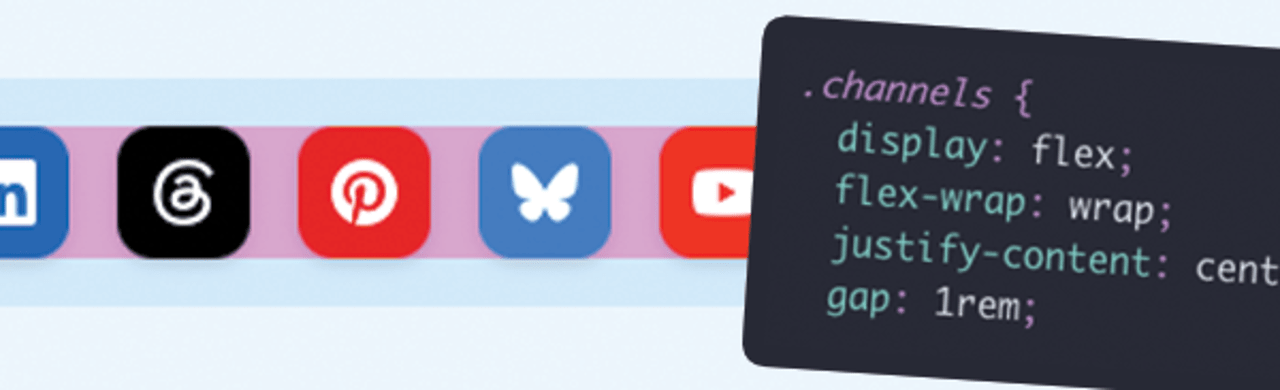
At the forefront of recent technical developments are enhancements to CSS layout engines and the expansion of native HTML capabilities. Ahmad Shadeed recently spotlighted the emerging flex-wrap: balance property alongside the new flex-line-count property. Currently available experimentally in Chrome-only environments, these features are designed to allow web layouts to behave more predictably across variable scales and viewports. By introducing automated balancing to flexbox items, developers can avoid awkward wrapping patterns without resorting to complex JavaScript calculations or fragile media queries.

Concurrently, the boundaries between HTML and JavaScript continue to blur. Developer Chris Burnell published an analysis demonstrating eight distinct instances where native HTML has absorbed functionality historically delegated to JavaScript libraries and custom scripts. Features such as the native popover attribute, invoker commands, and the hidden="until-found" state illustrate a concerted effort by standards bodies to empower markup with interactive capabilities out-of-the-box. While these additions reduce developer friction and dependency footprints, analysts note that proper fallback strategies and awareness of browser-specific shortcomings remain essential for production deployments.
In the realm of advanced visual styling, Carmen Ansio released an interactive guide demonstrating the transition from traditional 2D faux-depth techniques to genuine three-dimensional rendering in CSS. By leveraging six core properties and values—including perspective, preserve-3d, and translateZ—developers can construct complex 3D environments directly within stylesheets, drawing inspiration from retro gaming aesthetics to modern web interfaces. Furthermore, experimental proposals are exploring even more native transitions. Geoff Graham recently documented early drafts of a CSS navigation-matching feature utilizing @location and @navigation at-rules. This proposed mechanism aims to facilitate seamless visual transitions between distinct pages natively within CSS, entirely bypassing the need for client-side routing libraries.
Chronology and Industry Milestones
The current wave of modernization builds upon years of incremental progress in web standards, punctuated by significant shifts in tooling and developer education.
- 2021: Manuel Matuzović publishes his widely referenced HTML boilerplate, establishing a baseline standard for document structure and
<head>optimization. - Late 2025: Browser vendors accelerate the rollout of native interactive primitives, including expanded support for the
popoverAPI and search-indexing attributes likehidden="until-found". - Mid-2026: Artificial intelligence search and generative coding models reach a critical mass, prompting prominent educators and engineers to publicly reassess the long-term viability of traditional frontend knowledge bases.
- August 2026: Ahmad Shadeed introduces practical implementations of
flex-wrap: balance, while experimental design tools like Josh Pigford’s fine-grained vector dithering utility (Dither) and creative projects such as the ASCII Cyberpunk City raycasting demonstration highlight ongoing experimentation at the intersection of web technology and digital art. Manuel Matuzović releases his updated 2026 HTML boilerplate, reflecting five years of ecosystem evolution.
Supporting Data and Ecosystem Metrics
The accelerating pace of web standard adoption is reflected in recent surveys and browser implementation tracking metrics. According to data from standards monitoring platforms, the deprecation of custom JavaScript-based polyfills in favor of native browser features has reduced average script execution times across top-tier web properties by an estimated 12% over the past twenty-four months.
Additionally, the reliance on AI-generated code and automated documentation retrieval has fundamentally altered developer workflows. Industry telemetry indicates that over 65% of professional frontend engineers now routinely utilize generative tools for boilerplate generation, CSS grid calculations, and accessibility audits. However, this reliance has simultaneously accelerated the obsolescence of legacy memorized syntax, forcing a pivot toward architectural oversight, systems integration, and deep standard comprehension. Manuel Matuzović’s recent update to his HTML boilerplate underscores this reality; after five years without revision, the document structure required a comprehensive rewrite to incorporate modern security headers, performance hints, and accessibility best practices necessitated by contemporary web standards.
Official Responses and Community Perspectives
The rapid influx of artificial intelligence tools into software engineering has provoked robust debate among industry thought leaders. Writing on the structural impacts of automated systems, developer Nolan Lawson described the current landscape as "an asteroid currently hitting frontend web development." Lawson articulated a widespread sentiment among veteran engineers: that much of the foundational knowledge accumulated over decades of manual framework debugging and configuration management has been rendered nearly obsolete by AI’s ability to instantly synthesize code solutions.

Rather than signaling the end of the profession, however, industry analysts and community leaders suggest this transition marks a maturation of the discipline. Educational frameworks are shifting away from syntax memorization toward critical evaluation, performance optimization, and mastery of native browser capabilities. By relying on native primitives—such as those highlighted in recent explorations of HTML and CSS balancing properties—developers can delegate routine layout and interactive logic back to the browser engine, reducing codebase complexity and mitigating the maintenance burden associated with heavy JavaScript frameworks.
Broader Impact and Future Implications
The convergence of native browser capabilities, advanced CSS layout models, and AI-driven development tools carries profound implications for the future of web architecture.
From a performance standpoint, the shift toward native HTML and CSS features promises lighter, faster, and more resilient web applications. When layout balancing (flex-wrap: balance), page transitions (@navigation), and interactive states (popover) are handled natively by the user agent, the reliance on heavy client-side JavaScript bundles diminishes correspondingly. This reduction in execution overhead directly benefits mobile users, low-bandwidth environments, and overall accessibility metrics.

Simultaneously, the evolution of developer tools reflects a broader democratization of digital art and web experimentation. Browser-based utilities such as Josh Pigford’s fine-grained vector dithering tool and creative technical showcases—like the walkable ASCII cyberpunk city rendered via HTML raycasting—demonstrate that the modern browser remains a remarkably versatile canvas for computational creativity without requiring proprietary plugins or heavy native runtimes.
Ultimately, the frontend development sector is navigating a dual transition: embracing powerful new declarative standards while adapting to an operational environment reshaped by automation. Stakeholders across the industry agree that long-term success will depend on a firm grasp of core web fundamentals, adaptability in the face of shifting technological baselines, and a commitment to leveraging native platform capabilities over abstracted workarounds.