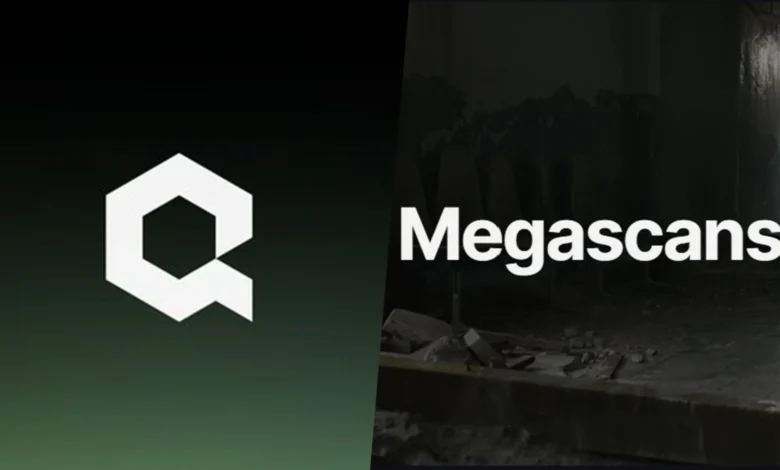
In a landmark development for the global 3D production industry, Epic Games has announced that its massive Quixel Megascans library—a premier collection of high-fidelity, photogrammetry-based digital assets—is now available to the public for free on an indefinite basis. This move, which marks a significant departure from previous licensing models, ensures that one of the most comprehensive repositories of real-world scanned data is accessible to game developers, visual effects artists, and architectural visualization professionals without the barrier of entry fees or restrictive subscription tiers. The transition, which began surfacing on the Fab marketplace earlier this month, is set to be fully realized by November 12, as the company completes its migration of the entire 23,000-asset library to its new unified marketplace platform.
A Strategic Pivot in Digital Asset Distribution
The decision to make Megascans permanently free is the latest iteration of Epic Games’ long-term strategy to lower the cost of high-end content creation. Two years ago, as part of the initial launch phase of the Fab marketplace, Epic introduced a temporary free access window for these assets to incentivize early adoption. However, by formalizing this access as a permanent fixture, the company is signaling a shift toward industry-standard ubiquity for its assets.
Quixel Megascans has long been considered the "gold standard" for photorealistic environmental design. By scanning real-world objects, surfaces, and organic materials, the library provides creators with the building blocks for hyper-realistic virtual worlds. The collection includes a vast array of 3D models, tileable PBR (Physically Based Rendering) surfaces, vegetation, decals, and complex material shaders. Historically, these assets were locked behind paid subscriptions or individual purchase models, which often necessitated significant budget allocations for independent studios and freelance artists. By removing these costs, Epic Games is essentially providing a massive subsidy to the creative industry, effectively democratizing the ability to produce AAA-grade visual content.
Chronology of the Transition
The integration of the Megascans library into the Fab ecosystem has been a methodical process spanning several months. Following the initial rollout of the Fab marketplace—which serves as the successor to the Unreal Engine Marketplace and the Sketchfab Store—Epic Games focused on centralizing its disparate asset offerings.
- January 1, 2025: A critical milestone date for existing customers. Epic Games has confirmed that any user who purchased Megascans assets or bundles on or after this date will be eligible for a refund. These funds are being returned to the user’s Epic Account Balance by the end of the calendar year.
- Early November 2026: The official announcement of the permanent free license was disseminated, alongside instructions for users to monitor the Fab marketplace as listings are updated in batches.
- November 12, 2026: The final deadline for the complete migration and update of all 23,000 assets to the new free-access structure on the Fab platform.
Expanded Rights and AI Training Capabilities
Perhaps the most significant aspect of this update is the revision of the End User License Agreement (EULA) regarding Artificial Intelligence. In a move that reflects the rapidly evolving landscape of generative AI, Epic Games has explicitly updated its terms to permit the use of Megascans and Megaplants assets for the training of AI models.
In an official statement, the company noted that these assets provide a high-quality data foundation for machine learning, allowing AI models to "learn from real-world scans to help you generate varied, photorealistic environments for your projects." This is a stark contrast to the stance of many other intellectual property holders who have moved to restrict the use of their assets in AI training datasets. By actively encouraging this use case, Epic Games is positioning its ecosystem as a hub for the next generation of AI-assisted 3D content creation.
This policy change provides developers with legal certainty in an area that remains highly litigious. By explicitly granting these rights, Epic is mitigating the risk for studios looking to build proprietary tools or generative pipelines, provided those pipelines leverage the legally obtained Megascans data.
Technical Implications for the Creative Pipeline
The impact of this shift extends far beyond cost-saving measures. In the realm of 3D modeling and game design, the technical bottleneck has historically been the time-intensive process of creating high-fidelity assets. By providing 23,000 pre-made, optimized, and PBR-ready assets, Epic is effectively shortening the production cycle for developers.
The Fab marketplace has been engineered to support this workflow through an intuitive "Channels" system, which allows users to filter assets by engine compatibility. While these assets are part of the Epic ecosystem, the Fab Standard License is notably agnostic; it permits the use of Megascans assets in any game engine or external 3D tool, including industry rivals like Unity or Godot, as well as offline rendering packages like Blender, Maya, or Houdini. This cross-platform flexibility is essential for maintaining the widespread utility of the Megascans library and reinforces Epic’s intent to be the foundational infrastructure layer for the metaverse and digital content creation at large.
Economic and Market Analysis
From an economic perspective, this move represents a "platform moat" strategy. By providing the best assets in the industry for free, Epic increases the overall value of the Fab marketplace, making it the default destination for 3D artists. Even if the assets are free, the traffic generated by the repository increases the visibility of other paid assets on the platform, fostering a more robust marketplace ecosystem.
Furthermore, the refund program for purchases made since January 2025 demonstrates a commitment to maintaining goodwill within the developer community. By returning funds to the Epic Account Balance—which can be spent on other Fab assets or Epic services—the company ensures that the capital remains within its internal ecosystem, further cementing user loyalty.
Broad Industry Impact
For independent developers and small-to-medium studios, the removal of licensing costs for Megascans is transformative. Previously, these studios had to weigh the quality of photogrammetry against the cost of licensing individual assets. With this barrier removed, the average visual quality of indie games and experimental film projects is likely to see a significant uptick.
Architectural visualization firms, which rely heavily on real-world accuracy, stand to benefit similarly. The ability to populate a scene with high-quality, real-world vegetation and materials without recurring licensing fees allows these firms to allocate their budgets toward labor and high-end hardware, such as the best-in-class laptops for 3D modeling and CAD, rather than asset acquisition.
As the industry moves toward November 12, the transition is expected to be seamless. Users are encouraged to keep a close watch on their Fab dashboards, as the update process is being handled in waves. For those looking to utilize these assets for AI training, the new license provides a clear, compliant path forward, potentially sparking a new wave of innovation in procedural generation and automated world-building.
Ultimately, Epic Games’ decision to make Quixel Megascans permanently free is a testament to the company’s belief in the future of 3D content. By providing the tools to build photorealistic environments to every creator—regardless of budget—Epic is not just supporting the current generation of artists; it is setting the stage for a new standard of visual fidelity that will define the digital experiences of the next decade. As the repository continues to grow, the Fab marketplace is poised to become the most critical piece of infrastructure for the digital age, a central library of the physical world rendered in perfect, accessible, and free digital form.
Related posts: