The Evolution of the Baseline Initiative
The Baseline project, managed by the web platform developer experience team, serves as a crucial metric for web developers. It identifies features that have reached broad support across all major browser engines—Chrome, Edge, Firefox, and Safari. By categorizing features as "Newly Available" or "Widely Available," the initiative aims to remove the uncertainty that often plagues front-end development, where cross-browser inconsistencies frequently force teams to maintain complex testing infrastructures.
The August 2026 update marks a pivotal shift in how developers audit their own codebases. With the integration of Baseline features into Lighthouse, the industry-standard performance and quality tool, developers can now gain automated insights into whether their sites are utilizing modern, interoperable APIs or relying on legacy patterns that may no longer be necessary.
Automated Auditing and Modern Web Guidance
A primary focus of this month’s updates is the integration of the Baseline Features audit into Lighthouse. This development represents a move toward proactive quality assurance. Instead of manual verification of browser compatibility tables, developers can now run a Lighthouse audit to automatically identify which parts of their application rely on features that have achieved Baseline status. This audit serves two purposes: it highlights opportunities for code modernization and flags instances where external libraries could be replaced by native platform capabilities.
The industry has seen an increased interest in the use of agentic coding tools—AI-driven assistants capable of refactoring and suggesting code improvements. Researcher Ahmad Alfy recently tested Google’s "modern-web-guidance" skill against a production-grade React application. The results of this experiment underscore the efficacy of using automated guidance to surface outdated patterns. In large-scale, enterprise-level codebases, where technical debt accumulates over years, these tools act as a bridge between legacy code and modern, optimized standards. By identifying where developers can swap out third-party dependencies for built-in browser features, these audits not only improve site performance but also significantly reduce the bundle size and maintenance overhead for development teams.
Technical Milestones: APIs Reshaping Development
The 2026 release cycle has introduced several APIs that are fundamentally changing the approach to complex web tasks. Dennis Morello, a prominent voice in the web development community, recently analyzed four APIs that have reached Baseline status this year: the Navigation API, container style queries, the :open pseudo-class, and the Math.sumPrecise() function.
The Navigation API is particularly notable for its ability to handle complex single-page application (SPA) routing without the need for the older, more cumbersome History API. Similarly, the shift toward container style queries represents a major evolution in CSS, allowing components to respond to their parent container’s context rather than just the viewport size. These additions, combined with the precision-focused Math.sumPrecise() and the utility of the :open selector, allow developers to shed significant amounts of JavaScript boilerplate code. The implications are clear: as native APIs become more powerful, the reliance on heavy frameworks to perform fundamental browser tasks is declining, leading to faster, more resilient web applications.
Newly Available Features: Enhancing Localization and Async Processing
The "Newly Available" category for July 2026 includes the standardization of Intl.Locale. This object is a significant step forward for developers building global-facing applications. Previously, managing locale identifiers—which include language, script, region, and various extension sub-tags—required custom string-parsing logic or large internationalization libraries.
By providing a native object to parse and manipulate these tags, Intl.Locale ensures that developers can handle multilingual content with greater consistency and less risk of error. This standardization is critical for accessibility and user experience, as it allows browsers to handle date, time, and number formatting according to specific regional standards with minimal overhead.
In the realm of asynchronous JavaScript, Array.fromAsync() has officially entered the "Widely Available" category. This method simplifies the process of creating an array from an asynchronous iterable, effectively mirroring the functionality of Array.from() for async data streams. For developers working with APIs that return data in chunks or streams, this addition removes the need for complex wrapper functions or await loops, making the code cleaner and easier to debug.
Standardization of Visual and Media Elements
Visual performance and consistency are pillars of modern web development. The updated MDN Image file type and format guide provides a comprehensive overview of the current landscape of image delivery. As browsers move toward supporting more efficient formats like AVIF and JPEG XL, the guide serves as a central resource for developers to determine which formats are "safe" to implement based on their target user base.
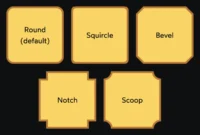
Furthermore, the introduction of the rect() CSS function for clipping and offsetting provides a more intuitive syntax for layout designers. By allowing developers to define clip paths using simple inset distances from a containing block’s edges, the rect() function reduces the reliance on more complex and often confusing SVG-based clipping masks. This aligns with the broader industry trend of bringing sophisticated graphic capabilities into native CSS.
Broader Impact and Implications
The transition toward these standardized features carries significant weight for the future of the web. By focusing on interoperability, the Baseline initiative is effectively shortening the development lifecycle. When a feature reaches Baseline, developers no longer need to write conditional code for different browser engines, which historically accounted for a significant portion of debugging time.
From a business perspective, the reduction in technical debt and the simplification of dependencies translate to lower long-term maintenance costs. Companies that adopt these native features early can offer faster, more secure, and more accessible experiences to their users. Moreover, the integration of these standards into automated tools like Lighthouse ensures that even smaller development teams can stay aligned with the latest web platform best practices without needing to manually monitor every browser update.
Looking Ahead
The path forward for the web platform is one of consolidation and optimization. The events of July 2026 highlight a mature ecosystem where the focus has shifted from "can this feature be used?" to "how can this feature best be implemented?" As the Baseline initiative continues to track the progress of emerging APIs, the developer community can expect further refinements in how web applications interact with hardware, manage data, and render complex interfaces.
For developers seeking to contribute to this evolution, the web platform issue tracker remains the primary channel for feedback. Whether through reporting discrepancies in browser implementations or suggesting new features for future audits, the community plays an active role in shaping the standards that define the modern web. As the industry moves into the latter half of 2026, the emphasis will likely remain on reducing the "web platform tax"—the cumulative effort required to support legacy environments—thereby enabling a faster, more capable internet for all users. The advancements recorded this month serve as a testament to the collaborative efforts between browser vendors and the developer community to create a unified, robust, and forward-thinking digital environment.