Corticeira Amorim Partners with Dezeen to Unveil Sustainable All-Cork Trophies for the 2026 Awards

The global architecture and design community is preparing for one of the calendar year’s most anticipated gatherings as the Dezeen Awards ceremony approaches. Set to take place next week on November 16 at London’s prestigious Royal Opera House, the gala event will bring together shortlisted studios, esteemed judges, and international creative professionals to honor the very best in global architecture, interiors, and design. Among the highlights of the evening will be the debut of a newly redesigned trophy collection. Crafted entirely from sustainably harvested cork by the world-renowned Portuguese manufacturer Corticeira Amorim, these trophies represent a major material evolution for the iconic D-shaped award.
The partnership between Dezeen and Corticeira Amorim bridges the gap between high-profile international design recognition and ecological responsibility. As final tickets for the November 16 ceremony remain available until midday in London on November 11, the unveiling of the trophies sets an ambitious tone for an evening dedicated to celebrating design excellence while confronting the pressing environmental challenges facing the built environment.
A Material Evolution: The 2026 Cork Trophiy Redesign
For the 2026 edition of the Dezeen Awards, the iconic D-shaped silhouette—originally conceived in 2018 by Dutch design studio Atelier NL using traditional local clay—has been reimagined. Rather than departing from the recognizable geometry that has come to symbolize the awards, Corticeira Amorim sought to preserve the structural form while allowing the raw, organic qualities of cork to dictate the aesthetic and tactile experience of the object.
According to Cristina Amorim, a board member at Corticeira Amorim, the primary design objective was to create a very direct encounter between the recipient and the material itself. The manufacturing process required meticulous experimentation, pushing the boundaries of how cork can be processed, compressed, and finished. By developing various cork compositions, textures, and subtle color variations, the production team successfully established a distinct hierarchy of grains and finishes to differentiate the winner tiers. This ensures that while individual trophies—ranging from project categories to the highly coveted Project of the Year and Designers of the Year accolades—possess unique tactile qualities, they all share a cohesive visual language.
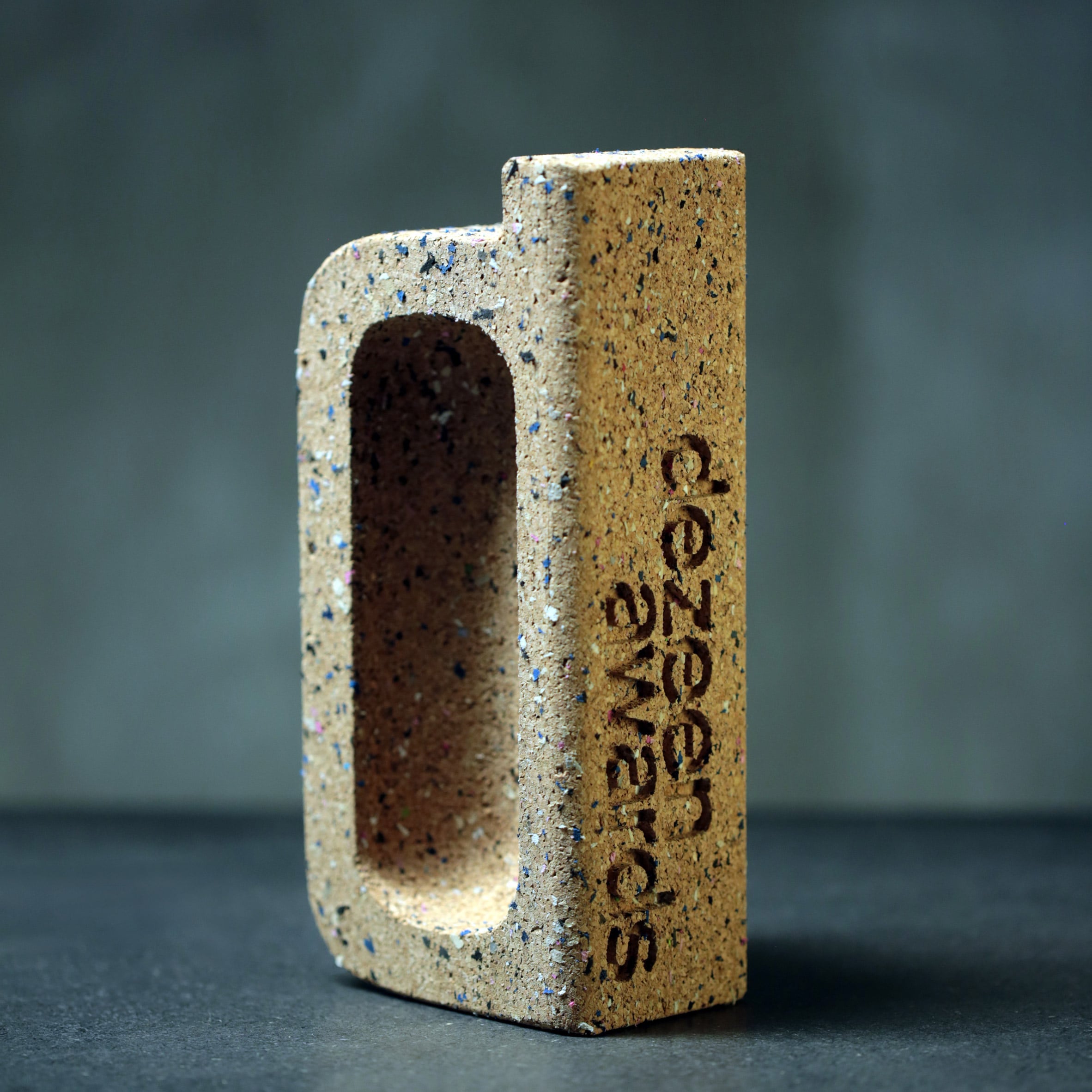
The result is a collection of objects that feel simultaneously modern and timeless. The characteristic warmth, natural grain, and tactile resilience of cork provide a stark contrast to the rigid, highly processed materials often associated with corporate or creative trophies. In the words of Cristina Amorim, the material is not merely associated with the awards; rather, it becomes an integral part of the award itself.
The Ecological Credentials of Cork
At a time when the architecture and design industries face increasing scrutiny regarding their carbon footprints and resource consumption, the choice of cork as a primary trophy material carries profound symbolic and practical weight. Derived from the outer bark of the cork oak tree (Quercus suber), cork is a 100 per cent natural, renewable, and recyclable material.
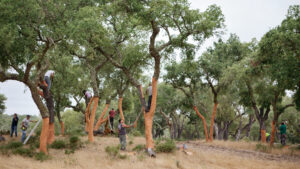
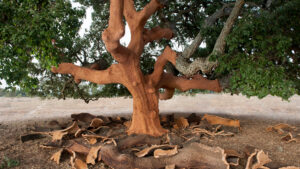
The harvesting process of cork is inherently sustainable. It requires no felling of trees; instead, skilled harvesters strip the outer bark manually using traditional axes, a delicate procedure that has been refined over centuries. A single cork oak tree can be harvested multiple times over a lifespan that often exceeds two centuries, with the bark naturally regenerating at intervals of no less than nine years. This harvesting process actually stimulates the tree to absorb significant amounts of carbon dioxide, making cork oak forests vital carbon sinks in the western Mediterranean region, particularly in Portugal, where Corticeira Amorim has operated for more than a century and a half.
Beyond its carbon-sequestering properties, cork boasts a unique cellular structure consisting of millions of microscopic air-filled pockets. This structure imparts remarkable physical traits: the material is exceptionally lightweight, highly resilient, shock-absorbent, and naturally resistant to moisture and fire. As industries search for viable alternatives to petrochemical-derived plastics and energy-intensive metals, cork continues to emerge as a versatile, low-impact biomaterial capable of replacing more polluting substances across diverse applications.
A Legacy of Material Innovation at Dezeen Awards
The introduction of the cork trophy continues a rich tradition of material exploration that has characterized the Dezeen Awards since its inception in 2018. Each year, the organizers collaborate with forward-thinking designers and material manufacturers to challenge conventional notions of what a trophy can be, ensuring that the physical objects presented to winners reflect contemporary discussions surrounding sustainability and material provenance.
The chronology of Dezeen Awards trophies highlights a steady progression toward circularity and localized material sourcing:
- 2018: The inaugural trophy was designed by Dutch studio Atelier NL. Crafted from local clay, the design paid homage to the traditional yellow bricks characteristic of London’s architectural heritage.
- 2020: The awards commissioned Atelier_Wood and London Trees to produce trophies fashioned entirely from timber salvaged from urban trees felled across the British capital, highlighting the value of local waste streams.
- 2023: Dezeen partnered with Paper Factor to create trophies utilizing an innovative compound made from micro-paper, demonstrating the structural potential of recycled cellulose.
- 2026: Corticeira Amorim introduces the all-cork trophy series, celebrating one of humanity’s oldest natural materials through contemporary processing techniques.
This sequential evolution underscores a broader industry shift: trophies are no longer viewed merely as static symbols of victory, but as active participants in ongoing conversations about material innovation, lifecycle analysis, and ecological stewardship.
Corticeira Amorim and the Architecture Community
For Corticeira Amorim, the collaboration with Dezeen is the latest in a series of high-profile cultural partnerships designed to showcase the unexpected applications of cork in contemporary architecture and design. While the company is globally recognized for its dominance in the wine-stopper industry and standard architectural insulation, its leadership has consistently pushed to reposition cork as a high-performance material for visionary creators.
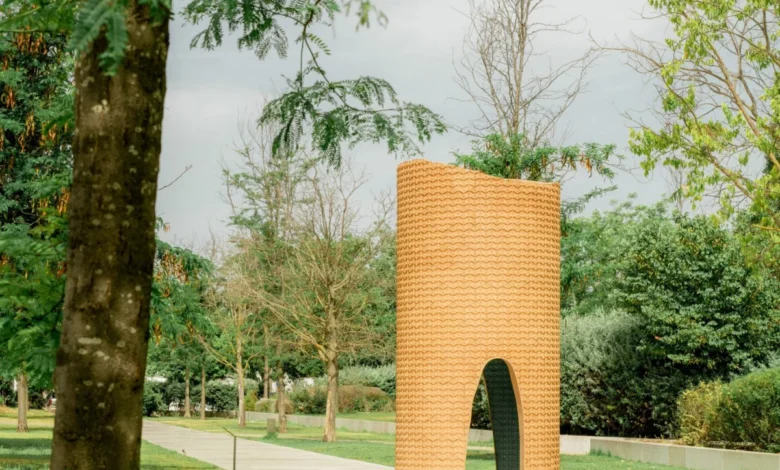
In 2024, Corticeira Amorim spearheaded City Cortex, a major public arts program that transformed various urban spaces across Lisbon. The initiative invited internationally acclaimed architects and designers to create large-scale, experimental installations using cork. Luminaries such as Eduardo Souto de Moura, Diller Scofidio + Renfro, and Yves Béhar contributed ambitious structural interventions, demonstrating the material’s capacity to withstand exterior elements while offering striking aesthetic qualities. Eduardo Souto de Moura’s massive cork chair installation, in particular, captured public imagination and highlighted the structural integrity achievable with agglomerated cork blocks.
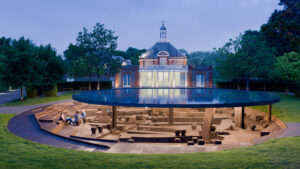
These cultural endeavors follow a long line of architectural milestones featuring Amorim’s products, most notably the iconic 2012 Serpentine Pavilion designed by Herzog & de Meuron and Ai Weiwei. That subterranean pavilion relied heavily on cork to create an immersive, tactile environment that invited visitors to touch, smell, and experience the material in an architectural context. Over the years, product collaborations with legendary designers such as Jasper Morrison, Ronan and Erwan Bouroullec, and Naoto Fukasawa have further cemented cork’s reputation as a medium of infinite versatility.
Broader Implications for the Design Industry
The adoption of cork for the 2026 Dezeen Awards trophies carries broader implications for the wider design and manufacturing sectors. As clients, consumers, and regulatory bodies demand greater transparency regarding material lifecycles, organizations are increasingly forced to reevaluate the physical goods they produce, distribute, and discard.
By utilizing a material that actively contributes to forest regeneration and carbon sequestration, Dezeen and Corticeira Amorim are setting a benchmark for event merchandising and award ceremonies globally. The transition away from synthetic resins, electroplated metals, and virgin plastics demonstrates that prestige and luxury do not require environmental degradation. Instead, true contemporary luxury is increasingly defined by material authenticity, ecological provenance, and a deep respect for natural processes.
Furthermore, the collaboration highlights the untapped potential of traditional biomaterials when paired with modern industrial processing. As Cristina Amorim noted, humanity has worked with cork for millennia, yet the creative community is only beginning to scratch the surface of its full capabilities. By continuously testing new densities, grain configurations, and surface treatments, manufacturers can unlock unprecedented functional and aesthetic applications, ensuring that ancient materials remain at the forefront of future design paradigms.
The 2026 Ceremony and Next Steps
As the final preparations for the November 16 gala at the Royal Opera House take shape, anticipation continues to build among the shortlisted nominees. Presented in partnership with global technology company Trimble—whose hardware and software solutions empower architects and designers to transform spatial design and enhance productivity—the ninth edition of the Dezeen Awards promises to be a landmark event for the international creative community.
With ticket sales closing firmly at midday on November 11, attendees are securing their places for an evening that will not only crown the leading projects and practices of the year, but also hand-deliver tangible proof of design’s sustainable future. When the winners walk away with their bespoke cork trophies next week, they will be holding more than just a symbol of professional achievement; they will be holding a piece of a centuries-old ecological tradition, thoughtfully reshaped for the challenges of tomorrow.