
Best National Parks For Wildflowers Usa

Unveiling America’s Floral Tapestry: The Best National Parks for Wildflowers in the USA
The United States National Park System, a vast network of protected landscapes, showcases an unparalleled diversity of ecosystems, and among its most breathtaking spectacles are the ephemeral carpets of wildflowers that bloom each season. From the arid deserts of the Southwest to the alpine meadows of the Rockies and the lush forests of the Pacific Northwest, these parks offer vibrant displays of nature’s artistry, drawing photographers, hikers, and nature enthusiasts alike. Identifying the "best" is subjective, but certain parks consistently deliver extraordinary wildflower experiences, often dictated by elevation, climate, and specific geological conditions that foster unique floral communities. Understanding the optimal timing for these blooms, which can vary significantly based on latitude and altitude, is crucial for planning a successful wildflower expedition.
Rocky Mountain National Park, Colorado: Renowned for its accessible alpine tundra and montane ecosystems, Rocky Mountain National Park is a premier destination for wildflower viewing, particularly from late June through September. The park’s elevation gradient means a staggered blooming season, offering diverse floral displays at different altitudes. Lower elevations, around the Moraine Park and Horseshoe Park areas, often burst with Indian Paintbrush, Columbine (the state flower), Lupine, and various species of aster and goldenrod in early to mid-summer. As you ascend, the landscape transitions to subalpine and then alpine zones, where hardy, vibrantly colored wildflowers thrive in the harsh conditions. Trail Ridge Road, the highest continuous paved road in North America, provides access to stunning alpine meadows teeming with Sky Pilot, Alpine Forget-me-nots, Parry’s Primrose, and the iconic Rocky Mountain Columbine. Popular hiking trails like the Bear Lake Loop, Emerald Lake Trail, and Ute Trail offer intimate encounters with these high-altitude floral wonders. The park’s varied microclimates and extensive trail system ensure that even during a single season, there are numerous opportunities to witness the landscape transformed by a kaleidoscope of colors. The sheer accessibility to alpine environments makes it a standout for experiencing a wide range of high-altitude flora without arduous backcountry expeditions.
Great Smoky Mountains National Park, North Carolina/Tennessee: This biodiverse hotspot is a true haven for wildflower enthusiasts, boasting over 1,600 species of flowering plants, making it one of the most diverse temperate deciduous forests in the world. The blooming season here is remarkably long, starting in early spring and continuing through late autumn, with peak displays often occurring from April to June. The lower elevations and coves of the Smokies are particularly prolific. Trails like those in the Deep Creek area, Porters Creek, and along the Cades Cove Loop Road reveal an astonishing array of spring ephemerals, including Trillium (in many varieties), Trout Lily, Bloodroot, Jack-in-the-Pulpit, and various violets and phlox. As spring progresses, the montane and higher elevation areas come alive with rhododendrons, azaleas (especially the vibrant pink and red flame azaleas), and mountain laurel. Clingmans Dome and Newfound Gap offer access to these blooming shrubs, often creating stunning visual corridors. The park’s humid climate and rich soil support a dense and varied understory, providing a continuous display of color that shifts with the advancing seasons. For those seeking a truly immersive experience, guided wildflower walks are often offered by park rangers and local organizations, providing valuable insights into the identification and ecological significance of these captivating plants.
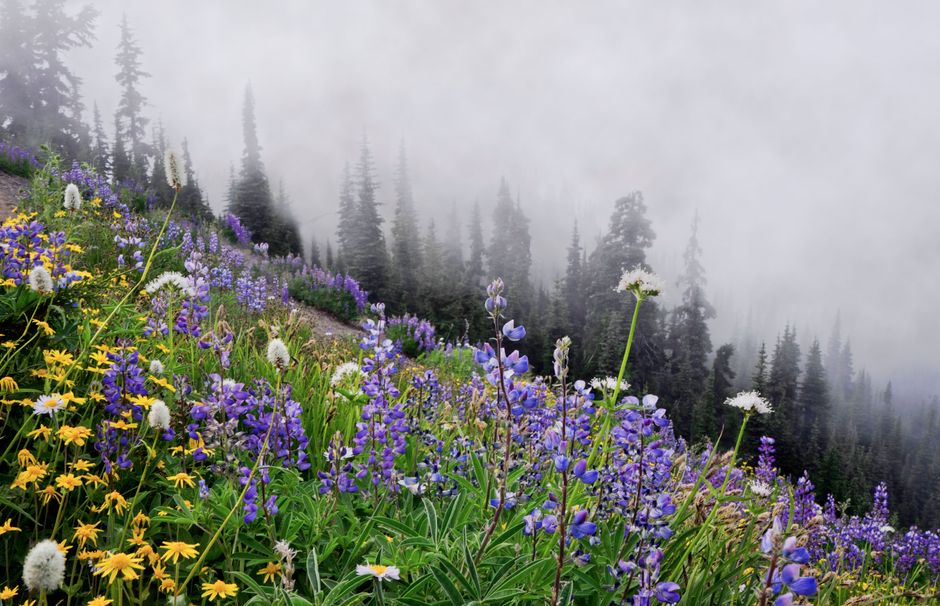
Mount Rainier National Park, Washington: Famous for its majestic stratovolcano and old-growth forests, Mount Rainier National Park transforms into a floral wonderland in the summer months, particularly from July through September, with the wildflower season peaking in late July and early August. The subalpine meadows ringing the base of Mount Rainier are legendary for their abundance and variety. Skyline Trail, leading from Paradise, is arguably the most celebrated wildflower hike in the park, showcasing vast expanses of vibrant blooms against the backdrop of glaciers and the iconic mountain. Here, you’ll find a breathtaking display of Indian Paintbrush, Lupine, Beargrass, Aster, Fireweed, and various species ofpaintbrush. The meadows are so dense with flowers that they appear as living tapestries. Beyond Paradise, trails like the Grove of the Patriarchs (though more focused on old-growth trees, it offers a different floral perspective at lower elevations) and trails around Sunrise offer additional opportunities to witness this floral spectacle. The park’s relatively short, intense blooming period is a direct consequence of the heavy snowpack that blankets the region for much of the year, creating a compressed window for plant life to flourish. The sheer density and color saturation in these meadows are truly unforgettable.
Death Valley National Park, California/Nevada: While often associated with extreme heat and barren landscapes, Death Valley National Park is a master of surprise, delivering spectacular wildflower displays following significant rainfall, typically in late winter and spring (February to April). These "superblooms" are rare but incredibly rewarding, transforming the desert floor into a vibrant carpet of color. The specific timing and intensity depend entirely on the amount and distribution of winter precipitation. When conditions are right, vast expanses of the desert floor, particularly in areas like Badwater Basin, Darwin Falls, and the historic Scotty’s Castle area, erupt in a riot of color. Common species include Desert Gold, Sand Verbena, Brittlebush, Desert Five-Spot, and various species of phacelia and primrose. The stark, arid backdrop makes the appearance of these delicate flowers even more dramatic and awe-inspiring. It’s essential to check park conditions and forecasts closely before planning a trip to Death Valley for wildflowers, as these events are highly unpredictable and can vary dramatically from year to year. The ephemeral nature of these blooms adds to their allure, making a superbloom a truly special event to witness.
Yellowstone National Park, Wyoming/Montana/Idaho: Yellowstone, the world’s first national park, offers a diverse range of habitats that support a rich tapestry of wildflowers, particularly from late spring through early autumn. The park’s geothermal features create unique microclimates, and its vast size encompasses meadows, forests, and alpine regions, each with its own floral calendar. In the spring and early summer, lower elevations and riparian areas around the Lamar and Hayden Valleys come alive with bright yellow Balsamroot, Indian Paintbrush, and various Lupine species. As the season progresses into mid-summer, the higher elevation meadows, particularly those accessible via hiking trails near Mount Washburn and in the Beartooth Mountains (partially within Yellowstone), begin to bloom with a diverse array of alpine wildflowers, including Gentians, various composites, and delicate saxifrages. The Firehole River and Norris Geyser Basin areas, with their hydrothermal activity, also support specialized plant communities that bloom in vibrant hues. Yellowstone’s sheer scale means that wildflower viewing opportunities are spread throughout the park and across a considerable portion of the year, offering a continuously evolving floral landscape for visitors to explore.
Olympic National Park, Washington: This park’s incredible diversity, encompassing rugged coastlines, temperate rainforests, and glaciated mountains, provides a unique setting for wildflower appreciation. The blooming season here is also staggered and varied. Along the coastal areas, such as Rialto Beach and Ruby Beach, visitors can find hardy coastal wildflowers blooming in spring and summer, including Sea Thrift and various lupines. The Hoh and Quinault Rainforests, while more known for their moss-draped trees, still offer subtle floral displays in the spring with species like Skunk Cabbage and various small forest flowers. The real wildflower spectacle in Olympic National Park, however, occurs in the alpine and subalpine meadows of the Olympic Mountains. Hurricane Ridge, accessible by road, is a prime location for spectacular wildflower displays in July and August. Here, visitors will find vast meadows painted with vibrant Indian Paintbrush, Lupine, Yellow Monkeyflower, and Aster. The Olympic Mountains, being a distinct ecological island, boast a high degree of endemism, meaning many of the species found here are not found anywhere else on Earth. This makes a wildflower excursion to Olympic particularly rewarding for those interested in unique botanical discoveries.
North Cascades National Park, Washington: Often referred to as the "American Alps," North Cascades National Park offers rugged beauty and stunning wildflower displays, particularly in its alpine meadows during the summer months. From July through September, trails like the Maple Pass Loop and the area around Washington Pass provide access to breathtaking floral carpets. Expect to see a profusion of Indian Paintbrush, Lupine, Beargrass, Fireweed, and various species of Aster. The park’s challenging terrain and remote nature mean that many of the best wildflower viewing areas are accessed via hiking trails, often requiring significant elevation gain. However, the reward is unparalleled natural beauty, with vibrant blooms set against a backdrop of jagged peaks and turquoise lakes. The intense blooming period is a testament to the short, but vibrant, alpine growing season. The relative lack of crowds compared to some other national parks makes the wildflower experience in the North Cascades feel even more pristine and special.
Grand Teton National Park, Wyoming: Adjacent to Yellowstone, Grand Teton National Park offers a dramatic mountain landscape that also supports a beautiful array of wildflowers, particularly in its meadows and along its scenic drives. The blooming season typically runs from late May through August, with peak displays in June and July. Areas around Oxbow Bend, Mormon Row, and the String Lake and Leigh Lake areas offer opportunities to see vibrant displays of Indian Paintbrush, Lupine, Fireweed, and various species of Balsamroot. As you ascend into the foothills of the Teton Range, higher elevation meadows and trails, such as those leading to Cascade Canyon or Paintbrush Canyon, reveal a more diverse and delicate array of alpine wildflowers. The juxtaposition of the iconic Teton peaks with the vibrant colors of the wildflowers creates a truly iconic American landscape. The park’s accessibility and well-maintained trails make it a fantastic destination for both casual observers and dedicated wildflower photographers. The vibrant colors are often amplified by the stunning reflections in the numerous lakes.
Carson-Big Basin Redwoods State Park, California (While not a National Park, it’s a must-mention for its unique wildflower displays): While this article focuses on national parks, it’s crucial to acknowledge significant state parks that offer exceptional wildflower experiences. Carson-Big Basin Redwoods State Park, after significant recovery from recent wildfires, is experiencing a remarkable resurgence of its native flora. The coastal influence and the unique redwood ecosystem support a distinct set of wildflowers. During the spring months (March to May), the forest floor beneath the towering redwoods can be carpeted with species like Redwood Sorrel, California Poppy (though more prevalent in drier areas), various species of Trillium, and delicate forest orchids. The return of vibrant life to this iconic landscape is a testament to nature’s resilience and offers a unique opportunity to witness wildflowers in a setting unlike any other, showcasing the interplay between ancient forest giants and their delicate, colorful companions. (Note: This entry highlights a significant state park to provide broader context, acknowledging that exceptional wildflower destinations exist beyond federal national parks.)
Badlands National Park, South Dakota: This starkly beautiful landscape of eroded buttes, pinnacles, and spires comes alive with a surprisingly diverse range of wildflowers during the spring and summer months, typically from May through August. The semi-arid climate and prairie ecosystem support hardy, colorful species. Along the park’s scenic drives and hiking trails, such as the Notch Trail and Saddle Pass Trail, visitors can encounter vibrant displays of Purple Coneflower, Yellow Prairie Coneflower, various species of Aster, Goldenrod, and the striking Red Yucca. The contrast between the dramatic geological formations and the delicate, colorful wildflowers creates a visually striking and unique wildflower viewing experience. The park’s focus on prairie ecosystems means that many of the wildflowers are adapted to drier conditions, showcasing a different facet of America’s floral diversity compared to more mesic environments. The accessibility of the scenic loop road allows for easy viewing of many of these blooms.
Understanding the seasonal nuances of each park is paramount. Many of these parks, particularly those at higher elevations, have a compressed blooming season dictated by snowmelt. Lower elevation deserts can experience dramatic "superblooms" after exceptional rainfall, but these events are unpredictable. For the most up-to-date information on wildflower conditions, it is always advisable to consult the official park websites or local ranger stations. These resources often provide bloom reports, trail recommendations, and alerts for any specific conditions that might affect your visit. The United States National Park System, in its vastness and ecological richness, offers an unforgettable journey through America’s ever-changing floral tapestry.


