Jordan Eagles Explores the Intersection of Blood Donation Policy and Queer Identity in New York Mets Themed Exhibition at Pioneer Works

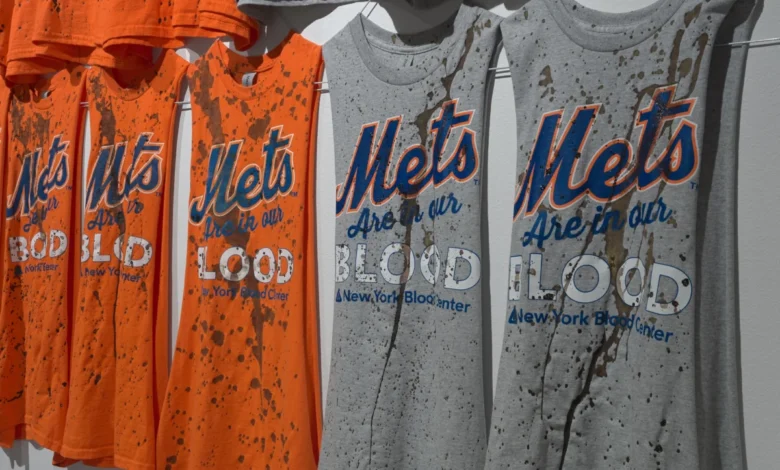
The genesis of artist Jordan Eagles’ latest exhibition, "Bases Loaded," began with a chance encounter three years ago during a bicycle ride along New York City’s East River. Eagles, a lifelong devotee of the New York Mets, observed a passerby wearing a team jersey emblazoned with the slogan, "The Mets are in our blood." The phrase, intended by the team as a testament to fan loyalty, struck Eagles with a profound sense of irony and bodily immediacy. As a gay man on PrEP (Pre-Exposure Prophylaxis), Eagles is historically and systematically excluded from the very act of blood donation that the jersey celebrates. This realization catalyzed a multi-year project that interrogates the boundaries of community, the politics of public health, and the yearning for inclusion within the quintessentially American framework of professional sports.
Eagles’ journey into the heart of this irony led him to eBay, where he tracked down the specific garment. He discovered that the jerseys were promotional items distributed at Citi Field to fans who participated in team-sponsored blood drives. For the average fan, the shirt is a badge of civic duty and tribal belonging. For Eagles, however, the garment represented a barrier. After modifying the shirt into a muscle tee for his personal use, he realized that he could never truly "earn" the jersey through the prescribed channel of donation. This personal disconnection serves as the thematic anchor for "Bases Loaded," currently on view at Pioneer Works in Brooklyn, where it is scheduled to run through August 9, 2026.
Visual Language: Jerseys, Resin, and Corporeality
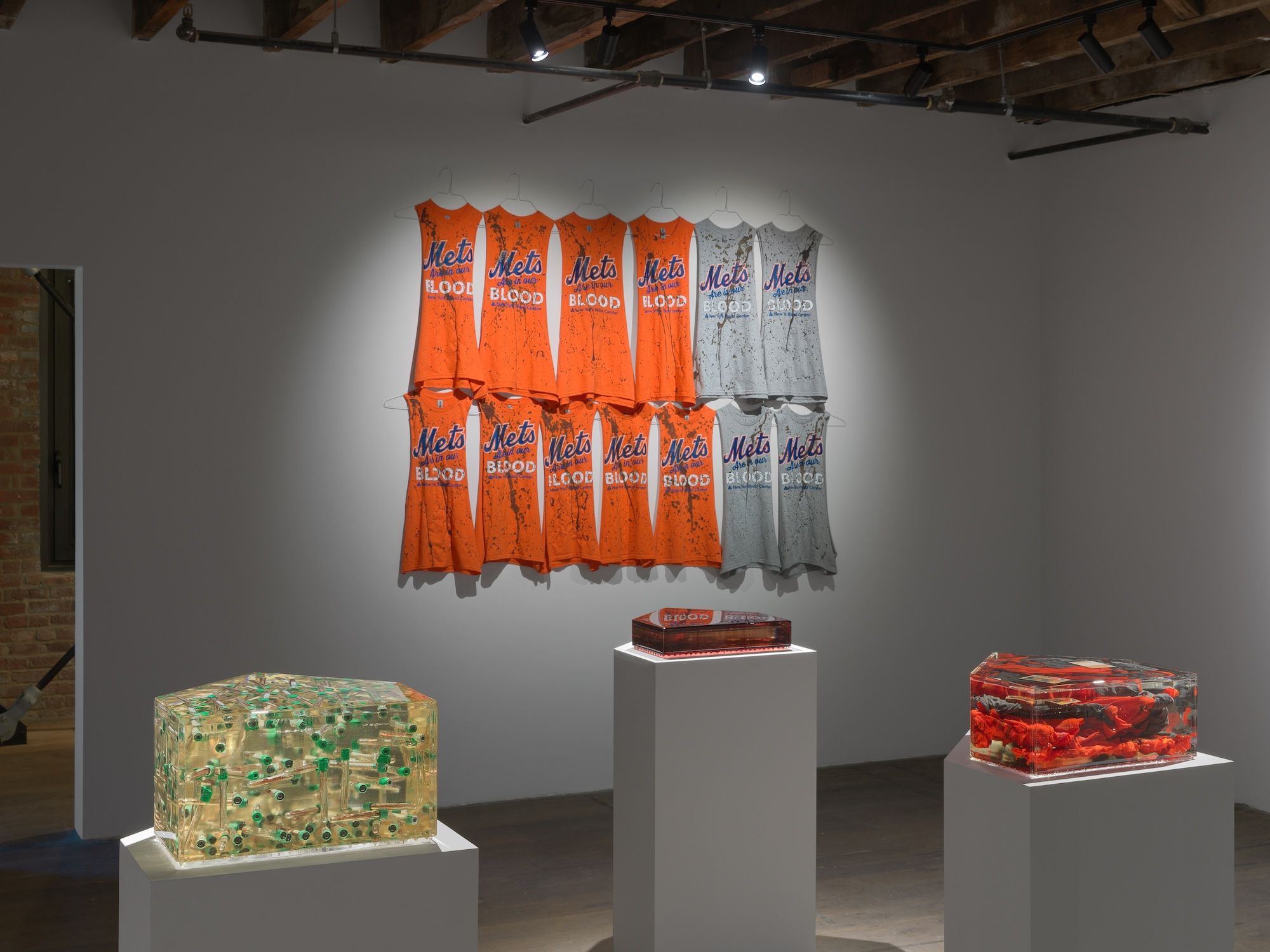
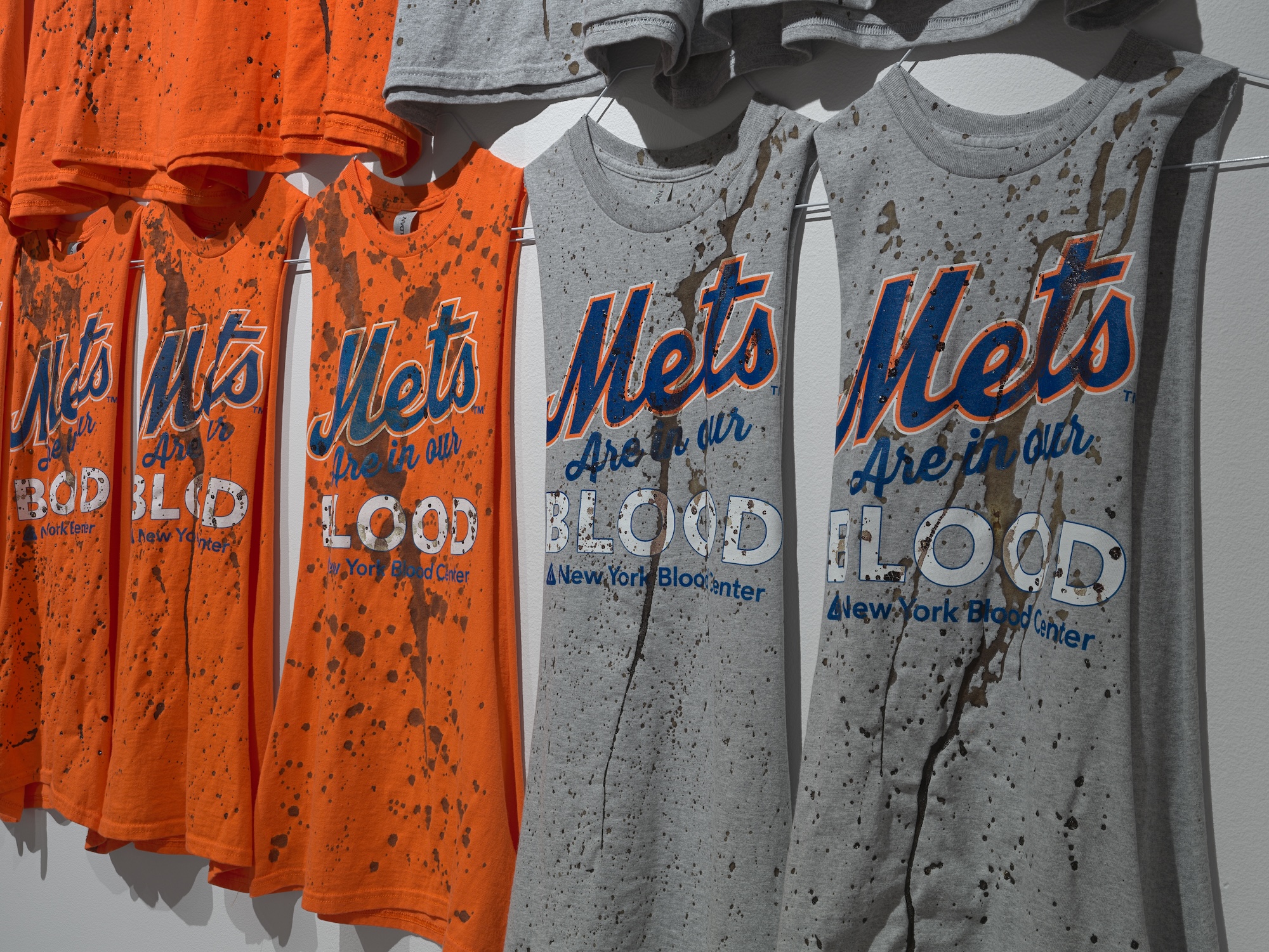
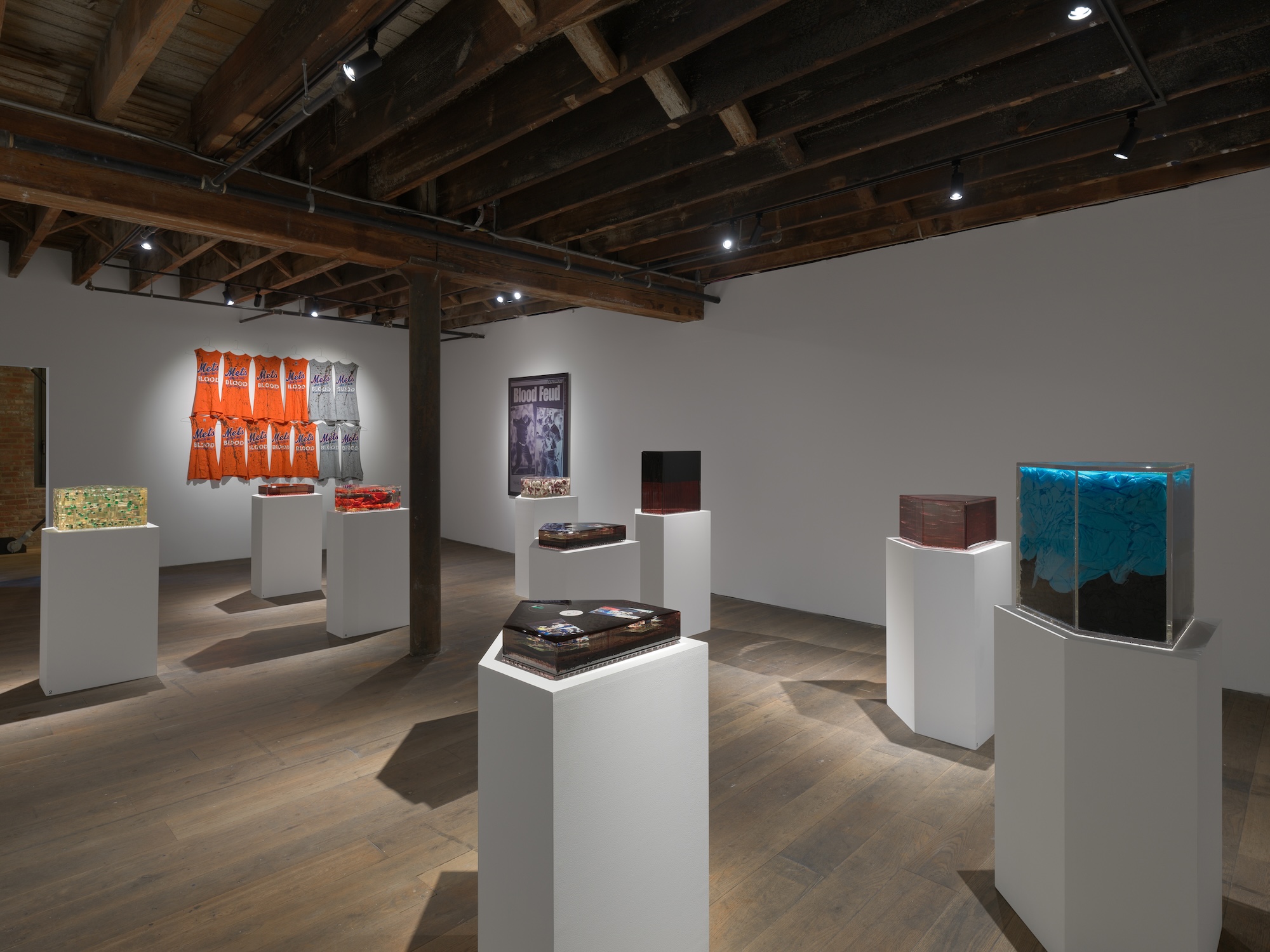
The centerpiece of the exhibition consists of 13 New York Mets jerseys, rendered in the team’s signature orange and grey. These are not merely displayed; they are saturated with the blood of an anonymous donor who is HIV-positive and undetectable. The number 13 is significant, reflecting the total number of players—both offensive and defensive—active during a half-inning of play. By drenching these symbols of athletic prowess in the blood of a marginalized individual, Eagles forces a confrontation between the "clean" image of professional sports and the "tainted" perception of queer bodies.
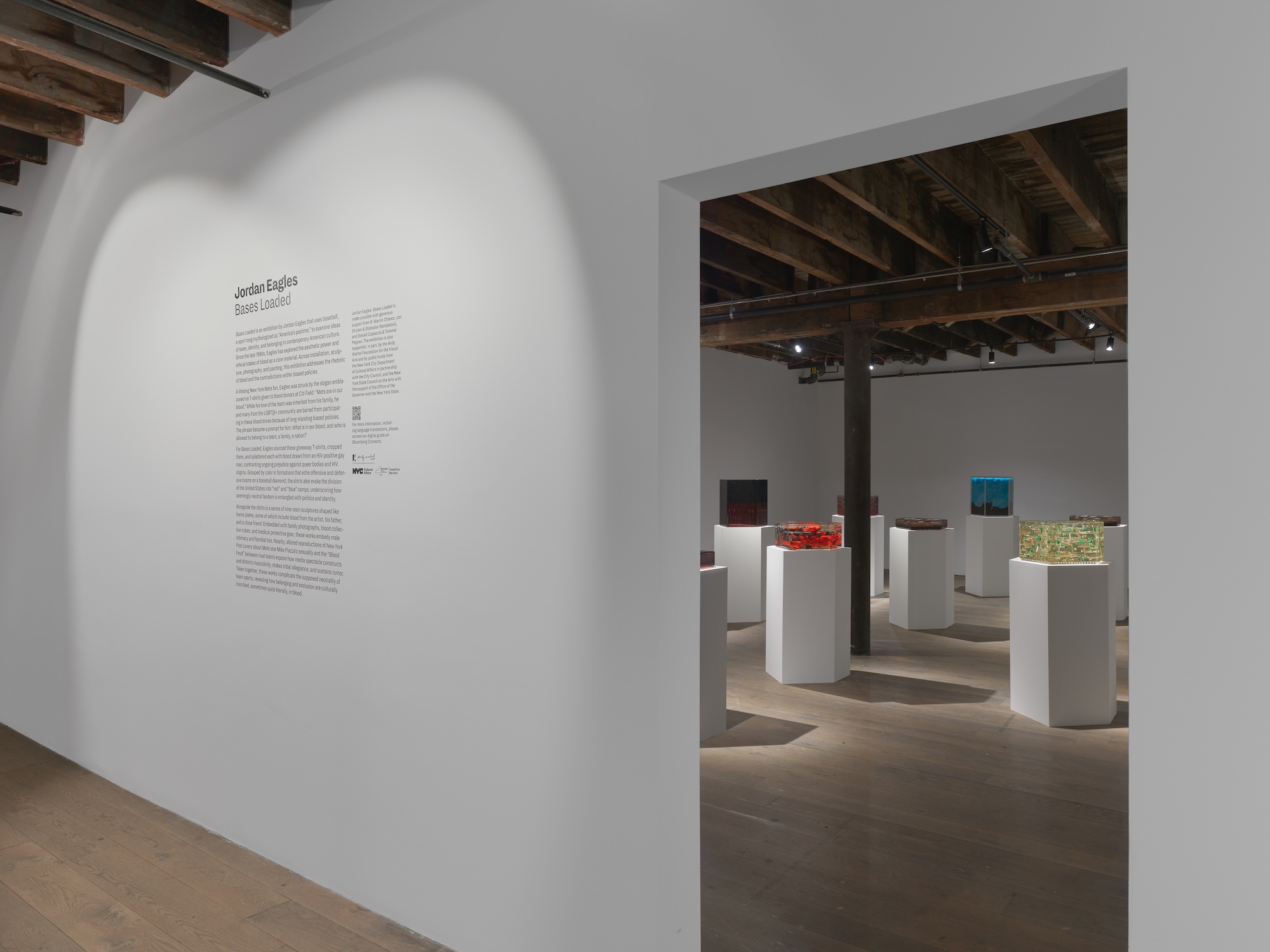
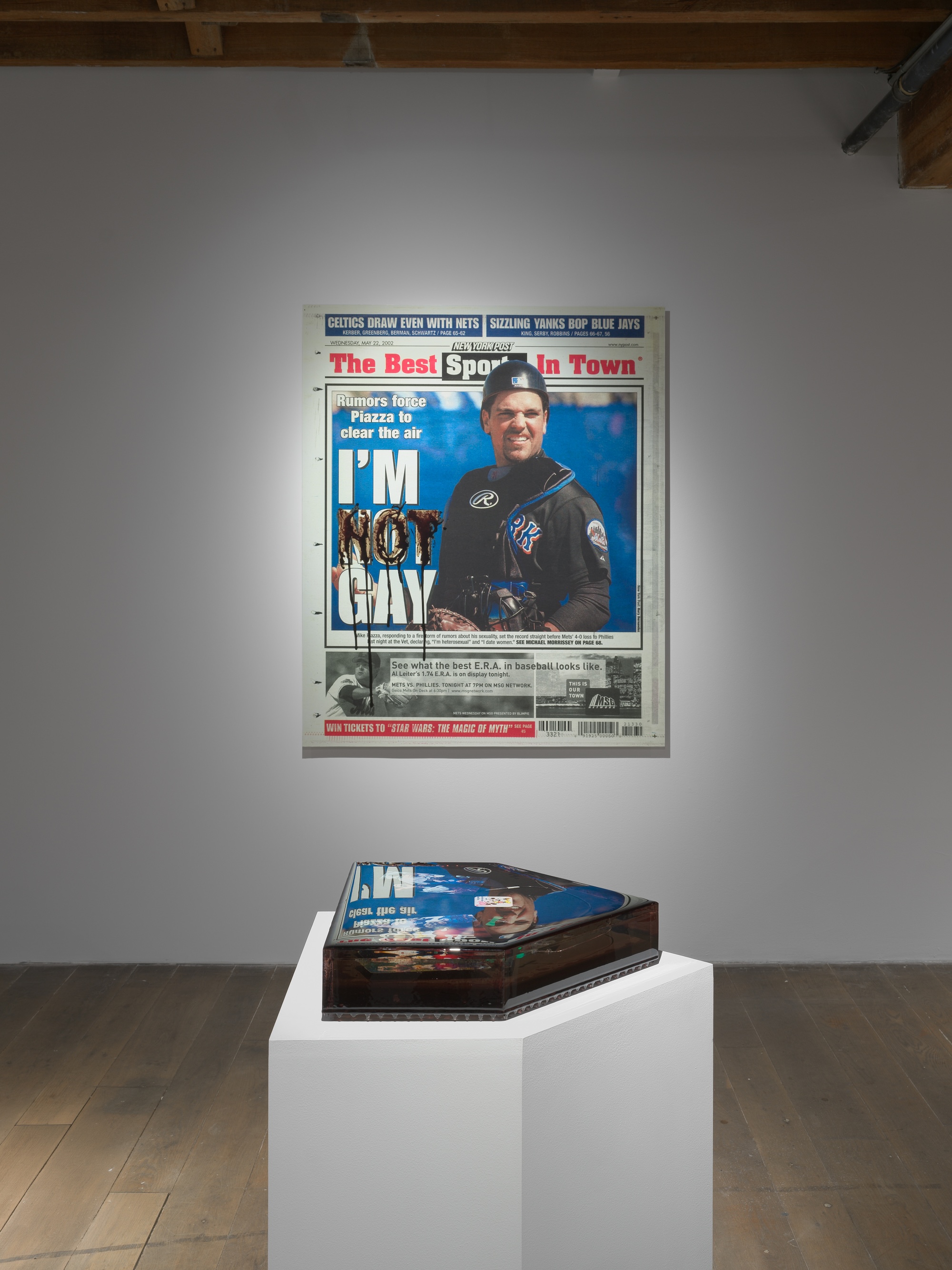
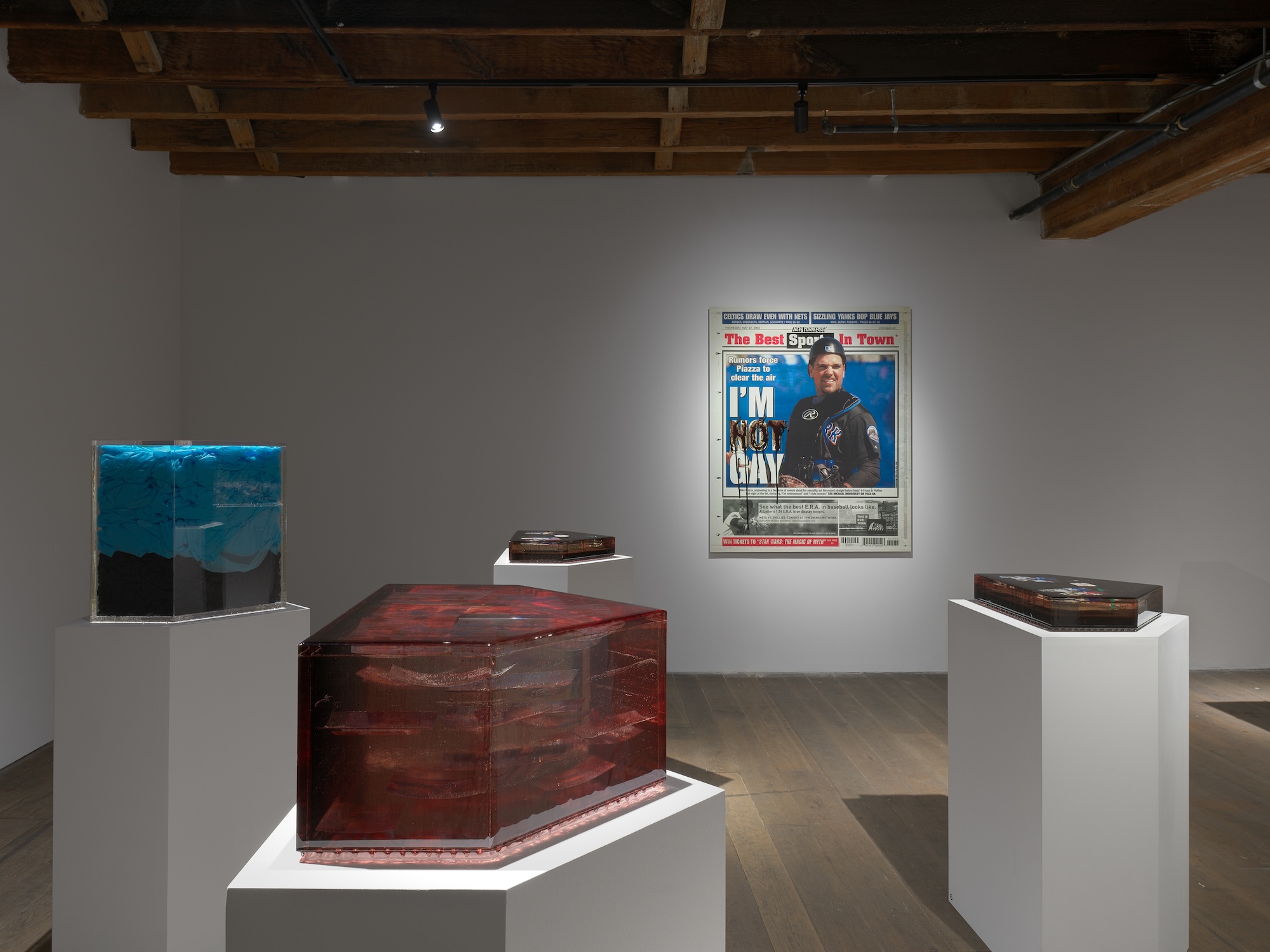
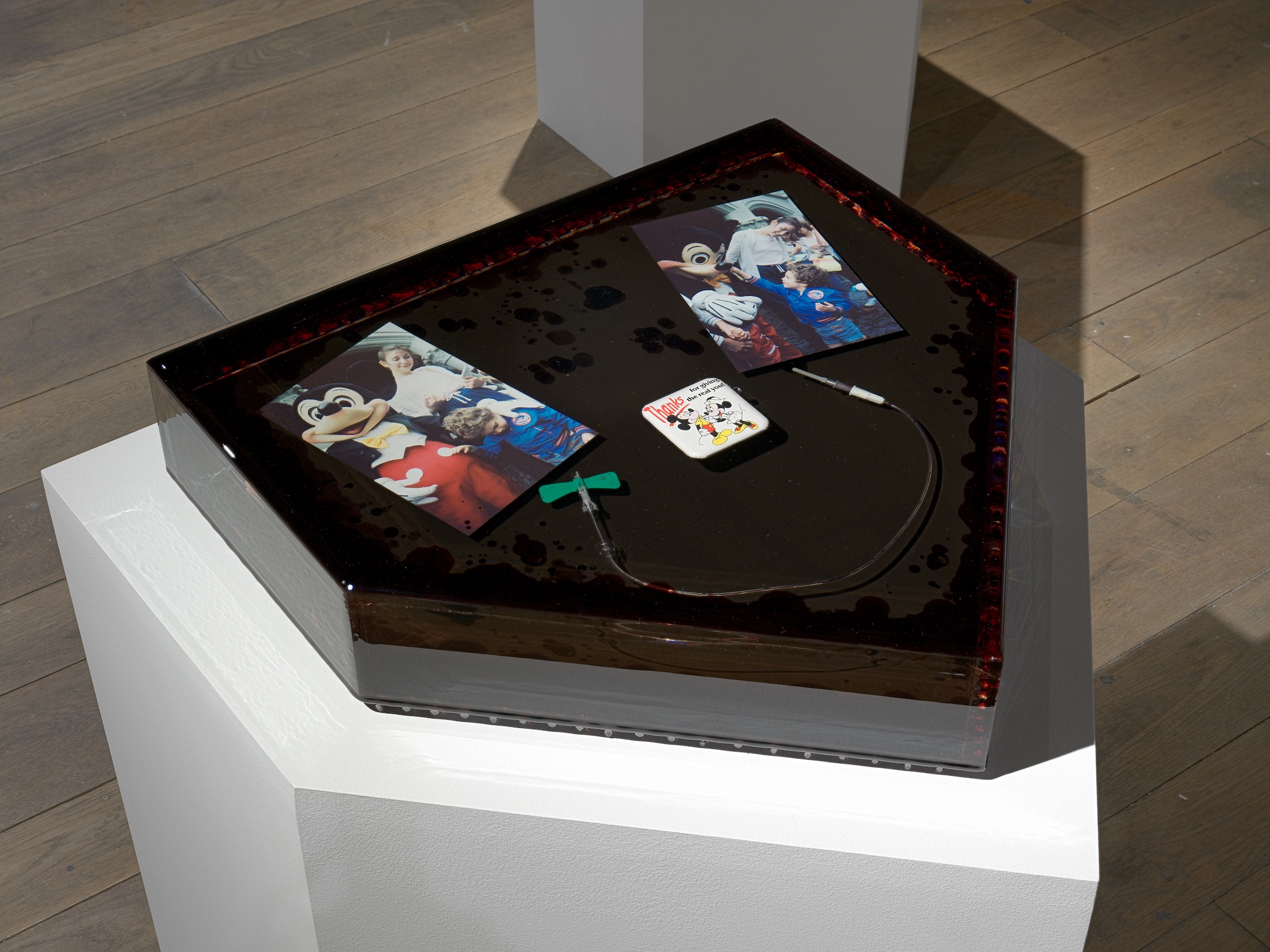
Devoid of the perspiring athletes who usually inhabit them, the jerseys hang as ghostly, heavy artifacts. They transition from symbols of team spirit to vessels of a different kind of corporeality. The exhibition further extends this metaphor through nine mixed-media resin sculptures shaped like home plates. In baseball, the home plate is the ultimate destination—the site where a player must arrive to score and find safety. In Eagles’ work, these plates become reliquaries. Some contain the blood of the artist’s father, the man who first introduced him to the Mets, creating a literal and figurative lineage of fandom. Others encapsulate family photographs, baseball cards, needles, and face masks, all suspended in layers of preserved blood.
A History of Blood Politics and FDA Regulation
To understand the weight of Eagles’ work, one must look at the decades-long evolution of blood donation policies in the United States. The restrictions on gay and bisexual men donating blood date back to 1983, during the height of the HIV/AIDS epidemic. At that time, the Food and Drug Administration (FDA) implemented a lifetime ban on blood donations from any man who had ever had sex with another man (MSM). This policy remained unchanged for over 30 years, rooted in a period of intense medical uncertainty and social stigma.
In 2015, following years of advocacy from organizations like the American Medical Association and the Red Cross, the FDA shifted from a lifetime ban to a one-year deferral period. This meant gay men could donate only if they had remained celibate for 12 months. In 2020, amidst a severe blood shortage caused by the COVID-19 pandemic, this deferral period was shortened to three months.
A landmark shift occurred in May 2023, when the FDA officially moved toward "Individual Donor Assessment." Under these new guidelines, all prospective donors, regardless of sexual orientation, are asked the same set of questions regarding recent sexual history. While this was hailed as a victory for equality, Eagles’ work highlights the remaining gaps. Specifically, the questionnaire remains focused on certain types of sexual activity, and the policy continues to exclude those taking PrEP.
The Paradox of PrEP and Blood Donation
A central tension in "Bases Loaded" is the status of PrEP users. PrEP is a highly effective medication that, when taken as prescribed, reduces the risk of contracting HIV from sex by about 99%. However, the FDA’s current policy requires individuals on PrEP to wait three months after their last dose before donating blood. The rationale provided by the FDA is that the medication can delay the detection of HIV by current screening tests, potentially leading to "false negative" results in the blood supply.
For artists and activists like Eagles, this creates a frustrating paradox: the very individuals taking the most proactive steps to maintain their health and prevent the spread of the virus are the ones still deemed "risky" by the system. This policy effectively bars a significant portion of the modern queer community from participating in the "blood-for-merchandise" economy that teams like the Mets promote. By using blood from an undetectable HIV-positive donor, Eagles challenges the viewer to reconsider what constitutes "safety" and "risk" in a contemporary medical context where "Undetectable = Untransmittable" (U=U) is a scientifically proven reality.
Familial Ties and the Search for Belonging
While the exhibition serves as a sharp critique of institutional policy, it is also deeply personal. Eagles has been working with blood as a medium since the 1990s, often utilizing animal blood sourced from slaughterhouses to create large-scale projections and resin works. His previous installations at the Princeton University Art Museum, the Getty, and the High Museum of Art used the fluid to explore themes of life force and mortality.
However, "Bases Loaded" marks a shift toward a more intimate narrative. The inclusion of his father’s blood and family photographs—where the entire family is seen wearing Mets gear—underscores the innate human desire to belong to a "team" or a community. For Eagles, the Mets represent a lifelong bond with his father and a connection to his New York roots. The exhibition explores the pain of being a "super-fan" of an organization that, through its partnership with restrictive blood drives, inadvertently signals that your "blood" is not welcome.
"This project invites the public to think about policy, but it is also more broadly about identity, belonging, and what it means to be a part of something," Eagles stated during the exhibition’s opening. The work suggests that for many in the LGBTQ+ community, the "game" is rigged, yet the love for the team—and the culture it represents—remains steadfast.
The Linguistic Bridge Between Sports and Sexuality
The exhibition’s title, "Bases Loaded," is a masterclass in double entendre. In baseball, "bases loaded" describes a high-stakes moment where three runners are on base, and the potential for a massive score (a grand slam) is imminent. It is a moment of peak pressure and anticipation. In a social or sexual context, the phrase takes on a different, more suggestive meaning, echoing the linguistic "flirtation" that has long existed between sports terminology and queer subculture.
Eagles leans into this slipperiness of semantics. Terms like "first base," "innings," "receivers," and "pitchers" are common to both the diamond and the bedroom. By highlighting these overlaps, Eagles injects a sense of playfulness and defiance into a subject that is otherwise heavy with the weight of medical trauma and exclusion. This linguistic play serves to reclaim the sports narrative for a community that has often been told it doesn’t belong in the locker room or on the field.
Broader Impact and Implications
The "Bases Loaded" exhibition arrives at a critical time for the American healthcare system. The American Red Cross frequently declares "national blood crises," noting that the number of people donating blood has declined by about 40% over the last two decades. Advocacy groups argue that fully removing the remaining barriers for gay and bisexual men—including those on PrEP—could provide hundreds of thousands of additional life-saving units of blood annually.
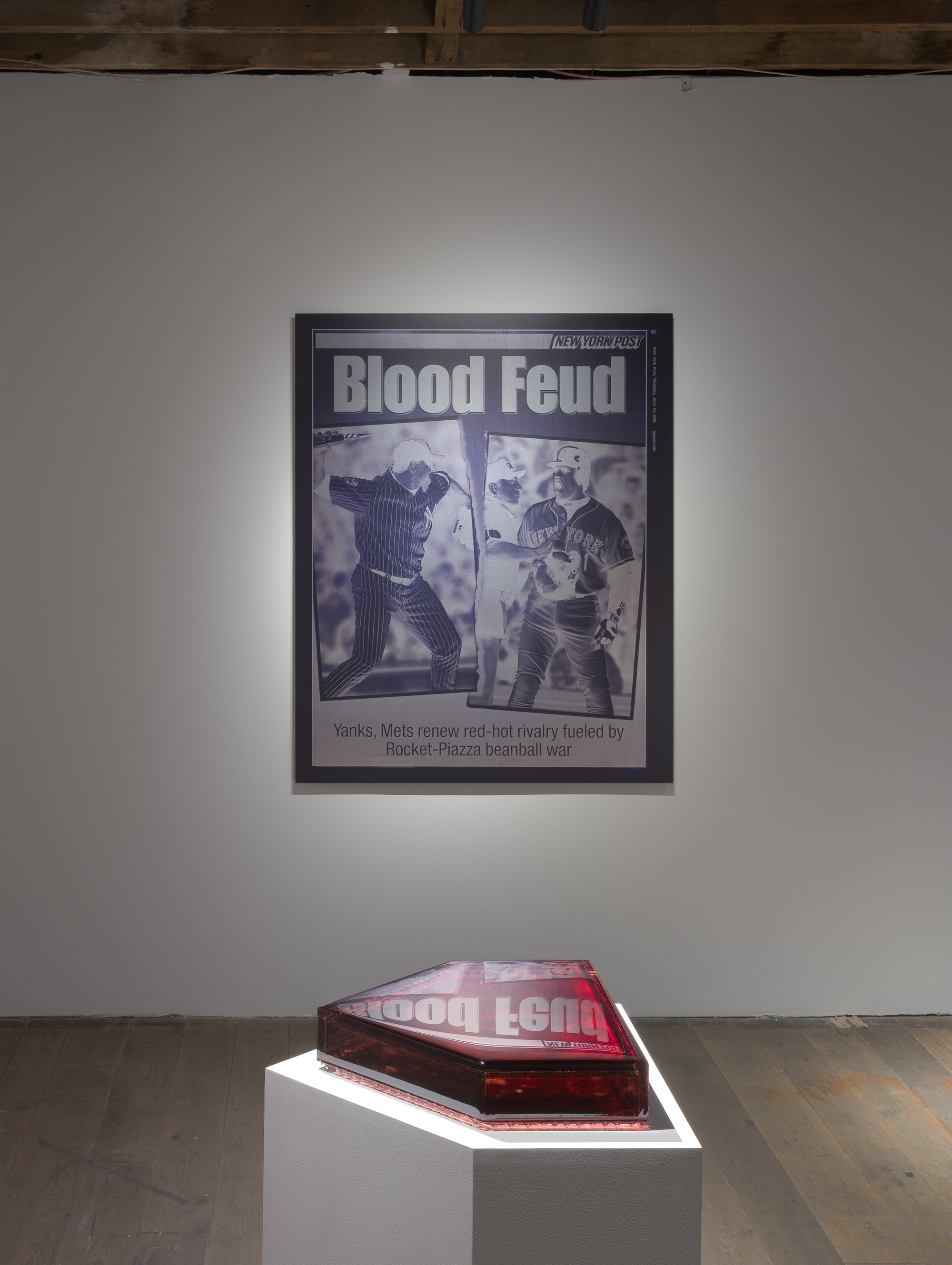
Eagles’ work at Pioneer Works acts as a visual protest and a demand for a policy based on modern science rather than legacy stigma. By placing these issues within the context of a beloved New York institution like the Mets, he moves the conversation out of the sterile confines of medical journals and into the public square.
As the exhibition continues its long-term residency in Brooklyn, it serves as a reminder that "blood" is more than a biological fluid; it is a currency of citizenship and a symbol of heritage. Through the lens of a Mets fan, Jordan Eagles demonstrates that until everyone can "earn the shirt," the game of inclusion is far from over. The installation remains a poignant testament to the fact that while the Mets may be in the blood of the fans, the politics of that blood remains a field of intense and necessary conflict.