The Algorithmic Gatekeeper: How AI is Transforming the Modern Hiring Landscape and Why Job Seekers are Reclaiming Agency

The rapid integration of artificial intelligence into recruitment processes has fundamentally altered the path from applicant to employee, often leaving job seekers navigating a opaque, automated gauntlet. As corporations scramble to manage the sheer volume of digital applications, they have increasingly outsourced the initial screening process to Large Language Models (LLMs) and Applicant Tracking Systems (ATS). This technological pivot has shifted the burden of proof onto the candidate, who is now expected to decode proprietary algorithms, optimize resumes for machine readability, and manage a fragmented ecosystem of subscription-based platforms simply to remain visible to potential employers.
The Rise of the Algorithmic Filter
The transition toward AI-driven hiring did not happen overnight, but its acceleration since 2023 has been unprecedented. Historically, human recruiters performed the initial triage of applications. Today, that role is frequently occupied by software designed to rank candidates based on keyword density, sentiment analysis, and pattern matching. While proponents of this shift argue that AI reduces unconscious human bias and increases efficiency, critics point to the "black box" nature of these systems. Candidates often find themselves unable to determine why they were rejected, as the criteria for selection remain hidden behind intellectual property walls.
The implications of this transition were brought into sharp relief by a 2025 research paper titled "AI Self-preferencing in Algorithmic Hiring." The study provided empirical evidence for a phenomenon many job seekers had long suspected: AI models are biased toward their own output. Researchers found that when LLMs are tasked with evaluating resumes, they demonstrate a "self-preference bias" ranging between 68% and 88%. In simulations across 24 distinct occupations, candidates whose resumes were structured using the same LLM employed by the evaluator were 23% to 60% more likely to be shortlisted than equally qualified individuals using human-authored documents. This creates a feedback loop where the style, tone, and formatting of AI-generated content become the new industry standard, regardless of the candidate’s actual professional merit.
The Paradox of AI-Assisted Applications
This technological arms race has created a profound paradox. As hiring platforms adopt AI to filter candidates, candidates are forced to adopt AI to "beat" the filters. This has led to the proliferation of tools that rewrite professional histories to align with the stylistic preferences of the algorithms. However, this trend risks homogenizing the workforce, as human experience is compressed into the predictable, often generic language of generative AI.
The core issue, according to industry observers, is not the use of technology itself, but the lack of transparency and the erosion of human agency in the hiring process. When the evaluation of a person’s career is delegated to a machine that favors its own syntax, the process ceases to be an objective assessment of capability and becomes a game of linguistic optimization.
Addressing the Power Imbalance: The Job Search Terminal
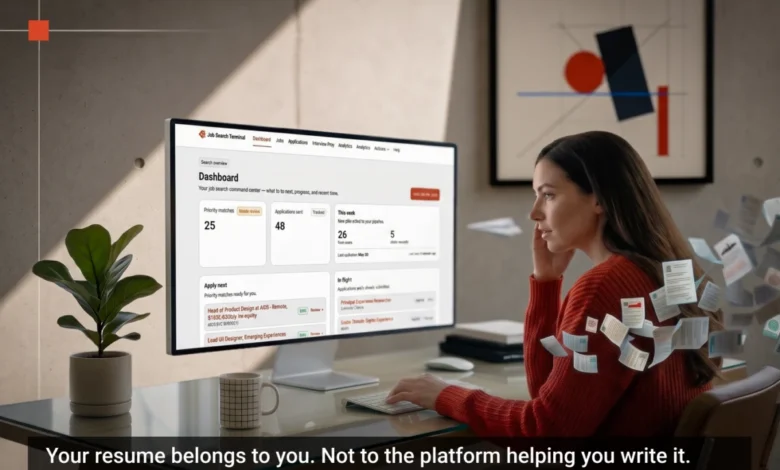
In response to these systemic challenges, independent developers have begun creating tools designed to shift the power dynamic back toward the applicant. One such project, the Job Search Terminal, seeks to provide a counterbalance to the subscription-heavy, cloud-dependent recruitment market. By utilizing a "local-first" architecture, this tool allows users to maintain control over their data—resumes, work history, and search notes—without uploading sensitive professional information to third-party databases.
Unlike commercial job-search platforms that operate as black boxes, the Job Search Terminal functions as an interface that empowers the user to utilize AI for parsing, comparing, and drafting documents while keeping the human in the loop. The software requires the user to input their own API key, ensuring that the AI remains a utility rather than an autonomous decision-maker. This approach acknowledges that while AI can be a powerful assistant in managing high-volume tasks, it should not replace the judgment of the professional whose career is at stake.
Data Privacy and the Local-First Movement
The architectural choice to prioritize local storage is a significant departure from the prevailing "software-as-a-service" (SaaS) model. In the current hiring ecosystem, job seekers are often required to surrender ownership of their data to multiple platforms, which then sell aggregated insights back to recruiters. By running on a user’s local machine, tools like the Job Search Terminal eliminate the need for cloud-based accounts and mitigate the risk of data exposure.
This model also addresses the growing anxiety surrounding privacy in the recruitment sector. As personal professional information becomes a commodity, the ability to contain that data within a private, offline environment provides a layer of security that traditional platforms lack. While the setup process—often involving GitHub or command-line interfaces—presents a higher barrier to entry than a standard web app, proponents argue that this "technical friction" is a necessary trade-off for professional autonomy.
Implications for the Future of Recruitment
The broader implications of algorithmic hiring are profound. If the labor market continues to reward applicants who can successfully mimic the output of LLMs, the workforce may see a decline in authentic professional representation. There is a tangible risk that recruiters, blinded by the uniformity of AI-vetted resumes, will lose the ability to identify unique, non-traditional, or highly creative candidates who do not conform to standard algorithmic patterns.
Furthermore, the economic burden of the modern job search—often involving monthly subscriptions to resume-tuning services and premium job boards—exacerbates existing inequalities. Candidates with greater financial resources can afford the tools necessary to satisfy the algorithm, while those without are left at a structural disadvantage.
A Call for Transparency and Agency
The move toward more transparent, user-controlled hiring tools signals a growing pushback against the "automation-at-all-costs" mentality. As the technology continues to evolve, the demand for "human-in-the-loop" systems will likely increase. This is not a rejection of AI, but a demand for its responsible application.
Key takeaways from the current state of the hiring market suggest that:
- Algorithmic Bias is Measurable: Recent research confirms that AI models show a distinct preference for their own generated content, creating a barrier to entry for human-authored resumes.
- Agency is Essential: The most effective tools are those that allow applicants to review, edit, and curate their own data, rather than delegating the entire process to an automated system.
- Data Ownership Matters: Moving away from cloud-dependent platforms toward local-first solutions can help candidates reclaim their professional identity and protect their sensitive work history.
- Efficiency vs. Authenticity: The goal of modern hiring tools should be to reduce the repetitive, administrative burden of job searching, allowing candidates to spend more time on meaningful, high-level decision-making.
The hiring market remains in a state of flux. While we cannot fully dismantle the opaque systems that have been institutionalized by major corporations overnight, the development of open-source, user-centric tools offers a pathway toward a more equitable process. By providing job seekers with the ability to manage their own digital footprint, these tools serve as a necessary intervention in an increasingly automated world. As the reliance on AI in HR continues to grow, the ability of candidates to navigate these systems with transparency and control will remain a critical factor in the future of the global labor market.