The Evolution of Localized AI Infrastructure
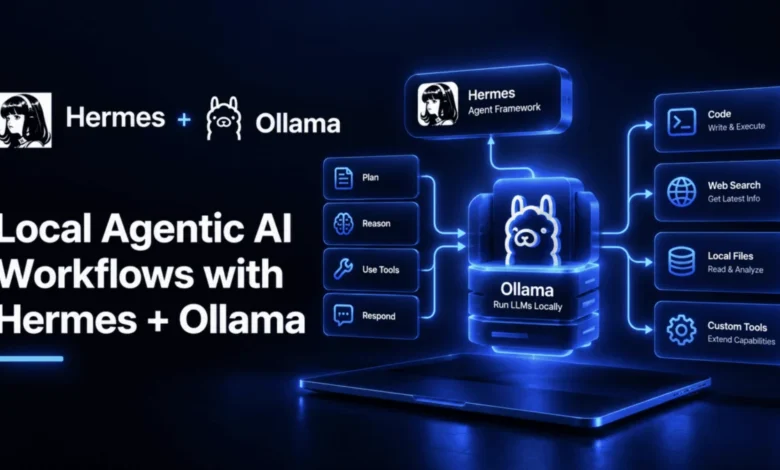
The architecture described herein leverages two primary open-source pillars: Nous Research’s Hermes Agent and the Ollama model-serving engine. Hermes Agent, currently in version 0.21.1, operates under the MIT license and provides a robust framework for agentic behavior. Unlike standard chatbot interfaces, Hermes is designed to interface with the host operating system, allowing it to edit files, execute terminal commands, and perform web searches.
The integration of Ollama serves as the backend infrastructure. By acting as a local server for open-weight models, Ollama exposes an OpenAI-compatible API at the localhost level. This design choice is critical for interoperability; because the API structure matches the industry-standard /v1/chat/completions endpoint, applications like Hermes can interact with local hardware as if they were querying a cloud-based service, maintaining high compatibility without the latency or security risks associated with data egress.
Technical Requirements and Hardware Calibration
Transitioning to a fully local AI workflow necessitates a baseline of hardware performance. While entry-level configurations are possible, the efficacy of the agent is heavily contingent on the available computational resources.
For users intending to deploy 3B-parameter models, a minimum of 8 GB of RAM and a quad-core processor are sufficient. However, for advanced agentic operations—which require models capable of sophisticated tool calling—the requirements increase significantly. A 31B-parameter model, such as the recommended gemma4:31b, requires at least 24 GB of RAM and ideally an NVIDIA GPU with 8 GB of VRAM or more.
The following table summarizes the recommended hardware environment for professional-grade performance:
| Component | Minimum Specification | Recommended Specification |
|---|---|---|
| RAM | 8 GB | 32 GB+ |
| Storage | 5 GB | 30 GB+ |
| CPU | 4 Cores | 8+ Cores |
| GPU | N/A | NVIDIA GPU (8 GB+ VRAM) |
While CPU-only operation is technically feasible, users should anticipate a reduction in inference speed. A 9B model on an 8-core CPU may yield approximately 10 tokens per second, whereas a 31B model can drop to between 2 and 5 tokens per second. This results in response times ranging from 30 to 120 seconds, which may impact the fluidity of interactive sessions but remains suitable for automated, background-oriented tasks.
Implementation and Configuration Chronology
The deployment of a local agentic workflow follows a structured technical progression. First, users must install the Ollama engine. The process is streamlined via shell scripts, which install the binary and allow for immediate verification via curl commands hitting the local API.
Once Ollama is initialized, the selection of an appropriate model is the most consequential decision in the workflow. The "Tool Calling" capability is non-negotiable for agentic functionality. Models that lack this specific architecture can provide conversational responses but cannot interact with the host system. Consequently, models like gemma4:31b serve as the standard for file management and command-line execution, whereas smaller models should be relegated to simple Q&A tasks.
Configuration of the Hermes Agent involves pointing the software toward the local API. This can be achieved through a guided setup wizard or by manually modifying the ~/.hermes/config.yaml file. By setting the provider to "custom" and the base_url to http://localhost:11434/v1, the agent is successfully tethered to the local model server.
Optimization Strategies for Production Utility
To ensure that a local agent performs effectively in a professional context, several optimizations are recommended.
- Context Window Expansion: Default context windows, often set to 2,048 tokens, are insufficient for agentic workflows where file contents and tool schemas consume significant memory. Utilizing an Ollama "Modelfile" allows users to override these defaults. By creating a custom model configuration with a 64,000-token context window, users can facilitate more complex, multi-step problem solving.
- Persistence Management: Ollama’s default behavior is to unload models from active memory after five minutes of inactivity. For agents that need to be ready for instant queries, utilizing the
keep_aliveparameter—set to 24 hours—prevents the latency penalty associated with reloading large models into VRAM. - Hybrid Fallback Configurations: A sophisticated local-first strategy does not strictly forbid cloud usage; rather, it prioritizes local resources. Hermes supports "fallback_providers." This allows the system to utilize local hardware for the vast majority of routine tasks while automatically routing exceptionally complex queries to high-tier cloud models. This ensures that the system remains cost-efficient while maintaining a safety net for performance.
Broader Implications and Future Outlook
The emergence of local agentic workflows represents a growing trend in the decentralization of AI. Industry analysts note that as privacy regulations (such as GDPR and CCPA) tighten, the ability for enterprises to keep proprietary code and sensitive data on-premises—while still utilizing modern agentic AI—is becoming a competitive advantage.
Furthermore, the "gateway" capability of tools like Hermes, which allows users to interface with their local agents via secure messaging platforms like Telegram or Slack, bridges the gap between desktop-bound automation and mobile accessibility. This allows for a persistent, private assistant that is available anywhere without the data being stored on third-party servers.
The financial impact of this shift is also notable. For a student or a small startup, the elimination of per-token API costs represents a significant reduction in operational overhead. By investing in local hardware once, the cost of running an AI agent shifts from a recurring, variable operational expense to a fixed capital investment.
Conclusion
The setup of a local agentic workflow using Hermes and Ollama is a practical, scalable solution to the challenges of modern AI integration. By prioritizing local execution, users gain control over their data, reduce the recurring costs of cloud-based APIs, and develop a system that is fully customizable to their specific technical requirements. As open-source models continue to improve in reasoning and tool-calling capabilities, the necessity for cloud-dependency in agentic tasks will likely diminish, cementing local-first AI as a standard practice for the privacy-conscious developer. Through careful configuration of hardware, model selection, and fallback protocols, individuals can build an infrastructure that is both powerful and entirely under their own sovereignty.
Related posts: