Scaling Mixture-of-Experts Reinforcement Learning Workloads on AWS with Amazon EKS, EFA, and DeepEP

The commercialization and widespread deployment of large-scale artificial intelligence models have placed unprecedented demands on underlying cloud computing infrastructure. As organizations scale Mixture-of-Experts (MoE) architectures to hundreds of billions or trillions of parameters, post-training phases—specifically Reinforcement Learning from Human Feedback (RLHF) and Group Relative Policy Optimization (GRPO)—introduce complex architectural bottlenecks. Unlike standard pre-training workloads, post-training reinforcement learning requires a delicate synchronization between elastic, high-throughput inference generation (rollouts) and tightly coupled, lockstep policy training.
To resolve these systemic infrastructural challenges, engineering teams can deploy a specialized architecture on Amazon Web Services (AWS) combining Amazon Elastic Kubernetes Service (Amazon EKS), Elastic Fabric Adapter (EFA), and DeepEP. This integration addresses the primary hurdles of heterogeneous compute coordination, high-throughput inter-node communication, and dynamic resource orchestration, ultimately yielding significant performance gains and operational cost efficiencies for massive AI models.
Background Context and Industry Evolution
The evolution of Large Language Models (LLMs) has increasingly favored the Mixture-of-Experts paradigm. By maintaining sparsity through specialized sub-networks, MoE architectures achieve efficient inference at scale while housing immense parameter counts. However, this sparsity shifts the primary system constraint during training from raw compute limitations to communication bottlenecks.
The standard machine learning lifecycle requires models to pass sequentially through pre-training, mid-training, supervised fine-tuning (SFT), and reinforcement learning. Among these, large-scale RL places unique structural demands on data centers. It unifies dynamic inference operations with tightly coupled gradient updates, while concurrent reward models, verifiers, and checkpoint updates place severe, simultaneous pressure on system memory, networking fabrics, and orchestration layers.
Furthermore, newer MoE architectures designed to minimize inference costs utilize extreme sparsity. Consequently, Expert Parallelism (EP)—which introduces dynamic, fine-grained all-to-all token routing across network devices—becomes the dominant performance limiter. When paired with asynchronous RL pipelines like Proximal Policy Optimization (PPO) or GRPO, any imbalance between rollout generation and policy training stalls the entire cluster, leaving expensive computational accelerators idle. PPO relies on separate critic models to calculate value estimations, whereas GRPO utilizes group-based relative rewards to bypass the critic model. Despite algorithmic differences, both impose nearly identical infrastructure requirements: massive rollout generation, lockstep policy updates, and high-bandwidth, low-latency inter-node communication.
Architectural Framework on Amazon Web Services
To overcome these multi-workload bottlenecks, modern cloud architectures must decouple orchestration, networking, and durable storage while enabling high-performance data paths. The solution engineered on AWS leverages three core pillars: Amazon EKS for cluster lifecycle management and heterogeneous workload placement, EFA for low-latency GPU-to-GPU inter-node communication, and Amazon Simple Storage Service (Amazon S3) for durable, long-term storage of datasets, model weights, and checkpoints.
EKS Cluster Topology and Resource Segmentation
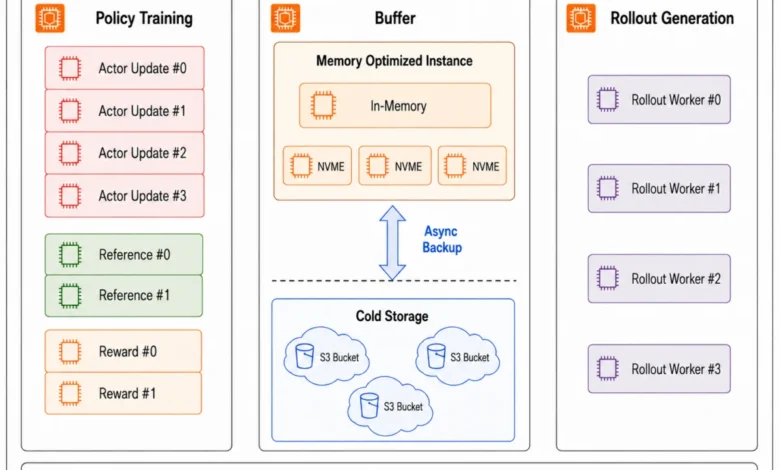
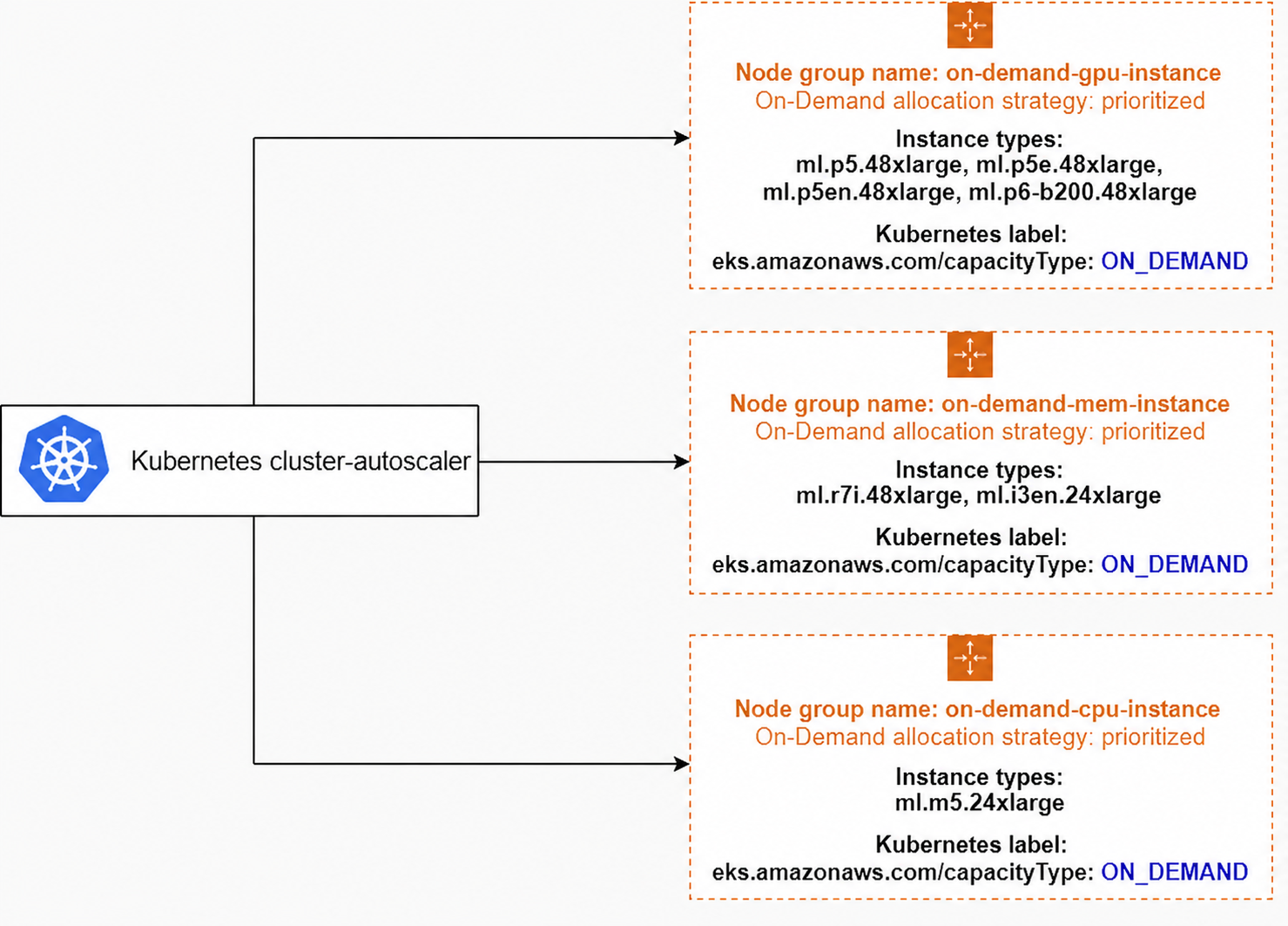
The Amazon EKS control plane manages the scheduling, scaling, and failure recovery of diverse worker node groups tailored to specific tasks within the reinforcement learning loop. GPU-accelerated Amazon Elastic Compute Cloud (Amazon EC2) instances—such as P5, P5en, and P6 configurations powered by advanced NVIDIA hardware—handle compute-intensive policy training and large-scale distributed inference during rollout generation.
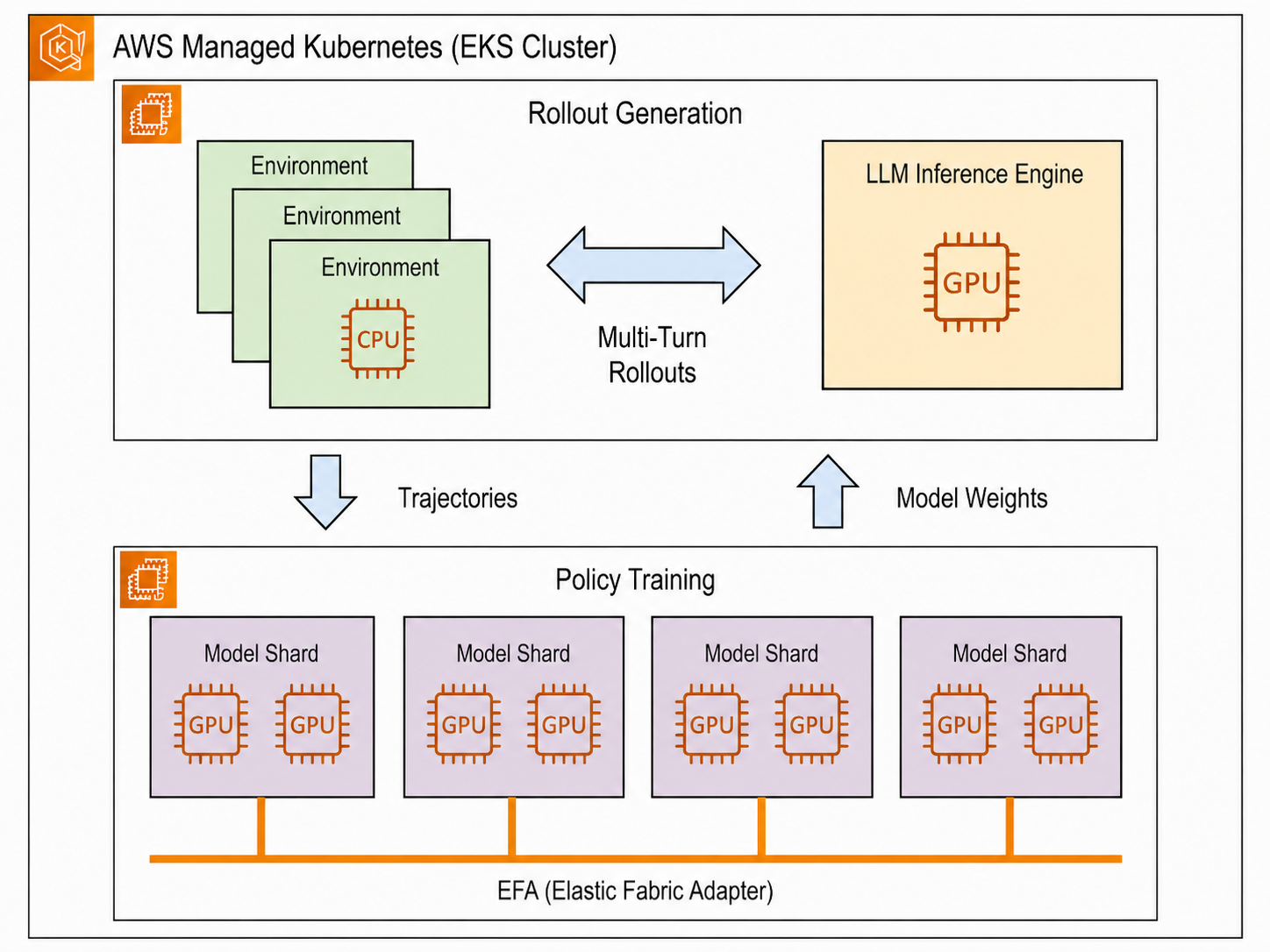
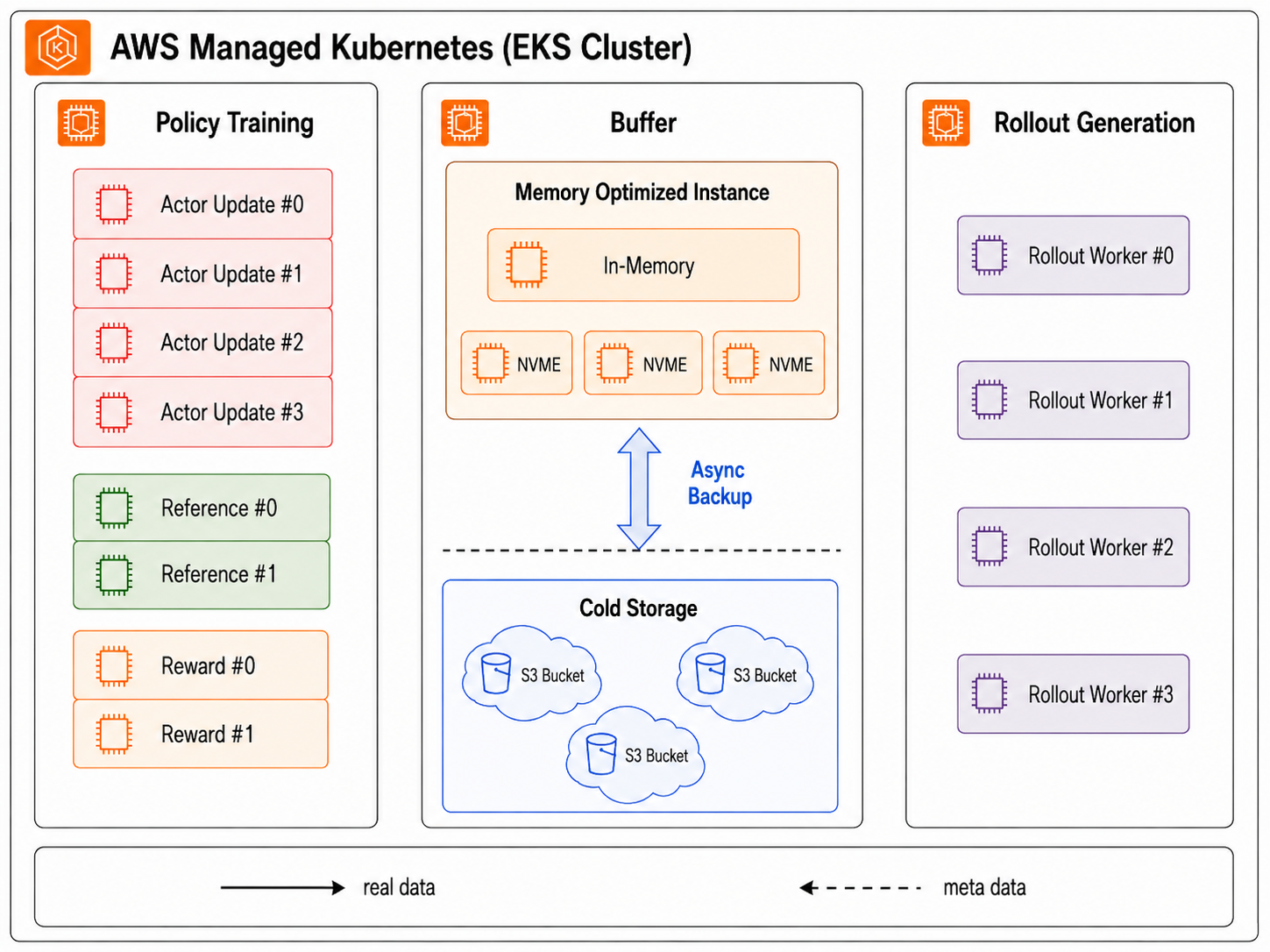
Simultaneously, dedicated CPU-optimized node groups execute environment simulations and data preprocessing tasks. Memory-optimized instances host experience buffers and checkpoint caches, allowing producers and consumers to exchange intermediate samples rapidly without bottlenecking durable storage layers. This segregation guarantees that volatile inference workloads do not interfere with the rigid synchronization requirements of policy updates.
The Asynchronous Rollout-Training Loop
The operational lifecycle of a reinforcement learning job on this architecture follows a distinct, continuous data flow:
- Rollout Generation: CPU-based environment pods and GPU inference workers interact to generate experience samples, prioritizing aggregate token throughput over latency metrics like Time to First Token (TTFT).
- Buffer Ingestion: Completed rollout samples stream into memory-optimized experience buffers.
- Policy Training: Policy-training workers consume batches from the buffer, execute gradient updates in tight lockstep, and generate updated model weights.
- Persistence and Feedback: Newly minted checkpoints are fed back into the next iteration of rollout generation while simultaneously being persisted to Amazon S3 for disaster recovery and downstream distribution.
Performance Optimization via DeepEP and EFA Integration
A primary innovation in accelerating multi-node MoE training on AWS is the integration of DeepEP with Elastic Fabric Adapter. Traditional distributed training relies on standard collective communication libraries like NCCL, which excel at regular, dense communication patterns. However, Expert Parallelism generates sparse, fine-grained, and dynamically imbalanced traffic as tokens are routed across distributed experts. As EP spans multiple nodes, per-message overhead and synchronization delays mount.
DeepEP solves this by replacing generic all-to-all collectives with specialized dispatch and combine GPU kernels. These kernels utilize high-speed intra-node NVLink fabrics (connected via NVSwitch) for local GPU communication and leverage an RDMA-capable backend for inter-node data movement. Recent engineering contributions by AWS have migrated DeepEP’s communication primitives to the portable libfabric layer. This enables native EFA support across supported AWS instance families.
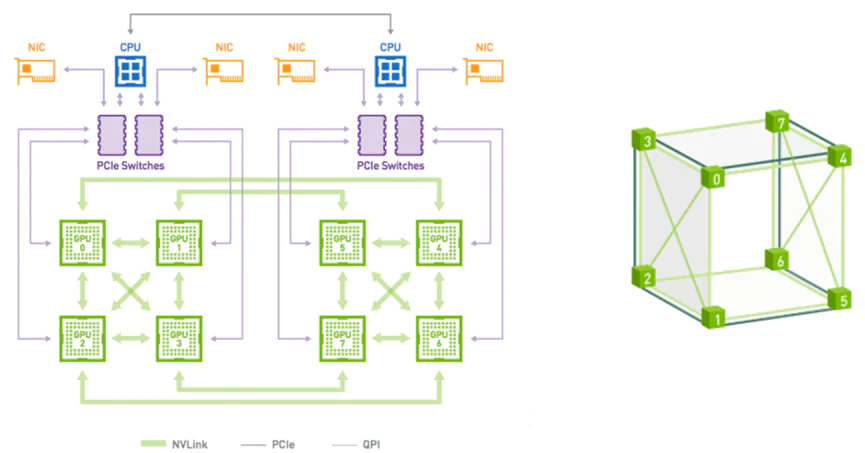
Through EFA and NVIDIA GPUDirect RDMA, data transfers occur directly between GPU memory buffers across different instances, completely bypassing the host CPU and operating system kernel. This direct-access data path minimizes latency and optimizes throughput for sparse token routing. Empirical testing across 48 P5en instances running a super-sparse MoE model demonstrated that enabling DeepEP over EFA increased aggregate RL rollout throughput by 40 percent compared to legacy configurations.
Cost Optimization Through EC2 Spot Instances
Managing the financial expenditures of large-scale AI training remains a paramount concern for enterprise engineering organizations. Rollout generation, which constitutes a significant portion of total compute consumption, is exceptionally well-suited for Amazon EC2 Spot Instances. Because rollout tasks consist of distributed inference operations partitioned across independent workers, the unexpected termination of a Spot instance does not require the entire training job to halt.
When a Spot interruption notice is issued, affected rollout workers gracefully drain active requests, return unfinished tasks to the processing queue, and allow remaining workers to continue uninterrupted. Policy-training workers remain isolated on stable On-Demand or reserved capacity, shielded from Spot interruptions or network timeouts. This architectural separation drastically reduces the overall operational expenditure of rollout generation without sacrificing training stability.
Implementation and Deployment Procedures
Deploying this production-grade architecture involves provisioning an Amazon EKS cluster, configuring the EFA Kubernetes device plugin, building a specialized DeepLearning Container, and submitting jobs via orchestrators like TorchX.
Cluster Provisioning with eksctl
Cluster infrastructure can be codified using configuration files that explicitly separate general-purpose tasks from GPU-accelerated accelerator nodes. Below is a representative configuration for deploying an EKS cluster with managed node groups:
apiVersion: eksctl.io/v1alpha5
kind: ClusterConfig

metadata:
  name: my-eks-cluster
  region: us-west-2
  version: "1.33"

managedNodeGroups:
  - name: general-purpose-ng
    minSize: 3
    desiredCapacity: 3
    maxSize: 6
    capacityType: ON_DEMAND
    privateNetworking: true
    labels:
      workload-type: general-purpose
    tags:
      Name: eks-general-purpose
      Workload: general-purpose

  - name: accelerator-ng
    minSize: 3
    desiredCapacity: 3
    maxSize: 6
    capacityType: ON_DEMAND
    privateNetworking: true
    labels:
      workload-type: accelerator
      accelerator: nvidia-gpu
    taints:
      - key: nvidia.com/gpu
        value: "true"
        effect: NoSchedule
    tags:
      Name: eks-accelerator
      Workload: accelerator
Configuring EFA Network Drivers on EKS
To facilitate direct inter-node GPU communication, the EFA Kubernetes device plugin must be deployed within the cluster. This daemon set ensures that containerized workloads can discover and utilize EFA network interfaces securely:
apiVersion: apps/v1
kind: DaemonSet
metadata:
  name: aws-efa-k8s-device-plugin
  namespace: kube-system
  labels:
    app: aws-efa-k8s-device-plugin
spec:
  selector:
    matchLabels:
      app: aws-efa-k8s-device-plugin
  template:
    metadata:
      labels:
        app: aws-efa-k8s-device-plugin
    spec:
      nodeSelector:
        eks.amazonaws.com/nodegroup: accelerator-ng
      hostNetwork: true
      tolerations:
        - operator: Exists
      containers:
        - name: aws-efa-k8s-device-plugin
          image: 602401143452.dkr.ecr.us-west-2.amazonaws.com/eks/aws-efa-k8s-device-plugin:v0.5.20
          securityContext:
            privileged: true
          volumeMounts:
            - name: device-plugin
              mountPath: /var/lib/kubelet/device-plugins
            - name: infiniband
              mountPath: /dev/infiniband
      volumes:
        - name: device-plugin
          hostPath:
            path: /var/lib/kubelet/device-plugins
        - name: infiniband
          hostPath:
            path: /dev/infiniband
Job Submission via TorchX
Once infrastructure and container environments are initialized, training workflows can be submitted independently of cluster provisioning using TorchX. The following command launches a distributed reinforcement learning job, separating rollout workers from policy training:
torchx run -s kubernetes -cfg queue=default
    dist.ddp -j 4x8
    --script train_rl.py
    --model_conf deepseek_v3_moe
    --num_rollout_workers 32
    --checkpoint_dir s3://my-bucket/checkpoints
Analytical Implications and Industry Outlook
The validation of DeepEP over EFA for large-scale MoE reinforcement learning marks a critical milestone in cloud-native artificial intelligence infrastructure. Historically, organizations scaling frontier models faced severe constraints when attempting to run asynchronous reinforcement learning on commodity or generic cloud clusters due to networking saturation during expert routing phases.
By pairing Amazon EKS container orchestration with bare-metal-equivalent networking performance via Elastic Fabric Adapter, enterprises can effectively decouple elastic inference pipelines from rigid training loops. This architectural blueprint not only eliminates traditional communication bottlenecks—resulting in a documented 40 percent throughput increase—but also democratizes access to trillion-parameter training capabilities through intelligent spot-instance cost optimization.
As the artificial intelligence industry transitions toward increasingly sparse, highly specialized multi-expert architectures, infrastructure patterns that unify high-performance networking with flexible cloud orchestration will become the baseline standard for enterprise machine learning operations. Organizations adopting these integrated frameworks can expect significantly reduced model iteration times, optimized hardware utilization, and lower total cost of ownership for advanced post-training pipelines.
Related posts: