Demna Redefines the Gucci Narrative Through a Monumental Vision of Broken Bourgeoisie at Milan Fashion Week

The landscape of contemporary luxury fashion shifted significantly this afternoon in Milan as Demna unveiled his second collection for Gucci. Staged within the sprawling Allianz Mi-Co events space, the presentation served as both a runway show and a tangible manifestation of a new retail philosophy. By constructing a hyper-realistic, life-sized simulacrum of a flagship Gucci store, the creative director sought to bridge the gap between the house’s storied heritage and its future commercial footprint. This architectural intervention, which mirrored the aesthetic of an upcoming flagship boutique on Paris’s Avenue Montaigne, signaled a deliberate departure from the experimentalism of his debut, favoring instead a rigorous, if unconventional, examination of "broken bourgeoisie."
A Chronology of a Visionary Reset
The trajectory of Demna’s tenure at Gucci has been marked by a fascination with the brand’s deep-seated cultural resonance within Italy. To understand this current collection, one must look back to February, when the designer first signaled his intent to anchor the brand in the classical tradition. His debut show was a masterclass in atmospheric branding, featuring a monolithic, marble-clad environment that echoed the architectural weight of the Uffizi Gallery in Florence.
The inspiration for that inaugural moment was profound and personal. Upon witnessing Botticelli’s The Birth of Venus in person for the first time, Demna was struck by the absolute nature of its beauty. Stepping out of the Uffizi into the Piazza della Signoria, his gaze fell upon the original Palazzo Gucci. The realization was visceral: Gucci is not merely a brand, but a fundamental pillar of Italian cultural identity.
Following that February debut, the intervening months were characterized by intensive research into the brand’s archives and its psychological impact on the global consumer. While the February show was about the museum—a place of preservation and historical awe—the September 2026 presentation was about the "temple of desire." By replicating a retail environment, Demna invited the audience to participate in the act of consumption as a performance, reflecting on the historical allure of the Gucci Galleria, where, in the late 1970s, elite clientele were granted access to exclusive wares via a literal golden key.
Architectural Narrative and Retail Strategy
The set design of the September show was not merely a backdrop; it was a manifesto. By meticulously recreating the interior of a luxury boutique—complete with stone frescoes, classical urns, and deep, plush velvet banquettes—Demna underscored the importance of the physical shopping experience in an increasingly digitized luxury market.
This design language is set to be rolled out globally. The debut of this concept in Paris on Avenue Montaigne in late October serves as a pilot for a broader store renovation strategy. Industry analysts suggest that this shift is part of a larger, systemic effort by Kering—Gucci’s parent company—to elevate the physical retail footprint. By creating spaces that feel like "monuments" rather than simple points of sale, the brand aims to reclaim the exclusivity and high-touch service models that defined the house’s golden age.
The Collection: Deconstructing the Bourgeoisie
The garments presented on the runway reflected the designer’s stated theme of "broken bourgeoisie." If the 1990s era of the house was defined by a specific type of provocative glamour, the current iteration is concerned with the tension between propriety and the underlying currents of subversion.
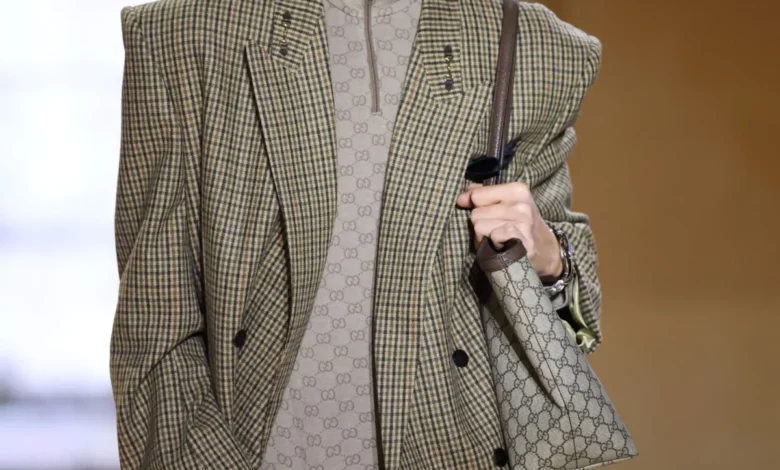
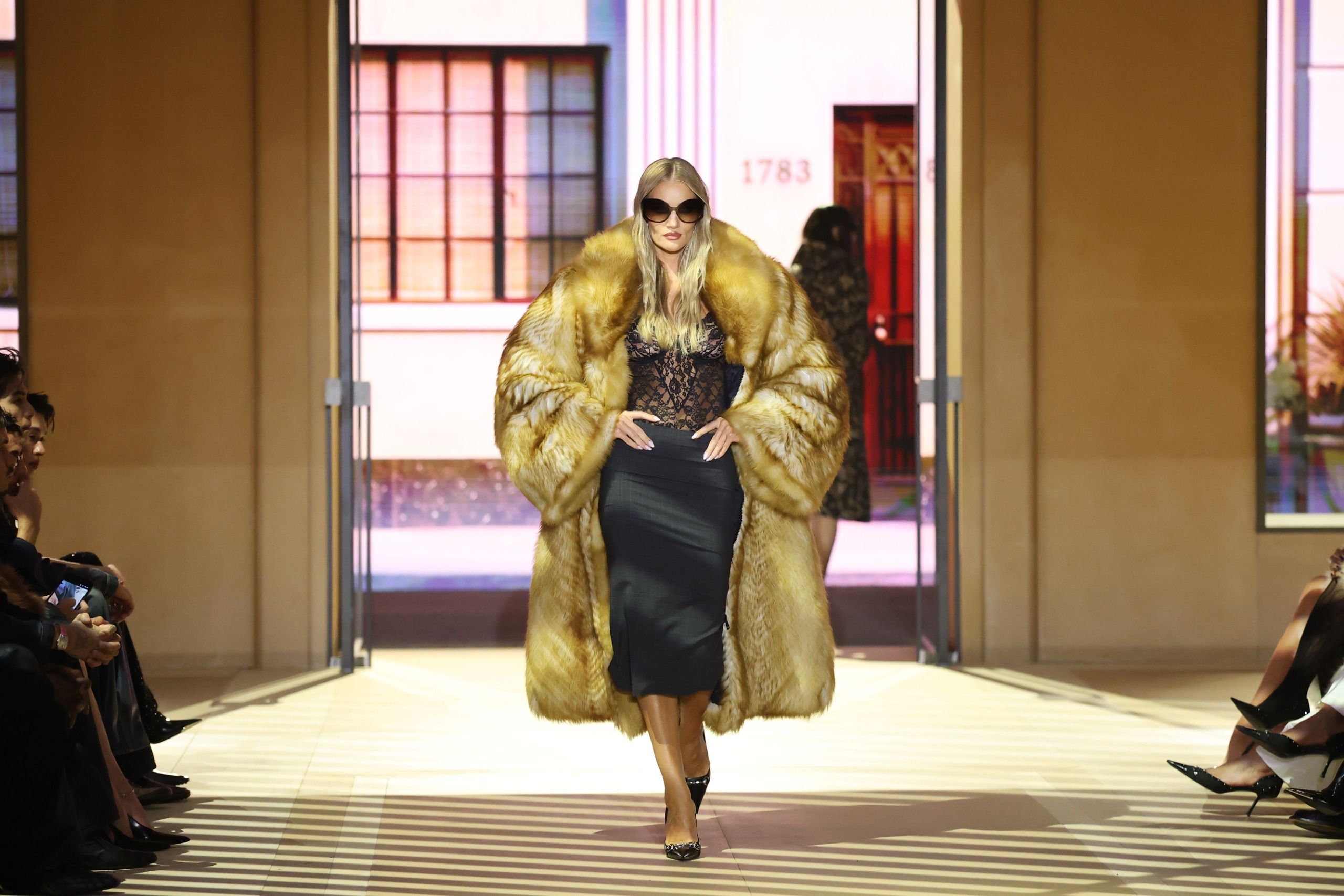
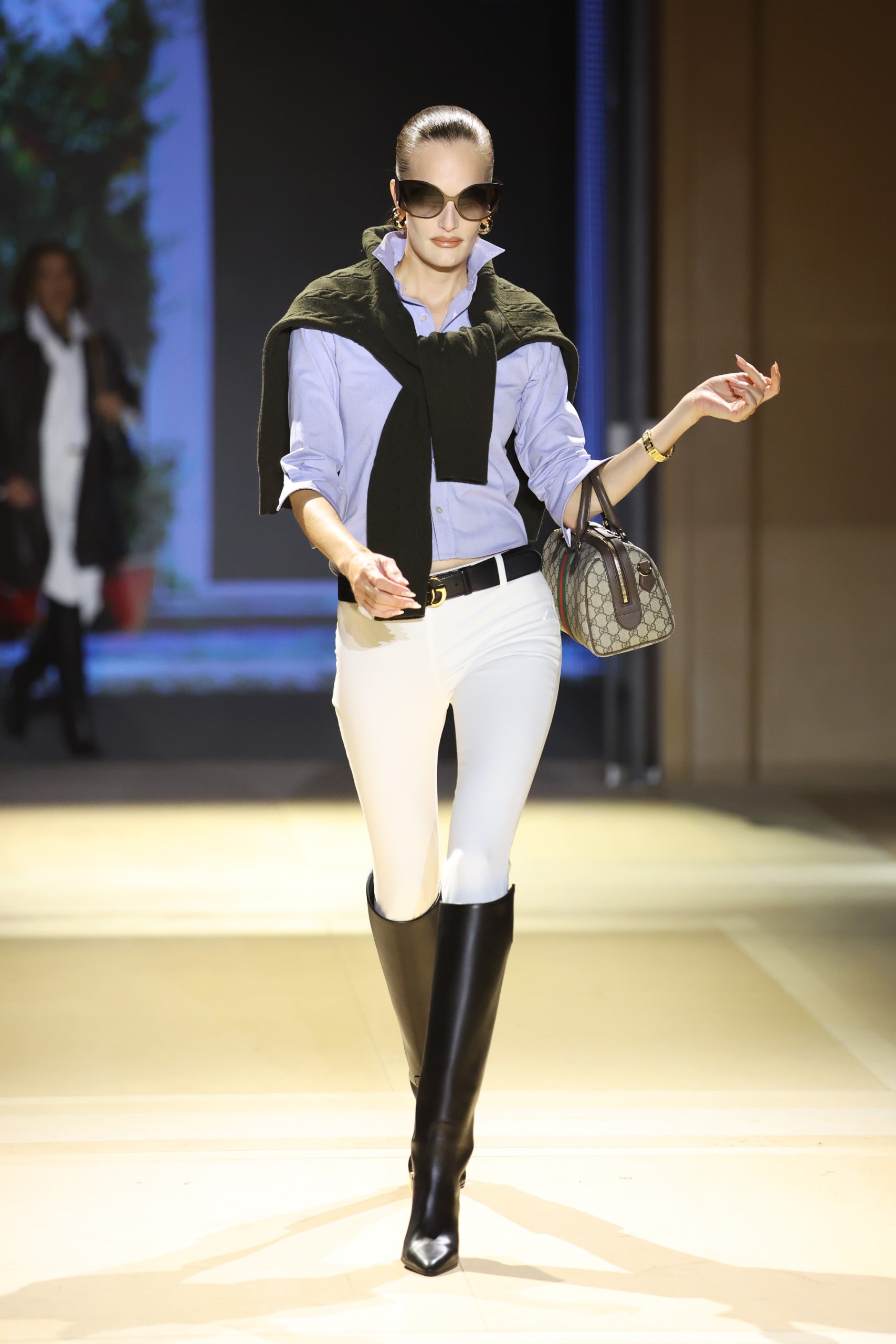
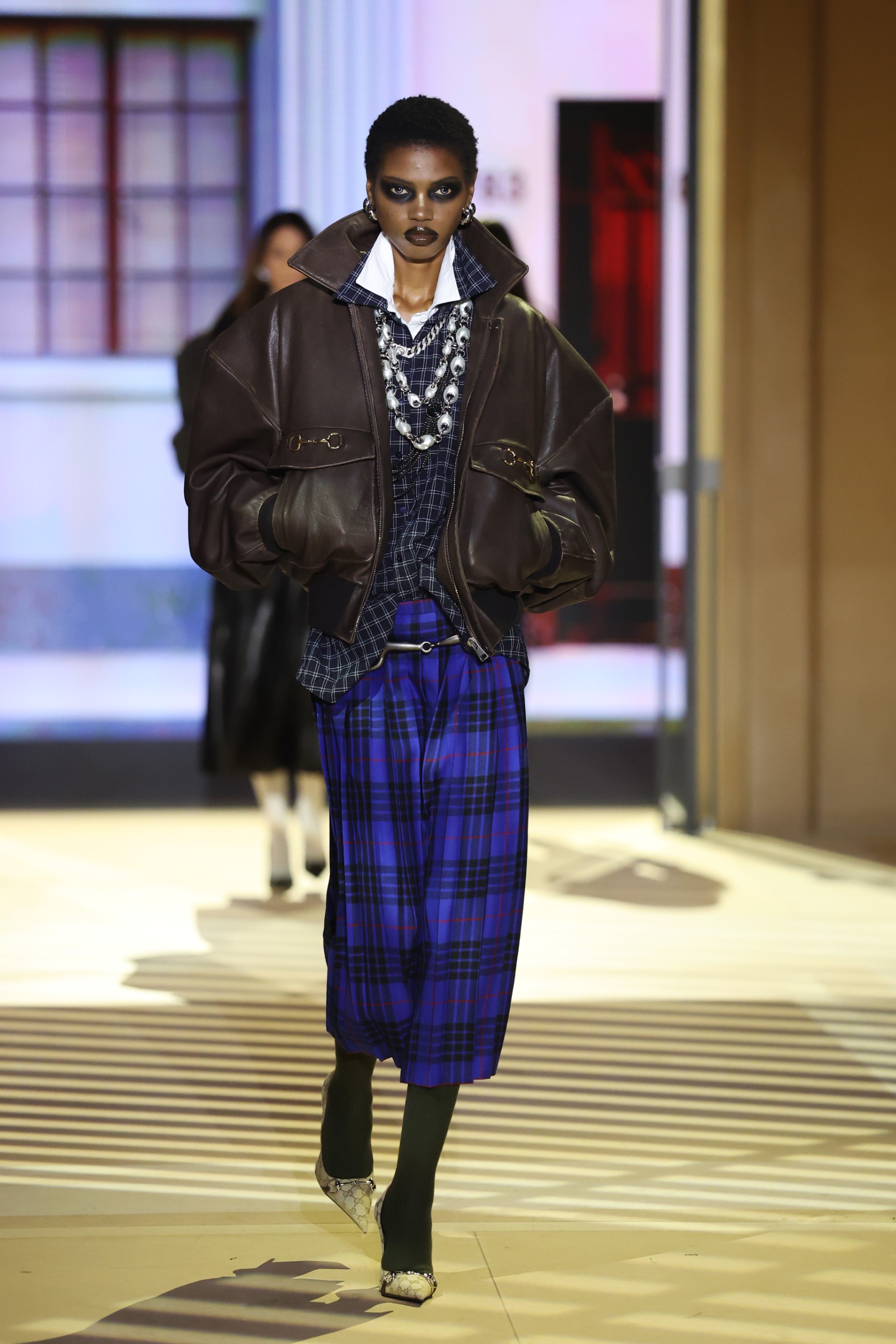
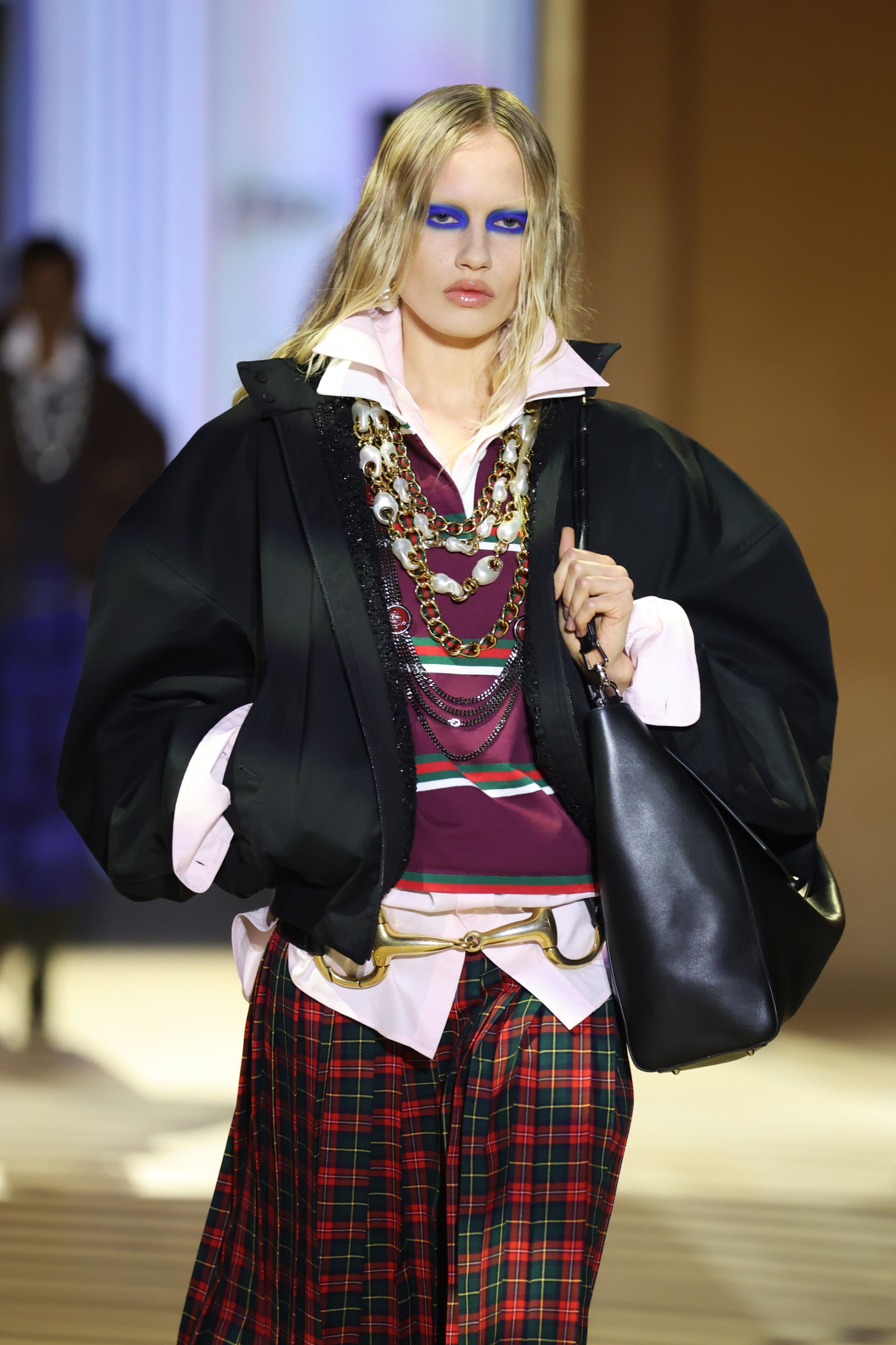
Models, including industry icons such as Rosie Huntington-Whiteley, Poppy Delevingne, and Alex Consani, embodied archetypes curated by Demna: "The Rebellious Aristocrat," "The Snob," and "The Eccentric." The clothes themselves were a study in this duality. Traditional bourgeois signifiers—such as faux fur coats, structured double-breasted tailoring, and polished equestrian-inspired silhouettes—were intentionally disrupted.
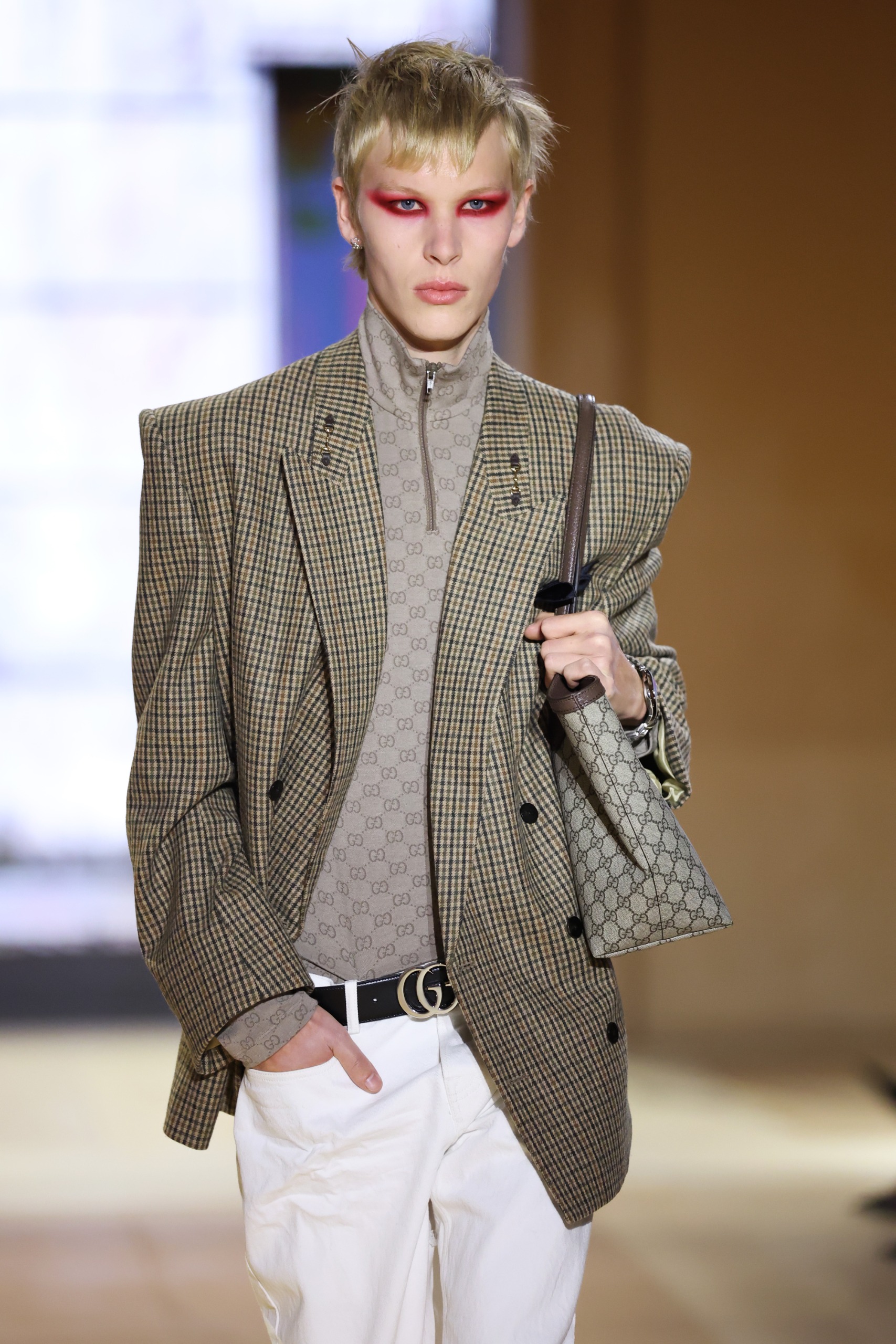
Key details included:
- The Horsebit Motif: Reimagined across the collection, appearing as miniature embellishments on shirt collars and jacket pockets, or as oversized, heavy hardware used to cinch waists or secure back fastenings.
- Prep-School Influences: A recurring theme of layered polo shirts, precisely tucked-in ties, and sweaters casually draped over shoulders, grounding the high-fashion elements in a recognizable, albeit elevated, classicism.
- Textural Contrast: The juxtaposition of heavy, high-pile carpets and velvet seating in the set design was mirrored in the collection, where sinuous, sparkling evening gowns were paired with the raw, structural integrity of leather outerwear.
Official Statements and Industry Reception
In a letter distributed to guests, Demna articulated the core of his research: "My first year at Gucci was dedicated to understanding and formulating what Gucci stands for. The conclusion of my research is that Gucci stands for being rooted in the desire to belong to a more glamorous world, and in the audacity to remake that world in your own image."
Backstage, the designer was candid about the evolution of his approach. "It kind of feels like it’s my first show for Gucci," he noted, distancing himself from the "comfort zone" of previous design languages. He emphasized that he was not interested in rehashing the 1990s "snobby fashion glamour," but rather in tapping into a more primal, historical version of the house—one that existed before the high-octane commercialism of the late 20th century. "Gucci is about luxury that wants to be seen—it is about the tension between propriety and sensuality," he added.
Market Implications and Future Outlook
The implications of this show extend far beyond the immediate trends of the upcoming season. With the luxury sector facing cooling demand in key global markets, the pivot toward a more established, "respectable," yet eccentric brand identity is a strategic move to secure long-term brand equity.
Data from the first half of the year suggests that heritage-heavy luxury houses are seeing a stabilization in sales compared to those relying on purely trend-driven collections. By emphasizing the "monumental" and the "bourgeois," Demna is positioning Gucci as a brand that offers permanence and pedigree.
Furthermore, the emphasis on the store as a "temple of desire" signals an aggressive move to increase the average transaction value per customer. By elevating the in-store environment, the brand is betting that the physical retail experience remains the ultimate conversion tool for high-net-worth individuals.
Conclusion: A New Era of Gucci
As Milan Fashion Week for the S/S 2027 season continues, the conversation around Gucci remains central. Demna has effectively signaled that he is moving away from the pastiche-heavy approach often associated with high-fashion revivals. Instead, he is building a new vocabulary for the brand—one that respects the "bourgeois" foundations of the house while leaving enough room for the "danger" and "sex appeal" that have historically defined Gucci’s most successful eras.
The coming months will be critical. With the Paris store opening in October, the industry will be watching closely to see if the translation of this runway concept into a permanent retail space resonates with the consumer base. If the response to today’s show is any indication, the "broken bourgeoisie" is not just a seasonal aesthetic—it is the blueprint for a transformed Gucci, one that is as much about the architecture of desire as it is about the garments themselves. As the dust settles on the Allianz Mi-Co space, it is clear that the brand is not merely looking back at its history; it is actively rewriting its future.