AI Workflows vs Agents: A Practical Guide to Architectural Decision-Making in Software Engineering

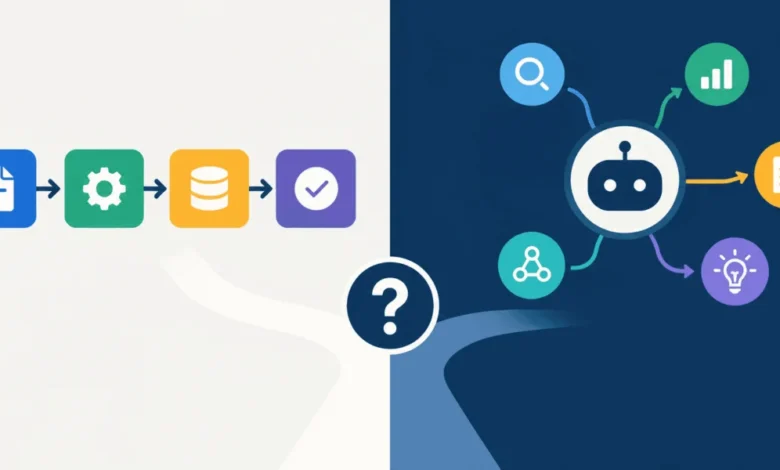
The rapid proliferation of Large Language Models (LLMs) has ushered in a period of architectural experimentation, where the terms "AI agent" and "AI workflow" are frequently used interchangeably despite representing fundamentally different technical approaches. As organizations move beyond initial prototyping, the distinction between these two paradigms has become the most critical factor in determining the reliability, cost-efficiency, and scalability of enterprise AI applications. A failure to distinguish between a deterministic pipeline and an autonomous agent often leads to fragile systems, ballooning API costs, and unpredictable output.
The Evolution of AI Architectural Patterns
The industry-wide confusion stems from the historical trajectory of AI integration. In 2023, early implementations were largely restricted to simple prompt-response cycles. By mid-2024, the focus shifted toward "agentic" frameworks, as researchers sought to imbue models with the ability to use external tools. This trend was fueled by the release of frameworks like LangChain, AutoGen, and CrewAI, which popularized the concept of autonomous agents—systems that can loop, plan, and execute multi-step tasks without constant human intervention.
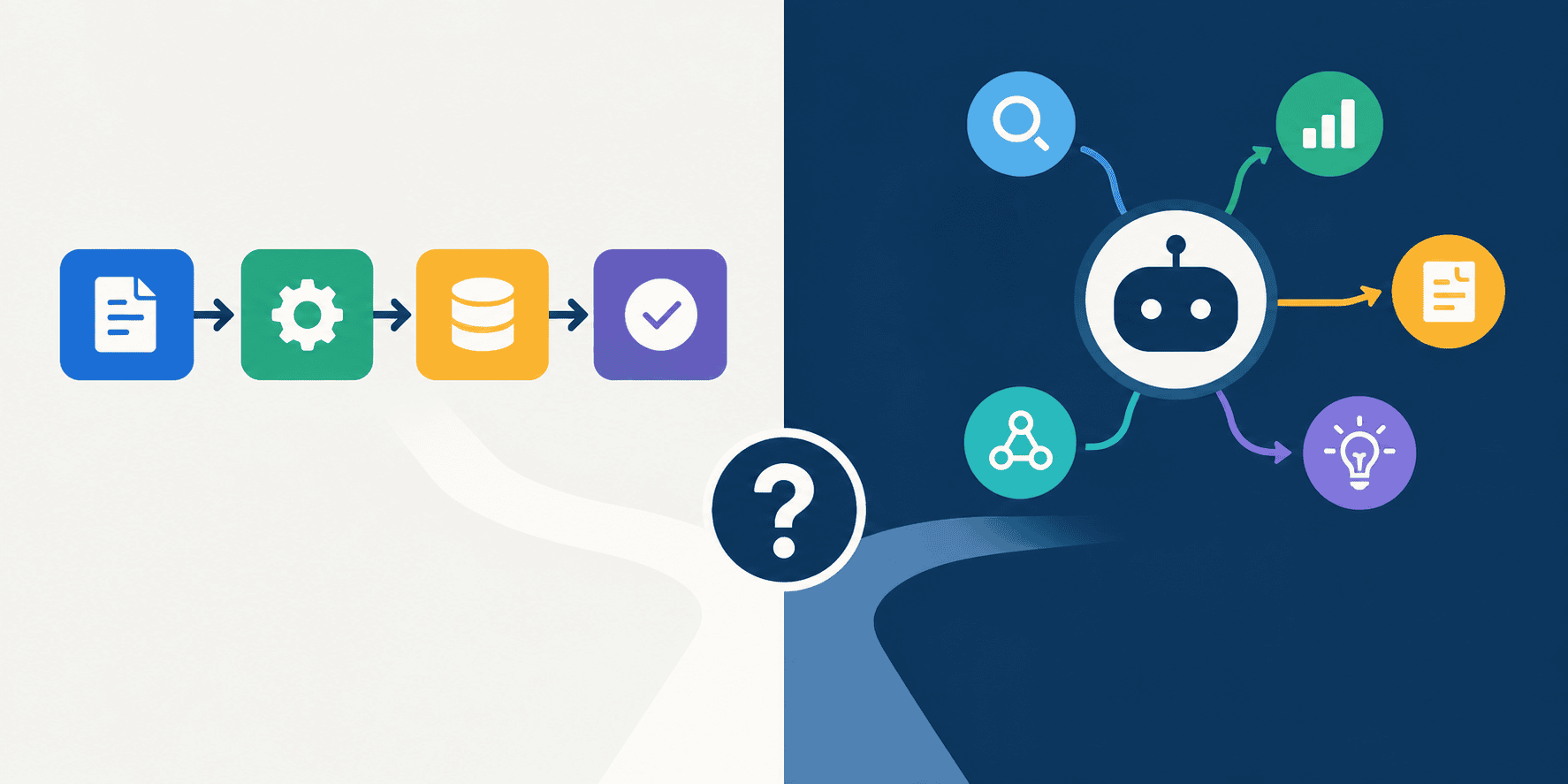
However, the "agent" label has become a marketing catch-all. Industry analysis suggests that over 70% of current enterprise use cases labeled as "agentic" are, in reality, complex workflows. A workflow, or a deterministic pipeline, relies on a pre-programmed sequence of events where the developer defines the "happy path" and the error-handling branches. In contrast, an agent delegates the control flow to the LLM itself, allowing the model to determine the next step based on its observations.
Defining the Deterministic Workflow
A workflow functions as a state machine where every transition is mapped during the development phase. Even when these systems integrate LLMs for specific tasks—such as summarizing a document or classifying a support ticket—the overarching logic remains rigid.
For instance, in a standard automated refund processing system, the sequence is typically: ingest customer request, verify purchase status, check against company return policy, and issue a refund if criteria are met. Because the business rules are absolute, there is no requirement for the system to "reason" about the process. The developer has already drawn the flowchart, and the LLM acts as a specialized tool within a fixed node of that diagram. This approach is favored in high-stakes environments, such as banking or healthcare, where auditability and consistent, predictable outcomes are mandatory.
The Rise of Autonomous Agentic Systems
An agentic system represents a departure from traditional software engineering. In this model, the developer provides the LLM with a high-level goal and a set of available tools, such as web search, database query interfaces, or code execution environments. The model then performs an internal reasoning cycle: "What is my goal? What information do I have? Which tool should I use next?"
This capability is particularly transformative in troubleshooting or research scenarios. In the context of a production system outage, the sequence of events is often unknown. One incident might be caused by a database latency spike, while another might stem from a regional CDN failure. A hard-coded workflow would struggle to account for the infinite combinations of network failures. An agent, however, can inspect a log, see a specific error, decide to pivot its search to a different telemetry provider, and continue until it reaches a root cause. The control flow is not in the code; it is in the model’s weights.
The Practical Test: The Whiteboard Methodology
Before committing to a specific architecture, lead engineers often apply what is known as the "Whiteboard Test." If an engineer can draw the entire decision tree—including all failure modes and branches—on a whiteboard, the system should almost certainly be built as a workflow.
The primary danger in modern development is the "agent trap," where developers assign an LLM a goal that is too broad, leading to "looping" issues or unnecessary token consumption. Supporting data from recent cloud infrastructure studies indicates that agentic workflows can be 5x to 10x more expensive than their deterministic counterparts due to the increased token usage required for the model to "think" between steps.
Comparative Analysis: Workflow vs. Agent
| Feature | Workflow | Agent |
|---|---|---|
| Control Flow | Developer-defined (Fixed) | Model-determined (Dynamic) |
| Predictability | High (Deterministic) | Moderate (Probabilistic) |
| Complexity | Linear | Exponential |
| Maintenance | Easier to debug/audit | Challenging to trace |
| Best Use Case | Data extraction, compliance | Troubleshooting, research |
Economic and Operational Implications
The implications of these architectural choices extend far beyond code maintenance. Organizations currently optimizing for cost-efficiency are finding that "Agentic Fatigue"—the exhaustion of computing resources due to inefficient model reasoning—is a significant risk.
For example, a high-volume customer service bot that handles thousands of requests daily should be implemented as a workflow. By using a workflow to classify the intent and only invoking the LLM to generate the final response, a firm can reduce latency to milliseconds and keep costs predictable. If that same bot were built as an agent, every single user interaction would trigger a multi-step reasoning loop, potentially inflating operational costs by an order of magnitude without providing any tangible improvement in user experience.
Strategic Decision Checklist
To determine the correct path, engineering teams are increasingly using a standardized validation checklist:
- Flowchart Feasibility: If the logic can be represented in a static diagram, utilize a workflow.
- Input Variability: If the input is highly structured, such as an API response or a formal contract, use a workflow. If the input is conversational, unstructured, or highly unpredictable, consider agentic patterns.
- Audit Requirements: In sectors governed by strict regulatory oversight, the transparency of a workflow is non-negotiable.
- Resource Constraints: For systems where latency is the primary performance metric, deterministic workflows are significantly faster because they bypass the overhead of multi-turn agentic reasoning.
Conclusion: Starting with Constraints
The current consensus among systems architects is to begin with the most constrained system possible. A well-designed workflow does not mean the system lacks "intelligence"—it simply means that the intelligence is applied in a surgical, targeted manner. By utilizing LLMs to make judgments within a fixed workflow, developers can capture the benefits of advanced AI while maintaining the robustness of traditional software engineering.
The most effective approach is to build the deterministic backbone first, identify the specific nodes where the system fails to generalize, and only then introduce agentic capabilities to those isolated, high-complexity segments. By adhering to this "workflow-first" methodology, organizations can avoid the pitfalls of over-engineering and ensure that their AI systems are not only innovative but also reliable, auditable, and cost-effective.