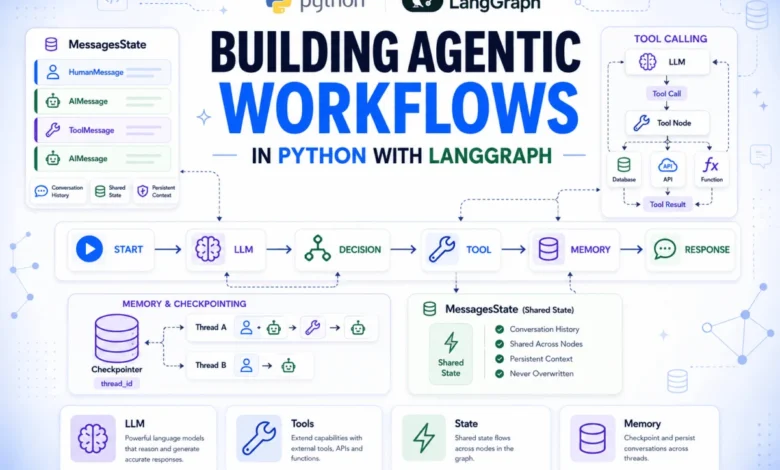
The Evolution of AI Agents and the Need for Advanced Frameworks
The rapid advancements in large language models have democratized access to powerful natural language understanding and generation capabilities. Initially, many AI applications revolved around single-turn queries, where a user asks a question, an LLM provides an answer, and the interaction concludes. However, real-world applications often demand more: agents that can perform sequential tasks, interact with external systems, maintain conversational context over time, and provide transparency into their decision-making processes.
This demand spurred the development of "agentic AI," a paradigm where an AI system can reason, plan, execute actions, and reflect on its outcomes to achieve a given goal. These agents mimic human problem-solving by breaking down complex problems, using tools to gather information or perform operations, and iteratively refining their approach. The challenges in building such systems are significant, encompassing the orchestration of multiple LLM calls, managing dynamic state, handling tool interactions reliably, and ensuring observability into the agent’s internal workings. Traditional approaches often led to brittle, custom-coded "plumbing" for each use case, proving difficult to scale, debug, and maintain.
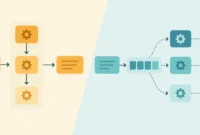
LangGraph, emerging from the LangChain ecosystem, directly confronts these complexities by introducing a graph-based representation for agent workflows. It provides a clean, modular structure where each step of an agent’s operation is explicitly defined, enabling developers to construct intricate decision-making loops without sacrificing clarity or maintainability. Industry experts have increasingly emphasized the necessity of such frameworks as AI applications move from prototypes to production, where robustness and transparency are paramount.
LangGraph’s Foundational Architecture: State, Nodes, and Edges
At its core, every LangGraph application is constructed from three fundamental primitives: State, Nodes, and Edges. Understanding these components is crucial for designing effective agentic workflows.
State serves as the central nervous system of a LangGraph agent. It is defined as a TypedDict and acts as the shared memory accessible to all parts of the graph. Every node within the graph reads from this global state and, critically, writes updates back to it. This mechanism ensures that information flows consistently throughout the agent’s execution. Unlike traditional function calls where data is passed explicitly between functions, LangGraph’s state management promotes a decoupled architecture. Nodes only return the fields they intend to modify; any fields not updated remain unchanged, preserving the overall context. For data that needs to accumulate over time, such as conversation history or logs, LangGraph supports reducer functions (e.g., operator.add for lists) that specify how new values should merge with existing ones rather than simply overwriting them. This is particularly vital for maintaining dynamic elements like message histories.
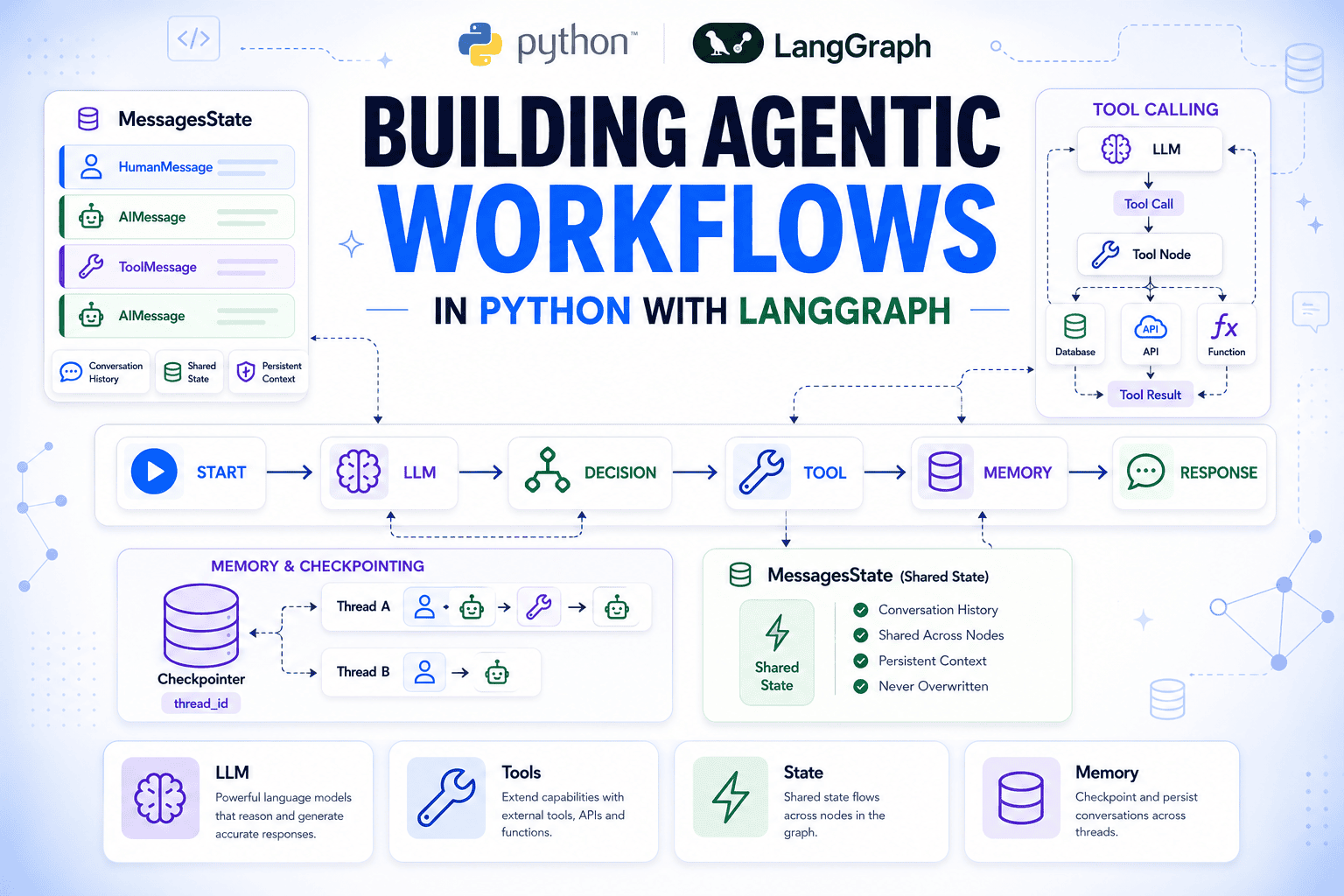
Nodes are the operational units of a LangGraph agent. Conceptually, they are plain Python functions that encapsulate a specific piece of work. A node takes the current State as its argument and returns a dictionary of state updates. The simplicity of using standard Python functions means developers can integrate existing logic or build new functionalities with minimal overhead. Registering a function with StateGraph.add_node() formally incorporates it into the graph. This design choice fosters modularity, allowing individual nodes to be developed, tested, and maintained independently before being composed into a larger workflow. Each node represents a distinct step in the agent’s reasoning or action process, such as invoking a language model, calling an external tool, or performing data processing.
Edges dictate the flow of execution within the graph, defining the sequence in which nodes are activated. StateGraph.add_edge(A, B) specifies a direct transition: upon completion of node A, node B is executed. More sophisticated routing is enabled by StateGraph.add_conditional_edges(), which allows for dynamic transitions based on the current state. After a specified node finishes, a routing function is invoked, which examines the state and determines the next node to execute. This conditional routing is fundamental for implementing complex decision trees and iterative loops, such as those found in a ReAct (Reasoning and Acting) agent pattern. Every graph requires a designated START node as its entry point and at least one path leading to an END node, signifying the completion of a workflow segment or the entire process.
Managing Conversation History with MessagesState
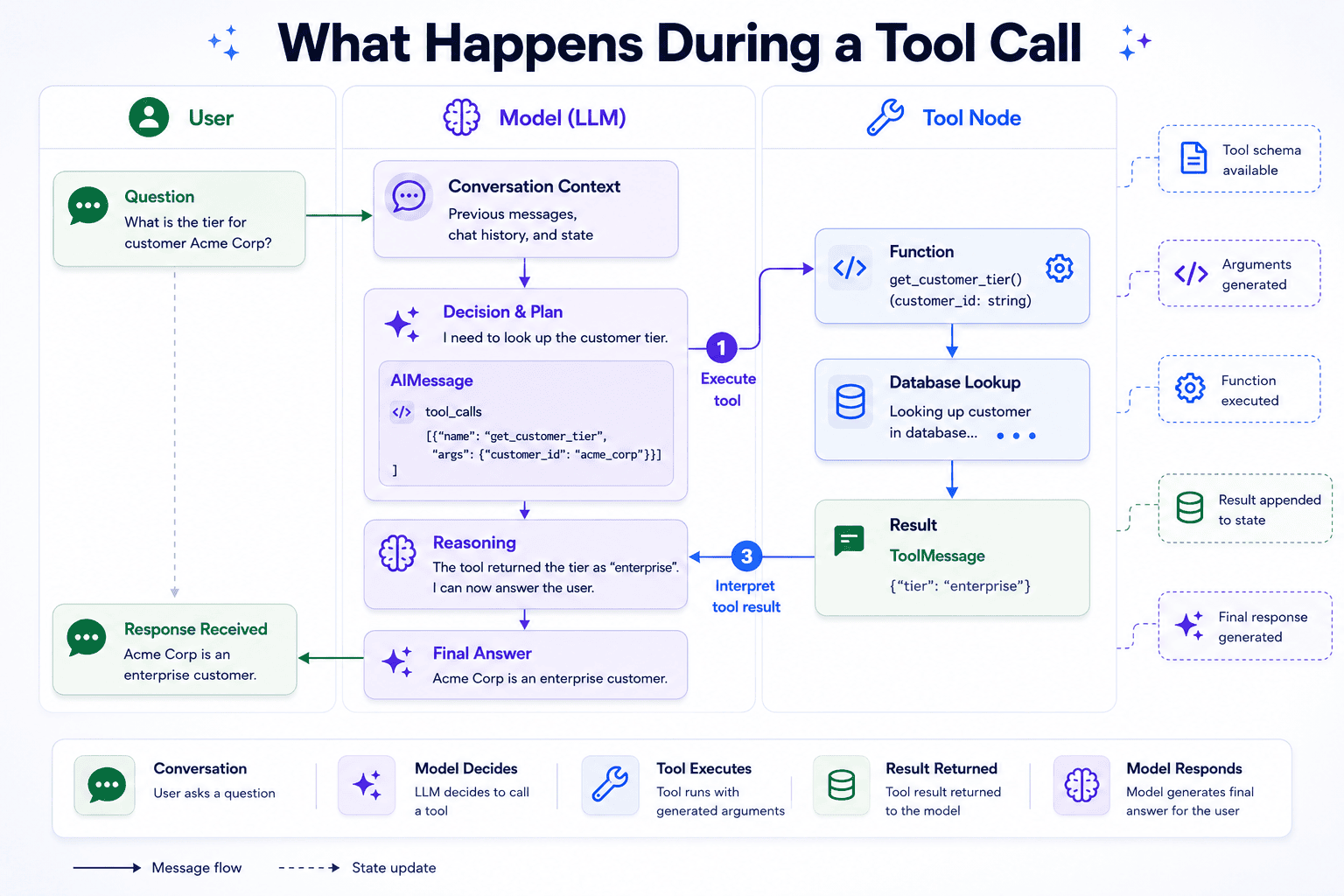
For conversational AI agents, maintaining a coherent and complete history of interactions is paramount. Without it, agents lose context, leading to disjointed responses and a diminished user experience. LangGraph addresses this with its built-in MessagesState, a specialized TypedDict designed to simplify conversation management.
MessagesState features a single messages field, which is automatically configured to use the add_messages reducer. This reducer intelligently appends new messages to the existing list, handling deduplication and ensuring correct ordering. This means developers are freed from the cumbersome task of manually stitching together user inputs, AI responses, and tool outputs. When a node returns new messages, they are seamlessly integrated into the ongoing conversation history. Furthermore, MessagesState can be extended with additional custom fields (e.g., customer_id, priority_flag) to store application-specific data relevant to the conversation, ensuring that all necessary context travels with the agent’s state. This persistent and automatically managed message history is a cornerstone for building truly intelligent and engaging conversational interfaces.
Integrating Language Models and Tool Calling
The core intelligence of a LangGraph agent typically resides in its interaction with a large language model. Within a node, the agent invokes an LLM, passing it the current conversation history and potentially other context from the MessagesState. For instance, a run_model node might take the messages field, prepend a SystemMessage to define the model’s persona (e.g., "You are a support agent"), and then invoke the LLM. The LLM’s AIMessage response is then returned by the node, and the add_messages reducer automatically appends it to the state. LangGraph’s design ensures that swapping out LLM providers (e.g., OpenAI, Anthropic, Google, local Ollama models) is a straightforward process, primarily involving changing the import statement and model string, thus promoting flexibility and future-proofing.
However, the real power of agentic AI lies in its ability to interact with the external world through tool calls. LLMs, by themselves, are limited to the knowledge they were trained on. To access real-time data, query databases, perform calculations, or interact with APIs, agents require tools. LangGraph facilitates this by allowing developers to define tools using the @tool decorator, which automatically generates a schema that the LLM can understand. A precise docstring for each tool is critical, as it guides the LLM in deciding when to use the tool and what arguments to provide.
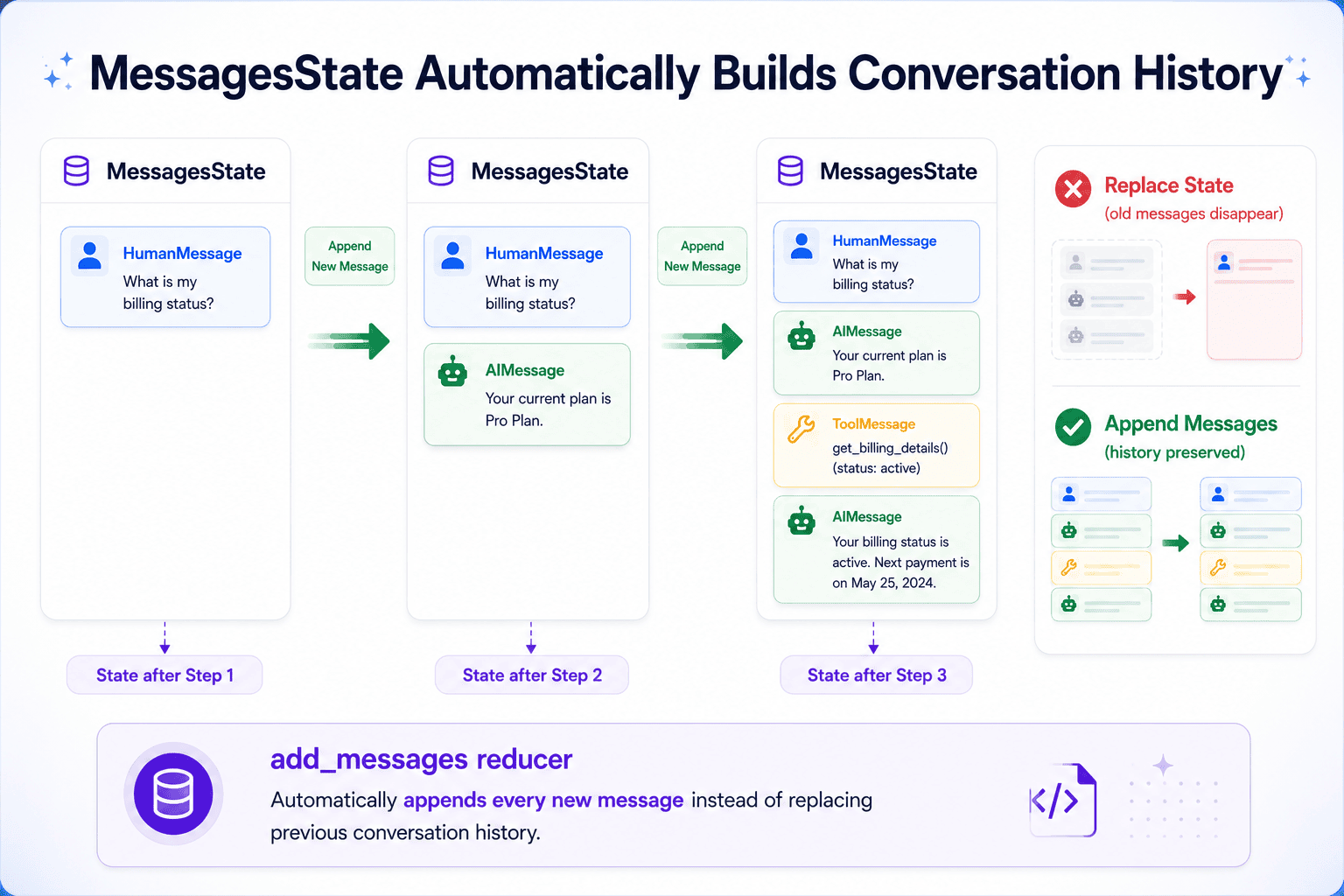
When a tool is bound to the LLM using bind_tools(), the model gains the capacity to return an AIMessage with a tool_calls field, indicating its intention to use a specific tool with certain arguments. LangGraph’s ToolNode pre-built component then automates the execution of these tool calls. It interprets the tool_calls from the AIMessage, runs the corresponding Python function, and encapsulates the result in a ToolMessage, which is then appended to the state. The tools_condition function, used with add_conditional_edges, intelligently routes the workflow: if the LLM suggests a tool call, the graph transitions to the ToolNode; otherwise, it progresses to the END or another appropriate node. This creates a powerful ReAct pattern: the model reasons, decides on a tool, the tool executes, and the result is fed back to the model for further reasoning or to formulate a final answer. This iterative loop, while costing two model calls per tool use (one to decide, one to interpret), is fundamental for complex, data-driven interactions.
Tracing the Reasoning Loop for Enhanced Observability
One of the significant advantages of LangGraph’s graph-based structure is the inherent observability it provides. By representing an agent’s workflow as a sequence of nodes and edges, every step of the agent’s reasoning and action becomes transparent and inspectable. When an agent utilizes a tool, the full sequence of messages in the state reveals the detailed interaction:
- A
HumanMessageinitiates the query. - The
run_modelnode invokes the LLM, which, recognizing the need for external information, returns anAIMessagecontaining atool_callsinstruction (e.g.,get_customer_tier(customer_id='cust_1001')). - The
tools_conditiondetects the tool call and routes execution to theToolNode. - The
ToolNodeexecutesget_customer_tier("cust_1001"), producing a result. - This result is encapsulated in a
ToolMessageand added to the state. - The graph then loops back to
run_model. The LLM, now having theToolMessagein its context, processes the tool’s output and generates a finalAIMessagewith the answer. - The
tools_conditionchecks again, finds no further tool calls, and routes toEND.
This detailed message sequence provides invaluable insight into the agent’s decision-making process, making it easier to debug, understand failures, and optimize performance. For developers, this level of transparency is crucial for building trustworthy and reliable AI systems, a feature often lacking in opaque, black-box LLM interactions.
Persisting Conversations for Continuous Interaction
While the graph structure facilitates complex single-turn interactions, many real-world agentic applications require persistent memory across multiple invocations. Without persistence, each graph.invoke() call would start with a fresh, empty state, rendering multi-turn conversations impossible.
LangGraph addresses this with checkpointers. By attaching a checkpointer when compiling the graph, the agent’s state can be saved and restored between calls. The InMemorySaver is a simple, memory-based checkpointer suitable for development and testing. For production environments, it is typically replaced by persistent checkpointers backed by databases (e.g., SQLite, Postgres, Redis) or other durable storage solutions.
The mechanism is straightforward: when an invoke call is made with a thread_id (e.g., config="configurable": "thread_id": "ticket-7741"), the checkpointer first attempts to load the state associated with that thread_id. If a state exists, the conversation resumes from where it left off. After the graph execution, the checkpointer saves the updated state back to its storage, ensuring continuity. Using a different thread_id automatically initiates a new, separate conversation state. This capability is fundamental for building chatbots, support agents, or any AI system that needs to maintain context over extended periods or across user sessions.
It’s also important to distinguish between checkpointers and Stores. Checkpointers manage and persist the graph state for individual threads (conversations). In contrast, Stores provide durable application-level storage for data independent of any specific conversation, such as user profiles, preferences, or long-term memories shared across multiple threads. LangGraph allows graphs to access these stores during execution, complementing the conversational memory provided by checkpointers.
Broader Implications and Future Outlook
LangGraph represents a significant step forward in the development of AI agents, providing a framework that balances flexibility, modularity, and transparency. Its structured approach simplifies the orchestration of complex AI workflows, moving beyond the limitations of single-model interactions. For enterprises, this means the ability to build more robust customer support agents, intelligent assistants, automated data analysis tools, and sophisticated decision-making systems that integrate seamlessly with existing infrastructure.
The independence of LangGraph’s components is a key strength. Developers can swap out language models, add new tools, or change persistence mechanisms without overhauling the entire graph. This adaptability ensures that applications built with LangGraph can evolve with the rapid pace of AI innovation.
Furthermore, LangGraph’s foundational principles extend naturally to multi-agent systems. A complex problem can be decomposed into sub-problems, each handled by a specialized agent. A coordinator agent, itself a LangGraph, can route requests to these specialist agents based on the problem domain, creating sophisticated collaborative AI ecosystems. This multi-agent paradigm promises to unlock even more advanced capabilities, tackling problems that are beyond the scope of any single agent.
As AI continues to mature, frameworks like LangGraph will be instrumental in bridging the gap between powerful LLMs and practical, production-ready applications. They empower developers to build intelligent systems that are not only capable but also understandable, maintainable, and scalable, paving the way for a new generation of autonomous and semi-autonomous AI solutions.