Why Design Systems Are the Critical Missing Piece in Modern Agile Development

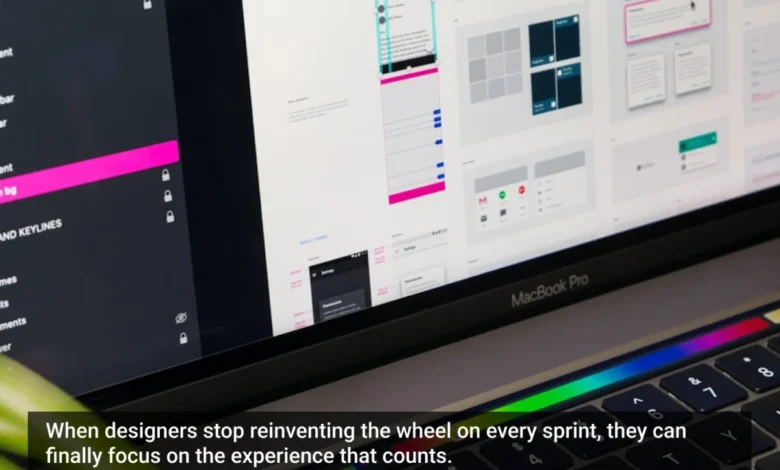
The tension between design velocity and product quality remains one of the most pervasive challenges in contemporary software development. Designers operating within agile frameworks frequently report a sense of perpetual urgency, where the relentless cadence of sprints—each punctuated by new tickets, evolving features, and shifting requirements—leaves little room for deep, contemplative user experience work. While agile methodologies are designed to foster rapid delivery and iterative improvement, the reality for many design teams is a fragmented workflow that prioritizes visual output over structural cohesion. Industry research suggests that the solution to this ongoing friction is not merely to work faster, but to fundamentally alter the design infrastructure through the adoption of comprehensive design systems.
The Evolution of the Agile-Design Conflict
The origin of this conflict can be traced back to the early 2010s, when the "Agile Manifesto" became the dominant paradigm for software engineering. Originally conceived for developers, the framework focused on the "sprint" model: two-to-four-week cycles intended to deliver working software incrementally. However, as design became an increasingly vital component of product success, the integration of design processes into these engineering-heavy timelines created a mismatch.
For years, the industry operated under the "waterfall" model, where design was completed in its entirety before engineering began. As organizations transitioned to agile, they often attempted to compress the design process into the same sprint cycles as engineering. This shift frequently forced designers into a reactive role, where they were tasked with creating pixel-perfect mockups for tickets that were already queued for development. The result was a breakdown in cross-functional collaboration, leading to the "handoff" model—a siloed approach where designers deliver specifications to engineers, effectively ending the collaboration phase just as the most critical implementation work begins.
The Hidden Economic and Operational Costs of Visual Redundancy
A quantitative analysis of design workflows reveals a significant amount of wasted labor. Designers spend an estimated 30% to 50% of their time on "low-value" visual tasks: defining the padding of a button, ensuring the alignment of form fields, or selecting color palettes for individual components. When these elements are designed from scratch for every new screen, the cumulative cost to an organization is substantial.
This redundant effort does not merely consume time; it introduces technical debt. When each button or input field is designed independently, the codebase becomes bloated with disparate CSS and JavaScript rules. A 2022 study by industry analysts found that companies without a centralized design system face a 25% higher rate of UI inconsistency, which directly correlates to a decrease in user trust and a lower conversion rate. The lack of standardized visual language acts as a silent tax on product development, slowing down the pace of innovation and increasing the cognitive load on the end-user.
Design Systems as an Operational Infrastructure
A design system is not a static style guide or a library of components; it is a living ecosystem of shared standards. By codifying buttons, typography, navigation, and interaction patterns into a centralized repository, organizations provide their teams with a "single source of truth."
When a design system is effectively integrated, the nature of the designer’s role shifts from "pixel technician" to "problem solver." Instead of debating the aesthetic merits of a dropdown menu, the designer utilizes a pre-approved, tested component. This allows the team to focus on the higher-level architecture of the user experience—such as error state management, complex user journeys, and accessibility requirements—that are often relegated to the background in a high-pressure agile environment.
Industry experts, including Laura Klein, have long argued that this shift is essential for scaling product teams. By defining the basics of the interface, the team creates a shared vocabulary. Engineers no longer wait for a full mockup; they can assemble interfaces using the documented components, drastically reducing the time-to-market for new features.
Chronology of Implementation: From Chaos to Cohesion
The transition to a design system typically follows a predictable four-stage chronology within an organization:
- The Audit Phase: The team maps all existing UI patterns across the product. Often, this reveals hundreds of variations of common elements, such as multiple shades of gray for backgrounds or slightly different border radii on buttons.
- The Foundation Phase: Teams define the "tokens" of the system: the core design language including colors, typography scales, spacing units, and motion profiles.
- The Component Development Phase: Designers and engineers collaborate to build the atomic elements—buttons, inputs, and cards—that will form the basis of all future interfaces.
- The Integration Phase: The design system is embedded into the daily workflow. Jira tickets no longer require comprehensive mockups; instead, they reference the specific design system components, leaving the implementation details to the established guidelines.
Data-Driven Implications for Agile Success
The impact of this shift is measurable. Organizations that have successfully implemented robust design systems report a 40% reduction in time-to-delivery for new features. Furthermore, the rate of "rework"—the time spent fixing bugs related to visual inconsistencies or poor implementation—drops significantly.
Beyond efficiency, there is a tangible impact on product performance. Consistent interfaces reduce the "learning curve" for users. Because users encounter familiar patterns, they navigate the product with greater ease, leading to higher retention rates. A study conducted by an international UX research firm indicated that products utilizing a unified design system saw a 15% increase in user satisfaction scores, as the interface felt more "trustworthy" and cohesive.
Bridging the Gap: The Future of Collaboration
The integration of design systems into the agile workflow effectively eliminates the traditional handoff. When designers and engineers share the same component library, the conversation moves from "What should this look like?" to "How does this best serve the user?"
This collaborative shift is fundamental to the philosophy of "learning faster than you build." By removing the friction of visual design, the team is free to iterate on the functional aspects of the product. They can push small, incremental updates to users, gather feedback, and adjust, knowing that the structural integrity of the interface is protected by the design system.
Broader Implications for Product Organizations
The adoption of design systems signals a maturation of the digital product industry. As software becomes increasingly complex and teams grow larger, the reliance on individual heroics—where a single designer attempts to maintain consistency through sheer willpower—is no longer sustainable.
The move toward design systems is an acknowledgment that design is a scalable infrastructure, much like the codebases that support modern applications. For stakeholders and executives, the investment in a design system is an investment in long-term organizational health. It mitigates the risks associated with team turnover, as new designers can be onboarded into an established system rather than needing to reverse-engineer existing products.
Ultimately, the agile trap—the feeling that there is never enough time—is a symptom of a process that is focused on the wrong inputs. By moving away from the constant reinvention of visual patterns and toward the systematic application of proven design standards, organizations can break the cycle of frantic, repetitive work. They create space for the kind of deliberate, thoughtful design that defines industry-leading products. As the landscape of software development continues to evolve, the ability to design at scale will not be a luxury, but a requirement for any team looking to survive the relentless pace of the modern market.