New York City Redesigns Justice Architecture: Inside the Borough-Based Jail System Replacing Rikers Island


New York City is undergoing one of the most ambitious and contentious civic infrastructure overhauls in its modern history, shifting away from its notorious central penal complex in favor of a decentralized, borough-based jail system. Initiated formally under the New York City Borough-Based Jail Program (BBJ) launched in 2017, the multi-billion-dollar initiative seeks to replace the crumbling, scandal-plagued Rikers Island detention complex with four newly constructed, smaller facilities located within Manhattan, Brooklyn, Queens, and the Bronx. Overseen primarily by the New York City Department of Design and Construction (DDC) in collaboration with prominent architecture firms such as HOK, CetraRuddy, and Michael Graves, the project aims to realign the city’s criminal justice infrastructure around principles of rehabilitation, community integration, and human dignity.
With construction officially underway across all four sites following the recent groundbreaking of the Manhattan facility, the city faces a strict timeline to shutter Rikers Island by its mandated deadlines, even as architects, local communities, and municipal leaders grapple with the complex ethical, logistical, and architectural challenges of designing modern carceral spaces.
Background Context and the Fall of Rikers Island
For decades, the Rikers Island jail complex has stood as a symbol of systemic dysfunction, violence, and institutional neglect within the American correctional landscape. Spanning over 400 acres between Queens and the Bronx, the sprawling island facility has long been plagued by documented human rights abuses, chronic operational mismanagement, rampant violence among inmates and staff, and severe infrastructural decay. Over successive mayoral administrations, civil rights advocates, legal aid organizations, and incarcerated individuals campaigned tirelessly for its closure, arguing that the isolated geography of Rikers Island exacerbated the deterioration of inmate mental health and severed vital community and legal support systems.
In response to mounting public pressure and federal oversight threats, municipal leaders committed to a paradigm shift. Mayor Zohran Mamdani recently reinforced this commitment, characterizing Rikers Island as one of the "deepest failures of our city government" and articulating a municipal vision focused on replacing a system built around punitive neglect with one centered on rehabilitation. The borough-based jail strategy was conceived as the structural cornerstone of this transition. By bringing detainees closer to their home boroughs, local courts, families, and legal counsel, the city hopes to reduce pretrial detention lengths, foster safer environments, and facilitate smoother reintegration into society upon release.
The Chronology and Current Status of Construction
The path from the program’s legislative authorization in 2017 to active construction has been marked by rigorous environmental reviews, fierce local opposition, and complex logistical hurdles. The timeline for completion spans well into the next decade, with varying stages of development across the four boroughs:
- 2017: The New York City Council formally votes to approve the Borough-Based Jail Program, setting the legal framework for the closure of Rikers Island and the establishment of four neighborhood-scale facilities.
- June 2023: A peripheral parking garage and dedicated community space are completed in Kew Gardens, Queens, marking an early milestone in the preparation for the borough’s new jail facility.
- March 2026: Urbahn Architects and the design team host their final community meeting for the Bronx facility, presenting refined massing strategies to address neighborhood scale concerns.
- June 2026: Mayor Zohran Mamdani permanently closes a major facility on Rikers Island, marking a tangible step toward the complex’s ultimate decommission. Later that summer, official ground is broken on the Manhattan Detention Facility.
- 2029: The Brooklyn Borough-Based Jail, currently the furthest along in construction, is slated to open its doors.
- Early 2030s: The remaining facilities in Manhattan, the Bronx, and Queens are projected to reach completion, paving the way for the total cessation of operations at Rikers Island.
Architectural Philosophies: Justice Design in the Balance
The architecture of incarceration—often referred to in professional circles as "justice design"—remains a deeply polarizing field. The debate within the architectural community reached a critical juncture in 2020 when AIA New York issued an official statement urging member studios to "move away" from the design of prisons, jails, and detention centers, arguing that architects should not lend their expertise to expanding or modernizing a fundamentally flawed punitive apparatus.
Conversely, firms participating in the BBJ program argue that declining to participate abdicates professional responsibility in the face of urgent human needs. HOK, which secured contracts for two of the four facilities and maintains a dedicated justice design division, has defended its involvement.
"We think it’s our responsibility as architects to help solve some serious social problems, and we don’t shy away from them," said HOK New York design principal Ken Drucker.
Architectural teams working on the borough-based jails have sought to implement human-centric design strategies that reject the institutional brutality of older facilities. These interventions include integrating circadian-rhythm lighting synced with outdoor natural light to support mental health, replacing oppressive overhead illumination, and providing individual cells equipped with horizontal barred windows, desks, and user-controlled reading lights. Furthermore, interior layouts emphasize clear sightlines, warm materials, and welcoming visiting centers equipped with contact and no-contact spaces, children’s play areas, and dedicated resources for nursing mothers and families.
A Closer Look at the Four Borough Facilities
Each of the four facilities has been tailored to respond to its specific urban context while adhering to the DDC’s broader programmatic goals of safety, sustainability, and civic integration.
Manhattan Detention Facility (Chinatown)
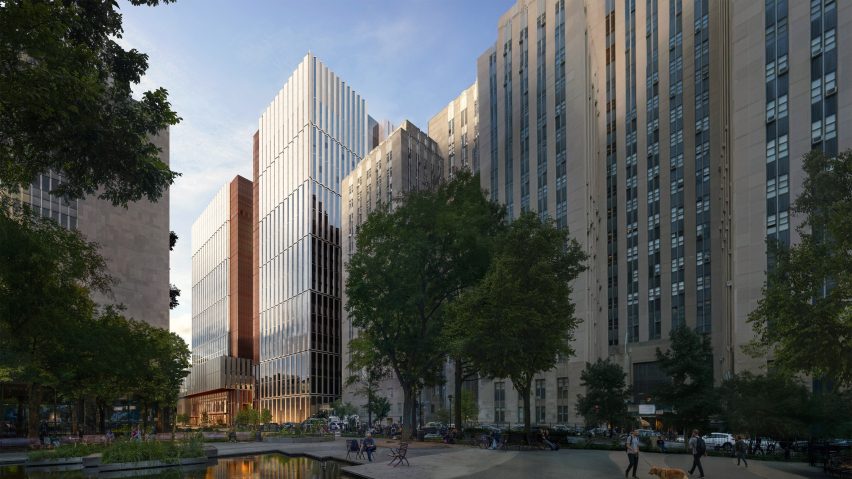
Situated at 125 White Street on the site of a former detention center, the Manhattan facility is designed by HOK and is set to become the tallest jail in the world upon completion. The architectural composition divides the structure into four distinct "vertical quadrants." A prominent feature of the design is a 55-foot-tall (16 meters) pedestrian passageway running underneath the building, engineered to knit the structure into the surrounding urban fabric at the bustling intersection of Chinatown, Little Italy, Tribeca, and the civic district. Despite site preparation being underway, the project has faced sustained skepticism, with local leaders recently petitioning the mayor’s office for a comprehensive reassessment of the location due to structural feasibility and neighborhood impact concerns.

Brooklyn Borough-Based Jail (Boerum Hill)
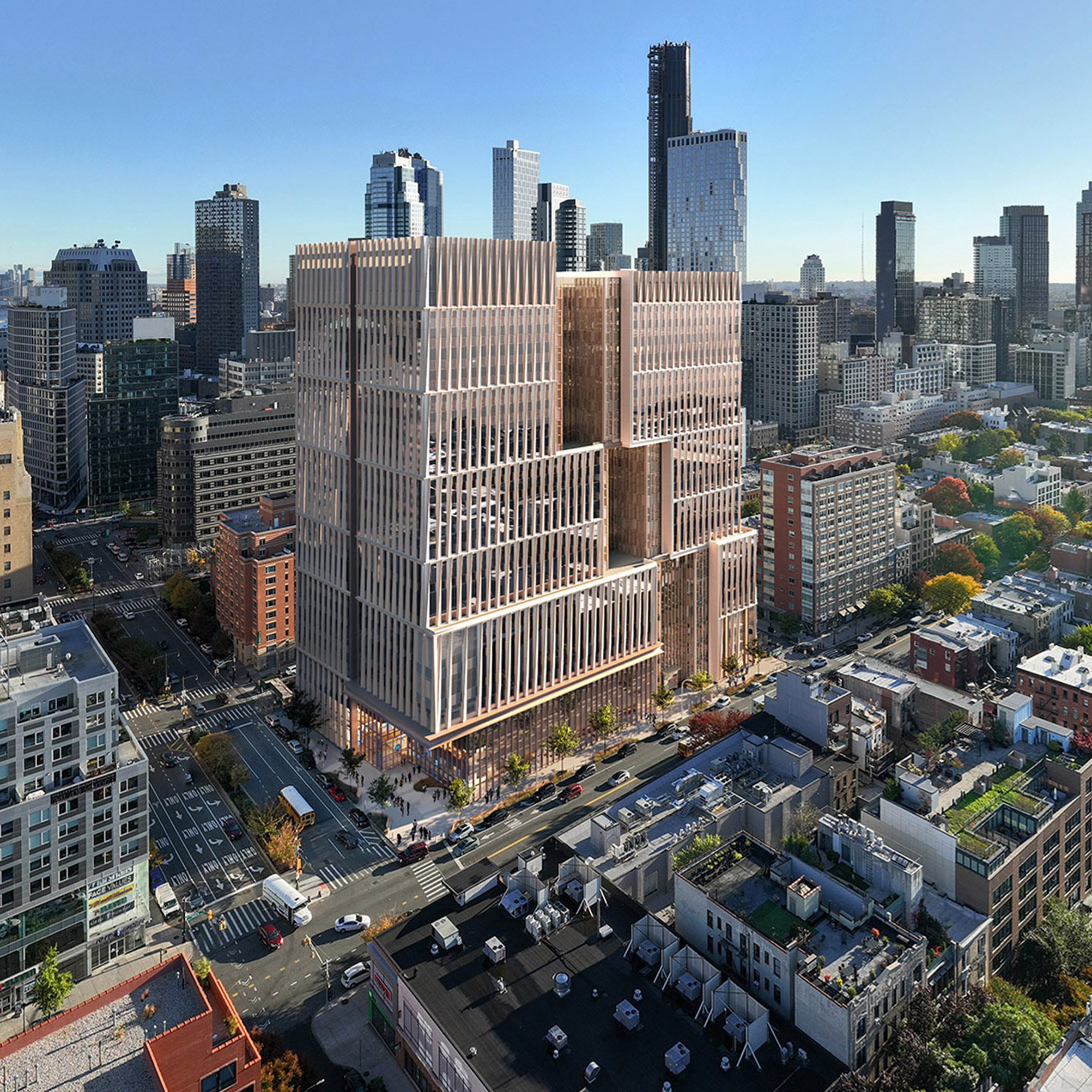
Located at 275 Atlantic Avenue on the footprint of an existing, outdated correctional facility, the Brooklyn project is the most advanced in the construction timeline, with an anticipated opening in 2029. HOK’s design philosophy for this tower prioritizes natural illumination, ensuring that daylight penetrates deep into the core of the building. Notably, outdoor recreation spaces are directly attached to individual living units rather than consolidated in a centralized yard.
"One of the things that we’ve seen in facilities where people have to be escorted to a central place for outdoor space is that often they don’t get there, and with putting the outdoor space directly attached to the living unit, people will be out there daily," noted HOK director of civic and justice Jeff Goodale. The exterior is clad in terracotta panels to harmonize with neighborhood aesthetics, alongside fixed vertical fins to control solar heat gain and glare.
Bronx Borough-Based Jail Facility (Mott Haven)
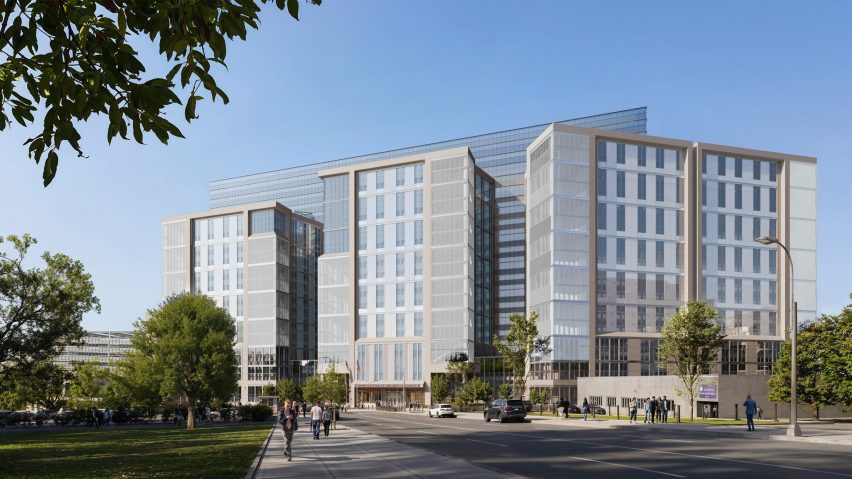
Designed by a collaborative team comprising CetraRuddy, Lumen Architects, and Urbahn Architects, this 11-storey facility occupies a former hospital site and municipal vehicle impound lot. The building incorporates approximately 40,000 square feet of ground-floor community and commercial space, alongside on-site social services and administrative offices. To mitigate community anxieties regarding the physical scale of the building in a low-rise neighborhood, Urbahn Architects incorporated a stepped three-storey podium that aligns with the height of adjacent residential rowhouses, while the upper mesh-clad tower reflects the industrial vernacular of the surrounding district.
Queens Borough-Based Jail Facility (Kew Gardens)
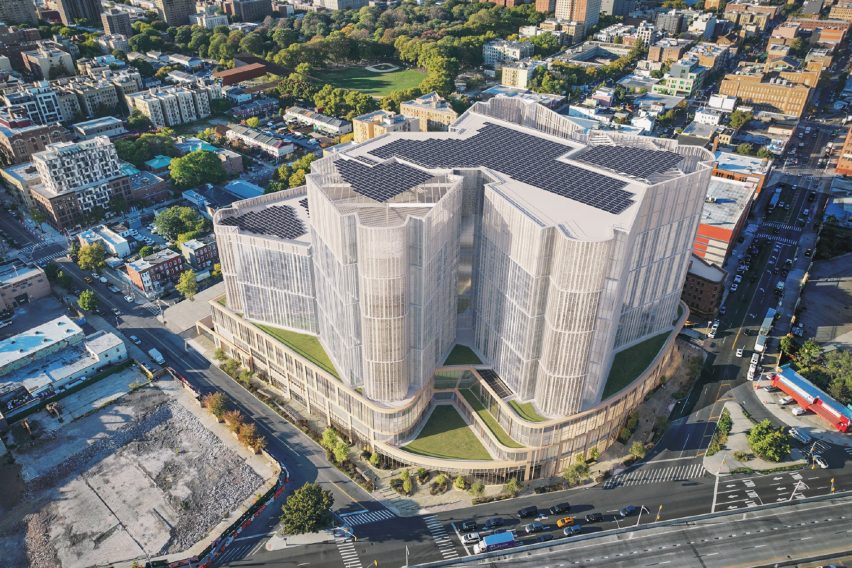
Positioned at 126-02 82nd Avenue alongside the existing Queens Detention Center, the facility designed by STV and Michael Graves holds the unique distinction of housing female and gender-expansive detainees. The architectural scheme features three distinct housing towers ringed by protective metal mesh around recreation zones, a robust precast concrete base, and upper levels finished with metal panels and glass curtain walls. The complex also incorporates specialized spaces such as a dedicated nursery and a women’s law library. Recent community design revisions have focused on enhancing ADA accessibility and substituting natural wood elements with higher-durability materials to withstand rigorous institutional use.
Socio-Political Implications and Community Resistance
While municipal authorities champion the borough-based jail system as a progressive leap toward humane detention, the program has met with fierce, sustained grassroots opposition across all four host neighborhoods. Activist coalitions, local business owners, and neighborhood associations have staged numerous rallies and protests over the years, arguing that mega-jails do not solve the root causes of crime and will negatively impact local quality of life, property values, and pedestrian safety. In Chinatown and Mott Haven particularly, residents have voiced frustration over what they perceive as a lack of genuine civic consultation during the preliminary planning phases.
Urban planners and criminologists note that the success of the BBJ program hinges not only on architectural innovation but on broader systemic reforms. If the city fails to concurrently reduce its overall jail population through policy changes, bail reform, and expedited court proceedings, the new facilities risk operating at or above capacity, undermining the rehabilitative intentions of their designers.
As construction progresses toward the early 2030s completion targets, New York City stands at a historic crossroads. The transition from Rikers Island to the borough-based jail network represents a profound test of whether physical architecture can successfully recalibrate a broken justice system, balancing the urgent demands for human dignity and rehabilitation against the complex realities of urban politics and neighborhood opposition.