Rewriting the Django Async Story: Carlton Gibson on Dispelling Myths and Shaping the Framework’s Future

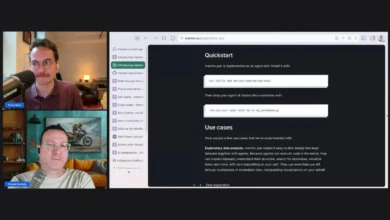
For years, the intersection of Django and asynchronous programming was accompanied by a persistent asterisk in official documentation. Developers turning to Django for modern, high-throughput web applications were routinely met with cautious guidance, stark performance warnings, and a narrative that suggested the framework’s asynchronous capabilities were perpetually half-finished. That narrative, however, has undergone a comprehensive rewrite. Behind this shift is Carlton Gibson, a former Django Fellow, eight-year veteran of the security team, and current member of the Django Steering Council, who recently sat down to explain why the historical framing of Django’s async story was fundamentally flawed.
The conversation sheds light on the sweeping updates made to Django’s asynchronous topic documentation, separating legitimate architectural considerations from generalized anxiety surrounding async adoption. Furthermore, the discussion highlights upcoming milestones in Django releases, including the long-awaited Tasks framework in version 6.0, the introduction of database-level cascades and fetch modes in version 6.1, and the strategic bet on Python’s free-threading capabilities. For software engineers who have long been told that Django is ill-suited for modern asynchronous paradigms, these developments offer a definitive course correction.
Deconstructing the Myth of Incomplete Asynchronous Support
When asynchronous capabilities were initially introduced to Django during the Python 3.5 and 3.6 eras, the Python ecosystem as a whole was grappling with a fragmented landscape. Developers faced the "function coloring" problem, where adopting an asynchronous function required propagating the async paradigm up through the entire call stack. Early performance benchmarks often highlighted the overhead of bridging synchronous and asynchronous boundaries via helper utilities such as sync_to_async.
In Django’s case, these architectural growing pains were magnified by documentation that leaned heavily on caution. Developers were routinely warned that asynchronous request handling would introduce performance penalties or lead to unexpected deadlocks. According to Gibson, while these warnings served a purpose during the early transitional phases, they became outdated as both Python’s internal machinery and Django’s core components matured.
Today, Django features complete asynchronous APIs spanning the Object-Relational Mapper (ORM), the caching framework, authentication, session management, and signal dispatching. The performance cost of bridging synchronous and asynchronous code—once measured in milliseconds—has been reduced to mere microseconds due to optimizations in modern Python interpreters. By overhauling the asynchronous topic documentation, the Django core team has shifted the framing from defensive hesitation to practical enablement, signaling that the framework is fully prepared for production-grade async workloads.
Architectural Evolution in Django 6.0 and 6.1
The ongoing evolution of Django is heavily reflected in its recent and upcoming version releases. Version 6.0 introduced the foundational components of the new Tasks framework, addressing a long-standing architectural gap within the ecosystem. Historically, Python developers relying on Django had to integrate third-party task queues such as Celery, RQ, or Huey to handle background processing. While these tools are powerful, they often introduce significant operational complexity, requiring separate monitoring infrastructure, specialized message brokers, and distinct deployment pipelines.
The newly introduced Tasks framework establishes a standardized backend API within Django. This allows third-party package maintainers and application developers to enqueue background jobs, manage retries, and handle results through a unified interface, regardless of whether the underlying infrastructure uses a simple database-backed queue or a more robust Redis deployment.
Building upon this momentum, Django 6.1 introduces critical enhancements designed to solve persistent performance bottlenecks at the database layer. Among the most notable additions is the implementation of database-level cascade options for foreign key deletions (on_delete). Historically, when a parent record—such as an organization or user—was deleted, Django’s ORM would execute this operation in memory by walking the object tree, fetching related records, and issuing individual delete statements for the leaves before addressing the root. At scale, this process frequently resulted in memory exhaustion and severe performance degradation.
By leveraging database-level cascades, Django now delegates this heavy lifting directly to the relational database management system, which is fundamentally optimized for handling complex relational integrity at scale. Alongside database-level cascades, Django 6.1 introduces query set fetch modes, commonly referred to as "peer fetching." This feature acts as an intelligent, deferred form of prefetching, mitigating the infamous N+1 query problem by automatically batching related object retrievals when a developer iterates through a query set.
The Strategic Bet on Free-Threading Python
Beyond database and task queue improvements, the broader Python ecosystem is experiencing a generational shift with the advent of free-threading (PEP 703), which removes the Global Interpreter Lock (GIL). For years, the GIL constrained Python applications by limiting CPU-bound multithreaded execution to a single core, forcing developers to rely on multi-processing architectures that consumed substantial system memory and complicated deployment topologies.
Django’s historical reliance on thread-based isolation for database connections and transaction states positions the framework exceptionally well to capitalize on free-threading. As Python toolchains like uv make experimenting with free-threaded interpreters trivial, the core team and community are systematically auditing third-party packages and internal modules to ensure thread safety without GIL protections.
The implications for production deployments are profound. By enabling true parallelism within a single process, free-threading combined with Django’s asynchronous request handlers allows applications to process higher volumes of traffic with significantly smaller memory footprints. Organizations will be able to consolidate server infrastructure, reducing operational overhead and cloud computing expenditures without rewriting core application logic in lower-level languages like Go or Rust.
Industry Implications and the Road Ahead
The maturation of Django’s asynchronous story and its alignment with modern Python runtimes arrives at a critical juncture for web development. As engineering teams increasingly favor component-driven architectures, server-sent events, and lightweight interactivity over heavy single-page application frameworks, the demand for robust, high-performance backend infrastructure has never been higher.
By removing the historical caveats from its documentation, introducing native background task management, and modernizing ORM execution pathways, the Django project has solidified its position as a competitive, forward-looking web framework. While asynchronous programming and free-threading introduce advanced architectural considerations that require careful planning, Django now provides the necessary tools and guidance for developers to scale their applications sustainably into the next decade.
Related posts: