Simplifying Private Connectivity for Amazon OpenSearch Serverless with Native AWS PrivateLink Integration

The landscape of cloud-based data management has undergone a fundamental shift as Amazon Web Services (AWS) transitions its OpenSearch Serverless architecture toward a more streamlined, standards-based networking model. Historically, securing private access to serverless search and analytics workloads demanded a complex orchestration of virtual private cloud (VPC) endpoints, cross-account DNS configurations, and the persistent maintenance of private hosted zones. These requirements often acted as a friction point for enterprises aiming to scale their data operations across distributed, multi-account environments. By moving to a native AWS PrivateLink interface endpoint model, AWS is effectively removing the manual overhead that previously defined the deployment experience for private OpenSearch Serverless connectivity.
The Evolution of Networking Architecture
Before this evolution, administrators were required to perform multi-step DNS orchestration. This included configuring Amazon Route 53 Profiles for cross-account DNS resolution and deploying resolver inbound endpoints to bridge the gap between on-premises infrastructure and cloud-based serverless collections. For organizations with complex network topologies, this manual configuration often led to configuration drift and increased operational risk.
The "next generation" of OpenSearch Serverless, now available for production workloads, leverages standard interface VPC endpoints. By utilizing the service name com.amazonaws.<region>.aoss-data, developers can now use the same mechanical workflow they utilize for other primary AWS services, such as Amazon S3 or Amazon DynamoDB. This change represents a significant shift from "bespoke" connectivity patterns toward a "standardized" framework, which is critical as enterprises increase their reliance on serverless architectures to power AI agents and real-time analytical dashboards.
Understanding the Mechanics of the New Model
The new model simplifies endpoint management by offering two distinct formats for resource-based endpoints. The first is a per-collection endpoint, where a specific hostname (in the format <collectionId>.aoss.<region>.on.aws) maps directly to an individual resource. The second is a per-account regional endpoint (formatted as <accountId>.aoss.<region>.on.aws), which allows a single hostname to reach any collection within a given account.
The intelligence behind this routing lies in the headers. When using the per-account regional endpoint, the system requires the x-amz-aoss-collection-name or x-amz-aoss-collection-id header to determine the target. Notably, AWS SDKs have been updated to inject these headers automatically, provided the request is signed with Signature Version 4 (SigV4). This level of abstraction ensures that the developer experience remains consistent, regardless of whether the underlying network infrastructure is handling single-collection or multi-collection routing.
Chronology and Operational Impact
For many AWS customers, the journey toward this simplified model follows a defined lifecycle. The initial phase of this transition occurred as AWS moved to integrate PrivateLink more deeply into the OpenSearch Serverless control plane. By late 2024 and early 2025, the maturation of these patterns allowed for the deprecation of the more cumbersome DNS-forwarding requirements for most standard use cases.
The current operational reality is that once a standard VPC interface endpoint is created—with the private-dns-enabled flag active—AWS automatically provisions a private hosted zone for the *.aoss.<region>.on.aws domain. This zone associates the VPC with the endpoint’s Elastic Network Interface (ENI), allowing for seamless DNS resolution. This automation eliminates the need for manual CNAME record management, which was previously a leading cause of connectivity failures in complex VPC peering or Transit Gateway environments.
Data-Driven Analysis of Connectivity Patterns
The new framework supports nine primary connectivity patterns, ranging from simple single-VPC deployments to complex, multi-business-unit architectures spanning on-premises data centers and multiple AWS accounts.
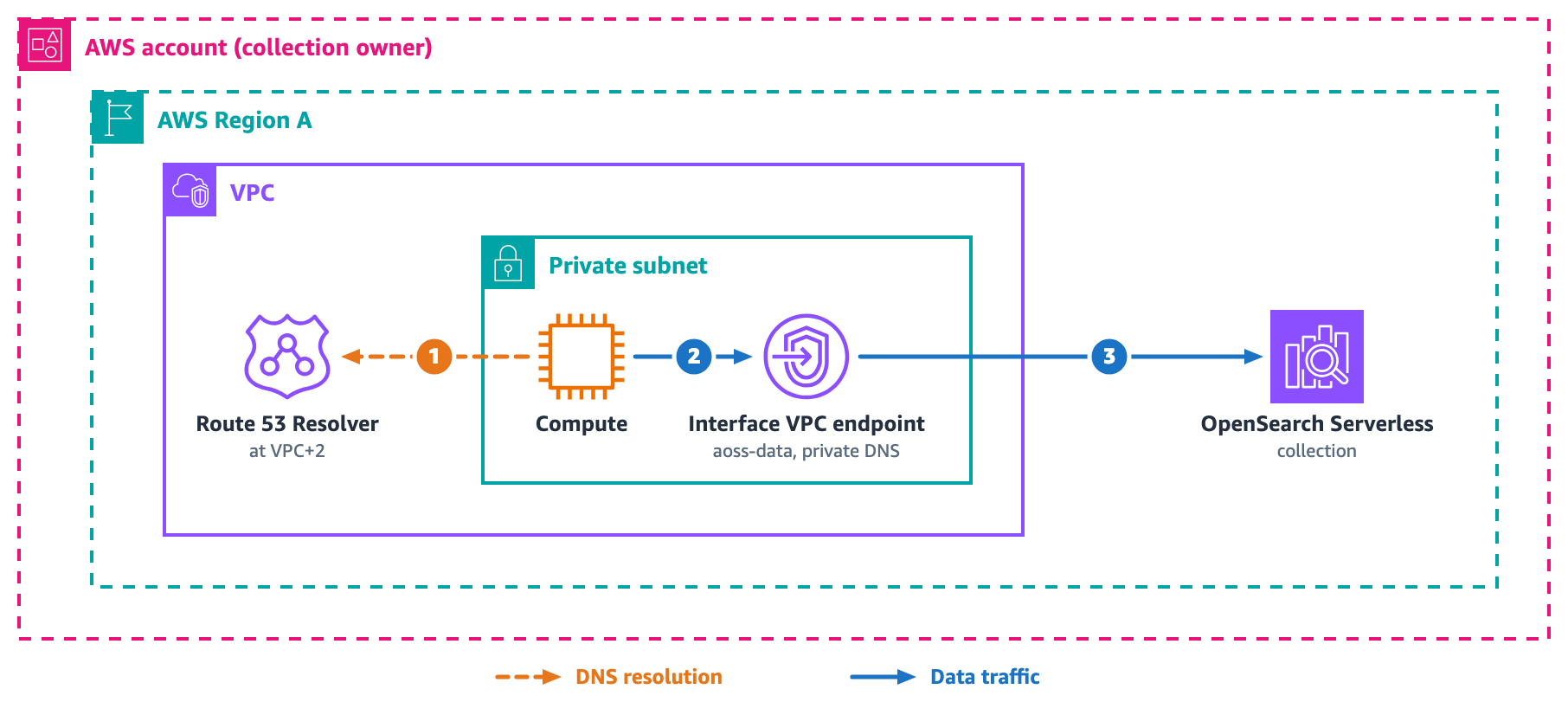
- The Single-VPC Standard: In this configuration, compute resources reside in the same VPC as the interface endpoint. The DNS resolution is handled internally via the VPC’s Route 53 Resolver, resulting in minimal latency and zero extra configuration.
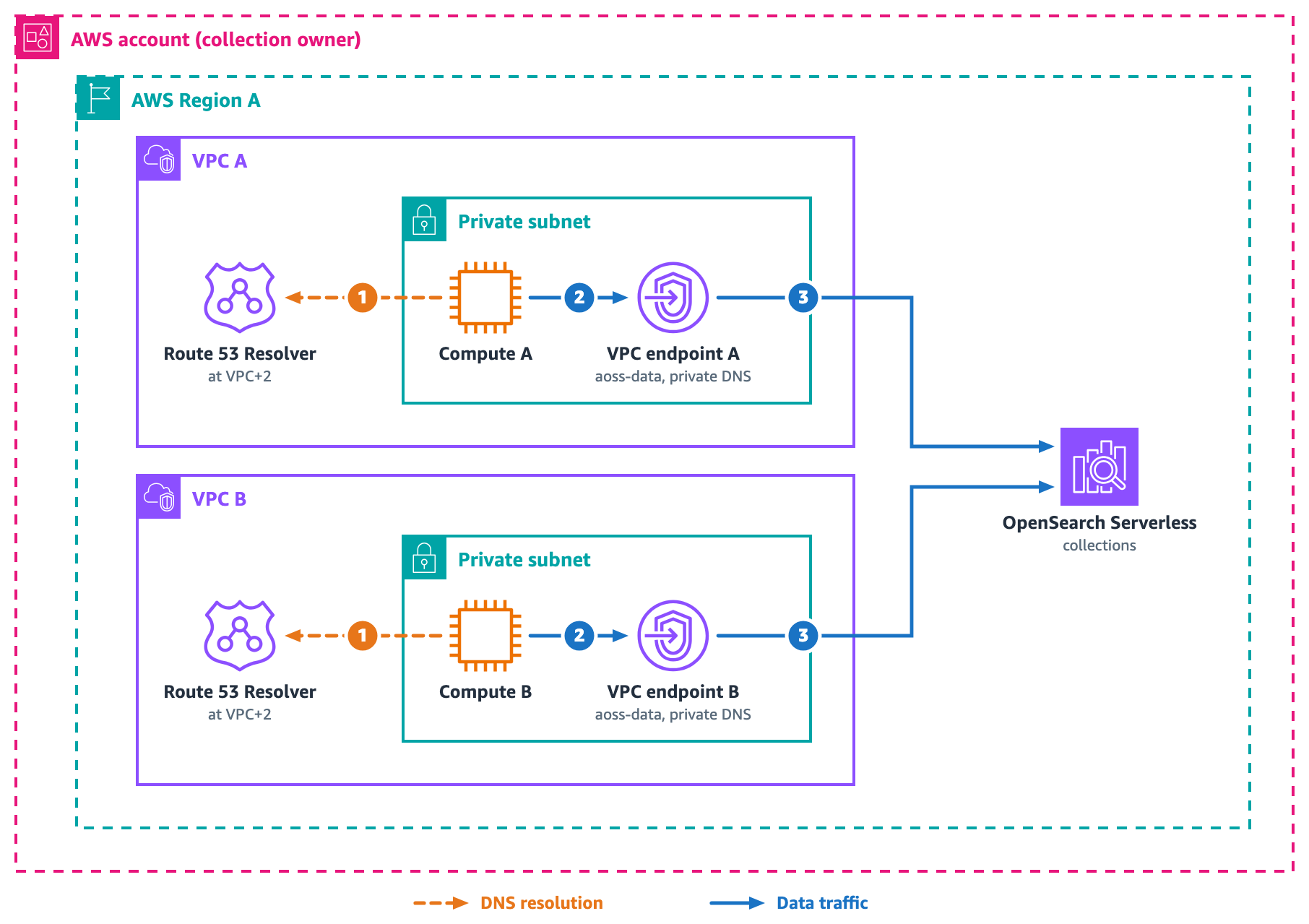
- Multi-VPC/Multi-Account Decentralization: For organizations requiring strict environment isolation, each VPC can now maintain its own interface endpoint. This eliminates the need for cross-VPC DNS dependency, as each VPC independently resolves its own endpoint ENIs.
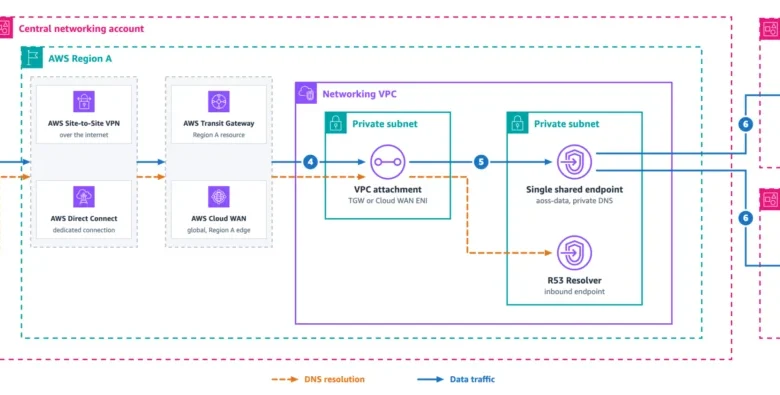
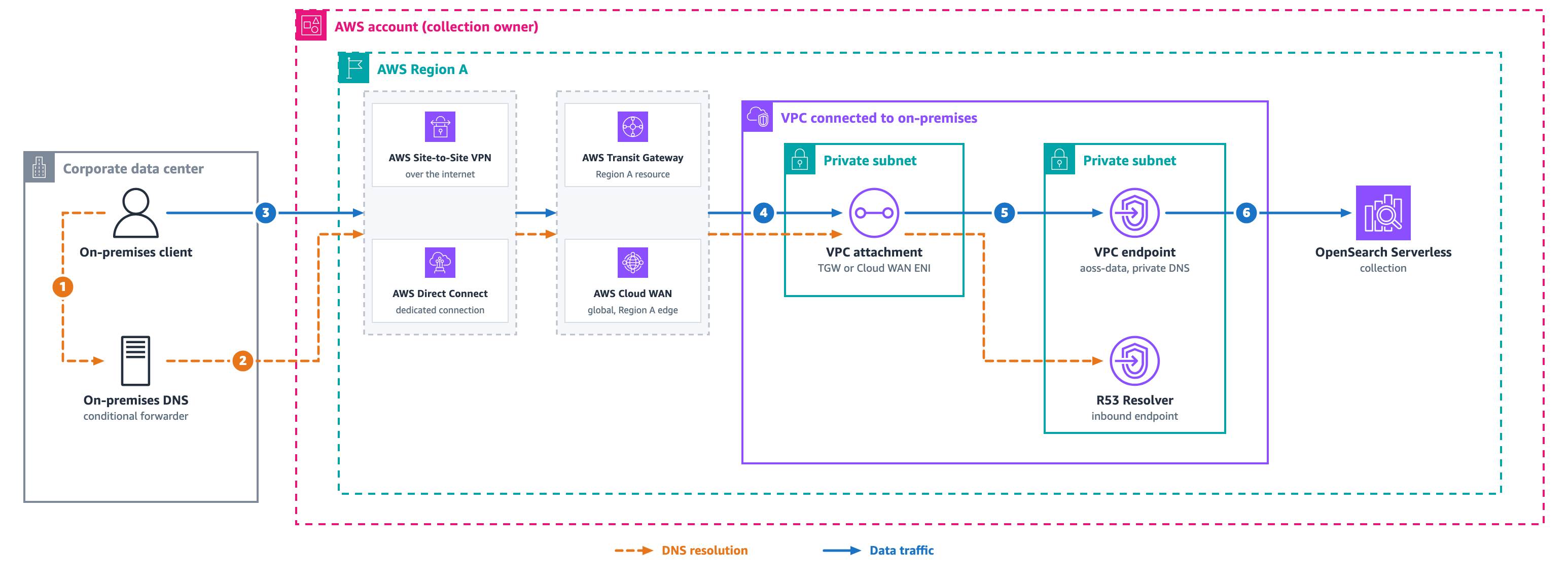
- On-Premises Integration: For legacy systems still residing in private data centers, connectivity is achieved through AWS Direct Connect or Site-to-Site VPN, combined with Route 53 Resolver inbound endpoints. This allows on-premises DNS servers to forward queries for serverless collections directly into the AWS environment.
- Centralized Networking (The Exception to the Rule): While most patterns favor decentralized endpoints, some enterprises prefer a "hub-and-spoke" model where a central networking account hosts the endpoint. This is the only scenario where Amazon Route 53 Profiles must still be managed to share DNS across accounts via AWS Resource Access Manager (RAM).
Economic and Strategic Implications
A critical consideration for IT budget managers is the shift in cost dynamics associated with these patterns. Previously, organizations often paid for unnecessary networking infrastructure—such as complex resolver chains—just to establish basic connectivity. Under the new model, standard PrivateLink pricing applies.
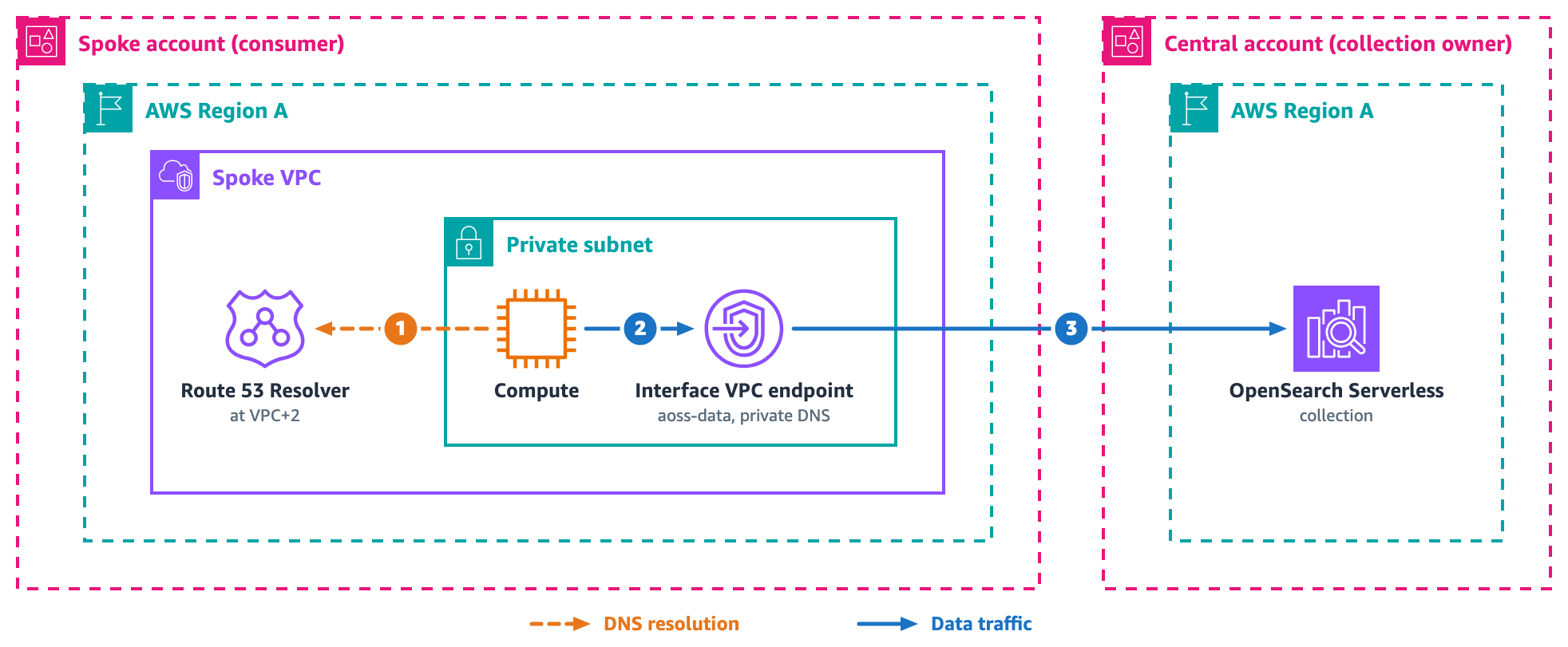
Data from early adopters suggests that by moving to an endpoint-per-consumer model (Pattern 4), organizations can reduce the complexity of their network policies while simultaneously optimizing data transfer costs. Because collections are regional, keeping the traffic within the region via local interface endpoints ensures that data does not traverse unnecessary cross-region hops. Furthermore, the "scale-to-zero" capabilities of OpenSearch Serverless mean that idle secondary-region collections (used for disaster recovery or global latency requirements) now incur costs only for storage, significantly lowering the barrier to entry for high-availability architectures.
Security and Policy Enforcement
Security remains a cornerstone of the new connectivity model. Access control is now bifurcated: network policies govern which endpoints are permitted to connect to the collection, while identity-based data access policies (utilizing IAM roles) govern what the principal is permitted to do once a connection is established.
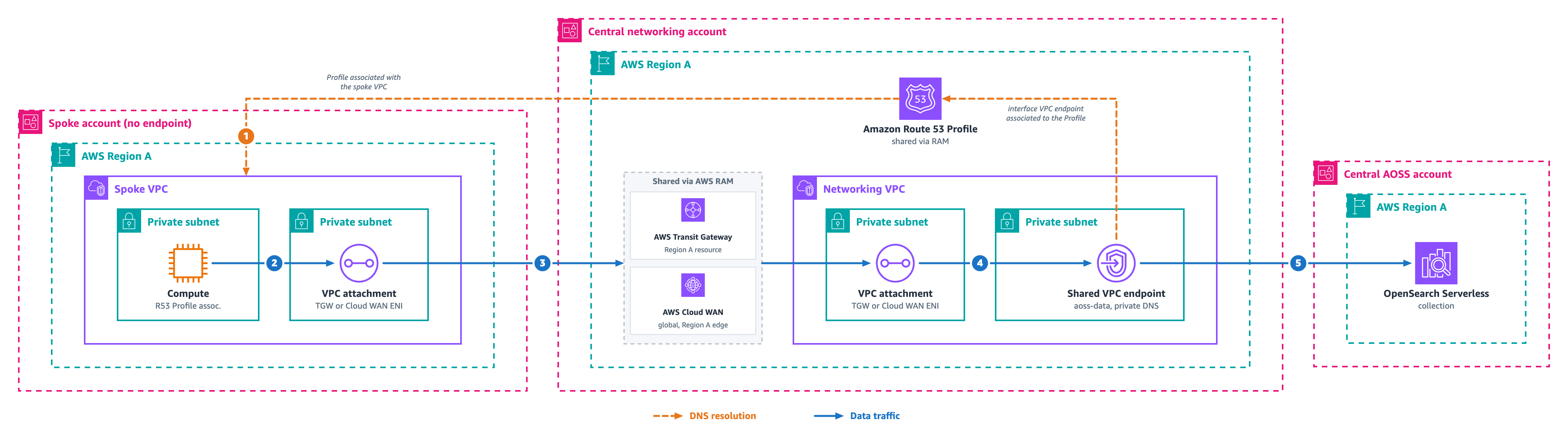
This separation of concerns is particularly powerful for cross-account setups. A central account owner can grant access to a spoke account simply by adding the spoke’s VPC Endpoint ID to the collection’s network policy. This granular control allows for the "least privilege" principle to be applied at both the network and data layers, reducing the attack surface of the search cluster.
Looking Ahead
The move to native PrivateLink integration is not merely an incremental update; it represents a fundamental maturation of the serverless search category. By aligning OpenSearch Serverless with the standard AWS networking stack, the provider has removed the primary technical debt associated with implementing serverless search in enterprise environments.
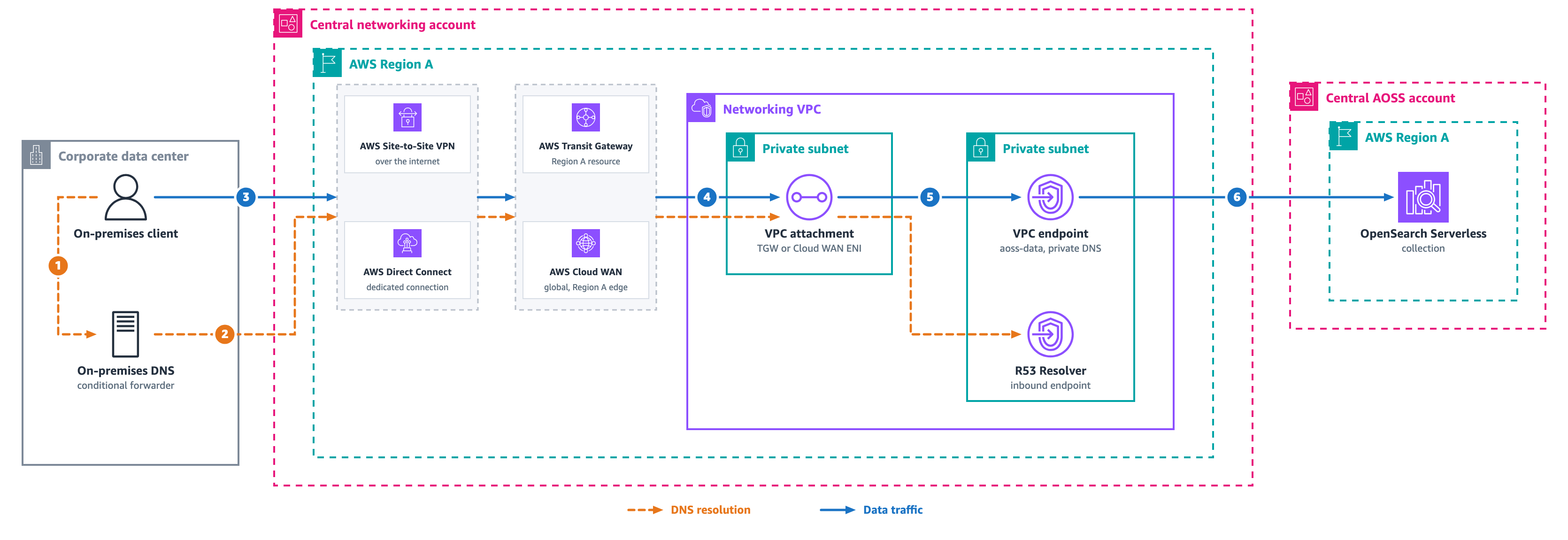
While the majority of users will find the standard interface endpoint model sufficient, the continued support for specialized, centralized networking architectures ensures that organizations with stringent compliance or data sovereignty requirements can still maintain granular control. As the industry moves toward increasingly automated "agentic" workflows—where AI agents require low-latency, secure access to search indices—the ability to deploy these endpoints in a standardized, repeatable fashion will become a prerequisite for scalable, cloud-native application development.
The transition marks the end of an era where "DNS orchestration" was a primary skill required to run a serverless search engine. In its place is a model that favors automation, security-by-default, and the seamless integration of compute and data resources. For organizations currently evaluating their serverless search strategy, the recommendation is clear: adopt the native interface endpoint model to reduce operational overhead, simplify security audits, and align with the long-term roadmap of the AWS serverless ecosystem.