Keith Haring A World in Motion Exhibition Opens at 60 White in New York to Celebrate the Artists Global Legacy and Activism

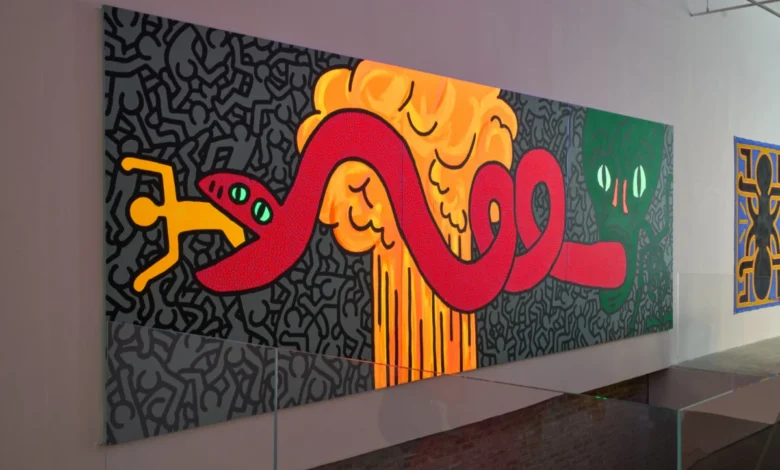
The legacy of Keith Haring, an artist whose vibrant, kinetic lines became the visual shorthand for New York City’s 1980s cultural zeitgeist, is being reimagined in a sweeping new exhibition titled "Keith Haring: A World in Motion." Hosted at the multi-level 60 White art space in Lower Manhattan, the exhibition serves as a profound exploration of Haring’s transition from a local subway tagger to a global icon of social activism. Curated by renowned cultural critic Carlo McCormick in collaboration with Lio Malca, the show meticulously traces Haring’s journey, illustrating how his work transcended the boundaries of the traditional art world to engage in a universal dialogue about humanity, crisis, and hope.
For Haring, who moved to New York City in 1978 to study at the School of Visual Arts, the city’s sprawling infrastructure was not merely a backdrop but a primary medium. His arrival coincided with a period of fiscal instability and creative explosion in New York, where the intersection of hip-hop, punk, and street art birthed a new aesthetic. Alongside contemporaries like Andy Warhol and Jean-Michel Basquiat, Haring pioneered a movement that sought to democratize art, stripping away the exclusivity of white-cube galleries and placing visual narratives directly into the hands—and eyes—of the public.
The Genesis of a Global Visual Language
The exhibition at 60 White emphasizes that Haring’s work was never static. His art "pulsed," as McCormick describes it, with the rhythmic energy of the street. This energy was first captured in his legendary subway drawings. Between 1980 and 1985, Haring produced thousands of chalk drawings on the black matte paper used to cover expired advertisements in New York’s transit system. These ephemeral works were his first major step in creating a shared visual language—a lexicon of "radiant babies," "barking dogs," and "flying saucers" that could be understood by commuters regardless of their linguistic or socioeconomic background.
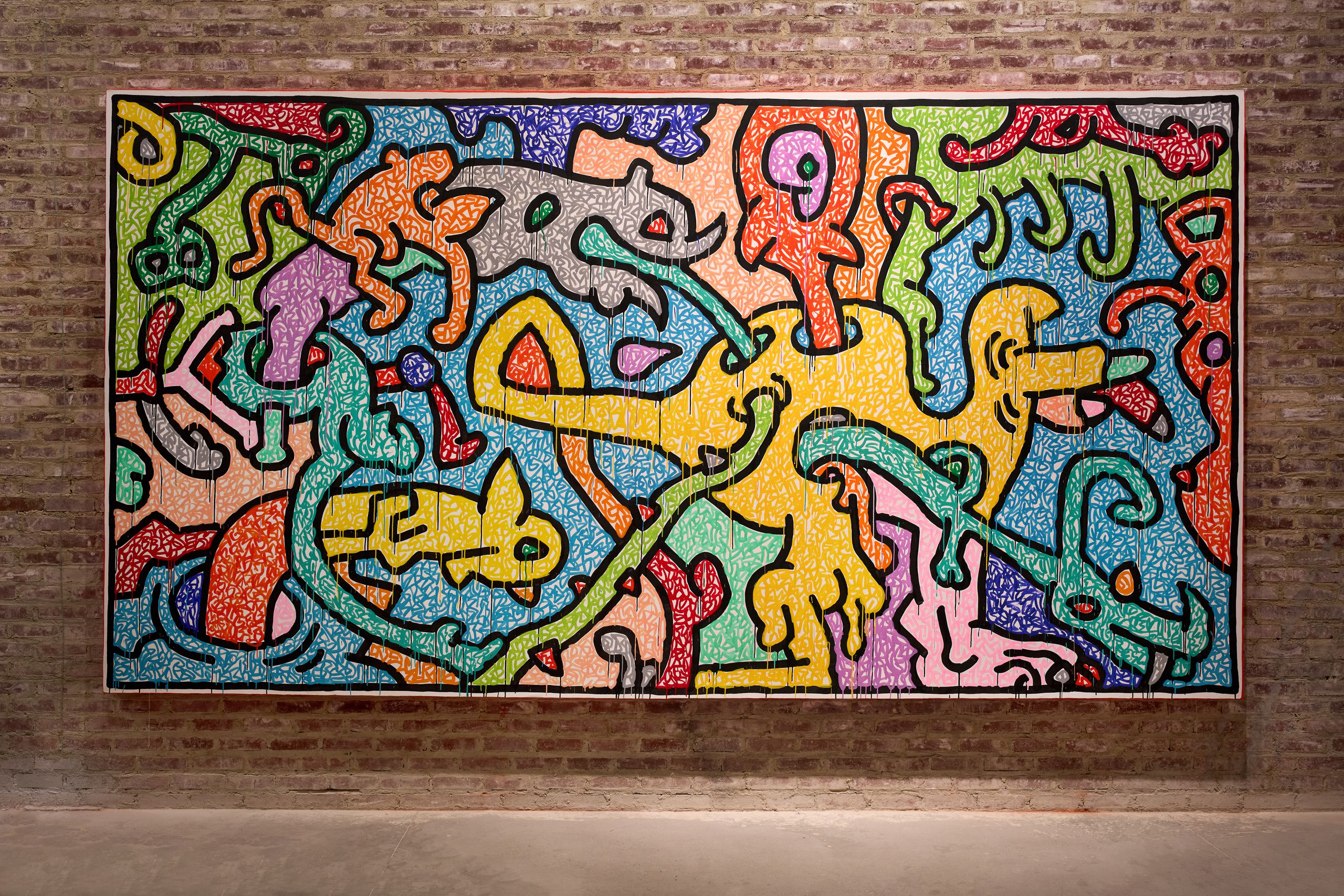
This period of Haring’s career is central to the exhibition’s narrative. By documenting the fluidity of his style, "A World in Motion" demonstrates how Haring’s motifs evolved into a sophisticated tool for activism. As the 1980s progressed, the urgency of his work shifted from playful experimentation to a desperate plea for social awareness. The exhibition highlights his role in raising consciousness around the burgeoning AIDS epidemic and the devastating impact of the crack cocaine crisis, most notably through his 1986 "Crack is Wack" mural in Harlem.
Recreating the Hedonism of the 1980s: The DV8 Nightclub
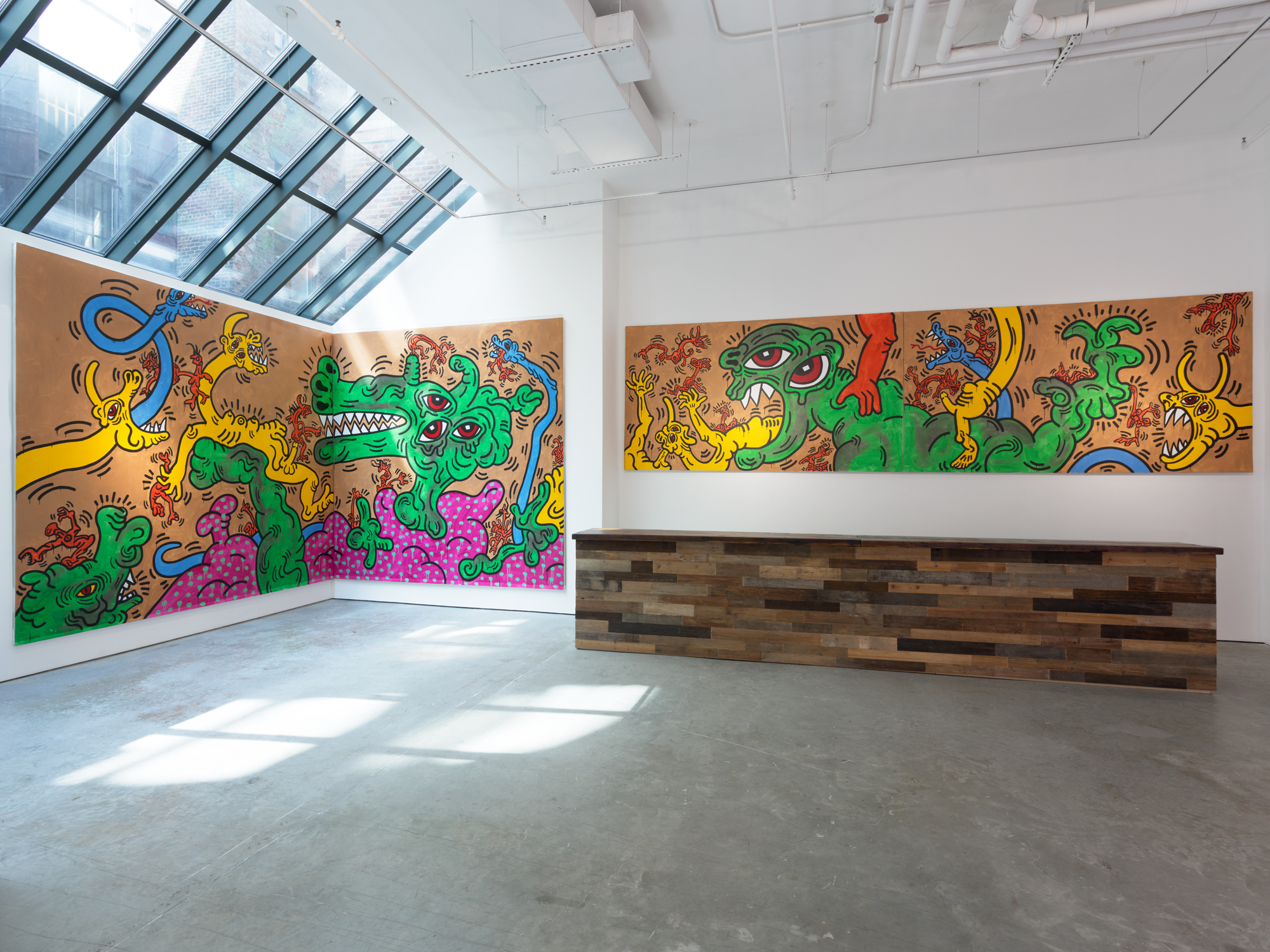
A standout feature of the 60 White installation is the ambitious recreation of the DV8 nightclub. Originally located in San Francisco during the late 1980s and early 1990s, DV8 was a cornerstone of the West Coast’s underground scene and featured extensive murals painted by Haring. The recreation within the multistorey New York space serves to remind viewers of the intrinsic link between Haring’s art and the nightlife culture of the era.
In the 1980s, the nightclub was more than a place for music; it was a sanctuary for marginalized communities and a laboratory for cross-disciplinary art. Haring’s murals for DV8 were characterized by their immense scale and "all-over" composition, creating an immersive environment that blurred the lines between the observer and the artwork. By bringing this atmosphere to 60 White, the curators highlight the community-driven aspect of Haring’s practice. His work was designed to be lived in, danced around, and experienced collectively.
From New York to Tokyo: A Chronology of International Influence
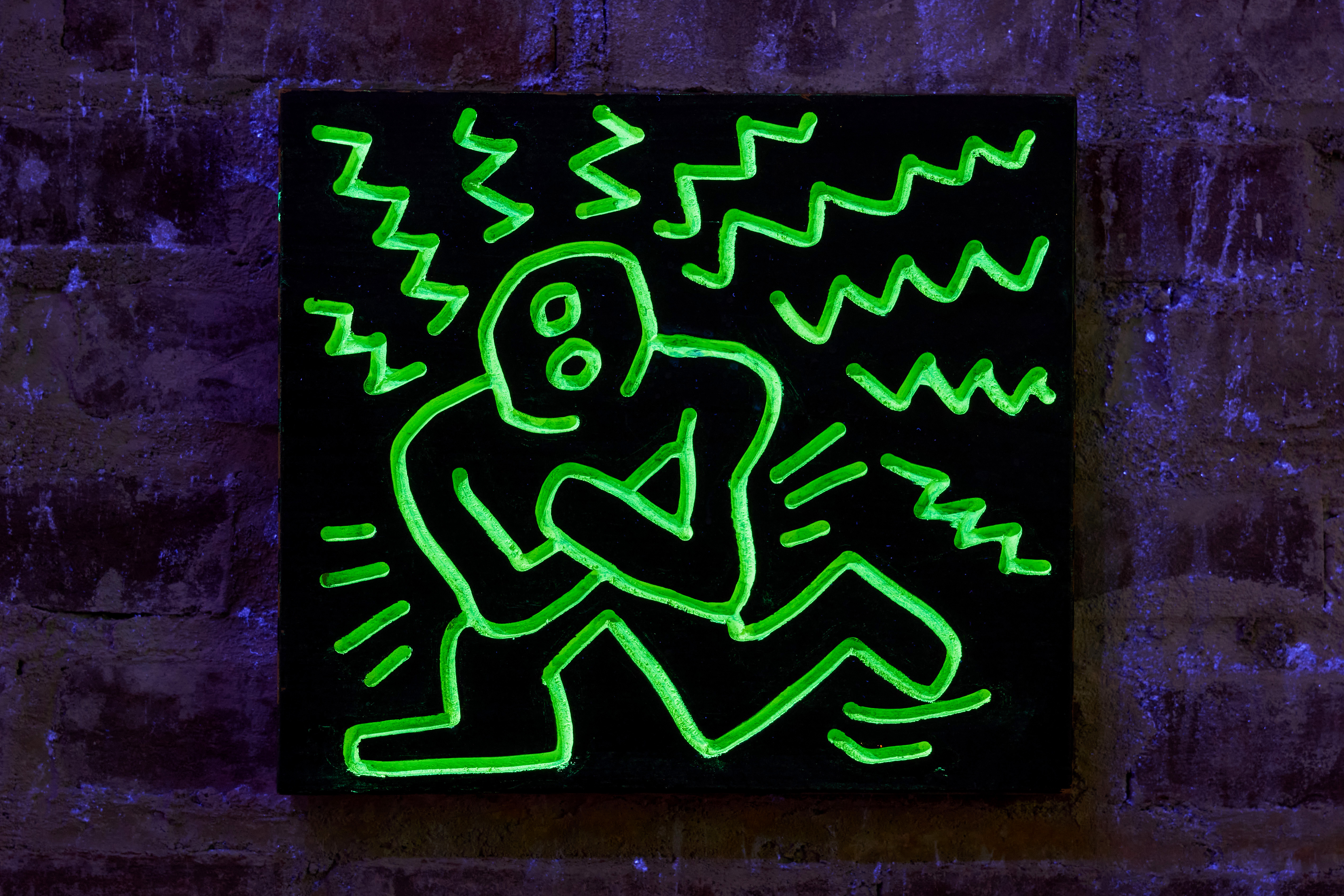
While Haring is inextricably linked to the grit of Manhattan, "A World in Motion" makes a compelling case for his status as a global citizen. One of the exhibition’s focal points is the 1985 painting Sister Cities – For Tokyo. This work was created to celebrate the burgeoning friendship and cultural exchange between New York and Tokyo, two metropolises that Haring felt shared a similar high-velocity creative spirit.
Haring’s international projects were numerous and significant:
- 1984: He traveled to Australia to paint murals at the National Gallery of Victoria and the Collingwood Technical College.
- 1986: He painted a 300-meter-long mural on the Berlin Wall, using the colors of the German flag to symbolize a hope for unity and the eventual dissolution of the barrier.
- 1987: He created murals in Paris at the Necker Children’s Hospital, reinforcing his commitment to public health and the well-being of the youth.
- 1989: Shortly before his death, he completed the "Tuttomondo" mural in Pisa, Italy, a massive tribute to world peace.
Lio Malca, who worked closely on the curation, notes that Haring’s ability to "enter into dialogue" with these diverse locations was his greatest strength. He did not merely export New York culture; he absorbed the rhythms and histories of the places he visited, reflecting them back through his unique stylistic lens.
Supporting Data: The Enduring Impact of the Haring Market and Foundation
The relevance of Keith Haring in the 21st century is supported by both cultural and economic data. Since his death from AIDS-related complications in 1990 at the age of 31, the value of his work has seen a meteoric rise, reflecting a growing appreciation for the historical significance of the 1980s East Village art scene.
According to market analysis from major auction houses like Sotheby’s and Christie’s, Haring’s works have consistently outperformed initial estimates over the last decade. In 2017, his "Untitled" (1982) sold for over $6.5 million, a testament to his status as a "blue-chip" artist. However, Haring himself often resisted the hyper-commercialization of the art world. In 1986, he opened the "Pop Shop" in Soho, selling buttons, posters, and T-shirts with his designs at affordable prices. This move was criticized by some in the fine art establishment but was essential to Haring’s philosophy that art should be accessible to everyone.
Furthermore, the Keith Haring Foundation, established by the artist in 1989, continues to be a major force in philanthropy. The Foundation provides funding to non-profit organizations that assist underprivileged children and those affected by HIV/AIDS. By maintaining his archives and licensing his imagery responsibly, the Foundation ensures that Haring’s message of "Art for All" remains a functional reality rather than a historical footnote.
Official Responses and Curatorial Analysis
The curators of "A World in Motion" argue that the exhibition is timely given the current global socio-political climate. Carlo McCormick suggests that Haring’s work offers a blueprint for how artists can engage with crisis without losing a sense of joy. "His work pulses with the energy of New York street culture while reflecting the histories, images, and rhythms of the places he encountered," McCormick stated. "The result is a global conversation, joyful, immediate, and profoundly connected."
Lio Malca echoed these sentiments, emphasizing the longevity of Haring’s visual alphabet. "Keith Haring’s work is rooted in New York, but it belongs to the world. This exhibition highlights his ability to connect people through a shared visual language that remains as immediate and powerful today as it was in the 1980s."
From a critical perspective, the exhibition demonstrates that Haring’s "simplicity" was his greatest sophistication. His ability to distill complex human emotions—fear, love, greed, and hope—into a few bold strokes allowed his work to bypass the gatekeepers of culture. In a digital age where visual communication is dominated by icons and emojis, Haring’s work feels more contemporary than ever. He anticipated a world where the image would become a primary mode of global communication.
Broader Implications: The Legacy of Public Art
The opening of "Keith Haring: A World in Motion" at 60 White also prompts a broader discussion about the role of public art in urban development. Haring’s career began at a time when "street art" was synonymous with vandalism. Through his persistence and the sheer quality of his output, he helped shift public perception, paving the way for the contemporary mural movement that now defines cities like London, Berlin, and Los Angeles.
The exhibition serves as a reminder that Haring’s activism was not performative but lived. He used his fame to shine a light on the AIDS crisis at a time when the American government remained largely silent. By documenting his own struggle with the disease and incorporating themes of mortality into his final works, Haring humanized a global tragedy.
As visitors move through the multistorey space at 60 White, they are invited to see Haring not just as a painter, but as a catalyst for movement—both literal and metaphorical. Whether through the kinetic figures that seem to dance off his canvases or the social movements he helped spark, Haring’s world is indeed one in constant motion. The exhibition stands as a definitive tribute to an artist who believed that the stroke of a brush could, and should, change the world.
"Keith Haring: A World in Motion" is currently on view at 60 White, New York. For more information on visiting hours and educational programs, interested parties can visit sixtywhite.com.