Design for players, not metrics: The evolution of user engagement in the digital age

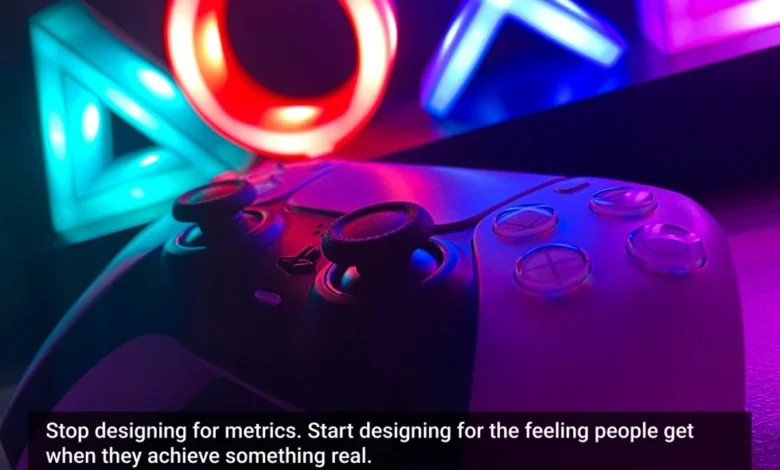
The digital landscape is currently undergoing a significant paradigm shift, as product developers move away from the traditional, metrics-obsessed model of gamification toward a philosophy centered on intrinsic user satisfaction. For decades, the software industry has relied on extrinsic motivators—leaderboards, streaks, and artificial reward loops—to drive daily active users (DAU) and retention. However, a growing consensus among behavioral scientists and industry experts suggests that this "Skinner box" approach is losing its efficacy, giving way to what is being described as "Gamification 2.0."
The Historical Context of Gamification
The rise of gamification can be traced back to the early 2010s, when businesses began integrating game mechanics into non-game contexts to influence consumer behavior. Following the commercial explosion of mobile gaming, companies sought to replicate the addictive qualities of titles like FarmVille or Candy Crush within productivity, fitness, and educational apps.
The strategy was straightforward: by quantifying progress through experience points (XP), badges, and competitive leaderboards, developers could trigger a dopamine response in users, encouraging habitual use. Throughout the late 2010s, this approach became the industry standard. Data from major mobile analytics firms in 2018 indicated that apps utilizing streak-based notifications saw a 20% to 30% increase in short-term retention. However, longitudinal studies have since revealed that these metrics often mask a decline in genuine user loyalty, as the compulsion to maintain a streak eventually leads to user burnout and eventual app abandonment.
The Failure of Extrinsic Manipulation
The fundamental flaw in traditional gamification is its reliance on Pavlovian psychology. By treating users as subjects to be conditioned rather than individuals to be served, developers have inadvertently created a cycle of "digital debt."
Industry analysts point to a specific inflection point: the saturation of the "attention economy." As consumers became increasingly savvy, the psychological friction of being "tricked" into using an app became a liability. When a user feels compelled to complete a task—not because it is inherently valuable, but to satisfy an artificial progress bar—the experience shifts from recreation to labor. This phenomenon is often cited as the primary driver behind the "digital minimalism" movement, where users are actively purging apps that employ aggressive notification strategies or manipulative design patterns.
Defining Gamification 2.0
Gamification 2.0 represents a departure from the "reward-for-action" model. Instead, it prioritizes the psychology of "flow"—a concept pioneered by psychologist Mihaly Csikszentmihalyi, which describes a state of total immersion and intrinsic motivation.
In this new framework, successful applications are those that align their mechanics with the user’s ultimate goal. For instance, instead of rewarding a user for opening a language-learning app every day, the app focuses on providing the user with the tangible, functional skill of conversation. The "reward" is the mastery itself, not a digital badge.
Core Principles of the New Paradigm:
- Intrinsic Agency: Allowing users to choose their path within the app, mirroring the open-world design of successful titles like Minecraft or The Legend of Zelda: Breath of the Wild.
- Meaningful Friction: Designing challenges that are inherently difficult, providing a sense of genuine accomplishment upon completion.
- Respect for Time: Eliminating artificial barriers and "grind" mechanics that serve only to inflate time-on-app metrics.
- Skill Transferability: Ensuring that the skills or insights gained within the application remain valuable outside of the digital environment.
Supporting Data and Industry Trends
Recent data from the gaming and software sectors highlight the divergence between "engagement" and "retention." While traditional gamification can spike engagement metrics in the first 30 days, products that prioritize genuine value exhibit significantly higher 12-month retention rates.
According to a 2023 report on software design, applications that emphasize user-led goal setting outperform those that rely on automated notification prompts by a factor of two in long-term user satisfaction surveys. Furthermore, the rise of platforms like Notion and Roblox underscores this trend; these platforms do not force users into a linear progression. Instead, they provide tools and frameworks that allow users to create and explore, fostering an environment where the user’s creativity is the primary driver of engagement.
Implications for Product Development
The shift toward Gamification 2.0 requires a total restructuring of product team priorities. Historically, product managers have been evaluated on KPIs such as DAU, session length, and conversion rates. Under the new model, teams are being encouraged to track qualitative data, such as Net Promoter Scores (NPS) and self-reported user satisfaction.
"We are seeing a move toward ‘human-centric’ design," notes a lead developer at a major productivity software firm. "The goal is no longer to keep the user in the app at all costs, but to make the time they spend in the app so productive that they choose to return voluntarily. It is a transition from an extractive business model to a value-added one."
The "Twelve-Year-Old" Litmus Test
A common heuristic currently circulating in product design circles is the "nephew test." If a product’s gamification elements—such as streaks or point systems—would be viewed as condescending or transparently manipulative by a child who is an experienced gamer, then the design is likely failing.
Expert designers argue that younger generations, raised on highly sophisticated, non-manipulative game systems, have a refined intuition for when they are being managed by an algorithm. When an app treats a user like an automaton, the user loses respect for the platform. Conversely, when an app treats the user like a player capable of agency, it creates a bond of trust.
Broader Economic and Societal Impacts
The implications of this shift extend beyond software development into the broader digital economy. As regulatory bodies in the EU and North America continue to scrutinize "dark patterns"—design choices that manipulate users into making unintended decisions—the move toward transparent, value-based design is also a risk-mitigation strategy.
Furthermore, the societal cost of the "attention economy" has become a matter of public health concern. The mental health implications of persistent, guilt-inducing notifications have led to a backlash against platforms that prioritize engagement at the expense of user wellbeing. By aligning with Gamification 2.0, companies are not only improving their product quality but are also positioning themselves as socially responsible entities in an era of increasing digital skepticism.
Conclusion: A Future of Dignity
The future of software engagement lies in the acknowledgment of user dignity. As the digital sphere matures, the novelty of points and badges has worn off, leaving behind a user base that demands meaningful interactions. Developers who succeed in the next decade will be those who recognize that the most effective way to engage a human being is to provide them with the tools to be more capable, creative, and connected.
The transition from Pavlovian conditioning to genuine mastery is the defining challenge for the next generation of designers. By moving away from metrics that trap and toward experiences that empower, the industry can finally move past the era of manipulation and into a new chapter of digital innovation—one where the product is worth using, not because of a streak, but because of the value it adds to the human experience.