Beyond Vibe Coding: The Case for Directed Generation in Modern Design Practice

The architectural foundations of digital design are undergoing a profound transformation as generative artificial intelligence shifts from a novel experiment to a primary production tool. Central to this transition is a growing tension between two distinct methodologies: passive, low-accountability output generation—colloquially termed "vibe coding"—and a more disciplined, intentional practice defined as "directed generation." As the industry moves toward deeper integration with large language models and diffusion systems, the vocabulary used to describe these workflows has become a point of contention among design leaders, who argue that the terminology applied to AI-assisted work directly influences the perceived value, accountability, and professional standing of the designer.
The term "vibe coding," popularized by figures such as Andrej Karpathy in early 2025, was originally intended to characterize a specific, experimental mode of software and design development. In this context, the practitioner provides loose, high-level natural language instructions to an AI, accepting the generated output with minimal iteration or rigorous structural scrutiny. While efficient for rapid prototyping or low-stakes exploration, the term has since migrated into professional design environments where it has been inappropriately applied to high-fidelity, high-stakes engineering and design tasks. Critics within the design community contend that the normalization of this term risks eroding the perceived necessity of craft, judgment, and technical authorship.
The Evolution of AI-Assisted Design: A Chronology
The trajectory of AI in design has moved through three distinct phases over the last three years. The initial phase, spanning 2023 to early 2024, was characterized by "prompt engineering," where designers spent significant time optimizing textual inputs to coerce models into specific aesthetic outcomes. By mid-2024, the focus shifted toward "model fine-tuning," where design teams began training proprietary models on internal design systems to ensure brand consistency.
The current stage, which began in early 2025, is defined by "directed generation." In this model, the designer acts not as a supervisor of a black-box system, but as an architect of a feedback loop. This transition coincides with the release of multimodal models capable of processing visual references—such as high-fidelity sketches, wireframes, and design tokens—as primary inputs rather than secondary constraints. This evolution represents a pivot from "prompt-accept-ship" workflows to a "judgment-first" paradigm.
Data-Driven Insights: Efficiency vs. Intentionality
Industry analysis suggests that the divide between these methodologies is not merely stylistic but impacts the bottom line and long-term product scalability. According to recent performance metrics from enterprise design organizations, teams that utilize directed generation report a 40% reduction in "design debt"—instances where AI-generated code or UI patterns deviate from established design systems. Conversely, teams operating under the "vibe coding" model often face higher rates of post-implementation rework, as the lack of initial intentionality leads to inconsistent UI behavior across different device surfaces.
The economic implications of this shift are significant. As organizations move toward agentic workflows—systems where AI agents handle autonomous delivery of UI components—the cost of "low-accountability" generation rises. In an agentic environment, a poorly defined primitive at the start of a design system can propagate thousands of errors across an entire application, making the precision of the initial "directed" reference a critical safeguard against technical failures.
The Argument for Professional Taxonomy
The professional concern among designers is rooted in the history of nomenclature. During the rise of User Experience (UX) design in the early 2010s, those who failed to define their practice in terms of information architecture, interaction design, and user research were frequently marginalized or absorbed into adjacent engineering or product management roles. Observers note that language functions as a barrier to entry and a marker of authority. If designers accept the label of "vibe coders," they surrender the narrative of their own work to external observers who may lack an understanding of the rigorous decision-making involved in managing non-deterministic outputs.
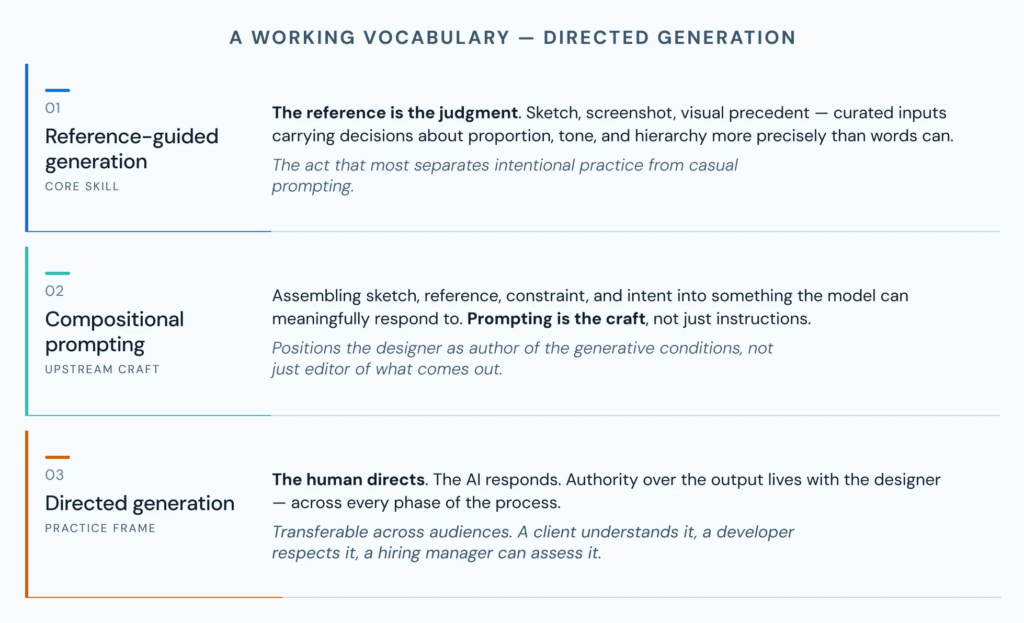
George Orwell’s linguistic theories, often cited by design ethicists, hold that imprecise language enables imprecise thinking. When a designer describes their work as "vibe coding," they may subconsciously adopt a passive stance toward the quality of the output. In contrast, "directed generation" implies a high degree of agency. It necessitates that the designer curate the reference, define the constraints, and evaluate the output against specific technical and aesthetic criteria.
Defining the New Methodology: Components of Directed Generation
At the heart of the directed generation approach is a shift from pixel-level manipulation to pattern-level architectural design. This transition involves several key components:
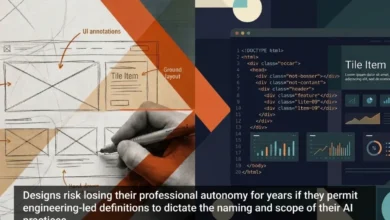
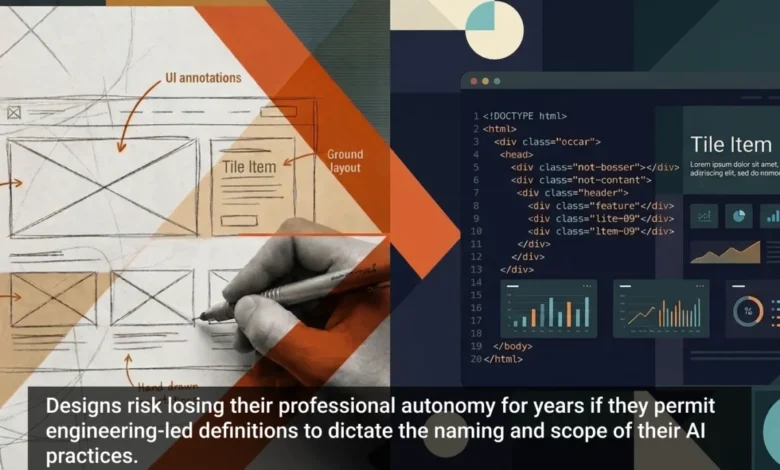
- Reference-Based Curation: Instead of relying on ambiguous text prompts, designers provide curated visual precedents that encode intent, tone, and hierarchy. These references serve as the "ground truth" for the AI, significantly reducing the probability of erratic or off-brand outputs.
- Constraint Frameworks: The designer functions as a system architect, defining the bounds within which the AI is permitted to operate. This involves setting strict limits on spatial, typographic, and behavioral variables, ensuring that even non-deterministic outputs remain within the desired system constraints.
- Non-Deterministic Synthesis: Unlike traditional design, where a component is a static artifact, directed generation treats components as fluid, context-aware relationships. The AI interprets these relationships and recomposes them based on the specific surface or device, allowing for a level of responsive design that manual documentation cannot replicate.
Implications for Future Design Leadership
The maturation of these tools requires a corresponding maturation in professional standards. For design leads, the challenge lies in hiring and training designers who possess both the creative vision to define original patterns and the technical literacy to steer generative systems. The "hybrid approach"—which balances deterministic, fixed-component design for core navigation with non-deterministic, generative exploration for complex interfaces—is likely to become the industry standard.
The distinction between "vibe coding" and "directed generation" is not a semantic triviality; it is a fundamental debate about the future of creative authority. As systems become more capable of autonomous delivery, the value of the human designer shifts upstream. The authoring of the "grammar" of a design system—the logic, the constraints, and the intent—will become the most valuable professional contribution.
As the industry continues to evolve, the ability to articulate these workflows with precision will determine which designers remain leaders in the field. Those who view AI as a subordinate tool to be directed, rather than an oracle to be questioned, are effectively defining the next chapter of digital product development. The conclusion reached by industry analysts is clear: the terminology used today will solidify into the professional standards of tomorrow. Whether the field adopts the term "directed generation," "compositional prompting," or an entirely new descriptor, the emphasis must remain on the agency of the designer, the rigor of the process, and the intentionality of the final output. The era of passive generation is drawing to a close, replaced by a more deliberate, architected relationship between human judgment and machine capability.