The proliferation of AI tools in the design landscape has sparked a crucial debate surrounding the very nature of creative authorship and practice. While the term "vibe coding" has emerged as a descriptor for a particular approach to AI-assisted design, many practitioners argue that it risks devaluing the intellectual rigor, intentionality, and leadership inherent in sophisticated design work. This article explores the emergence of this debate, the nuanced distinctions between passive generation and directed design, and the implications for the future of the design profession.
The Genesis of "Vibe Coding" and its Misapplication
The term "vibe coding," coined by AI researcher Andrej Karpathy in early 2025, was intended to accurately describe a specific, low-accountability behavior when interacting with generative AI models. It refers to a process where users provide loose descriptions, accept the AI’s output with minimal critical examination, and show little concern for understanding the underlying generation process. Karpathy’s initial framing was precise, aiming to delineate a particular mode of engagement that prioritized speed and ease over deep analysis.
However, as is often the case with nascent terminology, "vibe coding" began to migrate beyond its original context. The phrase started appearing in discussions about professional design workflows, often without the necessary nuance. Designers found their own intentional and highly analytical processes being inaccurately characterized by this label. This misapplication is not merely a semantic quibble; it carries significant weight in shaping how the practice of AI-assisted design is perceived, valued, and ultimately compensated.
George Orwell, in his seminal work on political language, observed that "the slovenliness of our language makes it easier for us to have foolish thoughts." This principle holds true for the evolving lexicon of AI in creative fields. When an imprecise term like "vibe coding" colonizes a burgeoning practice, it can pre-empt meaningful definition. It can lead to a situation where the work is understood, hired, and valued based on a superficial and inaccurate description before its true complexity and value can be articulated. This is particularly relevant as the vocabulary surrounding AI-assisted design is still in its formative stages, with much of it originating from engineering cultures that often emphasize a supervisory or even passive role for the human element.
The Emergence of a Divide: Authority and Intentionality in AI-Assisted Design
A significant divide is now becoming apparent within the design community regarding the integration of AI. This separation is not about the adoption of AI tools, which have become widespread, but rather about the locus of authority and the underlying methodology.
The Passive Generation Approach: In one camp, the process is largely driven by the AI’s generative capabilities. The workflow typically involves:
- Prompting: A general or loose description is provided to the AI.
- Acceptance: The model’s output is accepted with minimal critical interrogation.
- Marginal Adjustments: Any modifications are typically superficial and made at the edges of the generated content.
- Shipping: The output is deemed acceptable and moved forward in the production pipeline.
This approach prioritizes speed and volume, often characterized by low accountability for the deeper design decisions. It aligns with the original intent of "vibe coding."
The Directed Generation Approach: In stark contrast, a more sophisticated and intentional approach places judgment and critical thinking at the forefront. In this paradigm, the AI serves as a highly capable responsive tool, not an autonomous creator. The process involves:
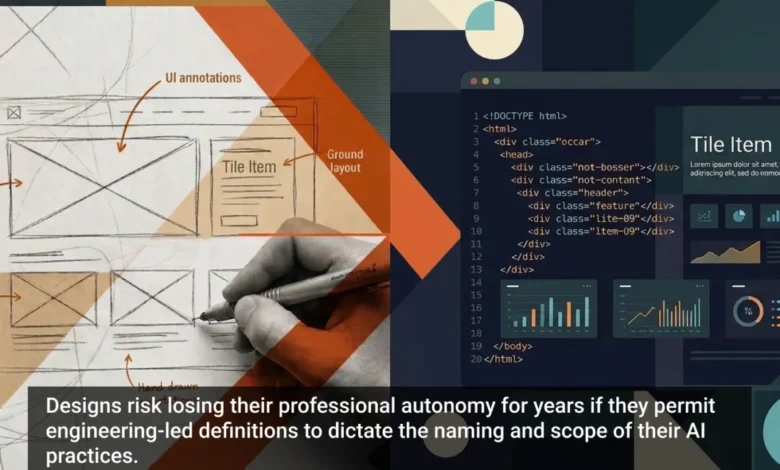
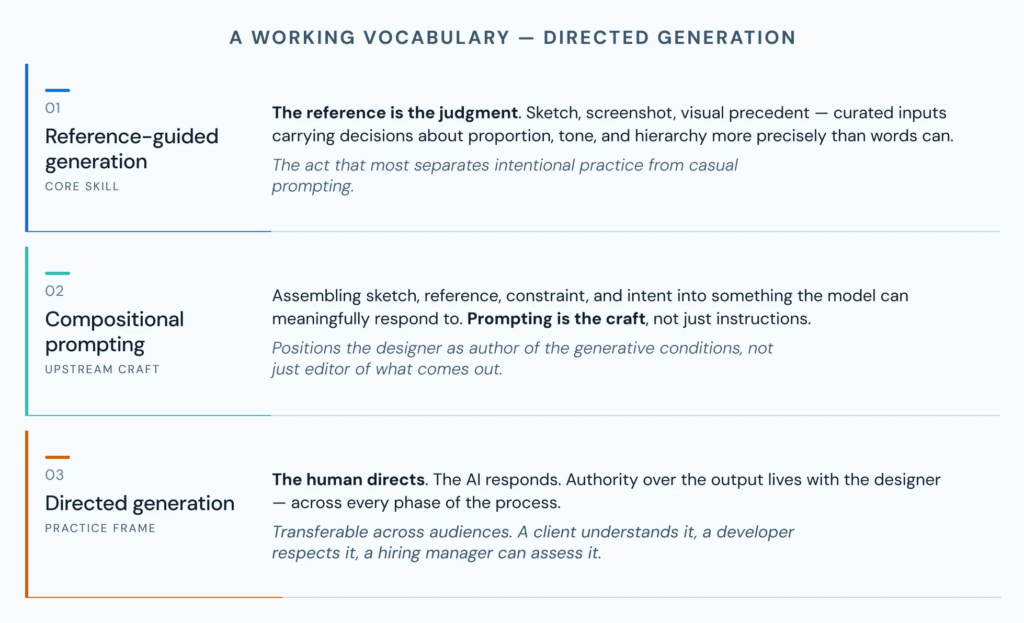
- Curated Input: Designers provide meticulously crafted references—sketches, screenshots, visual precedents, or combinations thereof. These references are not mere prompts but encapsulate complex design decisions regarding proportion, tone, hierarchy, and intent. This visual language can convey meaning with a precision that words often struggle to match.
- Judgment First: The designer’s deep understanding and critical judgment precede and guide the AI’s output. The AI responds to a highly informed input, acting as an extension of the designer’s vision.
- Phased Iteration: The process moves through distinct phases, requiring the designer to skillfully navigate between ideation, refinement, and execution. Knowing when to shift between these phases is the actual skill, demanding foresight and strategic decision-making.
This latter approach is more challenging to encapsulate in a catchy phrase, which has contributed to the vacuum filled by "vibe coding." However, it represents the cutting edge of serious design work conducted at speed, characterized by deliberate intent and profound craft.
The Transformative Potential of Directed Generation: Scaling Design Without Stagnation
The implications of adopting a directed generation approach extend far beyond individual workflows; they have the potential to fundamentally reshape how design systems are conceived and implemented.
Beyond the Pixel: Judgment at the Pattern Level: A key shift occurs when designers exercise judgment at the level of the design pattern rather than solely at the level of the individual pixel. The traditional model of design systems often treats patterns as fixed, meticulously defined, documented, and applied artifacts. Consistency is achieved through rigid replication, often at the expense of flexibility and adaptability.
Directed generation, however, liberates design systems from these constraints. When a machine can understand a design pattern with sufficient abstraction to recompose it contextually—not merely copy it, but interpret its underlying principles—the pattern evolves. It transforms from a static component into a dynamic set of spatial, typographic, and behavioral relationships. This allows for the intelligent adaptation of design elements across novel surfaces, devices, and contexts, many of which may not have been envisioned during the initial design phase.
The Designer’s Evolving Role: Defining Conditions for Emergence: In this new paradigm, the designer’s role shifts from painstakingly specifying every instance to defining the conditions under which high-quality instances reliably emerge. This is the essence of non-deterministic design. The output is not entirely predictable, and this unpredictability is not a system failure but a feature. The craft is elevated, moving upstream to the quality of the foundational elements, the precision of the initial references, and the rigor of the defined constraints.
Towards Agentic Delivery: Autonomous Intent: The natural evolution of this practice points towards "agentic delivery." This involves systems that not only respond to design direction but also autonomously carry it forward. These agents can generate coherent outputs across scales and contexts, preserving the authorial intent embedded in the original primitives. This represents a move towards systematic design generation, where the designer authors the underlying grammar, and the system executes it fluently, rather than merely documenting static design elements.
Redefining the Narrative: Towards Precise and Authoritative Language
The naming of an emerging practice is a critical, albeit often messy, undertaking. A label applied too early can calcify before the practice has fully matured. Conversely, a delay in nomenclature allows others to define the terms, potentially leading to an inaccurate or undervalued perception of the work.
The field of AI-assisted design finds itself in a "late-early" stage, where tools have advanced sufficiently to foster the development of genuine methodologies, yet the vocabulary is still largely borrowed from engineering, product management, and the often sensationalized discourse surrounding generative AI, which tends to focus on the output rather than the strategic intent behind it.
To counter this, a more precise and descriptive language is needed. While a definitive taxonomy remains elusive, several terms offer more accurate handles for the sophisticated practice of AI-assisted design:
- Directed Generation: This term emphasizes the designer’s active guidance and intent in shaping the AI’s output.
- Reference-Guided Practice: This highlights the crucial role of curated visual or conceptual references as the foundation of the design process.
- Compositional Prompting: This suggests a more deliberate and structured approach to interacting with AI, where prompts are composed with a strategic understanding of desired outcomes.
- Intentional AI Collaboration: This phrase underscores the partnership between human designers and AI, emphasizing mutual intentionality.
- Generative Design Systems: This term positions AI not just as a tool for individual outputs, but as an integral part of a dynamic, evolving design system.
These suggestions are not mandates but rather invitations to engage in a conversation about language that accurately reflects the value and complexity of the work. The goal is to establish terminology that facilitates precise thinking and effective communication, ensuring that the practitioners who define these methodologies are the ones who articulate their value.
The Crucial Impact of Nomenclature: Owning the Practice, Owning the Description
A common objection to focusing on terminology is pragmatic: "Does it really matter what we call it? The work gets done either way." While it is true that clients often focus on the final output, the chosen nomenclature becomes critically important in specific, high-stakes moments:
- Portfolio Reviews: When articulating one’s process to potential employers or collaborators, precise language is essential for conveying expertise.
- Client Kickoffs: Establishing the unique value and sophistication of a design process is paramount to securing fair compensation and building trust.
- Team Mentorship: Junior designers need clear models of intentional design practice in the age of powerful AI tools.
In these instances, having language that is precise, confident, and owned by the designer provides professional clarity and establishes authority.
The design field has navigated similar inflection points before. The emergence of User Experience (UX) design as a distinct discipline saw practitioners who actively named and defined their work—identifying themselves as interaction designers or information architects—shape the valuation of the field for an entire generation. Those who allowed adjacent fields to define their roles often spent years working to reclaim their professional identity and value.
AI-assisted design is at a similar juncture. The technology is no longer novel, but the practice of integrating it meaningfully is still being forged. The definitions that take root will either emerge from engineers describing their shipped products, journalists reporting on visible trends, or designers articulating the nuanced reality of their craft.
A Hybrid Future: Balancing Determinism and Non-Determinism
It is crucial to recognize that deterministic design—producing fixed components, documented patterns, and predictable handoffs—remains the appropriate and often necessary tool for many production environments. The value of directed generation and non-deterministic design does not lie in replacing these established methods but in expanding the capabilities of the design system.
The Strengths of Non-Deterministic Approaches:
- Rapid Concept Exploration: AI-powered tools can accelerate the ideation phase, allowing designers to explore a wider range of concepts quickly.
- Cross-Surface Pattern Interpretation: The ability of AI to interpret and adapt patterns across diverse platforms and devices unlocks new levels of design consistency and innovation.
- Generative Wireframing and Prototyping: These applications can significantly reduce the time spent on foundational design elements, freeing up designers for higher-level strategic work.
These applications of non-deterministic design deliver outsized returns by fostering agility and creative breadth.
The Role of Production-Ready Components: In many contexts, production-ready components will still require specification, review, and finalization through traditional means. A mature practice understands that different phases of the design process carry varying risk tolerances. A hybrid approach, acknowledging these differences, allows for the strategic deployment of both deterministic and non-deterministic methodologies. This is not a compromise but an intelligent application of the right tool for the right job, recognizing that different phases of design work demand different levels of control and predictability.
"Vibe coding" describes one method of interacting with AI, and for certain applications, its low-accountability nature might be perfectly suitable. However, it fundamentally fails to capture the essence of design leadership. The sooner the distinction between passive generation and directed, intentional design is clearly articulated, the sooner the work itself will receive the professional recognition and strategic positioning it deserves. Whether termed "directed generation," "reference-guided practice," "compositional prompting," or another fitting descriptor, the adoption of precise language is the first step in owning and defining the future of AI-assisted design.