The landscape of frontend development, a domain often characterized by its rapid evolution, has undergone a profound transformation over the past two decades. What began as a relatively straightforward process of uploading static files via FTP has escalated into a complex ecosystem of build pipelines, sophisticated frameworks, and intricate tooling. This evolution, meticulously detailed in a comprehensive deep dive by David Poblador i Garcia, prompts a critical examination of current practices and a contemplation of whether the industry is, in fact, circling back to its foundational HTML-first principles. The analysis, which also includes a forward-looking list of tools anticipated for use in 2026, offers a valuable perspective on the trajectory of web development.
A Twenty-Year Journey: From Simplicity to Complexity
For many years, the frontend developer’s role was primarily concerned with translating designs into functional web pages. This often involved writing HTML for structure, CSS for styling, and JavaScript for basic interactivity. Deployment was a relatively uncomplicated affair, typically managed through File Transfer Protocol (FTP) or similar direct file upload methods to web servers. The tools were less numerous and the build processes, if any, were rudimentary. This era, often referred to as the "Web 1.0" or early "Web 2.0" phase, prioritized accessibility and content delivery.
However, the advent of more dynamic web applications, the rise of single-page applications (SPAs), and the demand for richer user experiences began to reshape the frontend. Frameworks like React, Angular, and Vue.js emerged, offering powerful ways to build complex interfaces. This shift necessitated a more robust development workflow. Build tools such as Webpack, Parcel, and Rollup became indispensable, compiling, bundling, and optimizing code written in languages like TypeScript and modern JavaScript (ES6+). The introduction of CSS preprocessors like Sass and Less, and later CSS-in-JS solutions, further abstracted styling, adding layers of complexity and power.

This journey has not been without its challenges. The sheer volume of tools, libraries, and frameworks can be overwhelming, leading to what some critics term "framework fatigue." The constant need to update dependencies, manage build configurations, and learn new paradigms can divert significant developer time and resources. Poblador’s analysis highlights this shift, charting the transition from manual uploads to automated, continuous integration and continuous deployment (CI/CD) pipelines, a testament to the increasing complexity and scale of modern web projects.
The Return to HTML-First Principles?
Amidst this whirlwind of technological advancement, Poblador’s research suggests a potential re-evaluation of core principles. The notion of "circling back to HTML-first principles" implies a renewed appreciation for the foundational technologies of the web. This could manifest in several ways:
- Emphasis on Semantic HTML: A focus on using HTML tags appropriately for their intended meaning, enhancing accessibility and SEO.
- Leveraging Native Browser Capabilities: A greater reliance on standard HTML, CSS, and JavaScript features rather than solely depending on heavy frameworks or complex build processes.
- Content-Centric Design: Prioritizing content delivery and user experience over overly complex, JavaScript-heavy interfaces that might hinder performance and accessibility.
- Server-Side Rendering (SSR) and Static Site Generation (SSG): Increased adoption of techniques that render HTML on the server or at build time, improving initial load performance and SEO, and reducing client-side JavaScript overhead.
This potential shift is not a rejection of progress but rather a recalibration, seeking to find a more sustainable and efficient path forward. The "messy middle" of frontend development, as highlighted by Master.dev’s workshop, often refers to the challenges of integrating various tools and managing complex workflows. A return to simpler, more robust principles could streamline this process.
Innovations Shaping the Future of Frontend
The deep dive also points to significant ongoing innovations that are either building upon existing paradigms or forging entirely new paths.
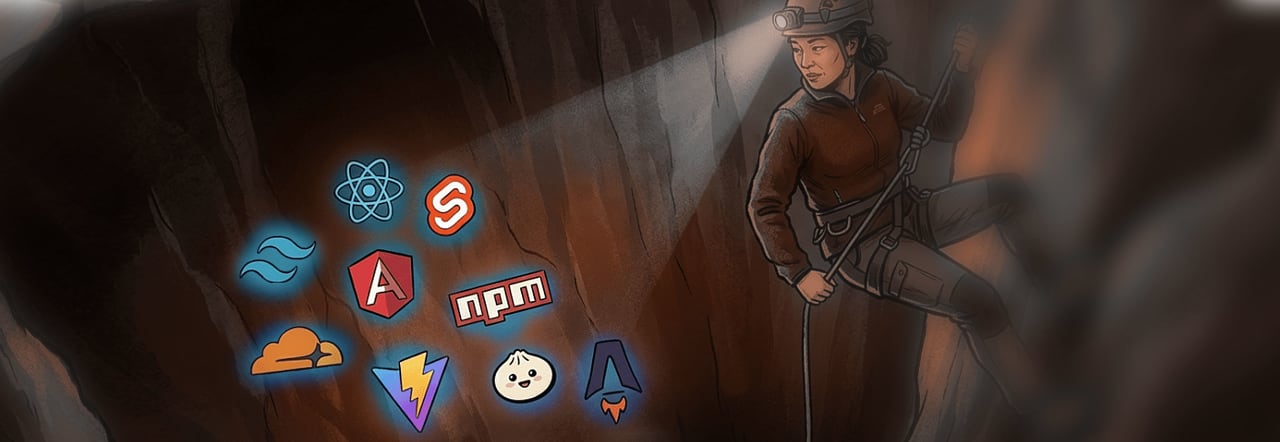
Agentic Frontend Development: The AI Integration
Master.dev’s workshop, "Agentic Frontend Development," sponsored by Master.dev, introduces a compelling vision for the future: leveraging Artificial Intelligence, specifically models like Codex, to assist in the frontend development process. This initiative targets the "messy middle" of frontend work by providing practical patterns for prompting, reviewing, debugging, and iterating with AI tools. The implication is a significant boost in developer productivity and efficiency, allowing developers to focus on higher-level design and problem-solving while AI handles more routine or complex coding tasks. This aligns with broader industry trends in AI-assisted development, aiming to democratize complex tasks and accelerate project timelines.
Advancements in CSS: Native Mixins and Border Shapes
Significant strides are being made in the evolution of CSS, bringing features previously only available through preprocessors directly into browsers. Patrick Brosset of Microsoft reports that CSS mixins are beginning implementation in Chromium. This feature, akin to Sass mixins, allows developers to define reusable blocks of styles with arguments, streamlining style management and promoting consistency. The native implementation promises better performance and broader accessibility compared to preprocessor-dependent solutions.
Furthermore, the CSS border-shape property, as detailed in a CSS-Tricks article by Temani Afif, is emerging as a powerful tool for creative design. Currently supported in Chromium, this property, alongside shape() and corner-shape, unlocks new possibilities for decorative elements, animations, and complex visual effects directly within CSS. This move towards more declarative and powerful styling capabilities within the browser itself reduces reliance on image assets and complex JavaScript manipulations for visual enhancements.
Fluid Typography and Modern Rendering Techniques
Matthew Morete’s exploration of "Fluid Typography with progress()" on Master.dev showcases a sophisticated approach to responsive typography. By utilizing the CSS progress() function and range mapping, developers can create fluid typography scales that adapt gracefully across different screen sizes and user preferences. This method aims to balance the benefits of responsive units like rem with the predictability of pixel-based breakpoints, ensuring that user font-size settings are respected without compromising design integrity. While currently lacking Firefox support, the article acknowledges fallback strategies, indicating a commitment to progressive enhancement.

David Bushell’s article, "Fixing Full-Bleed CSS," tackles a persistent challenge in web layout: achieving true full-bleed designs while managing scrollbars. The proposed solution involves a clever trade-off, substituting the often-problematic 100vw (viewport width) unit with container query units, augmented by @property for dynamic styling. This approach offers a more robust and flexible method for creating layouts that extend seamlessly across the entire viewport, a critical feature for modern, immersive web experiences.
Safari’s Evolving Developer Tools
WebKit’s introduction of the Safari MCP Server for Web Developers, as detailed in an article on webkit.org, marks a significant enhancement for debugging and development within the Safari ecosystem. Safari Technology Preview 247 includes this new feature, which allows agents to connect to a Safari browser window and gain direct insight into how code renders. This provides developers with a more granular understanding of their site’s behavior in Safari, crucial for ensuring cross-browser compatibility and optimal performance. The release notes for Safari Technology Preview 247 also reveal support for calc-mix() and a range of CSS and rendering bug fixes, underscoring Apple’s continued investment in web standards and developer tooling.
Tools and Resources for the Modern Developer
The evolving frontend landscape is supported by a growing arsenal of tools and resources designed to streamline workflows and enhance development capabilities.
Google’s Agent-Ready Toolkit
In a significant move towards standardizing web performance and accessibility for AI-driven interactions, Google has introduced a new Lighthouse toolkit. This "Agent-Ready Toolkit" audits websites for their "agent-friendliness," evaluating aspects such as the quality of the accessibility tree, layout stability, and integration with protocols like WebMCP. While the current scoring is primarily informational, it provides a valuable hygiene checklist, guiding developers to build websites that are not only performant and accessible to humans but also readily interpretable and navigable by automated agents and future AI technologies. This initiative reflects a proactive approach to preparing the web for an increasingly automated and AI-integrated future.

The Enduring Appeal of Classic Gaming
Demonstrating the creative application of modern web technologies, the "GTA2 Web – JS Port" project showcases the classic top-down game Grand Theft Auto 2 running natively in the browser. Developed by ERIK MARKUS KANNIKE, this impressive feat leverages WebRTC for peer-to-peer multiplayer functionality, bringing a beloved retro gaming experience to a new platform. Such projects highlight the power and versatility of web technologies, pushing the boundaries of what can be achieved directly within a web browser.
Broader Impact and Future Implications
The trends observed in frontend development over the past two decades, and the innovations emerging today, have profound implications for the industry. The increasing complexity necessitates continuous learning and adaptation from developers. The rise of AI-assisted development promises to democratize certain aspects of coding and accelerate development cycles, potentially lowering the barrier to entry for creating sophisticated web applications.
The renewed focus on foundational web principles suggests a maturing industry that recognizes the importance of performance, accessibility, and maintainability. By embracing semantic HTML, leveraging native browser features, and adopting efficient rendering strategies, developers can build more robust and future-proof applications.
The ongoing evolution of CSS, with features like native mixins and advanced shape properties, empowers designers and developers to create richer, more dynamic interfaces without excessive reliance on external libraries or complex build processes. Similarly, advancements in browser developer tools, such as Safari’s MCP Server, are crucial for ensuring a consistent and high-quality user experience across all platforms.

Ultimately, the journey of frontend development is a continuous cycle of innovation, adaptation, and re-evaluation. As David Poblador’s deep dive suggests, understanding this history is key to navigating the present and shaping a more efficient, accessible, and powerful future for the web. The tools and techniques emerging today, from AI assistants to advanced CSS capabilities, are not merely incremental improvements but represent significant shifts that will define how we build and interact with the digital world for years to come.