Understanding the Impact of Transformer Attention Architectures on Inference Memory Requirements


Two transformer models with the same parameter count can have very different memory requirements during inference. While the total number of parameters—the weight matrices that define a model’s knowledge—is a primary metric for determining storage needs on disk, it is often a misleading indicator for operational memory requirements in production environments. A major reason for this discrepancy is the structure of the model’s attention layers, specifically how they manage the Key-Value (KV) cache. The number of key-value heads, the specific representation stored for each token, and the number of historical tokens retained by each layer determine how much KV cache a request needs to stay resident in active GPU memory.
When serving an existing checkpoint, practitioners do not choose whether its layers use multi-head attention (MHA), grouped-query attention (GQA), multi-query attention (MQA), sliding-window attention, or multi-head latent attention (MLA). Those structural decisions are locked in during the initial training phase. The inference engine is bound by the architecture defined in the model configuration. Consequently, the primary task during deployment is to inspect the architecture, calculate the resulting memory footprint, and ensure the utilization of a compatible cache layout and attention kernel. While one might compare various checkpoints before deployment to select the most efficient model, one cannot swap an attention variant—such as replacing MHA with GQA—after the fact without fundamentally altering the model’s behavior, which typically leads to a significant degradation in output quality.
The Immutable Nature of Trained Architectures
The checkpoint acts as the final word on the model’s configuration. The configuration file and the corresponding weights define the attention projections, the number of query and key-value heads, the local-attention patterns, and the latent dimensions of the model.
Replacing MHA with GQA after training is not a trivial swap; it modifies the mathematical operations of the model, often requiring extensive fine-tuning to recover performance. Similarly, replacing a full attention mechanism with a sliding-window approach effectively "blinds" the model to historical data that it was explicitly trained to reference. These are not merely implementation details; they are core components of the model’s reasoning process.
In a professional deployment scenario, the attention variant remains critical for two specific reasons: it dictates the peak memory usage during concurrent inference and it determines the required memory bandwidth for the hardware. As models scale, the KV cache often becomes the primary bottleneck, forcing engineers to account for the specific architectural nuances of their chosen model family, such as Qwen, Llama, or Mistral, each of which may utilize different configurations for head dimensions and attention mechanisms.
Deconstructing KV Cache Memory
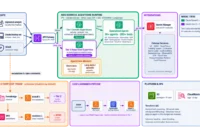
Attention creates two distinct types of inference memory requirements. The first is persistent memory, which includes the KV cache—the storage of key and value vectors for all previous tokens in a sequence. The second is temporary workspace memory, often utilized by kernels like FlashAttention to calculate scores during the inference step.
Persistent memory grows linearly with the number of live requests and the total number of cached tokens. Consequently, this factor usually dictates the maximum concurrency a system can support. While researchers have developed memory-efficient attention algorithms to reduce the temporary workspace, the fundamental size of the logical KV cache remains tied to the model architecture.
For a standard key-value representation, the cache memory for a single request can be calculated using the following formula:
$M^textKV = 2Ssum_i=1^L T_i H_i^textKVD_i$
In this equation, $T_i$ represents the number of tokens retained by layer $i$, $H_i^textKV$ denotes the number of key-value heads, $D_i$ is the dimension of the head, and $S$ represents the number of bytes per cache element. The factor of two accounts for both the keys and the values. For models where every layer uses a uniform configuration and retains the full context, the expression simplifies to $M^textKV=2SLTH^textKVD$. This is the standard benchmark for estimating how many users a single GPU can support simultaneously.
The Evolution of Attention Efficiency
The industry has moved toward more efficient variants of the original Multi-Head Attention to address the ballooning memory costs of long-context models.
Multi-Head Attention (MHA) is the baseline, where each token is projected into queries, keys, and values for every head. This design is robust but resource-intensive, as the cache grows linearly with both the batch size and the sequence length. During the autoregressive decoding phase, every layer must read the cached keys and values to generate the next token, creating a significant memory bandwidth challenge.
Multi-Query Attention (MQA) and Grouped-Query Attention (GQA) represent major optimizations. MQA forces all query heads to share a single key-value head, drastically reducing the KV cache size but sometimes sacrificing model expressivity. GQA serves as a middle ground, where multiple query heads share a single key-value group. This configuration significantly lowers the parameter count of the key and value projections and reduces the cache footprint by a factor proportional to the grouping, allowing for higher throughput without the severe quality penalties associated with MQA.
Sliding-Window Attention introduces a physical limit to the memory footprint by restricting attention to the most recent $W$ tokens. In this architecture, a token’s key and value become obsolete once they fall outside the window. This allows for the implementation of a ring-buffer cache, which bounds memory usage even in infinitely long conversations. This architecture is increasingly common in models designed for long-form documentation analysis.
Multi-Head Latent Attention (MLA) is the most sophisticated of the recent developments. By compressing the key-value representation into a smaller latent vector, MLA significantly reduces the memory required for the cache. During the decode step, the model reconstructs the necessary information from this latent space. While this requires additional arithmetic operations, it is often a favorable trade-off because inference is frequently limited by memory bandwidth rather than compute power.
Implications for Inference Runtimes
The inference runtime, such as vLLM or TensorRT-LLM, operates under the constraints set by the model. While the runtime can introduce optimizations—such as PagedAttention, which uses non-contiguous memory blocks to reduce fragmentation, or FlashAttention, which optimizes the compute kernel—these techniques cannot change the logical requirements of the model.
When deploying, engineers must differentiate between what the model demands and what the hardware can provide. The "cache budget" is the remaining accelerator memory after accounting for model weights, runtime workspaces, and safety margins. The maximum number of concurrent requests is then a function of this budget divided by the memory cost per token.
For instance, a model with 32 layers, 8 key-value heads, and a 128-dimension head size requires significant memory per token. In a high-traffic production environment, even a small reduction in the number of key-value heads via GQA can result in the ability to host hundreds of additional concurrent users on the same hardware cluster.
Analysis of Future Trends
As transformer architectures continue to evolve, the focus is shifting from simple parameter reduction to memory-aware architectural design. The industry is seeing a clear move away from standard MHA toward GQA and MLA as default standards. This shift implies that the "memory cost per token" is becoming a critical KPI for model performance, rivaling benchmarks like MMLU or HumanEval.
Furthermore, the integration of specialized hardware kernels for these specific attention types is accelerating. We are seeing a move toward unified kernels that can handle mixed-precision arithmetic and complex windowing patterns, allowing for more flexible deployment strategies. However, the core takeaway remains unchanged: the architecture of the model determines its operational feasibility. Before a model is chosen for a large-scale deployment, a thorough inspection of its configuration is required. Teams that ignore the nuances of the underlying attention mechanism risk deploying models that, while theoretically sound in terms of accuracy, are operationally impossible to scale in real-world environments.
In conclusion, the intersection of model design and inference efficiency is where the most significant gains in AI productivity currently lie. By understanding the constraints imposed by the KV cache, architects can better predict the hardware requirements for their models, optimize their throughput, and ensure that their infrastructure is prepared to handle the demands of modern, large-scale generative AI applications. The future of efficient inference is not just in faster hardware, but in the intelligent selection and optimization of the attention architectures that govern how models remember the past to predict the future.