The Future of Web Interoperability: Assessing the Impact of the Interop 2027 Project

For the past several years, the global web development ecosystem has undergone a quiet but seismic shift in how browser technologies are standardized and implemented. The Interop project, a collaborative initiative involving major browser vendors including Google, Apple, Microsoft, and Mozilla, alongside technical partners like Igalia and Bocoup, has emerged as the primary vehicle for ensuring that web technologies function consistently across different platforms. By focusing on specific "focus areas" each year, the project has successfully accelerated the adoption of critical standards, often pushing browser support from fragmented implementations to near-universal compatibility within a single 12-month cycle.
The Evolution of Interoperability
The origins of the Interop initiative date back to the early 2020s, a period marked by significant developer frustration regarding "browser drift," where features would arrive in one browser years before appearing in others. The success of the project is perhaps best exemplified by the trajectory of CSS Subgrid. In 2023, Subgrid—a powerful extension to CSS Grid that allows nested elements to align with a parent grid—was identified as a primary focus area. At the beginning of that year, cross-browser compatibility was sparse, with many implementations failing to meet standardized tests. By the conclusion of the 2023 cycle, the concerted efforts of the browser vendors brought support to over 90% across all major engines.
As the industry approaches the end of 2026, the focus has shifted toward the planning stages of Interop 2027. Mozilla and its partners have introduced a public-facing ranking system, inviting developers to weigh in on which features should receive priority. This transition toward a community-informed roadmap represents a significant democratization of web standards, moving away from closed-door committee decisions toward a data-driven model that reflects the practical needs of those building the modern web.
Key Technical Proposals for 2027
The current slate of proposals for Interop 2027 reflects a desire to bridge the gap between low-level layout capabilities and high-level programming logic.
CSS Functions
One of the most anticipated proposals is the introduction of native CSS functions. Currently, CSS relies on pre-processors like Sass or PostCSS to handle logic, such as color transformations or coordinate calculations. The proposed @function syntax would allow developers to define custom logic directly within a stylesheet. For example, developers could create functions for coordinate conversions—such as calculating polar coordinates for animations—without relying on JavaScript. This would not only reduce the reliance on heavy build-time dependencies but also provide a performance boost, as these calculations would be handled natively by the browser’s rendering engine.

Advanced Geometry and Styling
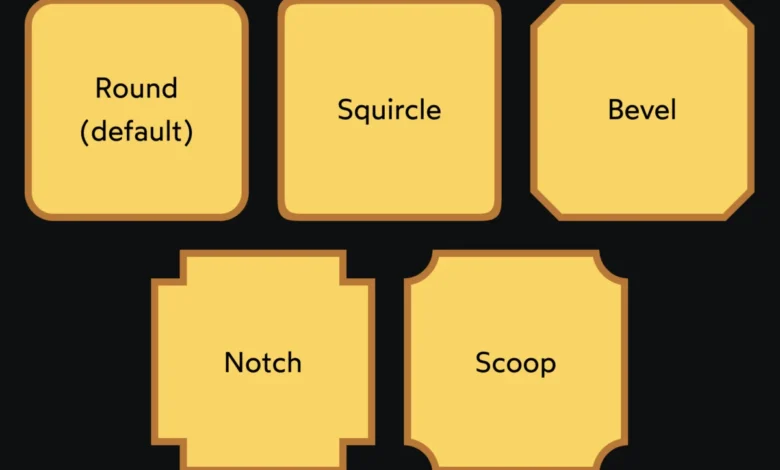
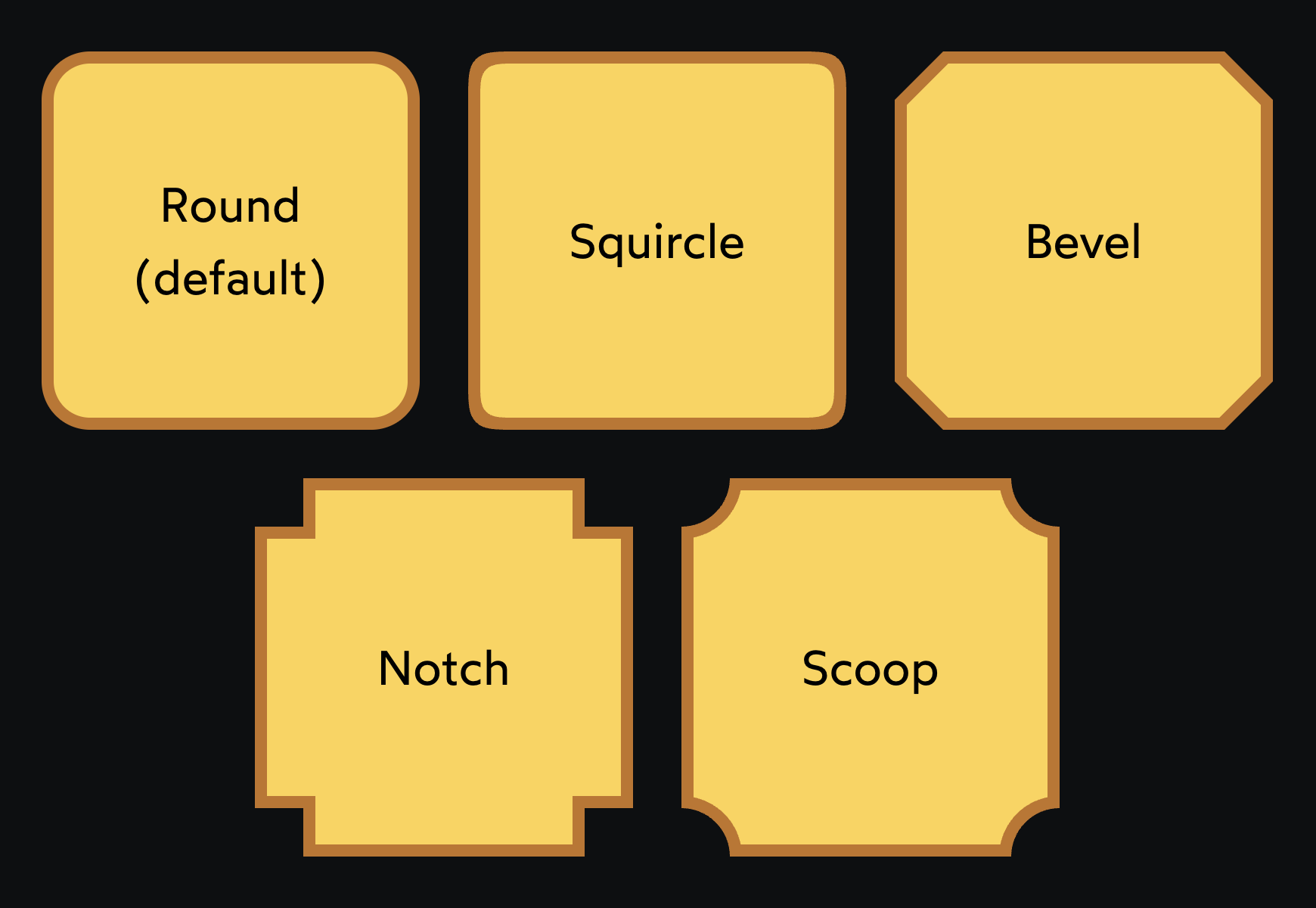
The corner-shape property is another high-priority item, aiming to move beyond the rigid constraints of border-radius. By allowing developers to define non-circular corners—such as bevels, notches, and "squircles" (a mathematical curve between a square and a circle)—this property promises to simplify UI design patterns that currently require complex clip-path hacks or SVG masking. Crucially, because corner-shape modifies the actual border-box of an element, shadows, outlines, and borders will automatically follow the new shape, solving a long-standing issue where visual effects would overflow or disconnect from customized corner geometries.
Related to this is the border-shape proposal, a lower-level API that grants developers granular control over the geometry of an element’s border. By utilizing Bézier curves and arcs, developers could define custom shapes that are responsive and animatable. This would enable a new class of sophisticated UI design, allowing for fluid transitions between disparate shapes that are currently impossible to achieve without performance-heavy JavaScript libraries.
Responsive Interaction and Anchoring
The evolution of the Anchor Positioning API, introduced in 2026, continues with the proposed "Level 2" additions. The primary goal here is to provide CSS-based feedback for anchored elements. For example, if a tooltip is forced to flip from the top of an element to the bottom due to viewport constraints, the current API does not provide a native way to query that state. The proposed anchored container queries would allow developers to detect these positioning changes, enabling the automatic adjustment of decorative elements, such as pointing carets, without requiring intrusive JavaScript event listeners.
Similarly, the proposal for reading-flow addresses a critical accessibility challenge in modern, grid-based layouts. As responsive designs often visually reorder content in ways that differ from the source DOM order, keyboard navigation and screen readers can become misaligned with the user’s visual experience. The reading-flow property would allow developers to explicitly define the navigation order of grid or flexbox items, ensuring that the logical flow of the page remains intuitive regardless of how the CSS rearranges the layout on mobile or desktop viewports.
Industry Implications and the Role of AI
The ongoing success of the Interop project carries significant implications for the future of web development, particularly in the context of the rise of generative AI. There has been ongoing debate regarding the necessity of deep technical knowledge in an era where LLMs can generate boilerplate code. However, industry analysts argue that the complexity of modern web features—such as those proposed for Interop 2027—makes expert knowledge more valuable than ever.
LLMs are often trained on legacy datasets, meaning they may lack the ability to effectively utilize cutting-edge CSS features that are currently in the proposal or early-implementation phase. Consequently, developers must act as architects, guiding AI tools to implement modern solutions that prioritize performance, accessibility, and maintainability. Features like interpolate-size for animating between keyword values such as auto, or the new rule property for gap decorations in grid layouts, require a nuanced understanding of how browsers handle rendering. Without human oversight, there is a risk that AI-generated code will continue to rely on obsolete "hacks" that impede browser performance and accessibility.
Broader Impact and Future Outlook
The Interop 2027 roadmap serves as a litmus test for the health of the open web. By prioritizing features that solve real-world problems—such as accessibility in dynamic grids, native support for complex animations, and advanced layout control—the project is effectively lowering the barrier to entry for high-quality web design.
Data from the Interop project consistently shows that when a feature is added to the interop set, the "Interop" line—representing the percentage of tests passing in all major browsers—climbs steeply. This consistent improvement creates a reliable environment for developers, reducing the need for browser-specific vendor prefixes and polyfills. As the committee reviews the rankings and finalizes the focus areas for 2027, the focus remains on closing the gap between the theoretical capabilities of CSS and the practical needs of modern web applications.
For developers and organizations, the message is clear: the web is becoming more capable, more accessible, and more standardized. Engaging with these proposals through the public ranking system is not merely an exercise in preference; it is a vital step in shaping the technological foundation of the next iteration of the web. As browsers continue to move toward a more unified implementation strategy, the cumulative effect of these small, focused improvements will define the user experience of the internet for the decade to come.