Freetown Memorial Redesign by Oshinowo Studio Marks a New Era of Commemoration for the Sierra Leone Carrier Corps

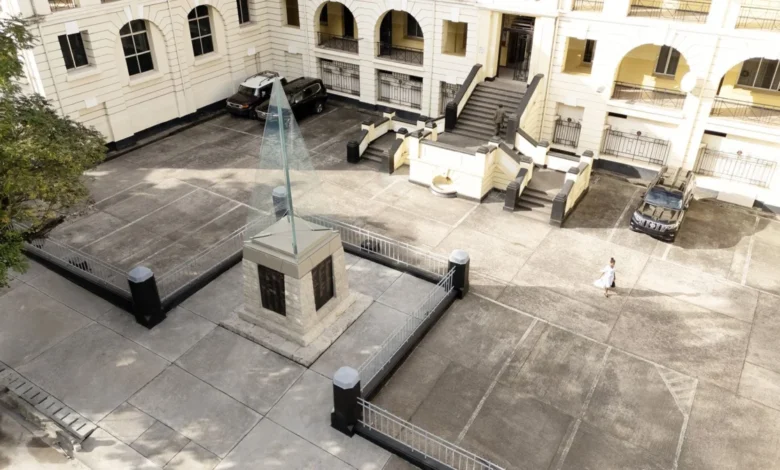
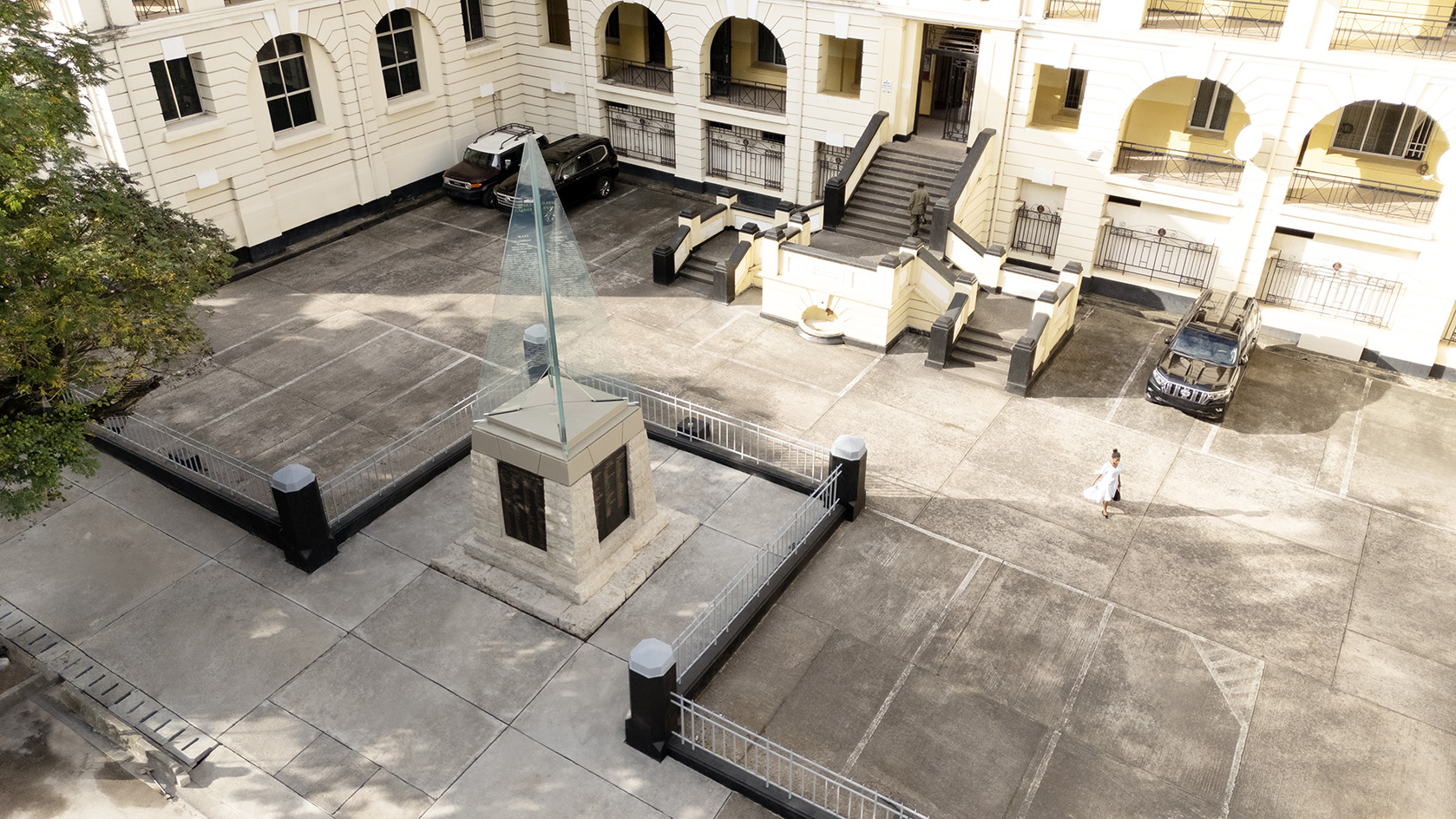
In the heart of Freetown, Sierra Leone, a profound architectural intervention has transformed a century-old site of remembrance. The Freetown Memorial, originally conceived by the renowned British architect Sir Edwin Lutyens in 1931, has undergone a significant modernization. Led by Tosin Oshinowo of Oshinowo Studio, the project serves as a physical and symbolic bridge between the colonial history of the First World War and the contemporary national identity of Sierra Leone. By integrating a striking, light-emitting glass prism into the existing masonry, the studio has achieved a delicate balance between historical preservation and forward-looking commemorative art.
Historical Context and the Forgotten Corps
The original Freetown Memorial was built to commemorate the contributions of those who served during the First World War. However, for decades, the contributions and sacrifices of the Sierra Leone Carrier Corps—the vital local workforce that supported British operations in East and West Africa—remained largely unacknowledged in official records. The Carrier Corps consisted of thousands of local men who served as porters, laborers, and scouts in some of the most challenging environments of the conflict. Often working in conditions of extreme hardship, many died from disease, exhaustion, and the hazards of the battlefield.
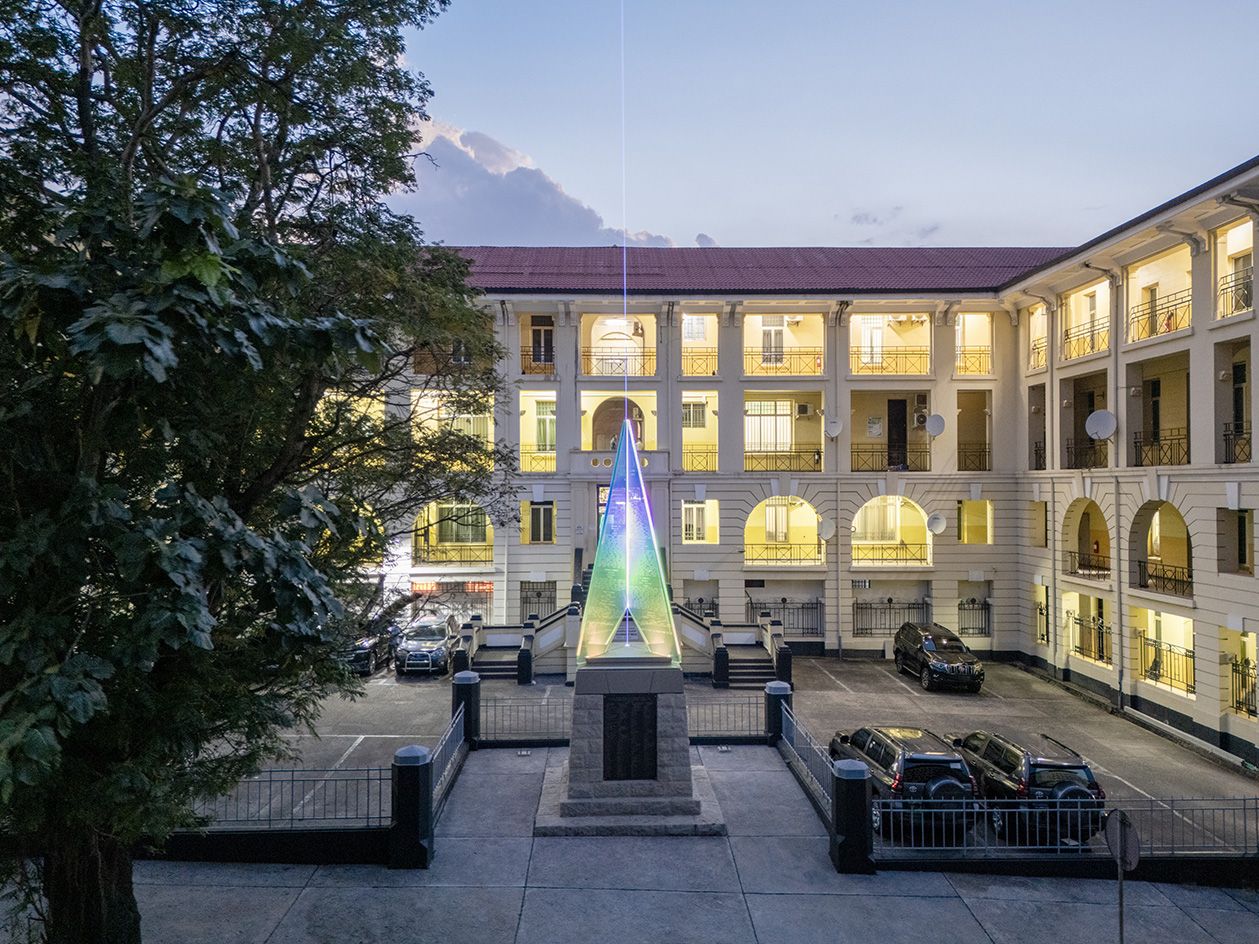
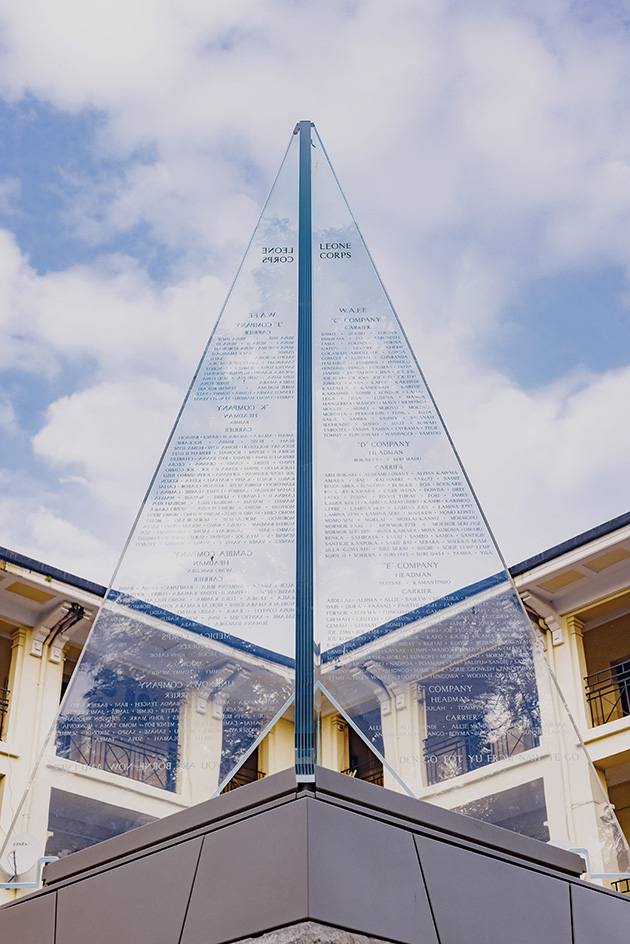
Historically, the lack of individual recognition for these soldiers was a systemic oversight in Commonwealth war commemoration. For nearly a century, their names were missing from the stones of the Freetown monument. The recent intervention by the Commonwealth War Graves Commission (CWGC), in collaboration with Oshinowo Studio, seeks to address this historical imbalance, finally etching the names of more than 900 fallen members of the Corps into the structure.
Architectural Innovation and Technical Execution
The design philosophy behind the new installation was rooted in the desire to transcend the limitations of the memorial’s site. Located within the secure, restricted-access forecourt of the Ministry of Finance, the original Lutyens monument faced visibility issues. Oshinowo’s response was to introduce a 8.4-meter-tall prism composed of structural glass, designed to act as a beacon.
The technical requirements for this project were immense. The new structure comprises four massive glass "fins," collectively weighing 4,000 kilograms. Integrating this load onto a 1930s-era masonry structure necessitated a sophisticated engineering strategy. Tosin Oshinowo described the process of retrofitting the memorial as akin to a "root canal"—a precise, internal reinforcement process designed to ensure the stability of the historical monument without altering its exterior aesthetics.
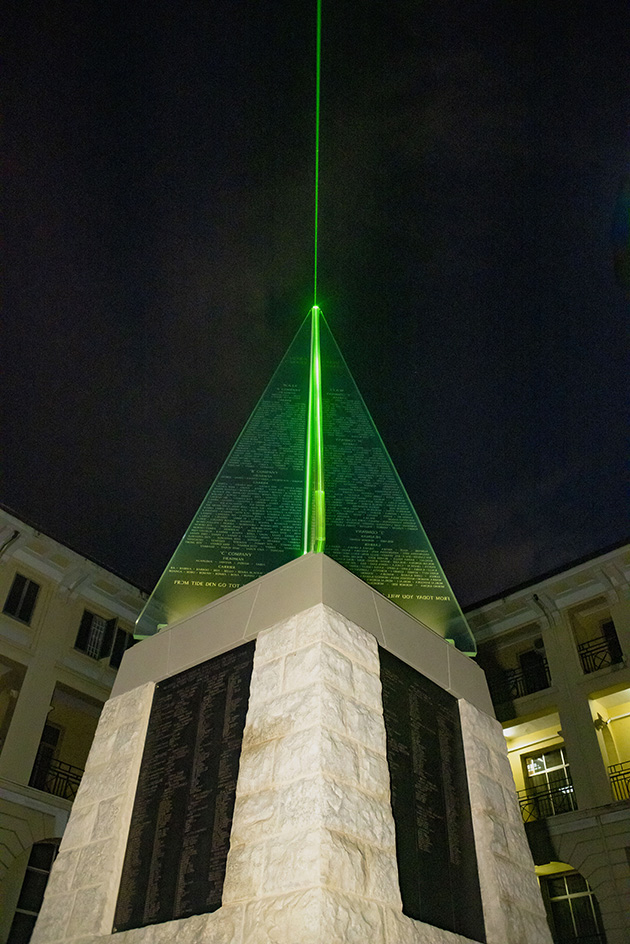
The illumination aspect of the memorial is perhaps its most defining feature. The prism is engineered to emit a soft, rhythmic glow, culminating in a powerful beam of light that projects upwards, visible from a radius of up to five kilometers across Freetown. This light serves as a dynamic presence, intended to be activated on significant commemorative days, thereby ensuring that the memorial remains a living, breathing part of the city’s nocturnal skyline rather than a static, forgotten relic.
A Global Collaborative Effort
The realization of the Freetown Memorial was a feat of international cooperation. Recognizing the complexity of the commission, Oshinowo Studio assembled a multidisciplinary team spanning several continents. Experts from Nigeria, the Netherlands, Spain, the United Kingdom, and Sierra Leone contributed to the project’s success.
The collaborative nature of the project extended beyond engineering and architecture. It involved historians, laser technology consultants, and local stonemasons and bronze specialists who were tasked with the delicate work of restoring the original Lutyens masonry. This restoration work was critical to the broader goal of the CWGC to treat the 1931 monument and the 2024 addition as a cohesive, unified whole.
The Role of Art in Public Memory
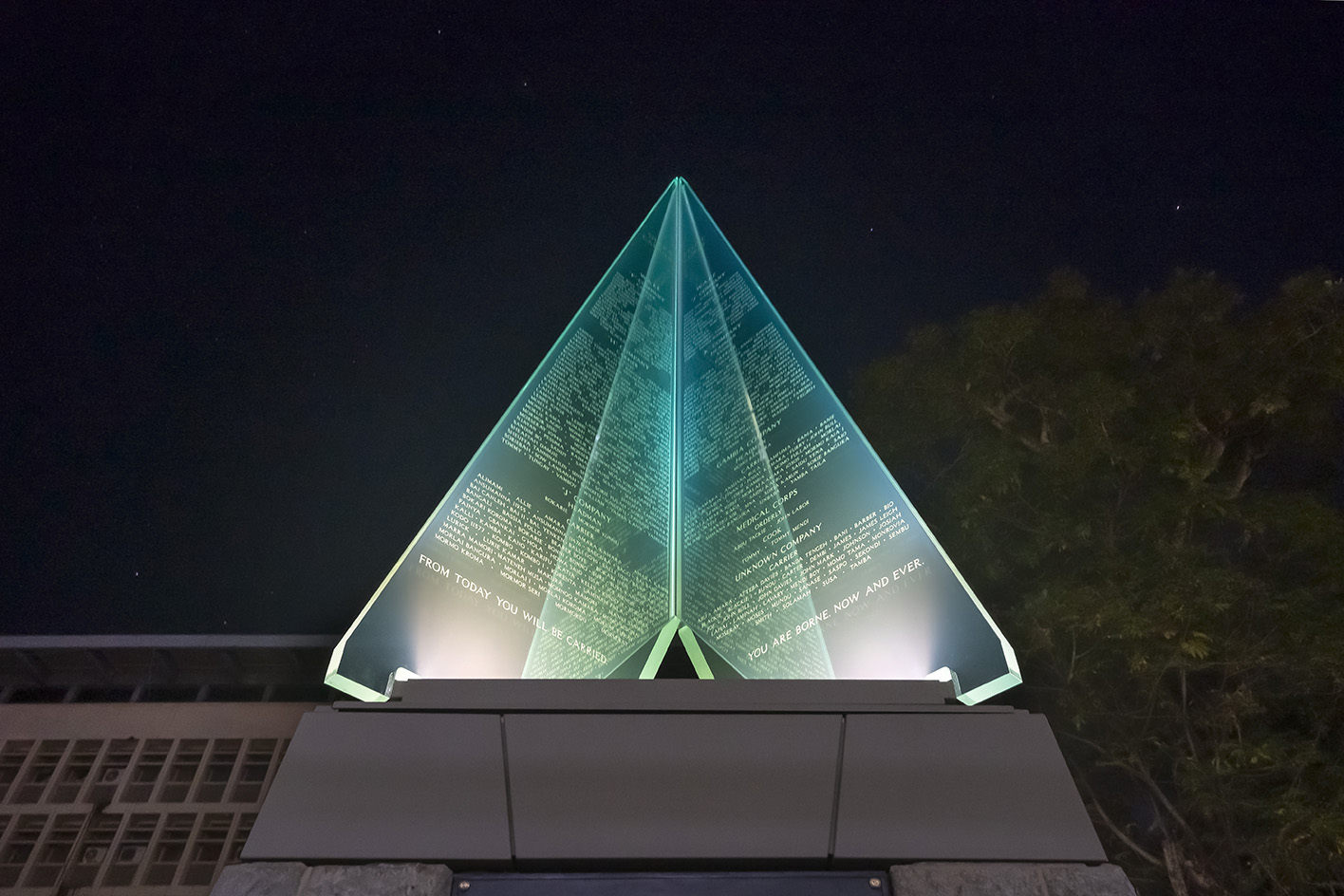
The memorial also features an evocative epitaph, written by poets Nii Ayikwei Parkes and Julianknxx. The inscription, rendered in both English and Krio, reads: "From today you will be carried, you are borne, now and ever." This linguistic choice underscores the project’s commitment to local heritage and the importance of ensuring that the history of the Carrier Corps is accessible and meaningful to the people of Sierra Leone today.
Tosin Oshinowo has noted that the project was as much an academic inquiry into the relationship between public space and collective memory as it was a standard architectural commission. By exploring how monuments can serve as vehicles for reconciliation, Oshinowo Studio has moved beyond traditional memorial design. The inclusion of space for future collective remembrance—acknowledging subsequent national tragedies—elevates the site from a singular focus on the First World War to a broader, more inclusive space for mourning and national reflection.
Official Responses and Strategic Implications
Claire Horton CBE, director general of the Commonwealth War Graves Commission, has characterized the project as one of the most significant endeavors undertaken by the commission since the conclusion of the Second World War. She emphasized that the project is not merely about construction, but about "righting a historic wrong."
The strategic implications of this project are twofold. Firstly, it fulfills a long-standing moral obligation to honor the "forgotten" soldiers of the Commonwealth, reinforcing the promise that every individual who died in the service of the global conflict is entitled to equal commemoration. Secondly, it sets a new standard for how international organizations should engage with local architectural talent to renovate colonial-era monuments. By hiring a local firm like Oshinowo Studio, the CWGC has empowered regional voices to interpret and shape the narrative of their own history.
Broader Impact and Future Outlook
The modernization of the Freetown Memorial serves as a catalyst for a more nuanced understanding of global conflict. It highlights the often-ignored role of African auxiliary forces in the First World War, an issue that historians and sociologists have argued is central to understanding the true scale of the global war effort.
For the citizens of Freetown, the illuminated memorial offers a renewed sense of pride and historical agency. The visibility of the light beam serves as a nightly reminder of the sacrifices made by their ancestors, effectively bringing a hidden piece of history into the public sphere.
As the world continues to grapple with the legacy of colonialism and the ethics of public commemoration, the Freetown Memorial stands as a model for "ambitious yet accurate" intervention. It proves that heritage need not be static; it can be challenged, expanded, and reinterpreted to better serve the needs of a contemporary society. By merging the structural permanence of the 1930s with the ephemeral, luminous technology of the 2020s, the monument ensures that the story of the Sierra Leone Carrier Corps will be "borne" into the future, providing a lasting testament to both the pain of the past and the hope for a more inclusive, remembered future.
This project signifies a pivot in how we view war memorials. They are no longer simply markers of loss but have evolved into active participants in the urban environment, designed to facilitate a dialogue between the generations of the past and the present. With its careful integration of local culture, technical prowess, and historical justice, the Freetown Memorial is likely to be viewed as a landmark project in the evolving field of commemorative architecture.