The Future of Web Interoperability: Previewing the CSS Features Shaping Interop 2027

The collaborative effort known as Interop, a multi-year initiative involving the world’s leading browser vendors—Google, Apple, Microsoft, and Mozilla, alongside technical partners Igalia and Bocoup—has fundamentally altered the pace of web standard adoption. By identifying critical pain points in web development and aligning engineering resources to solve them, this project has successfully pushed support for complex technologies toward near-universal availability within 12-month cycles. As the industry approaches the planning phase for Interop 2027, the focus shifts toward a new suite of CSS capabilities designed to expand the expressive power of the web platform.
A Proven Model for Web Standardization
The Interop project was born out of a historical industry challenge: the fragmentation of web standards. For decades, developers faced a "write once, debug everywhere" reality, where features implemented in one engine would languish for years in others. The Interop initiative introduced a rigorous, data-driven approach. By selecting specific focus areas, vendors commit to common test suites housed in the Web Platform Tests (WPT) repository.
The success of this model is best exemplified by the trajectory of CSS Subgrid. Prior to its inclusion in Interop 2023, Subgrid—a powerful extension to CSS Grid—had been limited to Firefox, which first implemented the feature in 2019. Despite its utility, adoption among other vendors remained stagnant for years. Upon its inclusion in the 2023 roadmap, the industry witnessed a rapid acceleration. By January 2023, only 12% of the standardized tests for Subgrid were passing across major browsers. By December 2023, that figure surged to 91%, with full 100% compliance achieved in Chrome, Edge, and Safari. This rapid convergence demonstrates that when browser vendors align their priorities, the web platform can evolve with unprecedented speed.
The Path Toward Interop 2027
As the industry prepares for the 2027 cycle, the Mozilla-led initiative to crowdsource feature priorities through an public ranking system marks a new phase in transparency. By allowing developers to signal demand, the Interop steering committee ensures that the chosen focus areas reflect the genuine needs of the engineering community. This year’s proposed features range from developer-experience improvements to complex layout engines.
1. CSS Functions
The proposal to implement custom CSS functions represents a paradigm shift in stylesheet architecture. By allowing developers to define functions with @function and return values via the result property, CSS is moving closer to the logic-driven capabilities typically reserved for preprocessors or JavaScript. This feature is particularly anticipated for its ability to handle complex mathematical operations, such as converting between polar and Cartesian coordinates—a task that currently requires verbose and fragile calc() chains.
2. Advanced Corner Shapes
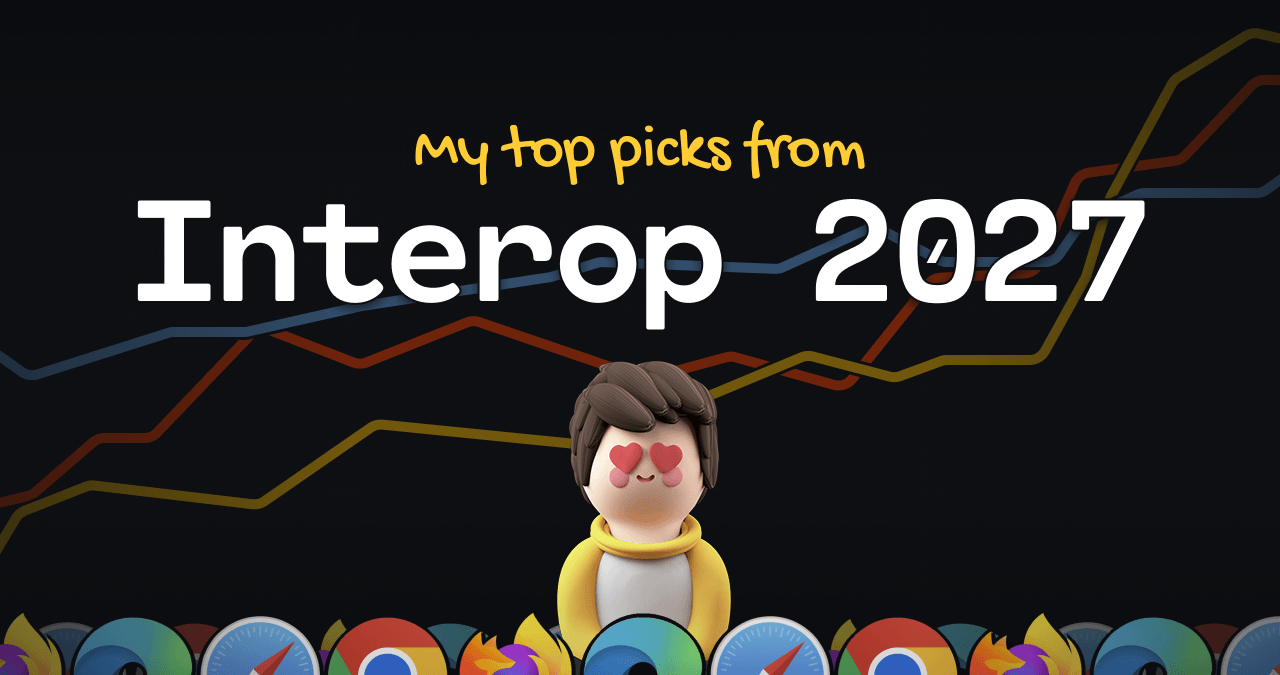
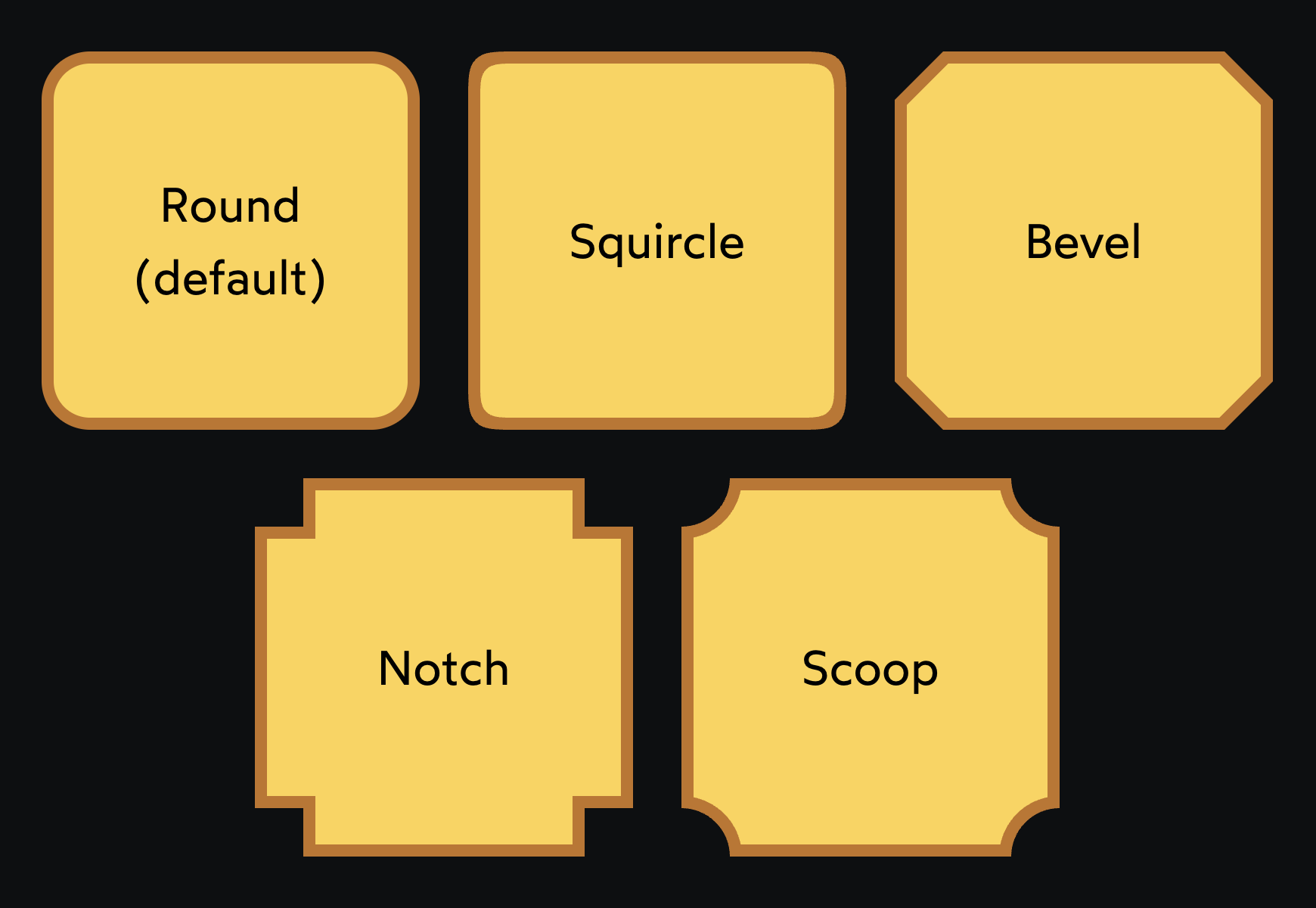
The corner-shape property aims to move beyond the standard border-radius limitation. By enabling shapes like squircle (a superellipse) and bevel, this property allows for more sophisticated UI aesthetics that were previously only possible through cumbersome clip-path hacks. Importantly, unlike masking techniques, corner-shape modifies the actual border-box, ensuring that borders, outlines, and box-shadows remain physically consistent with the element’s geometry.
3. Border-Shape and Custom Geometry
While corner-shape focuses on presets, the border-shape proposal provides a lower-level API for drawing custom borders using Bézier curves and straight lines. This proposal effectively democratizes the creation of complex, non-rectangular UI components, allowing for dynamic animations between different border states without requiring expensive canvas-based re-renders.
4. Anchored Container Queries
Building on the successful launch of the Anchor Positioning API in 2026, the "Level 2" proposal introduces state-based container queries. This allows elements to react to the positioning context of their anchors. Specifically, it enables developers to trigger CSS changes when an anchored element—such as a tooltip—flips its position to remain within the viewport. This provides a native, performant solution for managing UI overlays that were previously prone to clipping errors.
5. The Inherit() Function
The proposed inherit() function seeks to solve a long-standing issue with the inherit keyword: the inability to modify inherited values. By allowing developers to pass an inherited property into a calc() function, this feature would enable dynamic, context-aware styling—such as automatically adjusting nested border-radii—without the need for manual overrides at every level of the DOM.
6. Scroll-Triggered Animations
Following the successful integration of scroll-driven animations in Interop 2026, the industry is now looking toward scroll-triggered animations. While scroll-driven animations link an animation’s progress to a scroll position, scroll-triggered animations function like proximity sensors, initiating a full keyframe sequence once a target enters the viewport. This removes the current reliance on IntersectionObserver JavaScript, potentially reducing main-thread overhead for developers.
7. Reading Flow and Accessibility
A critical issue in modern responsive design is the decoupling of visual layout from DOM order. When a grid layout shifts content based on screen size, the underlying tab order for assistive technologies can become disjointed. The reading-flow and reading-order properties represent a significant step forward in web accessibility, allowing developers to explicitly define focus navigation paths that mirror the visual experience, ensuring that accessibility does not suffer at the expense of responsive design.

8. Keyword Size Interpolation
One of the most persistent "paper cuts" in web development is the inability to animate to or from keyword values like auto. The interpolate-size property and its associated calc-size() function aim to standardize how browsers transition between fixed sizes and intrinsic keywords. This is expected to simplify the implementation of accordion menus and dynamic height transitions significantly.
9. Gap Decorations
The gap-rule proposal addresses the difficulty of adding borders between grid cells. Because CSS Grid layout is defined by the grid container rather than the individual items, drawing borders between empty cells has historically required complex workarounds. The introduction of row-rule and column-rule properties will allow for standard-compliant border styling across grid gaps, mirroring the ease of use found in traditional table layouts.
10. Scroll-State Queries
Finally, the proposal for scroll-state queries seeks to expose the state of scroll containers to CSS. By enabling queries that match when a container is "at the top" or "at the bottom," developers can conditionally apply styling—such as revealing shadow gradients—without relying on JavaScript scroll listeners.

The Role of Technical Expertise in the AI Era
The emergence of these features occurs during a transitional period for the software industry, characterized by the rapid adoption of large language models (LLMs) in development workflows. While some have questioned whether deep technical knowledge of CSS remains necessary, the consensus among standards bodies and senior architects is that such expertise is now more critical than ever.
Because LLMs are trained on vast datasets of legacy code, they often default to outdated patterns. The ability to guide these agents toward modern, performant, and accessible CSS standards requires a deep understanding of the platform’s evolution. As these new capabilities move from proposals to browser implementation, the responsibility falls upon the development community to champion their use, provide feedback to the W3C and browser vendors, and ensure that the next generation of web interfaces is built on the most capable foundations available. The Interop 2027 cycle, therefore, serves not just as an engineering roadmap, but as a commitment to maintaining the web’s status as a robust and expressive medium.
Related posts: