Seven Common Token-Waste Patterns in Production AI Agent Systems and Their Architectural Fixes

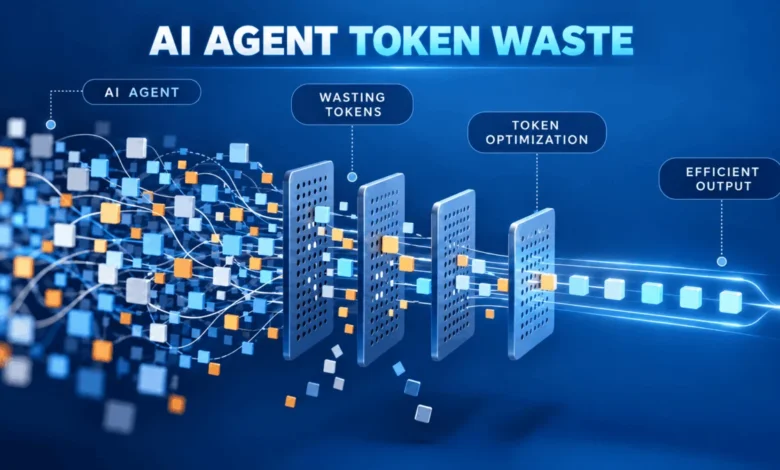
As artificial intelligence agents transition from weekend prototypes to core infrastructure, engineering teams are increasingly confronted with a critical operational hurdle: the escalating cost and latency of large language model (LLM) inference. While a prototype might function flawlessly with a handful of requests, scaling to thousands of concurrent users often reveals that the naive approach to context management—appending every interaction to an ever-growing prompt array—creates a "token-waste" feedback loop. This phenomenon does not merely inflate API bills; it introduces technical debt that degrades model reasoning and increases the probability of hallucinations.
The Structural Mismatch: Context versus State
The root of the issue lies in a fundamental architectural conflation. Many developers treat the LLM’s context window—the transient, ephemeral payload sent with every request—as the system of record. In reality, persistent agent state should be managed by durable, serialized databases, while the context window should only house the immediate, relevant information required to resolve the current step. When these two functions are blended, the system effectively performs an expensive database read for every inference call, causing costs to scale quadratically with the length of the interaction.
1. The Append-Only Trap: Context Window Accumulation
The most prevalent failure in agent design is the "infinite append" pattern. By storing every user message, tool observation, and internal thought in a single list, developers force the model to re-process its entire operational history on every turn. By the twentieth turn, the agent spends a significant portion of its token budget simply "reading" its past behavior rather than focusing on the task at hand.
The architectural solution is a sliding context window coupled with semantic rolling summarization. By maintaining only the last N turns of raw data and compressing older history into a dense background summary, engineers can maintain coherence without the bloat. However, this introduces a risk of data loss. To mitigate this, developers should implement a strict key-value lookup tool that allows the agent to retrieve specific, high-precision identifiers—such as UUIDs or cryptographic hashes—when exactness is required, bypassing the summarization layer.
2. Uncompressed Tool Result Ingestion
Modern AI agents frequently interact with enterprise APIs—such as Stripe, Jira, or AWS—which return deeply nested, machine-optimized JSON payloads. Directly injecting these raw responses into an agent’s context is a significant source of waste. A single webhook response can consume thousands of tokens, the vast majority of which consist of irrelevant metadata, null values, or boilerplate logs.
Engineers should deploy a middleware transformation layer that acts as a "token-cleaner" between the API and the agent. This layer strips unnecessary keys, converts JSON to YAML or structured Markdown, and sanitizes logs. While this saves massive amounts of compute, it requires careful implementation: removing pagination cursors or essential state-tracking metadata can break the agent’s ability to perform multi-step data retrieval.
3. Retrieval Thrash and the "Grep-and-Dump" Method
In retrieval-augmented generation (RAG) systems, particularly those focused on codebases, a common error is the "Grep-and-Dump" approach. When an agent needs to understand a specific function, the orchestrator retrieves the entire file containing that function. This is highly inefficient.
The industry-standard fix is to shift toward Abstract Syntax Tree (AST)-aware retrieval. By parsing code into a live call graph during the indexing phase, the orchestrator can return only the specific function signature, docstring, and immediate dependencies. Tools like Tree-sitter facilitate this granular extraction. The implication for developers is a requirement for a continuous, asynchronous indexing pipeline; if the index falls behind the code repository, the agent will reason based on stale data, potentially leading to critical errors.
4. Static Tool Schema Bloat
For agents with extensive capabilities, the overhead of defining every available tool in the prompt can be immense. If an agent carries 50 tools, the model must process thousands of tokens of schema definitions for every single request, even when most of those tools are irrelevant to the current task.
A more efficient approach involves context-aware tool pruning governed by a finite state machine. By dynamically injecting only the tools relevant to the agent’s current "operational state"—such as "discovery" or "execution"—developers can drastically reduce the input token count. While this is highly effective, it introduces tension with prompt caching, as dynamic schema changes often force the model provider to recompute the KV cache, potentially increasing latency.
5. Unbounded Chain-of-Thought Loops
Autonomous agents, by definition, operate with a degree of freedom that can be dangerous in production. If a tool call fails, an agent may repeatedly attempt to correct itself, entering a "reasoning loop" that consumes thousands of output tokens—which are typically billed at a significantly higher rate than input tokens.
To prevent runaway billing, developers must implement an orchestrator-level circuit breaker. By enforcing hard limits on retry counts and capping the total output budget per action, engineers ensure that a failed task does not drain the system’s budget. While these guardrails can occasionally terminate a complex but valid request, the business cost of a "false positive" termination is almost universally lower than the cost of an unconstrained billing event.
6. Optimizing the KV Cache and Prompt Prefixing
LLM providers use Key-Value (KV) caching to optimize attention over previously processed content. However, many developers inadvertently destroy the utility of this cache by placing dynamic variables—such as current timestamps or user IDs—at the very beginning of the prompt.
The industry best practice is to structure requests with a strict static-to-dynamic gradient. By placing massive, immutable system prompts and organizational style guides at the top of the request, the cache boundary is preserved. This allows the system to reuse the KV cache for the static portion, resulting in measurable cost savings and lower latency. The primary challenge here is managing the trade-off: dynamic tool pruning (as mentioned in point four) can shift the cache boundary, reducing hit rates and forcing the developer to find a balance based on the specific traffic volume of their application.
7. Monolithic Routing and the Need for Cascaded Models
Perhaps the most avoidable cost is the "over-utilization" of frontier models. Using top-tier, high-cost models for simple tasks like basic JSON parsing or intent classification is economically unsustainable.
A cascaded LLM routing strategy is the solution. By employing a fast, low-cost model (such as Gemini Flash or GPT-4o-mini) for routing, classification, and summarization, and escalating only to a "frontier" model (such as Claude 3.5 Sonnet or GPT-4o) when complex, multi-step reasoning is required, developers can optimize their cost-to-performance ratio. Libraries like LiteLLM have emerged to facilitate this provider-agnostic routing. This strategy requires rigorous testing, as an error at the routing layer—where a small model misclassifies a complex request—can lead to total failure.
Broader Implications and Strategic Outlook
Token optimization has evolved from a simple billing concern into a cornerstone of system stability. Data from recent industry benchmarks suggests that bloated context windows are the primary driver of agentic "drift," where the sheer volume of information causes the model to lose focus or prioritize irrelevant noise.
By implementing these seven architectural patterns, organizations can move toward more deterministic, reliable agent behaviors. The transition from a "naive" architecture to a "production-grade" one requires a shift in mindset: seeing the LLM not as an infinite sink for data, but as a component that must be fed a precise, curated diet of information. As these systems scale, the companies that prioritize efficient context management will be the ones capable of deploying complex, multi-agent architectures that remain both economically viable and operationally resilient. Over time, these structural decisions will determine whether an agent remains a helpful assistant or becomes a source of technical debt that hinders organizational agility.