The Evolution of Contemporary Workspace Design: Streamlining Productivity and Aesthetics Through Innovative Furniture Solutions

The modern corporate environment has undergone a profound transformation over the past several years, driven by shifting hybrid work models, an increased emphasis on employee wellbeing, and the necessity to optimize commercial real estate. As businesses reimagine their physical headquarters to lure employees back from remote settings, the demand for office interiors that balance operational efficiency with uncompromising aesthetic appeal has reached unprecedented levels. A comprehensive review of recent product rollouts featured in major architectural and design showcases highlights a distinct industry-wide shift: furniture manufacturers and global design studios are no longer just producing individual pieces; they are engineering holistic ecosystems meant to foster productivity, reduce physical and visual clutter, and prioritize ergonomic health.
This curated overview examines the latest innovations in workplace design—ranging from advanced sit-stand desks and integrated power systems to modular acoustic seating and health-conscious task chairs—exploring how contemporary manufacturing is responding to the demands of the 21st-century workforce.
The Macro Shift: Redefining the Open-Plan Office
For decades, the open-plan office reigned supreme as a cost-effective method for encouraging collaboration and maximizing floor space. However, widespread employee dissatisfaction regarding noise pollution, lack of privacy, and desktop disarray forced a design reckoning. Today’s workspace solutions seek to rectify these historical shortcomings without reverting to the isolating cubicle farms of the late 20th century.
Global design firms and furniture brands are focusing heavily on three core pillars: cognitive focus, physical ergonomics, and spatial flexibility. By integrating advanced technology seamlessly into furniture structures, providing spontaneous spaces for light collaboration, and utilizing biophilic design principles, manufacturers are aiming to reduce the physical toll of sedentary work while enhancing mental clarity. The integration of sustainable materials—such as recycled aluminum and reclaimed ocean plastics—further underscores a broader corporate commitment to environmental responsibility within the design sector.
Integrated Technology and Clutter Reduction
One of the primary friction points in the contemporary office is cable management and power accessibility. As employees juggle laptops, tablets, and secondary monitors, desktops frequently become overrun by tangles of wires and power bricks, contributing to cognitive fatigue and visual untidiness.
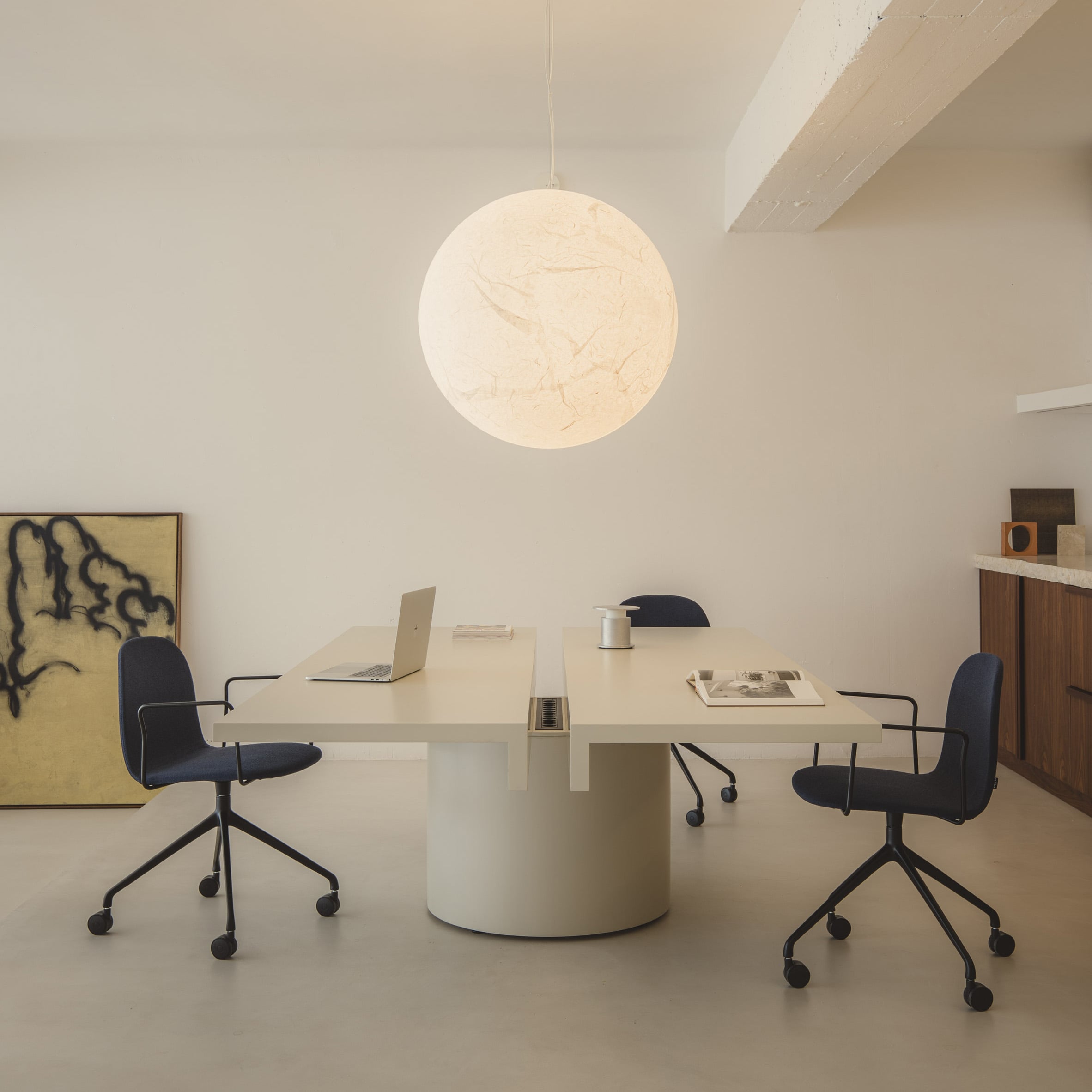
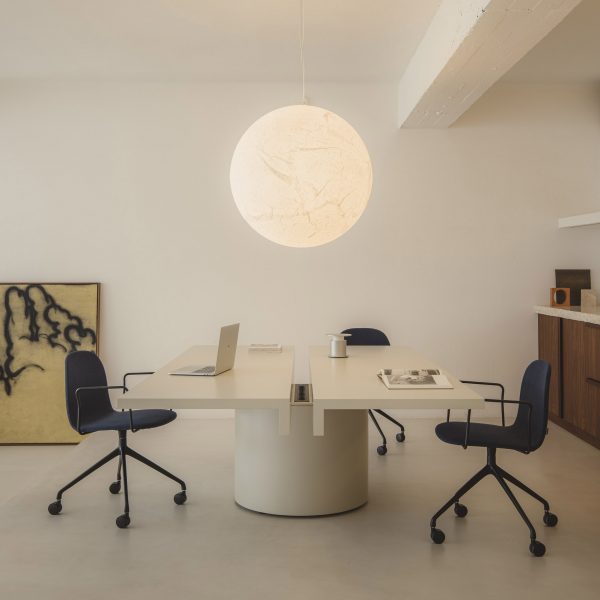
Addressing this challenge directly, Spanish designer Isern Serra collaborated with furniture brand Omelette Editions to create the TOT table. Designed specifically for modern co-working environments, the TOT table features a distinctive bisected tabletop profile that conceals electrical infrastructure directly within its core. Supported by minimalist cylindrical legs, the table houses a robust 12-socket power board, allowing users to plug in devices effortlessly while routing cables completely out of sight. This clean separation of technical utility from the working surface eliminates both physical and visual clutter, fostering an environment of uninterrupted focus.
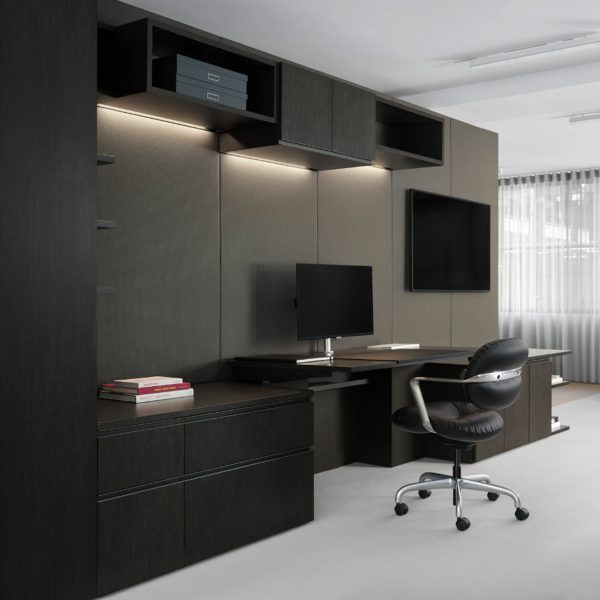
Similarly, large-scale office systems are embracing comprehensive technological integration. The Konzert office furniture system, developed by Italian designer Paolo Dell’Elce for American heritage brand Knoll, takes a macro approach to private office fit-outs. Konzert provides a cohesive ecosystem comprising configurable wall panels, multi-functional tables, integrated storage, and specialized seating. By offering curated colourways and harmonious finishes, the system ensures that private executive suites and open-plan team areas share a unified visual language while hiding necessary utility infrastructure.
The Ergonomic Renaissance: Active Sitting and Posture Correction
With the average office worker spending upwards of six hours per day seated, the design of task chairs has evolved from a matter of basic comfort into a critical health initiative. Modern ergonomic engineering focuses heavily on "active sitting"—a concept that encourages micro-movements to engage core muscles, improve circulation, and prevent musculoskeletal disorders associated with prolonged static postures.
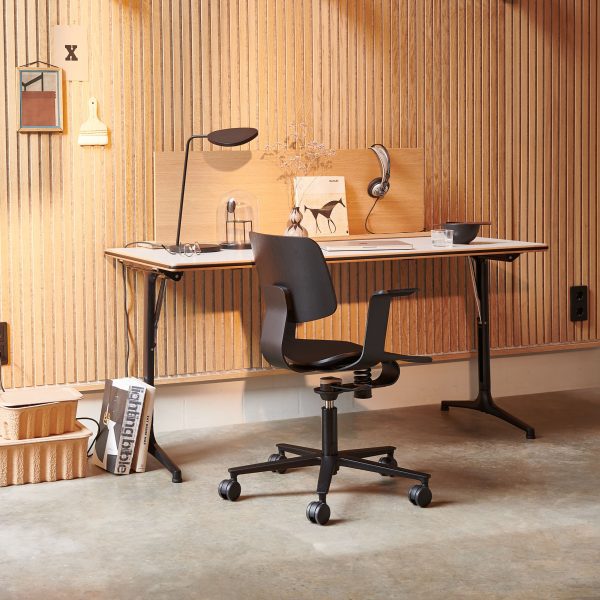
A prime example of this movement is the WiChair, designed by Alina Schnizler for German manufacturer Wilkhahn. The WiChair introduces mechanical dynamism to traditional steel and plywood construction through a thick, heavy-duty spring mechanism positioned directly beneath the seat. This engineered bounce subtly responds to the user’s shifts in weight, promoting dynamic movement throughout the workday and keeping the body engaged.
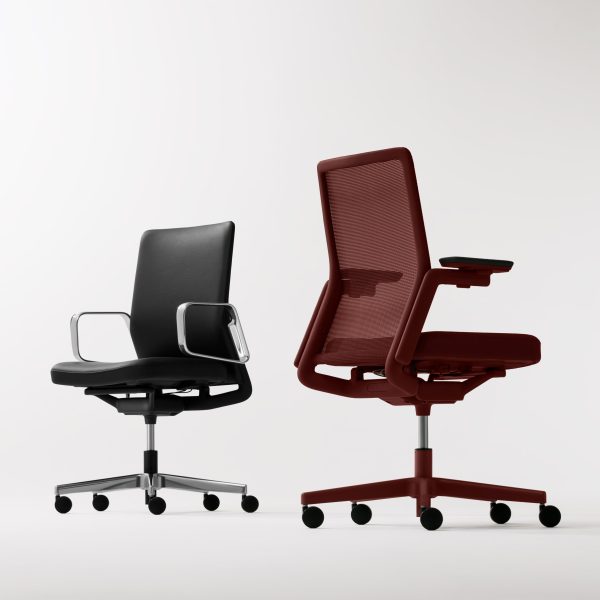
In the realm of high-performance task seating, British architecture powerhouse Foster + Partners partnered with Japanese furniture leader Okamura to develop the Muku task chair. Emphasizing a sober, refined aesthetic, the Muku is available in a restrained palette of light grey, dark grey, red, and black. Beyond its architectural silhouette, the chair is notable for its sustainable material composition, utilizing recycled aluminum for its structural frame and upcycled fishing nets for the mesh seat upholstery.
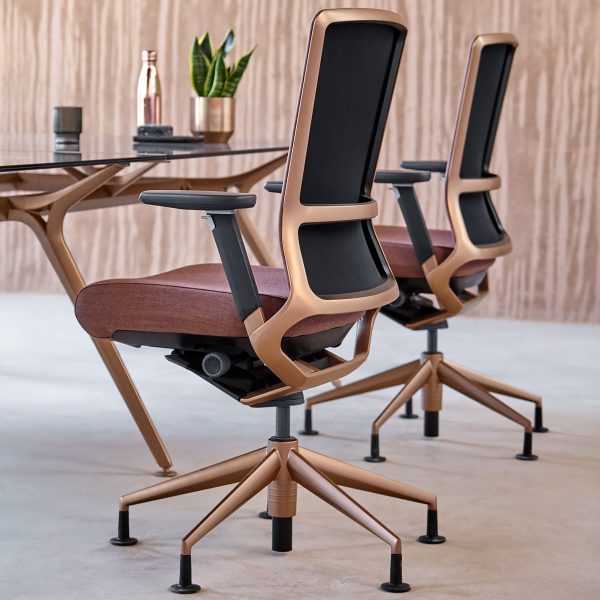
Complementing this is the TNK500 Aurea task chair, created by Alegre Design for Spanish brand Actiu. Distinguished by its metallic-finished frame and structural elegance, the TNK500 Aurea is engineered to intuitively support spinal health during intensive computing tasks. Notably, the chair is manufactured using nearly 60 percent recycled materials, bridging the gap between high-performance ergonomics and circular economy principles.
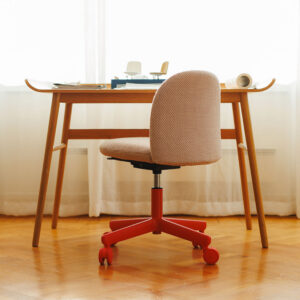
Norwegian designers Andreas Engesvik and Jannicke Grung took a more residential approach with the HÅG Minu task chair, produced for Flokk-owned brand HÅG. Available in seven curated colourways, the Minu aims to strip away the intimidating industrial aesthetic often associated with office chairs, bringing the warmth, comfort, and casualness of home furnishings into corporate spaces.
Flexibility and Acoustic Seating for Open-Plan Landscapes
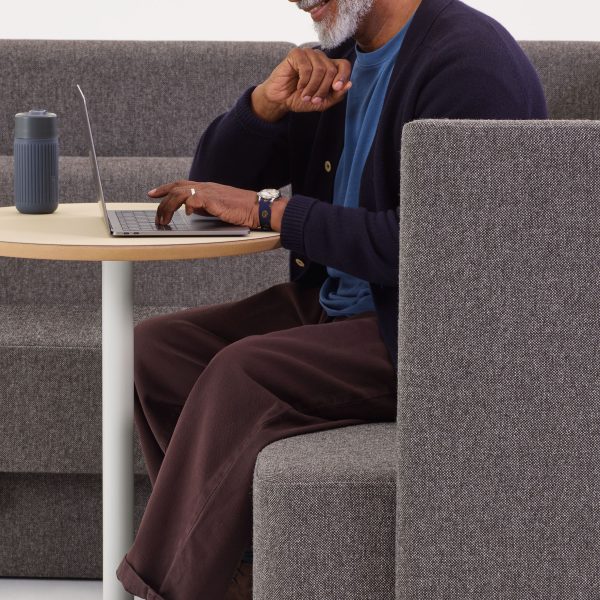
As collaborative tasks increasingly happen away from assigned desks, modular seating systems have become essential architectural tools for dividing vast, open-plan floorplates without erecting permanent walls.
The Pullman Modular seating system by NaughtOne was explicitly engineered to address the persistent issue of acoustic privacy in bustling offices. Featuring high-back profiles across all three of its primary segments, the Pullman system acts as both a spatial divider and a sound-dampening barrier, creating secluded pockets where employees can conduct impromptu meetings, phone calls, or focused solo work away from their primary desks.
Expanding on the concept of architectural landscaping within interiors, Italian designer Francesco Rota teamed up with brand Lapalma to create the HUB modular system. Characterized by its undulating profile, HUB constructs sculptural "islands of activity" within open spaces. These modules can be configured for waiting, conversing, or casual collaboration, effectively breaking down vast floor plates into human-scaled, purposeful zones.
To further enhance employee wellbeing through biophilic design, British manufacturer Boss Design updated its popular Eden pods range. These architectural booths can be heavily customized with lounge seating, tactile acoustic cladding, and even integrated rooftop planters. By bringing living greenery directly into the workspace, the Eden pods help reduce stress levels and improve indoor air quality.
Sit-Stand Adaptability: Movement as a Standard
The transition from purely seated environments to dynamic sit-stand offices has accelerated significantly over the past five years. Prolonged sitting has been clinically linked to numerous health complications, prompting organizations to mandate height-adjustable desks as standard-issue equipment.
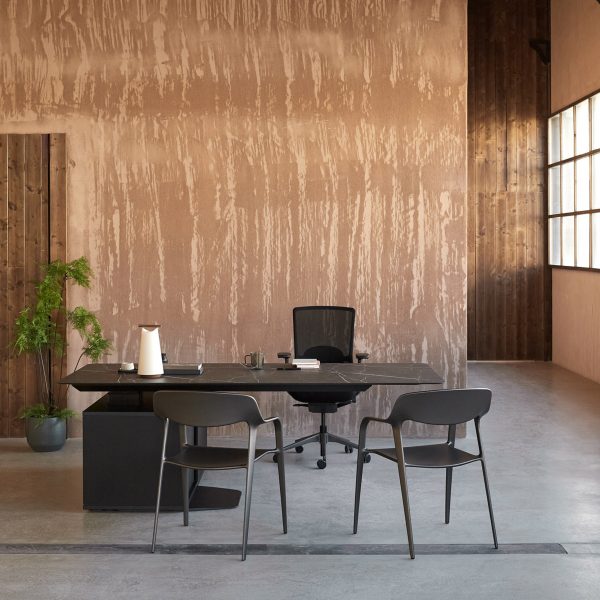
Actiu’s Menssula sit-stand work tables represent the state of the art in this category. Available in a wide array of dimensions and formats to suit private offices and benching systems alike, the Menssula range integrates a smooth, quiet, electrically-powered height-raising mechanism. This allows users to effortlessly transition between seated and standing postures throughout the day, supporting dynamic meetings and individual workflows without disrupting surrounding colleagues.
Industry Implications and Future Outlook
The convergence of these diverse product categories—desks with hidden power grids, chairs that promote active stabilization, and modular pods that introduce biophilic elements—points to a mature, highly sophisticated phase in office interior design.
Industry analysts note that as corporate office footprints continue to shrink in response to hybrid work models, the quality of the physical workspace must increase exponentially to justify the commute. Companies are investing fewer resources into sheer square footage and allocating more capital toward high-performance, durable, and aesthetically enriching furniture systems that prioritize employee health and retention.
Ultimately, the latest offerings from brands like Actiu, Knoll, Okamura, and NaughtOne demonstrate that the future of the office lies in adaptability. By bridging the gap between residential comfort and rigorous ergonomic engineering, contemporary workspace design is successfully transforming the office from a mandatory obligation into an inspiring destination for collaboration, wellness, and productivity.
Related posts: