Manual Photo Lab Blends Skate Culture And Analog Heritage In New York City Chinatown Flagship

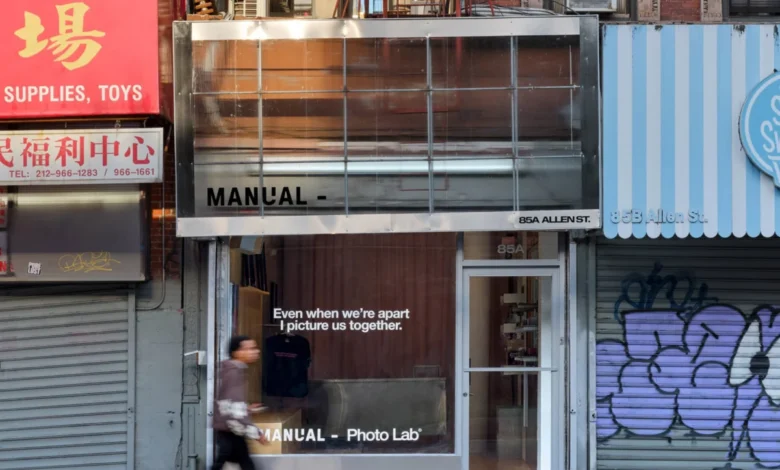
Design-build studio Protean Practice has completed the first permanent flagship storefront and film processing laboratory for camera brand Manual on Allen Street in Manhattan’s historic Chinatown. Situated inside a former point-of-sale supply store, the newly opened Manual Photo Lab combines raw industrial finishes, Baltic birch timber systems, and signature baby-pink accents to establish a community hub tailored to a burgeoning generation of analog and digital photographers. The project represents a significant milestone for Manual, a brand that has operated primarily through online channels and temporary pop-up installations since its inception nearly a decade ago.
The Genesis of Manual and the Evolution of Modern Photography Retail
Founded in 2017, Manual carved out a distinct niche within the contemporary imaging market by championing accessible, tactile photography tools. The brand is perhaps best known for producing the Holo—a pocket-sized, translucent digital camera designed to expose its internal components, including its battery and wiring, through a colored plastic shell. In addition to digital devices, Manual offers disposable cameras and various film stocks, appealing directly to a demographic of younger creators experiencing a widespread cultural resurgence in physical media.
For years, the brand lacked a permanent brick-and-mortar home, relying instead on transient pop-up spaces to connect with its audience. According to Manual founder Malcolm Dia, the decision to establish a permanent storefront in Manhattan was driven by a desire to create an authentic urban anchor for local creators. Dia envisioned a physical space modeled on the ethos of traditional skate shops—a welcoming downtown environment where photographers can drop by in the morning, borrow or purchase equipment, embark on daily excursions, return to develop their film, and congregate to socialize. Rather than positioning the enterprise as a corporate competitor to legacy institutions, the founders intend for the lab to serve as an accessible entry point for novices handling film or digital cameras for the very first time.
Architectural Concept and Facade Restoration
The spatial design of the Allen Street storefront was spearheaded by Protean Practice, a cross-disciplinary design-build studio founded in 2022 by apparel designer Saji Abu-Gold and photographer Steven Traylor. Operating across Los Angeles, New York City, and London, Protean Practice focuses on low-emission, locally sourced materials and the preservation of existing site conditions.
This philosophy is immediately evident upon approaching the building’s exterior. The storefront features a floor-to-ceiling glass facade crowned by a translucent polycarbonate upper bulkhead. This modern material choice allows natural light to filter into the interior while deliberately exposing the 1800s brickwork remnants of previous storefronts from decades past. The building’s original signage structure—uncovered beneath layers of historical vinyl and outdated commercial wrappers—was meticulously preserved. Instead of discarding the weathered framework, the design team stripped away excess layers to reveal an uneven yet structurally sound skeletal shape, infilled it with polycarbonate panels, and restored an original fluorescent light fixture positioned behind the bulkhead.
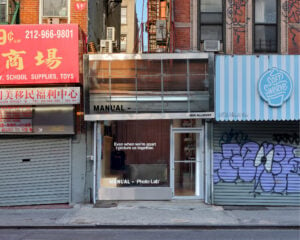
Abu-Gold noted that the installation of the polycarbonate sheathing yields a distinct refraction effect at night. This visual quality mirrors the ambient glow of a flashlight passing through the translucent plastic body of Manual’s signature Holo camera, bridging the gap between product design and spatial architecture.
Interior Architecture and Materiality
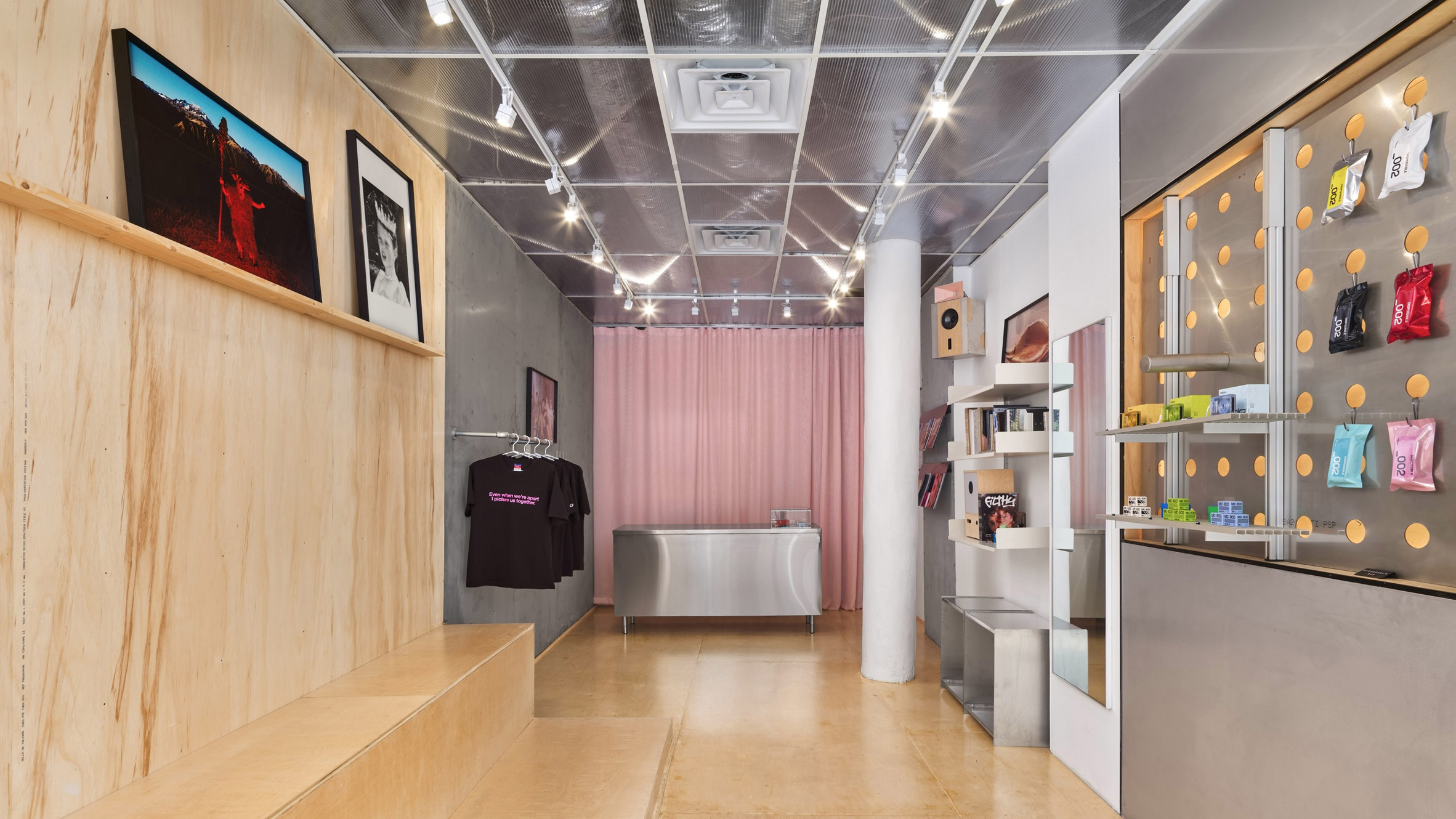
Upon entering the retail space, visitors encounter a thoughtfully curated material palette dominated by cold-rolled steel wall panels, custom millwork, and industrial accents. The layout is divided functionally into a front-of-house retail and community gathering zone and a back-of-house operations area concealed behind a vibrant baby-pink curtain.
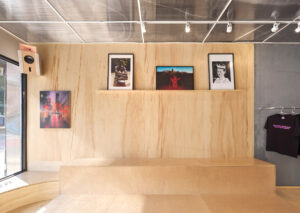
To foster communal engagement, Protean Practice constructed a large, multi-level Baltic birch plywood seating system along the left side of the room. The design of this amphitheater-like timber structure draws direct inspiration from the minimalist interior works of mid-century American designers Ward Bennett and Joe D’Urso. The lowest tier of the plywood platform aligns precisely with the lip of the front window, echoing a spatial detail frequently utilized by D’Urso to encourage casual lounging. The upper tiers step back further into the interior, inviting patrons to linger for extended periods.
For the shop’s grand opening, this central gathering zone was complemented by curated photographic prints supplied by the talent agency Silvertooth Agency, alongside a specially commissioned painting by artist Leon Xu.
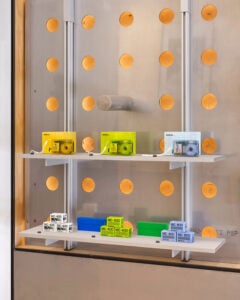
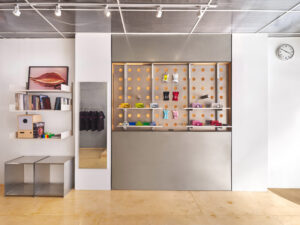
Wall treatments throughout the interior reinforce the industrial narrative. Cold-rolled steel panels line both sides of the room. Near the entrance, designer and fabricator Ian Chapin contributed an oversized, backlit steel pegboard cut directly into the wall paneling to display Manual’s hardware and retail inventory. Deeper into the floor plan, a column of custom aluminum shelving showcases independent zines and merchandise. In the upper corners of the room, custom speakers fabricated by Miami-based studio Lupo—incorporating elements of plywood, pink accents, and steel—provide an atmospheric acoustic backdrop.
Operational Workflow and Community Integration
At the rear of the shop, the baby-pink curtain acts as a visual threshold separating the public-facing lounge from the operational core. Customers can drop off rolls of exposed film at the retail counter. While the space functions as an intake hub, Manual outsources the intensive chemical development process to a trusted, family-owned processing laboratory in Flatbush, Brooklyn, maintaining a collaborative local supply chain.
Despite the influx of new retail concepts into lower Manhattan, Manual Photo Lab enters a neighborhood rich with photographic history. Dia has emphasized that the storefront is not designed to siphon patrons away from longstanding neighborhood staples such as Sammy Photo Lab or Elize Digital—the latter of which recently captured widespread internet fame for its traditional passport photography services. Instead, the founders view their establishment as a complementary addition that addresses the specific needs of an emerging generation discovering image-making in the digital-analog hybrid era.
The studio timeline saw construction and design phases executed closely with local craftspeople, including construction lead Agim Lamaj and millwork collaborator Matthew Avoletta, ensuring that fabrication adhered to local, sustainable standards. Olympia Shannon documented the completed architecture through professional photography.
Broader Urban Context and Implications
The opening of Manual Photo Lab coincides with a period of significant physical and cultural transformation in Manhattan’s Chinatown. The neighborhood continues to balance the preservation of multi-generational businesses with an influx of contemporary creative spaces and infrastructural developments. Nearby, architecture practice Spaced Agency recently completed a street-level expansion for the historic Chinese eatery Wo Hop, while large-scale public projects, such as the construction of a controversial Manhattan detention complex nearby, continue to shape local civic discourse.
By prioritizing adaptive reuse, material transparency, and community-centric spatial planning, Protean Practice and Manual have transformed a former point-of-sale supply depot into a functional cultural venue. The project underscores a broader architectural trend in retail design: shifting away from purely transactional commercial spaces toward experiential micro-institutions that serve as cultural anchors for specialized urban subcultures. As film photography continues its contemporary renaissance among younger demographics, spaces like the Manual Photo Lab offer a physical blueprint for how modern brands can successfully integrate e-commerce origins with tactile, neighborhood-based community engagement.